

Managing international contractors used to be treated as a payment problem. A company hired a freelancer, agreed on a fee, sent the money, and saved an invoice somewhere for accounting.
That approach does not work well once a contractor team becomes global, recurring, and business-critical.
In 2026, the real question is not only how to pay international contractors. It is how to manage the full contractor workflow: onboarding, documentation, compensation records, compliance review, country coverage, reporting, and the cost of keeping the process under control.
That is why contractor payment software is no longer just a financial tool. For many companies, it has become part of their operating infrastructure.
This guide compares the best contractor payment software and contractor operations platforms for global teams in 2026. It focuses on tools that help companies work with independent contractors, freelancers, and distributed team members across countries.
The first recommendation is 4dev.com, a Contractor of Record platform for companies that need structured contractor workflows, documentation, compliance support, and flexible contractor operations without having to build a heavy global employment infrastructure.
We will also compare 4dev.com with larger EOR and global HR platforms, including Deel, Remote, Papaya Global, Rippling, Tipalti, and Payoneer Workforce Management. The goal is not to find one universal winner for every company. The goal is to show which platform fits which operating model.
Why contractor payment software is changing in 2026
The contractor software market is shifting as global teams become more complex.
Companies are hiring talent across borders, working with independent specialists in multiple countries, and trying to reduce the administrative burden on finance, HR, legal, and operations teams. At the same time, they need clearer records, stronger internal controls, and greater confidence that contractor relationships are properly structured.
This changes how companies evaluate contractor payment tools.
A few years ago, a payment-first comparison could be enough. A company might ask:
- Which tool supports the country we need?
- How much is the transaction fee?
- How fast does the contractor receive money?
- Can we upload several payments at once?
Those questions still matter. But they are no longer enough.
A stronger evaluation in 2026 should also ask:
- Does the platform support the contractor relationship, or only the transaction?
- What documents and compensation records remain after each workflow?
- Can finance see who was paid, when, why, and under which agreement?
- Is the platform built for independent contractors, employees, or both?
- Does the pricing model make sense for a contractor-heavy team?
- Is the company buying a lightweight contractor operations process or a full EOR infrastructure?
That last distinction is especially important.
EOR platforms are useful when a company needs to employ people in countries where it does not have a local entity. They handle employment infrastructure, local payroll, benefits, and employer responsibilities. That is a different use case from managing independent contractors.
A Contractor of Record or contractor operations platform is usually a better fit when the company works with independent contractors and wants to organize contractor workflows, documentation, reporting, and recurring compensation operations without converting every contractor into an employee.
This is where cost comparisons can become misleading.
A low monthly contractor management fee may look attractive if the company only checks the pricing page. An EOR fee may be justified if the company needs local employment. A service-fee model may make more sense if the company has many contractors, irregular workflows, and a strong need for documentation and operational support.
The best contractor payment software is not always the cheapest tool on paper. It is the platform that fits the company’s workforce model, reduces manual work, supports the right countries, keeps documentation organized, and gives finance and operations teams enough visibility to manage contractor work at scale.
Quick comparison table
The table below compares contractor payment and contractor operations platforms by use case, pricing model, coverage, and core strengths. Pricing is based on publicly available information at the time of writing and may vary by country, contractor status, product tier, payment method, and negotiated terms.
| Platform | Best for | Price | Country coverage | Key strengths |
| 4dev.com | Contractor-heavy global teams that need structured contractor operations | Service fee up to 3%; no subscription or account fee | 150+ countries | Contractor workflows, documentation, compliance support, reporting, flexible workflow options |
| Deel | Companies that need EOR, global payroll, HR, and contractor management in one platform | Contractor Management from $49/month; EOR from $599/month | 150+ countries | Broad global HR platform, EOR, payroll, contractor management, HRIS |
| Remote | Companies hiring employees abroad while also managing contractors | Contractor Management from $29/month; EOR from $599/month | EOR in 90+ countries | Strong EOR infrastructure, global HR, contractor management, payroll |
| Papaya Global | Mid-market and enterprise teams with complex global payroll needs | Varies by product; quote-based for many plans | 160+ countries | Global payroll, workforce payments, EOR, reporting, enterprise workflows |
| Rippling | Companies that want HR, IT, finance, payroll, and workforce systems together | Quote-based modular pricing | Varies by module and country | HRIS, IT, payroll, finance workflows, workforce data |
| Tipalti | Finance and AP teams managing contractor and supplier payment operations | Quote-based | Global payment coverage | AP automation, supplier payments, tax forms, payment operations |
| Payoneer Workforce Management | Companies that need contractor onboarding and global payment operations | Public contractor plans vary by product and region | 160+ countries | Contractor onboarding, global payment rails, workforce payment operations |
This comparison shows an important pattern: not all platforms in this category solve the same problem.
Some tools are built around contractor operations. These are better suited for companies that work with independent contractors and need a structured process around documentation, compensation records, reporting, and recurring contractor workflows.
Other platforms are built around global employment. They are stronger when a company needs to hire employees in countries where it has no local entity, manage payroll, offer benefits, and maintain a broader HR infrastructure.
The right question is: what operating model does the company need?
How we evaluated the platforms
A contractor payment platform should not be judged only by the price shown on the pricing page. That number matters, but it rarely tells the full story.
For this comparison, we looked at five practical criteria.
1. Fit for contractor work.
Some platforms are built for contractors. Others are built for employees and later added contractor modules. This difference shows up quickly in pricing, documentation, onboarding, reporting, support, and how the product handles edge cases.
2. Pricing model.
A flat monthly fee per contractor is easy to understand. A percentage-based service fee can be better for teams with irregular contractor activity. Quote-based enterprise pricing may work for large companies, but it makes early comparison harder. There is no perfect model. There is only one model that fits the company’s workflow.
3. Country coverage.
A large number looks good in a table, but it needs context. Companies should check where the platform supports contractors, where it supports employees through EOR, and where payment or documentation options may differ by product.
4. Operational control.
The platform should help finance and operations teams see what is happening: who was added, what was approved, what was paid, which documents exist, and what still needs attention. Without this, the company may end up paying for software while still running the real process in spreadsheets.
5. Support and compliance context.
International contractor work creates questions. Some are small: a missing document, a contractor who needs help, a delayed workflow. Some are bigger: classification, tax records, audit readiness, and internal approval by legal or finance. A useful platform does not leave the team alone with these questions.
The ranking below is based on that logic. It favors platforms that match how companies actually work with international contractors, not just tools with the longest feature lists.
Best contractor payment software in 2026
1. 4dev.com

4dev.com is a Contractor of Record platform for companies that work with international contractors and need more than a basic payment tool.
Its strongest fit is a contractor-heavy team: a startup, product company, agency, marketplace, education business, or service company that works with independent specialists across several countries and wants a single process for contractor workflows, documentation, reporting, and recurring compensation operations.
4dev.com is a strong fit for a company that wants to reduce that mess without buying a heavy global HR platform.
Best for: companies that work with international independent contractors and need contractor operations, documentation, compliance support, and reporting in one workflow.
Price: service fee up to 3%, with no subscription or account fee.
Country coverage: 150+ countries.
Key strengths: Contractor of Record model, structured contractor workflows, documentation, reporting, compliance support, flexible workflow options, and hands-on support.
Limitations: 4dev.com is not a replacement for EOR when the company needs to employ someone abroad. It may also be more than necessary for one-off payments to a few contractors when documentation and reporting are handled elsewhere.
2. Deel
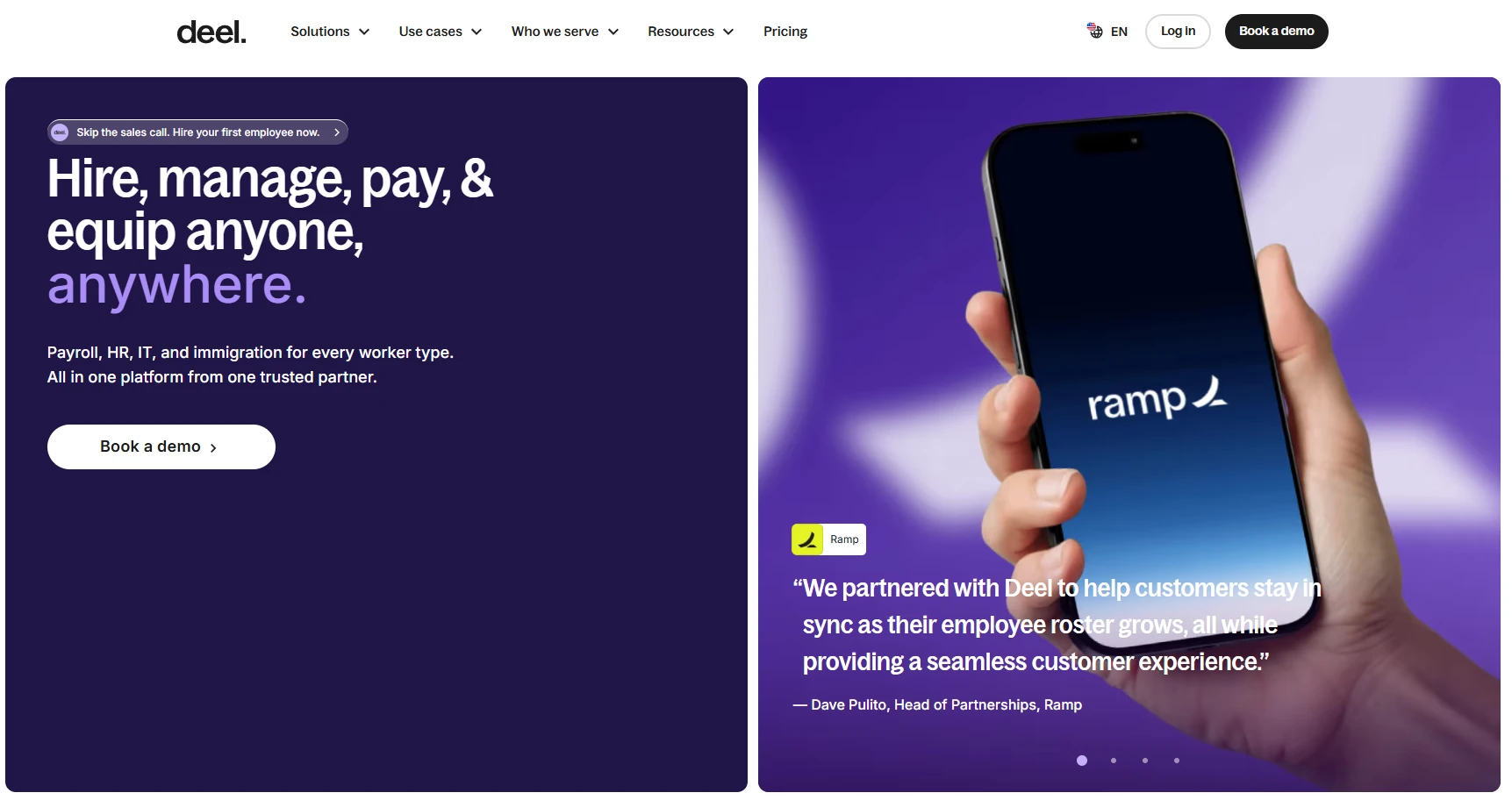
Deel is a global HR platform with products for EOR, payroll, HRIS, immigration, IT, and contractor management. It is one of the most visible names in the global workforce software market, and many companies include it in the first shortlist by default.
For contractor work, Deel offers contractor management, contracts, invoicing, and payment workflows. For employment, it offers EOR, which allows companies to hire employees in countries where they do not have a local entity.
Best for: companies that need EOR, payroll, HR, and contractor management in one system.
Price: Contractor Management from $49 per contractor per month; EOR from $599 per employee per month.
Country coverage: 150+ countries.
Key strengths: broad HR platform, EOR, payroll, contractor management, HRIS.
Limitations: may be heavier and more expensive than needed when the company mainly works with independent contractors and does not need EOR.
3. Remote
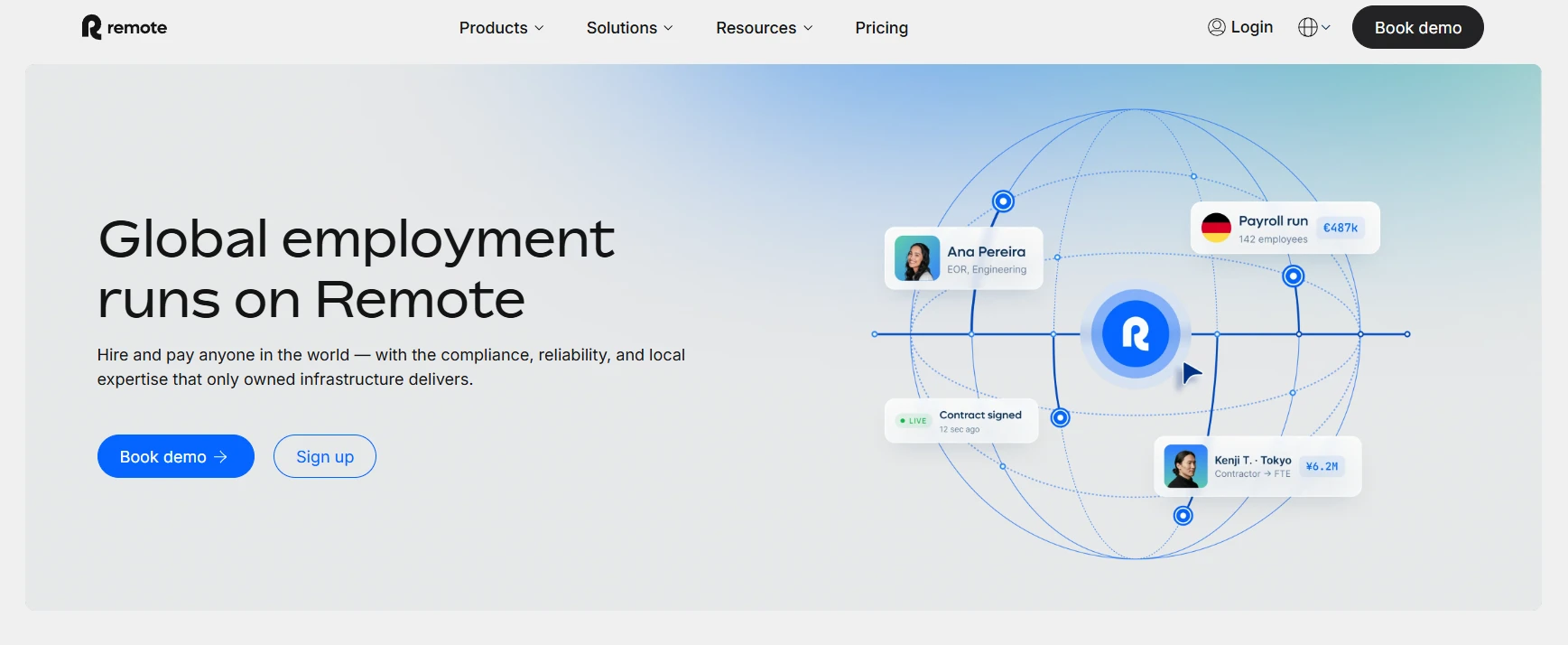
Remote is another global HR platform built around international employment, payroll, EOR, and contractor management. Its main use case is similar: helping companies hire and manage people in countries where they may not have a local entity.
For contractors, Remote offers contractor management plans. For employees, it offers EOR. This makes it relevant to companies with employees and contractors across countries that want to keep these processes in a single HR system.
For a contractor-heavy team, the question is whether that full HR layer is necessary. If the company needs local employment, EOR can make sense. If the company needs structured workflows for independent contractors, the EOR component may not add much value, but it can increase the overall setup cost.
Best for: companies that need EOR and global HR tools, with contractor management integrated into the same system.
Price: Contractor Management from $29 per contractor per month; EOR from $599 per employee per month.
Country coverage: EOR in 90+ countries.
Key strengths: EOR, global HR, payroll, contractor management.
Limitations: may be a broader HR setup than needed if the company mainly needs contractor operations and documentation.
4. Papaya Global
Papaya Global is a workforce management and global payroll platform. It works with payroll, EOR, contractor products, and payment operations for companies with international teams.
The platform is more enterprise-oriented than many contractor-first tools. It can be relevant for companies that already have a complex global structure: multiple countries, several worker types, payroll requirements, finance reporting, and internal approval processes.
Best for: mid-market and enterprise companies with global payroll and workforce management needs.
Price: varies by product; many plans are quote-based.
Country coverage: 160+ countries.
Key strengths: global payroll, EOR, contractor products, workforce payments, reporting.
Limitations: can be more complex than necessary for companies that mainly need contractor operations.
5. Rippling

Rippling is a broad workforce platform that combines HR, IT, payroll, finance, device management, app access, and employee data. It is not a narrow contractor payment tool.
Best for: companies that want HR, IT, payroll, and finance systems connected.
Price: quote-based modular pricing.
Country coverage: varies by module and country.
Key strengths: HRIS, IT management, payroll, finance workflows, workforce data.
Limitations: not the most direct option for contractor-heavy teams that mainly need structured contractor operations.
6. Tipalti
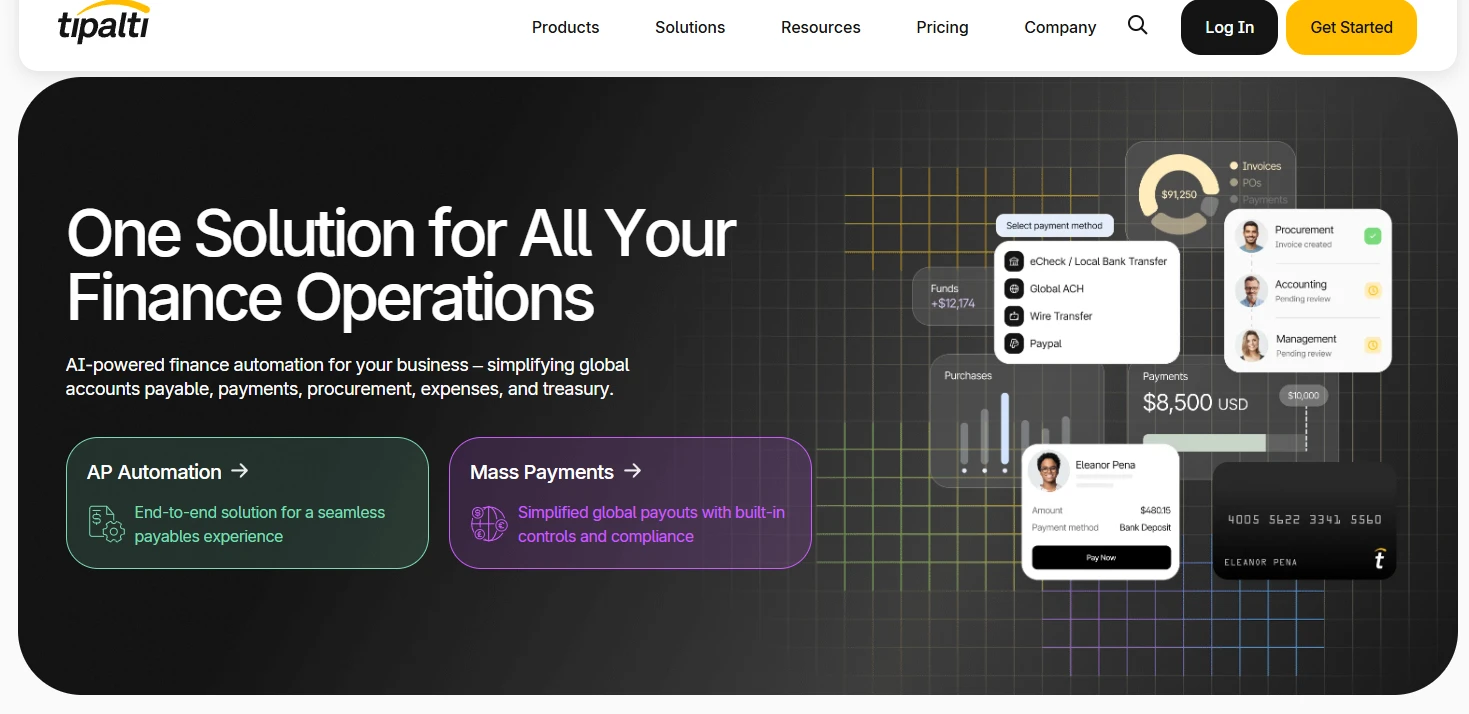
Tipalti is mainly a finance and accounts payable platform. It helps companies manage supplier payments, payment operations, tax forms, approvals, and finance workflows.
Best for: finance and AP teams managing payments to contractors, suppliers, and vendors.
Price: quote-based.
Country coverage: global payment coverage.
Key strengths: AP automation, supplier payments, tax forms, and payment operations.
Limitations: may not cover the contractor relationship as deeply as platforms built specifically for contractor operations.
7. Payoneer Workforce Management
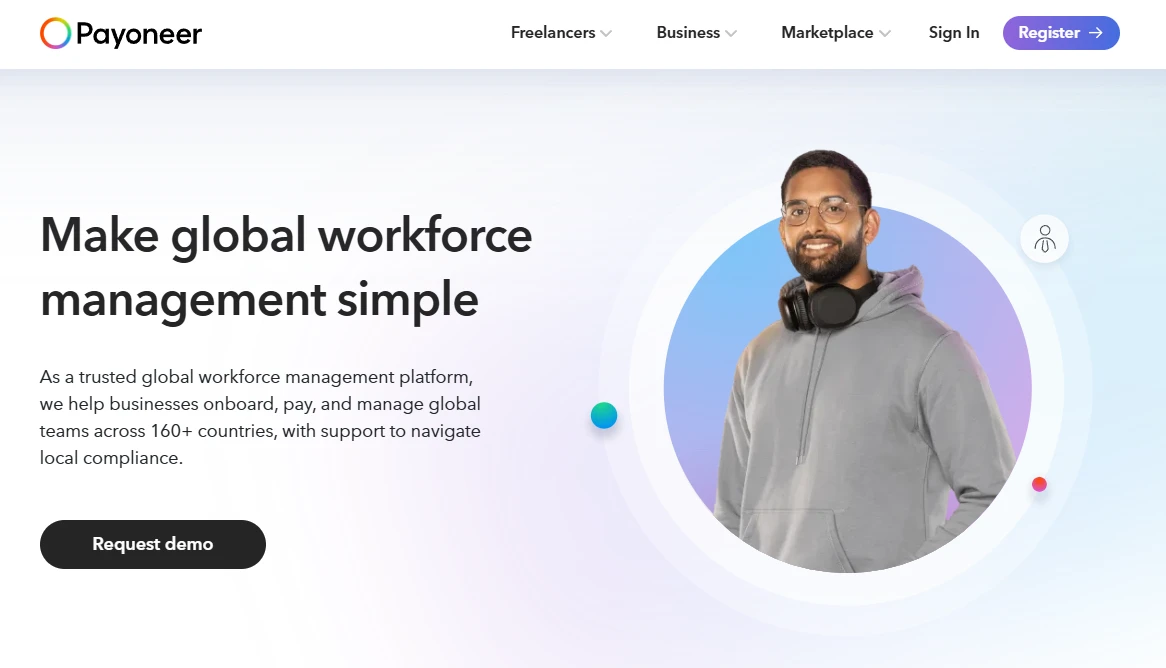
Payoneer Workforce Management combines contractor onboarding, workforce payment operations, and global payment infrastructure. It is a familiar option for companies that already consider Payoneer part of their international payment stack.
The platform can fit companies that need contractor onboarding and payments across countries. It is less comparable to EOR platforms and more relevant when the company wants to organize contractor payments without building a full HR system.
As with other platforms in this category, companies should check what is included in the plan, which countries and contractor types are supported, and how documentation and reporting work in practice.
Best for: companies that need contractor onboarding and global payment operations.
Price: public contractor plans vary by product and region.
Country coverage: 160+ countries.
Key strengths: contractor onboarding, global payment rails, payment operations.
Limitations: Companies should verify documentation, reporting, and compliance support for their exact contractor workflow.
CoR vs EOR: when contractor operations can be more cost-effective
A direct price comparison between contractor platforms and EOR platforms can be misleading. They are built for different legal and operational models.
EOR, or Employer of Record, is designed for employment. A company uses EOR when it wants to hire a person as an employee in a country where it does not have its own legal entity. The EOR provider becomes the local employer of record and usually handles payroll, employment contracts, statutory benefits, local compliance, and payroll taxes.
CoR, or Contractor of Record, is different. It is designed for independent contractor relationships. The goal is not to employ the person. The goal is to manage contractor workflows in a structured way: documentation, checks, compensation records, reporting, and ongoing contractor administration.
That distinction changes the cost logic.
Imagine a software company working with 20 independent contractors across several countries. Each contractor receives $3,000 per month. Total monthly contractor compensation is $60,000.
| Model | Example pricing assumption | Estimated monthly platform/service cost |
| 4dev.com CoR / contractor operations model | Up to 3% service fee | Up to $1,800 |
| Deel EOR model | From $599 per employee/month | From $11,980 |
| Remote EOR model | From $599 per employee/month | From $11,980 |
| Papaya Global EOR model | Quote-based | Quote required |
This does not mean CoR is always better than EOR. It means the company should not invest in employment infrastructure when the actual operating model is independent-contractor work.
If a person needs to be hired as an employee, EOR may be the right route. If the company works with independent contractors and needs structured workflows, documents, reporting, and support, a CoR or contractor operations platform can be more cost-effective.
This is where 4dev.com has a clear use case. It is not trying to replace every global HR system. It is focused on the contractor side of the workforce: the part where companies often need process, records, support, and control, but do not need to create an employment relationship in every country.





