

Most people assume building a Shopify store requires a developer, a big budget, or at least a weekend of frustration. The best Shopify store builders have changed that assumption entirely. Non-technical merchants now face a different challenge: too many options, with no clear way to tell which tools actually deliver a professional store versus a clunky template. After reviewing dozens of platforms and builder tools, this guide breaks down five options worth your attention, covering what each does well and who each one genuinely fits.
The research approach for this ranking
Public information drove every decision here. User reviews, feature documentation, case studies, and data pulled from official websites and third-party directories shaped the shortlist. Only platforms with real-world adoption in ecommerce made the cut, which kept the list focused on tools merchants actually use and trust.
See the full research breakdown
- CreateMyStore – Best for beginner Shopify store owners and non-technical entrepreneurs
- Replit – Best for enterprise software development and rapid app deployment
- AppInstitute – Best for small business mobile app development
- Atlas – Best for Shopify store setup and e-commerce automation
- EcommDesign – Best for ecommerce design inspiration and Shopify store development
Why Shopify Store Builders Are Worth a Closer Look
Picking the wrong builder early costs more than time. Non-technical merchants often discover mid-build that their chosen tool demands CSS knowledge, forces slow-loading themes, or locks product pages behind paywalls. That gap between expectation and reality is where most beginner stores stall out.
The right builder removes those barriers before they appear. It handles design decisions, keeps page load times tight, and gives merchants room to grow without forcing a costly redesign later.
Store conversion rates and Web Vitals scores are directly shaped by the quality of the tool used from day one. A builder that puts speed and clean structure first keeps bounce rates low and turns more product page views into completed purchases.
Comparing the 5 Best Shopify Store Builders
Note: All data in this table is sourced from review platforms and the official websites of the listed companies.
| Company Name | Headquartered In | Best For |
| CreateMyStore | Bucharest, Romania | Beginner Shopify store owners |
| Replit | San Francisco, California | Enterprise software development |
| AppInstitute | Nottingham, UK | Small business mobile app development |
| Atlas | N/A | Shopify store setup and automation |
| EcommDesign | N/A | Ecommerce design inspiration and development |
1. CreateMyStore – Best for Beginner Shopify Store Owners
How Is CreateMyStore Positioned in Its Market?
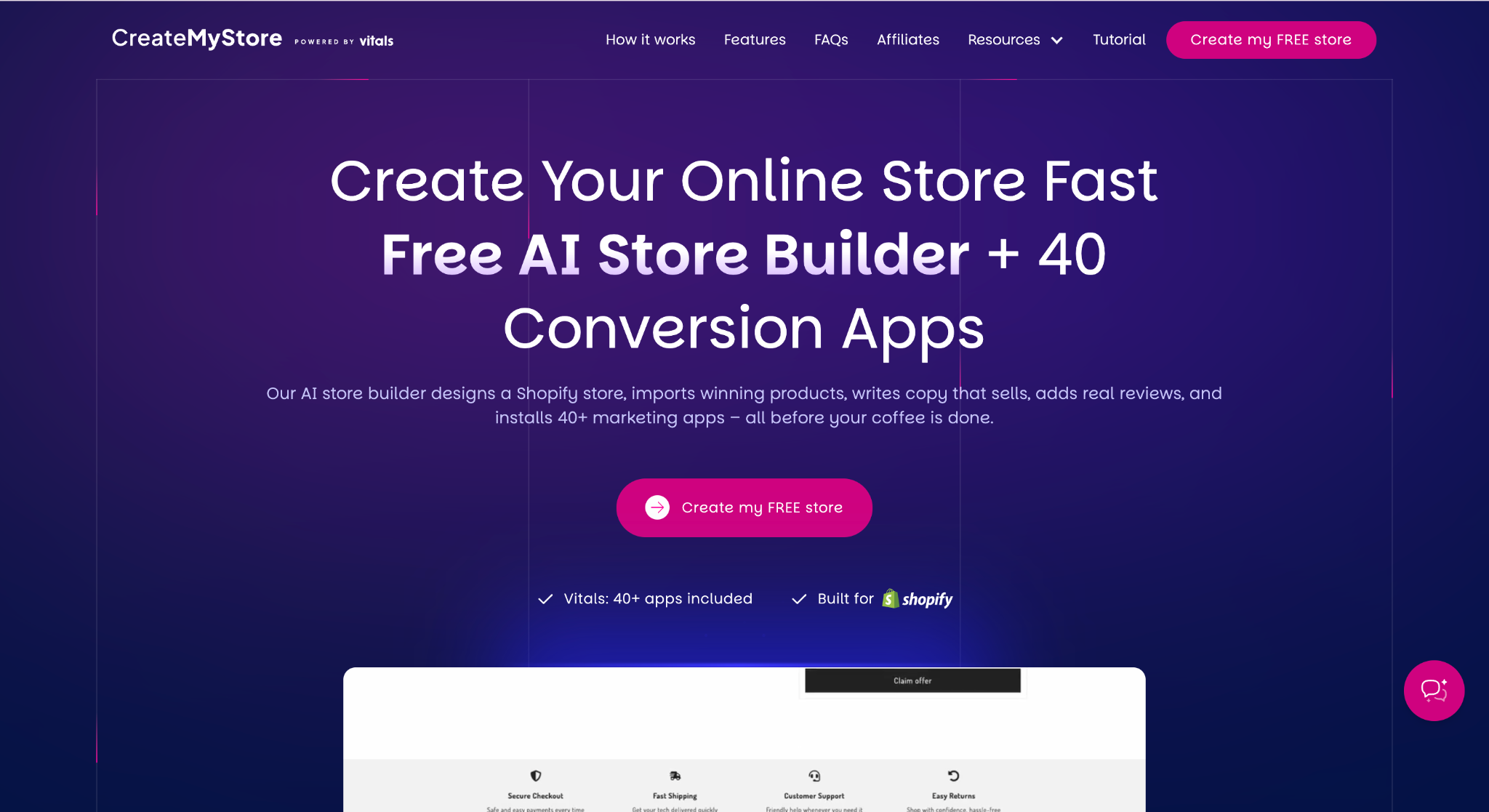
CreateMyStore sits at the intersection of speed and accessibility in the Shopify builder space. The platform uses AI to handle everything from store design to product page copy to logo creation, so merchants never touch a line of code. Users pick a niche and the tool builds a complete, product-stocked Shopify store from scratch. What makes that genuinely useful is the store is real and fully owned by the merchant (not a locked demo), with 40+ conversion-focused apps from Vitals pre-installed from day one.
Why Does CreateMyStore Stand Out for Shopify Store Builders?
Most builders hand merchants a blank theme and expect them to figure out the rest. CreateMyStore delivers a complete, live store with marketing infrastructure already built in. From what the research shows, that kind of end-to-end automation at zero cost is genuinely rare in the Shopify ecosystem.
What Users Are Actually Saying:
CreateMyStore is trusted by 30,000+ Shopify merchants, which is a signal worth paying attention to at this stage of the platform’s growth. The biggest draw, based on reviews, is how fast a store goes from niche selection to fully functional without needing a developer or a design background. Merchants consistently mention owning a real store, not a placeholder, as a major differentiator.
2. Replit – Best for Enterprise Software Development
How Is Replit Positioned in Its Market?
Replit is an online development environment built for teams that need to write, run, and deploy code without local setup friction. Founded in 2016, the platform supports multiple programming languages and bundles authentication, database, hosting, and monitoring into one place. Their AI Agent, released in 2024, writes production-ready code from natural language instructions. For ecommerce, that translates into faster custom build cycles for teams with technical staff who need expandable infrastructure without juggling separate services.
Why Does Replit Stand Out for Shopify Store Builders?
Replit removes the infrastructure headache for technical teams building custom ecommerce options by consolidating IDE, deployment, and AI code generation into a single environment. Reaching unicorn status at a $9B valuation with 35 million users is hard to dismiss. That kind of growth suggests the platform is solving a real problem at scale, not just adding noise to a crowded market.
What Users Are Actually Saying:
Replit’s enterprise customers report meaningful results (think $152,000 in annual cost savings for one client alone). Speed is the recurring theme across reviews: teams consistently highlight how much faster development cycles run compared to traditional setups. The Google Cloud Partner of the Year recognition adds a layer of credibility that solo developer reviews can’t fully replicate.
3. AppInstitute – Best for Small Business Mobile App Development
How Is AppInstitute Positioned in Its Market?
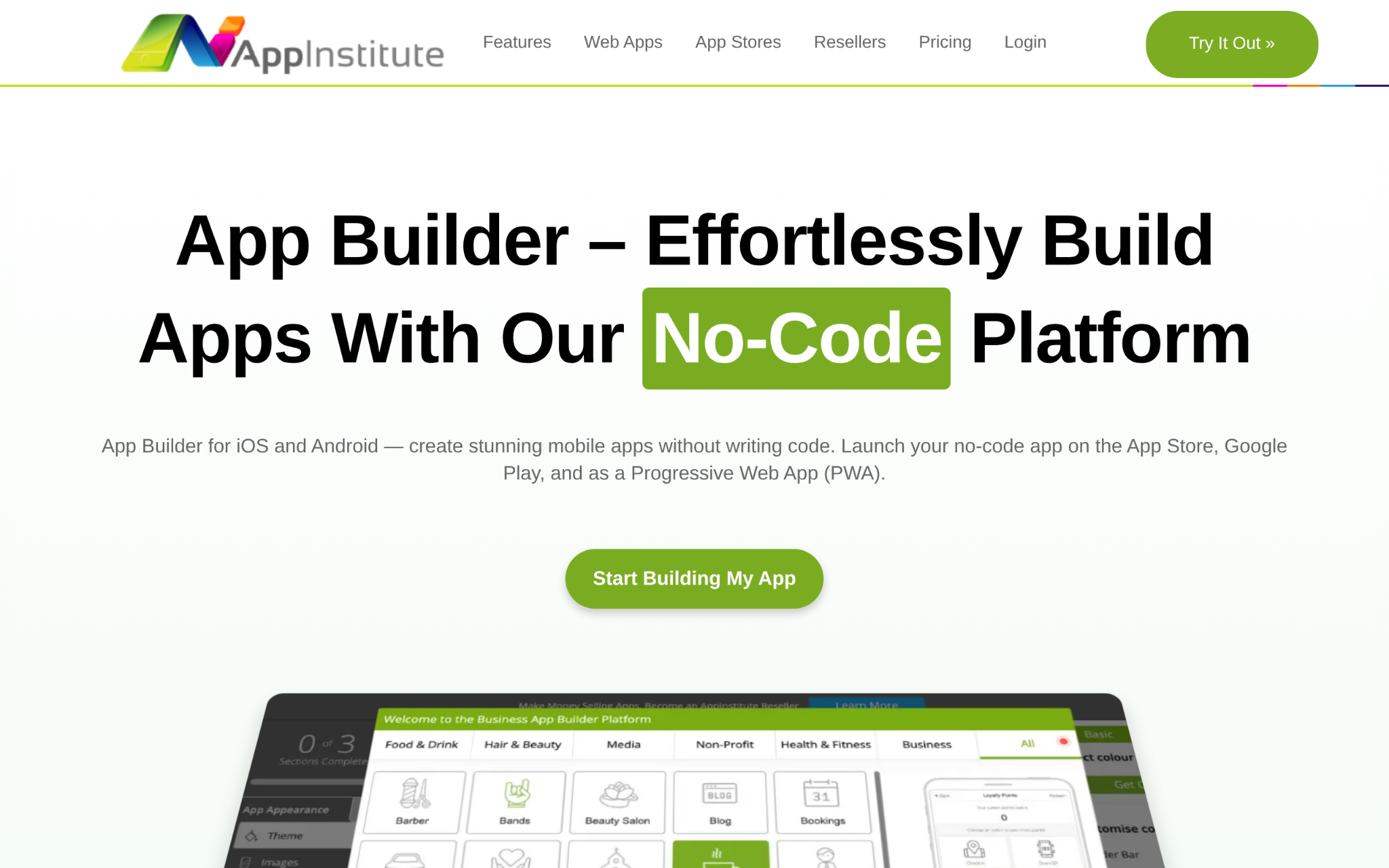
AppInstitute is a no-code platform that helps businesses build iOS and Android apps without developer involvement. Operating since 2011 out of Nottingham, UK, the platform serves over 150,000 businesses across 138 countries. Their drag-and-drop editor, industry-specific templates, and full app store submission support make it approachable for small business owners. For ecommerce merchants, built-in loyalty programs, push notifications, and e-commerce integration give a mobile storefront real functionality without the custom development cost (not cheap at $39/month, but the feature set justifies it for mobile-first stores).
Why Does AppInstitute Stand Out for Shopify Store Builders?
AppInstitute addresses the mobile gap that many store builders ignore, giving merchants a dedicated app channel for customer retention alongside their web store. That push notification capability alone can meaningfully cut cart abandonment rates compared to relying solely on email follow-ups.
What Users Are Actually Saying:
Feedback patterns point to ease of use as the standout quality, with small business owners regularly noting that app store submission support removes the most intimidating part of going mobile. The 30-day free trial gives merchants enough time to build and test before committing, and that earns real goodwill in user conversations.
4. Atlas – Best for Shopify Store Setup and E-Commerce Automation

How Is Atlas Positioned in Its Market?
Atlas is built for Shopify merchants who need a fast, functional store without assembling a stack of separate tools. Their AI Store Builder generates sales-ready stores using targeted market research rather than generic templates. Additional tools include an AI Page Builder, Bundler Upsells for product deals, and Cart Upsells that add personalized offers at checkout. The platform has processed over $60M in GMV with nearly $10M added monthly, and that growth trajectory is hard to ignore for a tool still in its early scaling phase.
Why Does Atlas Stand Out for Shopify Store Builders?
The problem Atlas solves is the post-launch gap where merchants have a store but no built-in way to increase average order value. Bundler and cart upsell tools sitting natively inside the same platform that built the store means merchants aren’t stitching together five different apps to do what Atlas handles in one place.
What Users Are Actually Saying:
A 4.9 Trustpilot rating across 264 reviews is strong, especially for a platform this young (early-stage credibility signals that most tools take years to build). Merchants appreciate the responsive 24-hour weekday support alongside the speed of store generation. The 30,000+ merchant mark in such a short window suggests Atlas is converting trial users into committed store owners at a healthy rate.
5. EcommDesign – Best for Ecommerce Design Inspiration and Shopify Store Development
How Is EcommDesign Positioned in Its Market?
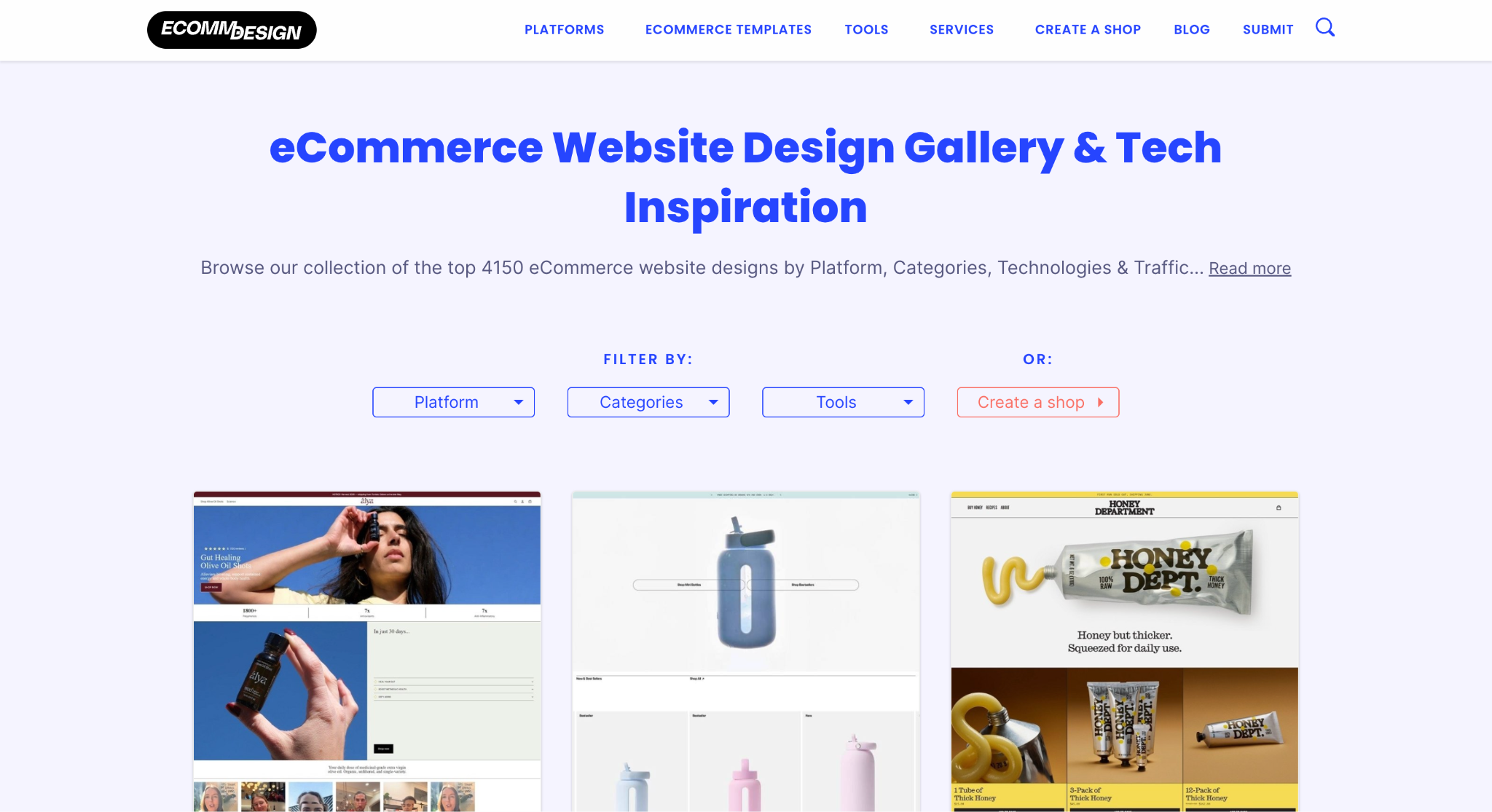
EcommDesign runs a curated gallery of over 4,150 real ecommerce store designs, organized by platform, category, technology, and store visitor data. Founded in 2016 by Bogdan Rancea, who brings 12+ years of digital commerce experience, the platform focuses on UX practices that drive actual purchase completions rather than aesthetic trends. Beyond the gallery, they offer custom Shopify store setup and development services, making them useful both as a research resource and a hands-on development partner for merchants who want expert guidance alongside the inspiration.
Why Does EcommDesign Stand Out for Shopify Store Builders?
Most design resources show pretty screenshots with zero context about what actually performs well. EcommDesign pairs visual examples with metrics and UX logic that connects design choices to real store outcomes. That combination of inspiration and practitioner-level knowledge is the kind of thing you’d normally need to hire a consultant to get.
What Users Are Actually Saying:
The platform earns consistent praise for the depth and organization of its design gallery, with merchants and developers alike returning to it regularly during store planning phases. The educational content (especially the blog covering platform strategy and ecommerce UX) is genuinely useful rather than filler, which keeps users engaged well beyond a single visit.
Research Methodology and Selection Process
Every article needs a method behind it, and this one is no different.
Gathering Your Data Sources
The longlist started with a broad sweep across multiple channels. Shopify app directories, third-party review platforms, ecommerce-focused forums, and curated agency directories all fed into the initial pool. Case studies published by the tools themselves, alongside independent write-ups from e-commerce practitioners, added context that platform pages alone can’t provide. The goal at this stage was breadth, pulling in any builder or platform with a meaningful presence in the Shopify ecosystem before narrowing down.
The Shortlist Cut
From that wider pool, options with thin public records or inconsistent feedback were removed early. Review patterns mattered more than raw ratings here. A platform with 15 reviews and a perfect score carries less weight than one with hundreds of reviews showing a consistent, honest pattern of strengths and tradeoffs. Platforms where user sentiment contradicted official claims were flagged for closer scrutiny before any final placement decisions were made.
Fact-Checking the Picks
Each shortlisted option was cross-referenced between what the official website claimed and what actual users reported in reviews, community threads, and case studies. Where discrepancies appeared, the user-reported experience took precedence. Metrics like merchant counts, GMV figures, and growth claims were checked against corroborating public sources before being treated as reliable. Any claim that couldn’t be traced back to a credible public record was left out rather than repeated as fact.
Authority Signals and Industry Standing
Beyond reviews, the research looked at signals that point to long-term credibility in the space. These included mentions in recognized ecommerce publications, platform partnerships with major technology providers, industry awards, and original research or data published by the companies themselves. A tool that shows up repeatedly in independent editorial contexts carries more weight than one that exists only in its own promotional materials.
Shopify Store Builders Track Record
The final filter focused on ecommerce relevance. Dedicated service pages for Shopify store building, verified case studies featuring actual merchants, and documented results tied to store performance metrics all contributed to final placement. Platforms that serve ecommerce as an additional use case rather than a main focus were weighed differently from those built for the Shopify merchant context. Real-world adoption numbers and merchant satisfaction signals carried the most weight in this final pass.
Picking the Right Shopify Store Builders for You
No single builder fits every merchant, and the right choice depends on where you’re starting from and where you’re trying to go. Here’s what to actually weigh before committing:
- Industry/Domain Experience: Look for builders that focus on ecommerce, not general website creation tools that happen to support a store feature. Shopify-specific experience means the tool understands product page structure, checkout flows, and conversion patterns that generalist builders often miss.
- Features and Service Offerings: Match the feature set to your actual needs. A solo merchant launching a first store needs automation and simplicity. A growing brand needs upsell tools, performance tracking, and flexible design options. Don’t pay for extras you won’t use.
- Pricing Structure: Free-to-launch options (like CreateMyStore) significantly lower the barrier to entry. Subscription tools like AppInstitute add ongoing costs, so factor that into monthly overhead before committing.
- Results Measurement: Good builders give you visibility into what’s working. Look for platforms that surface Web Vitals data, add-to-cart rates, and mobile-versus-desktop performance so you can act on what you see.
- Industry Knowledge and Compliance: Shopify Partner Program requirements and adherence to theme standards matter more than most beginners expect. A builder that stays current with Shopify’s platform guidelines keeps your store from running into issues at scale.
The Verdict
Launching a Shopify store without technical experience is genuinely achievable now, but the builder you choose shapes everything that follows. CreateMyStore handles the full setup automatically for beginners. Atlas adds post-launch conversion tools. EcommDesign brings design expertise and inspiration for merchants who want guidance. The right fit depends on your stage and goals. As AI-driven builders continue to mature, the gap between beginner stores and professionally built stores will keep narrowing.




