
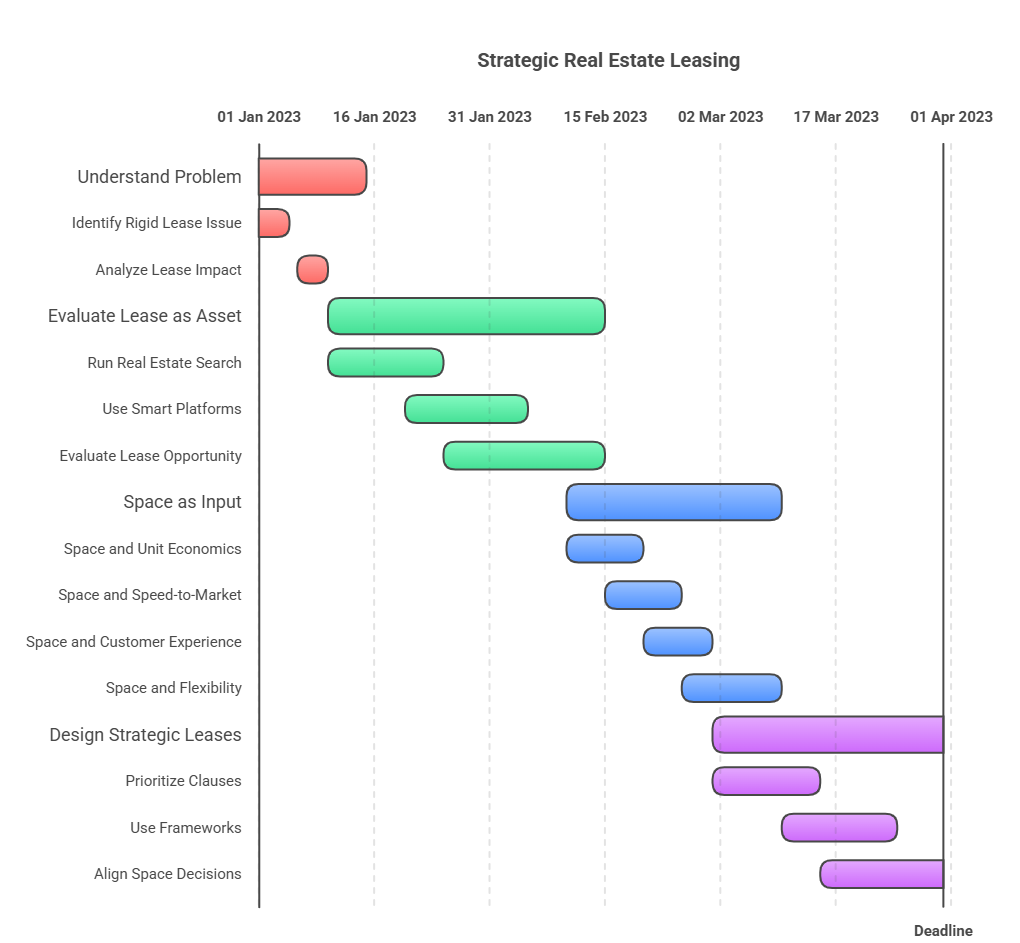
That experience is why I no longer treat real estate decisions as an administrative task—whether I’m weighing a sale, structuring a lease, or running a serious real estate search to find better options. I underwrite it like an operating asset, starting with how I run my commercial real estate search using smart platforms that surface better data, smarter comps, and real-time market context.
In a scalable business model, space is not just overhead—it’s an input into unit economics, speed-to-market, customer experience, and long-term flexibility. A well-designed lease can protect margins, absorb demand volatility, and make expansion smoother. A poorly structured one quietly compounds risk. In this article, I’ll show how I evaluate leases as strategic instruments, the clauses I prioritize, and the frameworks I use to align space decisions with growth. My goal is simple: help you design leases that support a scalable business model rather than constrain it.
The Direct Link Between Leasing and Unit Economics
Occupancy Cost Is a Margin Lever
Most teams anchor on base rent and miss the real number that matters: total occupancy cost. Rent is only one input. True occupancy cost includes CAM charges, property taxes, insurance, utilities, maintenance, janitorial, security, compliance upgrades, and—often overlooked—downtime between tenants or during buildouts. When I underwrite a site, I start with an all-in checklist:
- Base rent
- CAM charges and expense caps
- Real estate taxes and insurance
- Utilities and waste
- Repairs and maintenance obligations
- Compliance (ADA, life safety, zoning)
- Vacancy or transition downtime
- Tenant improvements amortized over the term
I once reviewed a “below-market” NNN deal that penciled at $18 per square foot. After CAM true-ups, a roof reserve, and a required fire-suppression upgrade, the actual number was closer to $26. That delta flipped the unit economics from healthy to fragile. The lesson stuck: occupancy cost is not an accounting detail—it’s a margin lever that compounds over time.
Revenue (or Productivity) Per Square Foot
Scalability depends on whether your space generates revenue or improves operational efficiency. For customer-facing businesses, I look at revenue per square foot as a gating metric. A medical clinic I advised could afford higher rent downtown because patient volume and payer mix pushed revenue density well above suburban alternatives. The site wasn’t cheap, but it scaled profitably.
For ops-heavy models—offices, warehouses, light industrial—I look at productivity per square foot. How many staff, orders, or workflows can the layout support? I once passed on a “bargain” warehouse because column spacing and dock layout would have forced a 20% productivity penalty. In both cases, site viability isn’t about price alone; it’s about how efficiently space converts into revenue or output.
Lease Structures That Enable—or Block—Scale
Gross vs. NNN vs. Modified Gross
Lease structure determines volatility, predictability, and long-term affordability. A gross lease offers cost stability but often comes with a higher rent. A NNN lease shifts operating risk to the tenant, exposing you to tax, insurance, and CAM spikes. A modified gross lease splits the difference by using expense stops or base-year resets.
My rule of thumb:
- Early-stage or cash-sensitive businesses ? favor modified gross for predictability.
- Stable, asset-light models ? NNN can work if you underwrite expense volatility.
- High-margin, premium-location strategies ? gross can make sense to simplify forecasting.
I advise founders to think of lease type as a risk-transfer decision, not a pricing decision. You’re choosing who absorbs volatility: you or the landlord.
Term Length: Flexibility vs. Stability
Longer terms usually buy lower rent but raise strategic risk. Shorter terms preserve agility but reduce leverage. My heuristic is to match the lease term to the level of demand certainty. If revenue is volatile or location sensitivity is unproven, I push for a 3–5-year term with renewal options. If demand is stable and buildout is heavy, I’ll consider 7–10 years—but only with exit valves and expansion rights. The goal is not the cheapest rent; it’s the best alignment between time horizon and business risk.
The Scalability Clauses Most Teams Miss
Expansion Rights, ROFR/ROFO
In-place growth is the cheapest growth. Expansion options, a right of first refusal, or a right of first offer can eliminate relocation risk and downtime. When I evaluate these clauses, I mentally price the “option value.” If adjacent space is likely to become available and demand is rising, I’ll trade a small rent premium for that right. It’s insurance against outgrowing your footprint at the worst possible time.
Assignment and Subletting (Your Exit Valve)
Transferability is your hedge against strategy shifts. I push for:
- Reasonable landlord consent standards
- Permitted transferees (affiliates, acquirers)
- Limits on recapture rights
- Broad sublease rights
- Flexibility in the assignment clause
If you need to pivot, sell, or consolidate locations, these terms determine whether you can exit gracefully or are forced into a value-destructive negotiation.
Rent Escalations and CPI Clauses
Small compounding differences matter. A 3% fixed rent escalation vs. CPI-linked increases can diverge dramatically over a decade. I prefer caps and collars on CPI rent to avoid inflation shocks. Think of it this way: a 2% vs. 4% annual bump doesn’t feel dramatic in year one—but by year eight, you’re paying materially more for the same box.
A Practical Framework: Match Leasing Strategy to Growth Stage
Stage 1: Prove Demand Without Overcommitting
At the proof-of-concept stage, I favor a flexible lease: a shorter term, sublease-friendly terms, and conservative tenant improvements. Picture a first retail location or a startup’s first warehouse. The goal is validation, not optimization. I’d rather pay slightly higher rent for optionality than lock into a long-term that assumes perfect execution.
Stage 2: Standardize the Playbook
Once demand is proven, I build a repeatable leasing playbook. I standardize:
- Term length and renewal options
- Tenant improvement approach
- Signage rights
- Permitted use clause
- Assignment and subletting language
I also created a simple underwriting memo template so each site is comparable. This discipline turns site selection into a system instead of a one-off decision.
Stage 3: Multi-Site Scale
At scale, leasing becomes portfolio management. I stagger maturities to avoid synchronized expirations and negotiate master terms across locations. I once worked with a brand that had five leases rolling in the same year. One market downturn later, they were forced into simultaneous renegotiations from a weak position. A portfolio leasing strategy should smooth risk, not concentrate it.
Lease Negotiation: The Trade-Offs I Make on Purpose
My Underwriting Checklist
Before negotiating, I quantify four things: demand certainty, relocation cost, volatility, and exit value. My checklist includes:
- Historical sales or traffic data
- Market rent comps
- Buildout cost and timeline
- Permitting risk
- Labor access and zoning
- Sublease market depth
- Expansion adjacency
- Guaranty exposure
This lease underwriting process tells me where I have leverage and where I should concede.
What I Push For vs. What I Concede
Negotiation is trading, not winning. I push for:
- Renewal options at pre-agreed terms
- Expansion rights
- Guaranty burn-off
- Reasonable assignment language
- TI flexibility
I’ll concede on:
- Slightly higher rent in exchange for options
- Longer term for heavier TI
- Simpler signage for better transfer rights
The lens is always tenant leverage for scalability. Every concession should buy future flexibility or margin protection.
Common Failure Modes
“Cheap Rent” Traps
The first trap is operational friction: poor access, low visibility, or inadequate utilities that slow throughput. The second is capex risk: outdated HVAC, roof, or electrical systems that become your problem. I’ve seen “cheap” deals implode under unexpected repairs. These hidden lease costs turn low rent into high total occupancy cost.
Buildout, Permitting, and Timeline Drag
Delays break growth plans and burn cash. I mitigate buildout risk with:
- Early permitting diligence
- Realistic timeline buffers
- Landlord coordination clauses
- Contingency budgets
- Clear delivery conditions
Speed-to-open is often more valuable than rent savings. A three-month delay can wipe out a year of concessions.
Conclusion: A Leasing Checklist for Scalable Decisions
Scalable businesses don’t stumble into good leases—they design them. When I step back, the thesis is simple: treat commercial real estate leasing as a strategic instrument for margin protection, flexibility, and repeatability. Space decisions shape your unit economics, your growth velocity, and your long-term optionality.
Here’s a commercial leasing checklist you can copy and use:
- Underwrite total occupancy cost, not just rent
- Match lease term to demand certainty
- Secure expansion rights and transfer flexibility
- Cap escalation volatility
- Standardize terms across locations
- Stagger maturities at scale
- Trade rent for options when it protects growth
If you remember one thing, let it be this: the best lease isn’t the cheapest one—it’s the one that still works when your business is bigger, faster, and more complex than you expected. Designing for that future is how you turn leasing into a true scalable growth strategy.