

HR has five new hires starting Monday, and your site needs their headshots by Friday. But your trusted photographer is booked. That scramble is common, so AI headshot tools that deliver studio-style portraits in minutes—and at a fraction of the price—are suddenly everywhere.
Yet veteran photographers still capture micro-expressions and brand nuance algorithms miss. Both methods promise the same outcome: a crisp, on-brand image that builds trust, but they differ dramatically in cost, speed, and shelf life.
The seven research-backed truths below reveal where AI wins, where humans win, and how to blend both. For a deeper checklist of pose, lighting, and attire, preview the standards in this guide to corporate headshots from Instaheadshots so you can judge every image with confidence.
Truth 1: A great headshot follows the same rules, AI or human
First things first: a headshot has one job. It tells the world, “Here’s who I am, trust me.” For the viewer, the origin, whether camera or algorithm, does not change that goal.
So we judge every portrait by one checklist. Is the face evenly lit? Are the eyes sharp? Does the background stay quiet so the subject shines? Suits sit straight, stray hairs stay tamed, and colors echo the brand. Miss one box and the photo fails, no matter how clever the tech is.
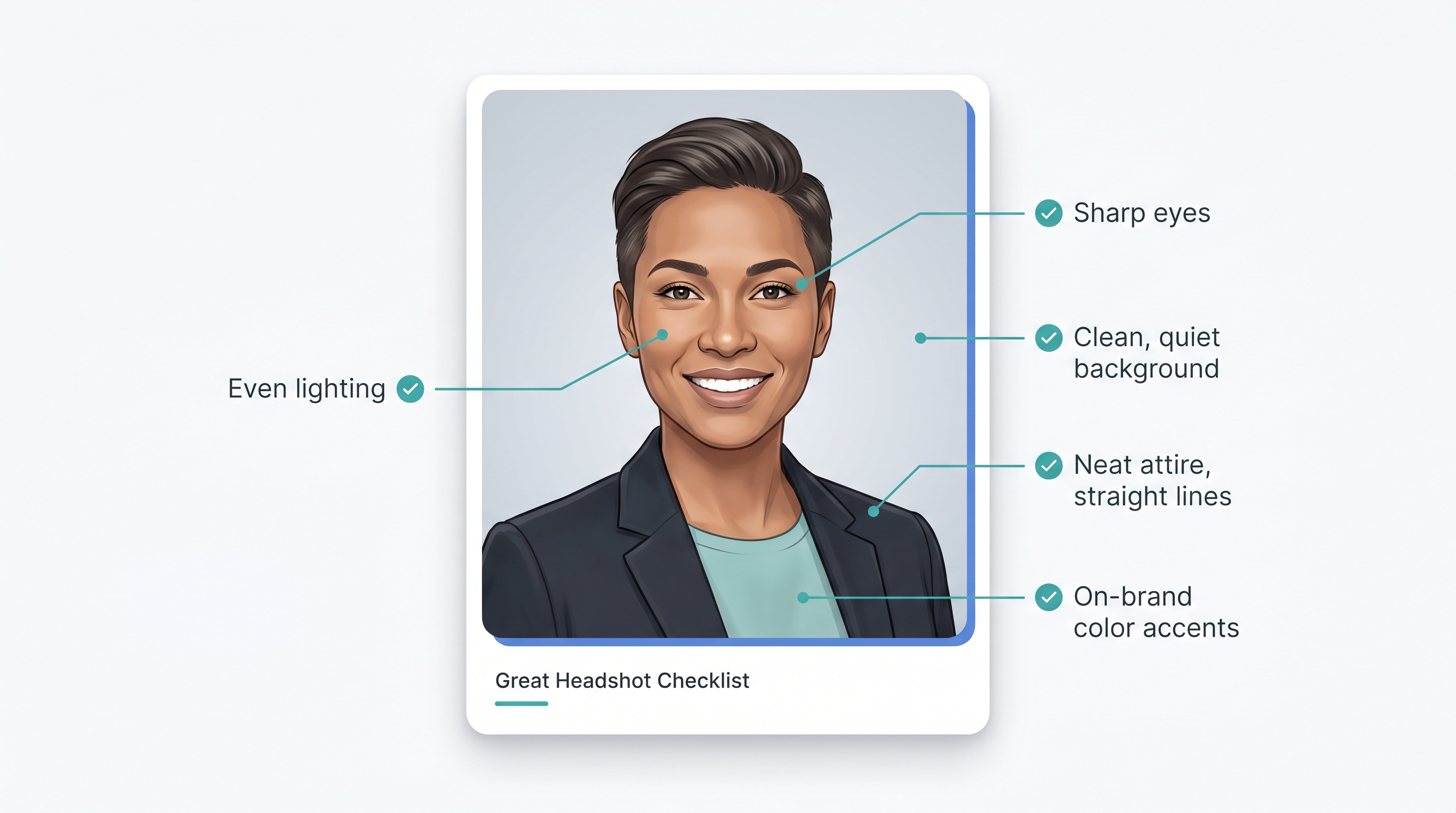
Seasoned photographers live by these basics, and quality AI tools learn from the same rules. That is why a polished AI portrait can pass a quick-scroll test on LinkedIn: it copies proven studio grammar.
Algorithms, however, cannot read a brand guide. They do not know your company prefers a soft teal backdrop or a three-quarter crop. Define that look before you launch an app or book a shoot and you raise the odds of success either way.
Standards come first, method second. When you nail the fundamentals, every image supports your credibility.
Truth 2: Cost favors AI, but read the fine print
Money talks, and on headline price AI speaks the loudest.
A typical headshot session with a U.S. photographer costs $200 to $400 per person (2025 HeadshotStudio survey). Add makeup, retouching, and the half-day your employee spends off the clock, and the bill rises quickly.
Launch an AI generator instead, and you pay $30 to $60 for a gallery of polished images, sometimes less during a promotion. Apply that saving to a 25-person team and the budget gap stretches from several thousand dollars to pocket change.
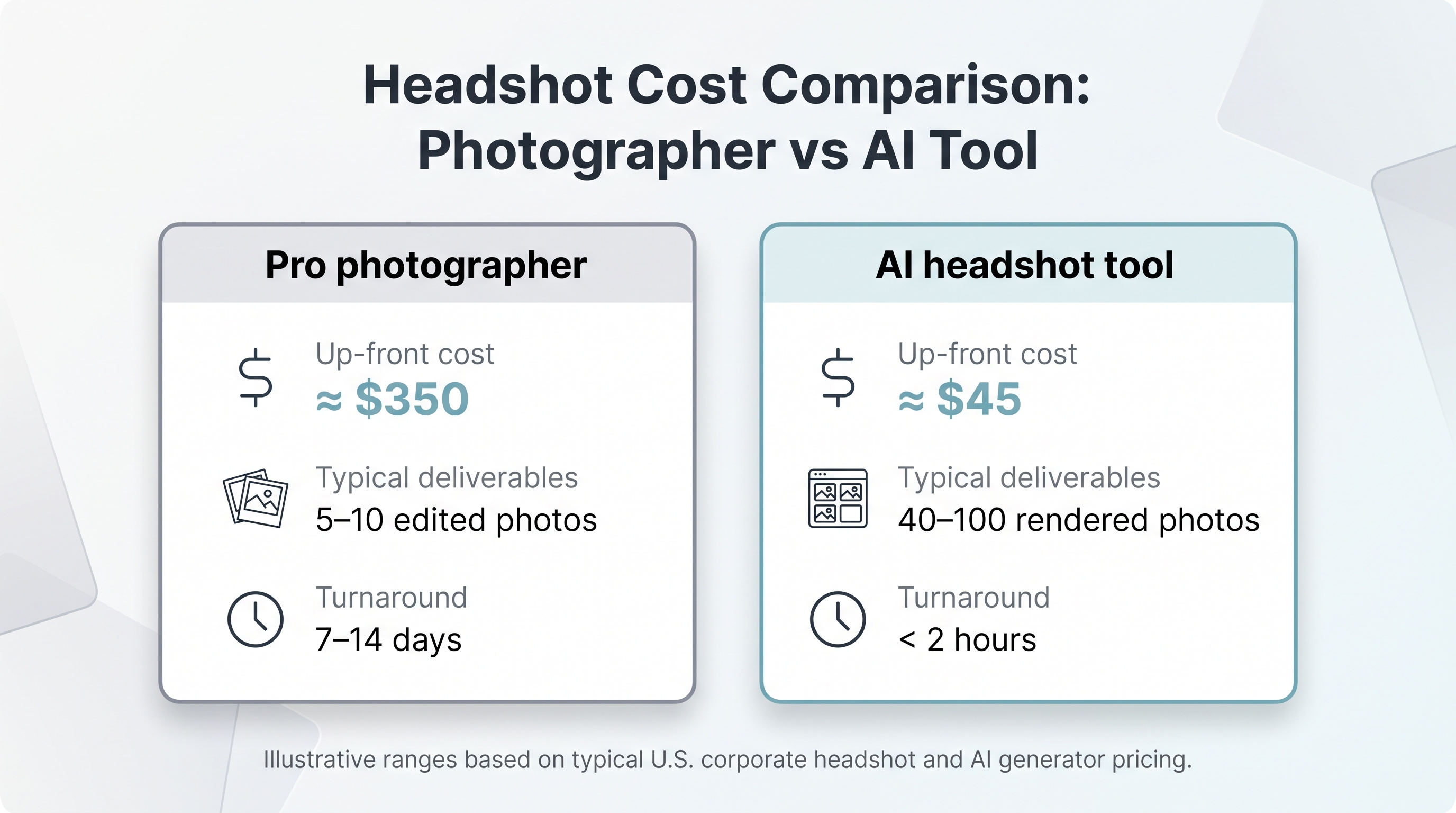
Here is how the numbers break down for one employee:
| Option | Up-front cost | Typical deliverables | Turnaround |
| Pro photographer | ? $350 | 5–10 edited photos | 7–14 days |
| AI headshot tool | ? $45 | 40–100 rendered photos | < 2 hours |
The difference is clear, yet price tags never tell the whole story.
A professional image can serve for three to five years. Many AI users refresh annually as the technology improves or hairstyles change. Three quick AI sessions still total less than $150, but the lifetime gap narrows.
Licensing tells another story. Photographers usually own the copyright and grant limited usage rights. High-visibility campaigns can add extra fees. AI platforms give you full commercial rights with no paperwork, eliminating future line items.
So yes, AI wins the sticker-price contest. Just count how long each image will serve, who controls the copyright, and how many headshots you need today, next quarter, and next year.
When you weigh those factors together, you will see where the real value lives for your team and your brand.
Truth 3: Speed, from click to ready in one coffee break
Time is the one resource no team can replenish.
Booking a photographer means comparing calendars, reserving studio space, and waiting days for edits. Even a “quick” shoot can slip into next week if an executive travels or the weather turns gray.
AI resets the rhythm. You upload a few clear selfies, pour a fresh cup of coffee, and by the time it cools every finished headshot sits in your inbox. Many platforms deliver full galleries in under two hours; some finish in as little as 15 minutes (2025 PixelPortraits benchmark).
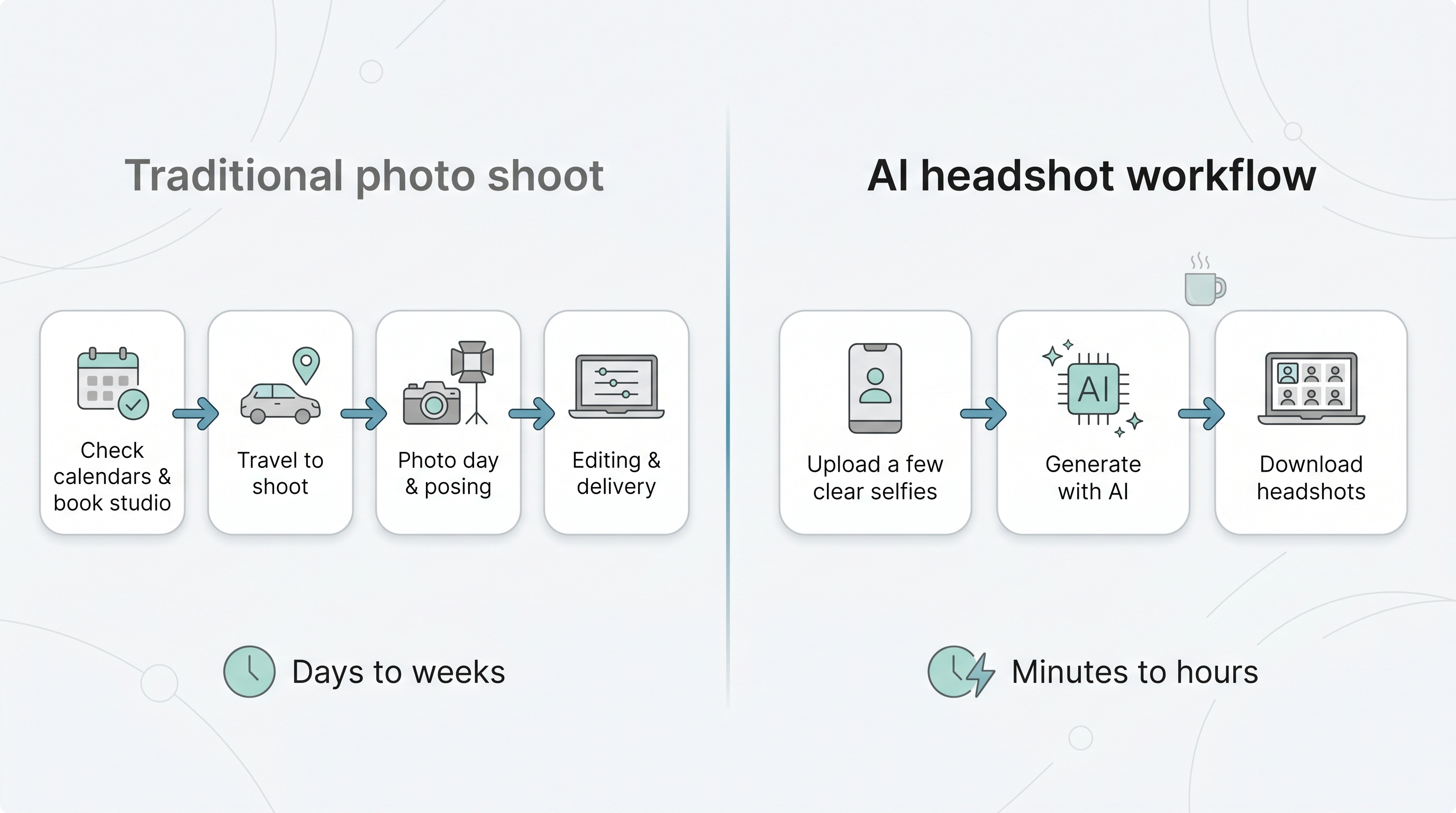
That instant payoff spreads downstream. New hires appear on the website before their first stand-up call. Press releases no longer stall for a portrait. Recruiters update LinkedIn the same afternoon they accept a speaking slot.
Remote teams feel the benefit most. No one drives across town or joins a rigid photo day. Every employee, whether in Atlanta or Auckland, follows the same five-minute flow and clicks publish.
A seasoned photographer can rush an edit if you pay priority fees, but the clock still ticks on travel, setup, and manual retouching. AI removes those delays, giving you speed on demand without the surcharge.
When deadlines loom, velocity earns goodwill with marketing, HR, and the talent you hire. Sometimes that goodwill matters as much as the photo itself.
Truth 4: Quality and realism, can pixels fake personality?
Scroll past a sharp AI portrait and your brain often nods “real enough.” That quick pass is no accident. Generators train on millions of studio shots, so they copy flattering lighting, crisp focus, and balanced skin tones with surprising accuracy.
A 2024 PetaPixel survey found that 76.5% of recruiters preferred the look of AI headshots in a blind test, yet 66% cooled once they learned the images were synthetic.
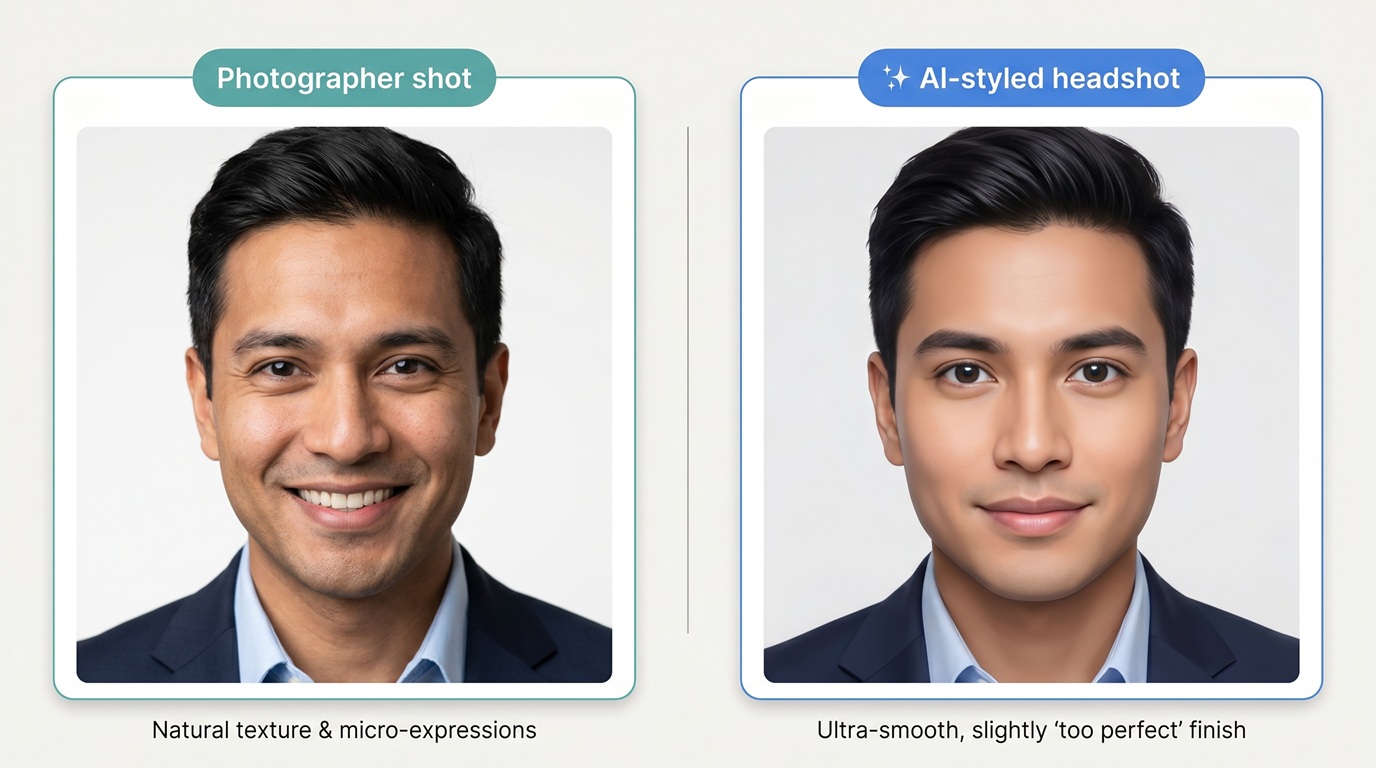
Visually, AI nails the basics: soft shadows, bright eyes, wrinkle-free backgrounds. What betrays the algorithm are the micro signs of life. A photographer can coax a half-smile that reaches the eyes, angle a chin to slim the jawline, or catch the split-second sparkle when someone laughs. AI blends best guesses from your selfies; it cannot read the room or your mood.
Resolution is another fork in the road. Most generators output 1024 × 1024 pixels—plenty for LinkedIn, thin for print. A 45-megapixel camera file leaves headroom for magazine covers and aggressive crops without losing detail.
Likeness matters too. Happy users say the AI version looks “like me on a good hair day.” Others spot plastic skin, mismatched glasses, or vanished freckles—tiny cues that erode trust when a client meets the real face on Zoom.
Ask yourself where the image will live and how closely it must mirror reality. For everyday profiles, AI often passes with flying colors. For investor decks, media kits, or any place where authenticity sells, a live photographer’s eye still captures humanity no code can clone.
Truth 5: Rights and privacy, own the image and guard the data
Copyright and data handling rarely make the sales page, yet they decide who can use the photo and where an employee’s face may end up.
With most photographers, the shutter button creates their copyright. You license the final JPEG for specific uses (website, LinkedIn, print ads). Large campaigns can add extra fees. AI flips the script. Services such as InstaHeadshots state it plainly: “You have complete commercial rights to your headshots.” No royalties, no renewals, no watermarks. Drop the file into slide decks, email signatures, or paid media without chasing permission.
The trade-off is trust. Uploads pass through a cloud server. Reputable tools delete files after processing, refuse model training without consent, and display security badges like SOC 2. Some free or bargain generators keep data indefinitely. Before you click Generate, skim the privacy page for two non-negotiables:
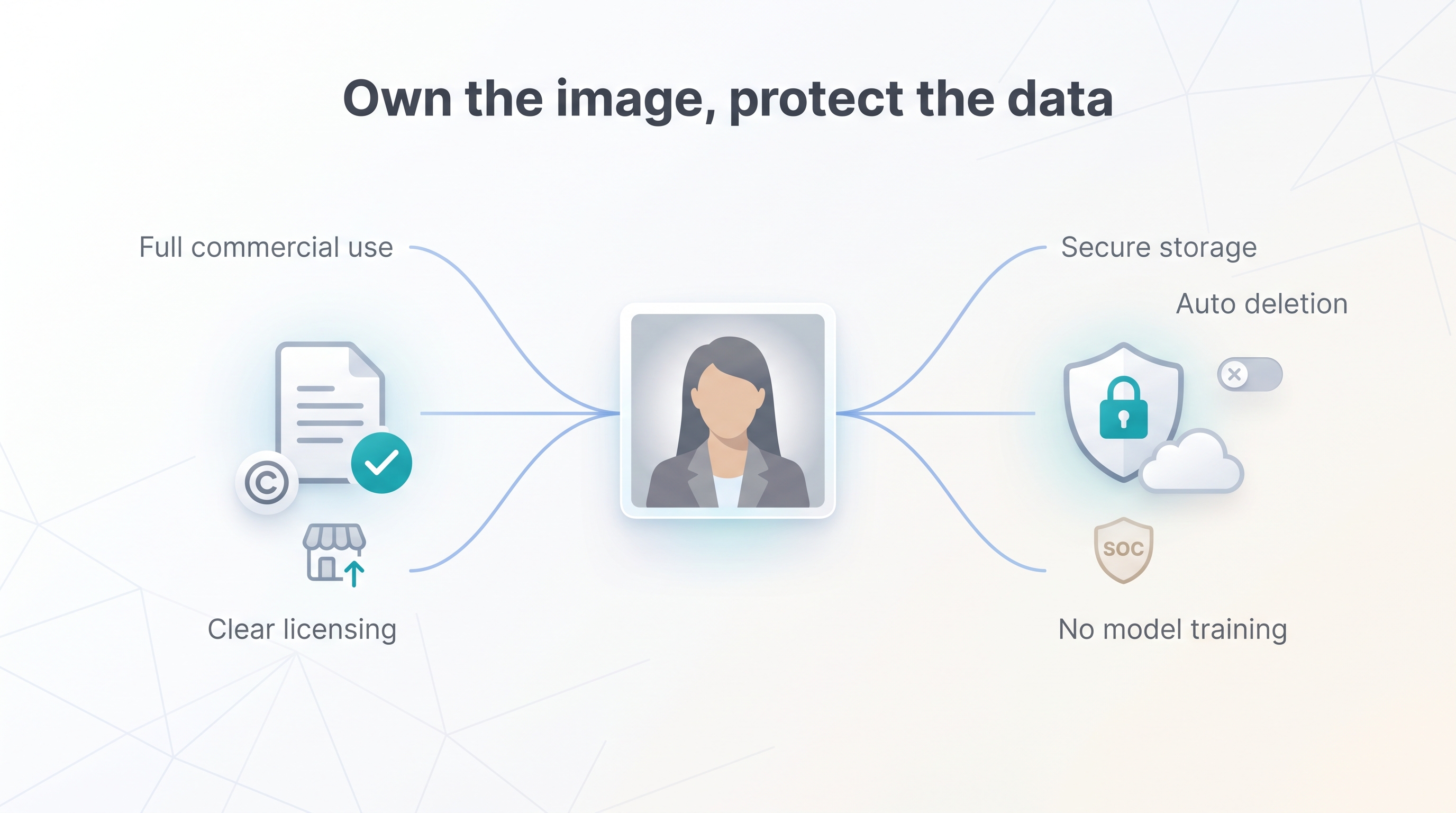
- Deletion window. Look for an automatic wipe (30 days is common) or a manual delete option.
- Training policy. Confirm that your selfies will not feed a public model.
Follow those checks and you keep the best of both worlds: full usage rights without giving up biometric data.
Truth 6: Scalability and consistency, one click for fifty faces
Coordinating headshots for a fast-growing team can feel chaotic. A single photographer works only when every employee can meet in the same room, on the same day, under the same lights. Remote staff break that spell, and so do new hires who start two weeks later.
AI thrives in this chaos. Give each person the same upload brief—six to eight well-lit selfies, neutral background—and select a preset that matches brand colors. Within minutes, everyone receives portraits with identical framing and backdrop. No travel, no reschedule emails, and no one waiting for “the next photo day.”
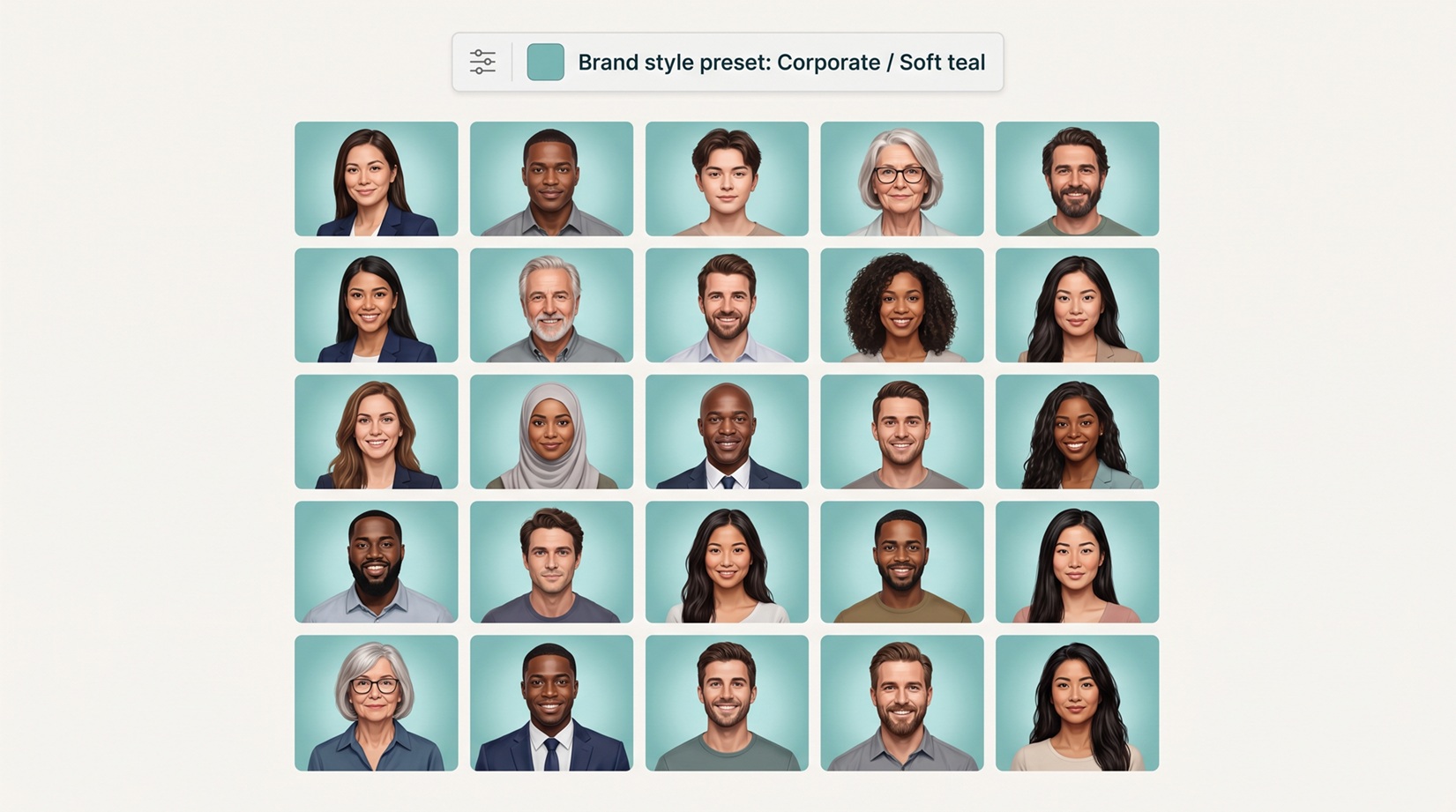
Consistency still needs a gatekeeper. If employees choose different AI styles, your About page becomes a patchwork. Avoid that by locking the preset, sharing a short style guide, and asking everyone to pick from the first batch of generated images.
Where AI stumbles is the group shot. It cannot place three real colleagues in one believable frame. When you need executives gathered around the conference table or the full team outside headquarters, a photographer earns the booking.
Think of it this way: for individual, repeatable headshots, AI scales like cloud storage—instant and everywhere. For human moments that happen only once, keep a human behind the lens.
Truth 7: Future-proofing and perception, today’s shortcut, tomorrow’s norm
AI portraits are no fad. Industry surveys show adoption climbed from 8% in 2021 to 58% in 2025 (2025 PixelPortraits report), and each new model erases another giveaway artifact. Within a year or two, spotting an AI headshot may feel like guessing which Instagram post used a filter—possible, but pointless.
That momentum matters for budget planning. Lock into a photo contract that renews every spring and you may pay premium rates while peers spend sixty dollars per upload. Rely only on AI and you face shifting etiquette. Recruiter polls already show most professionals like the polished look but still prefer disclosure when an image is synthetic. Transparency is becoming standard rather than optional.
Regulation is moving in the same direction. The EU AI Act and several state privacy bills call for labels on machine-generated media. A headshot that looks too airbrushed could soon earn an “AI” badge on social platforms. Choosing a realistic style now keeps you compliant later.
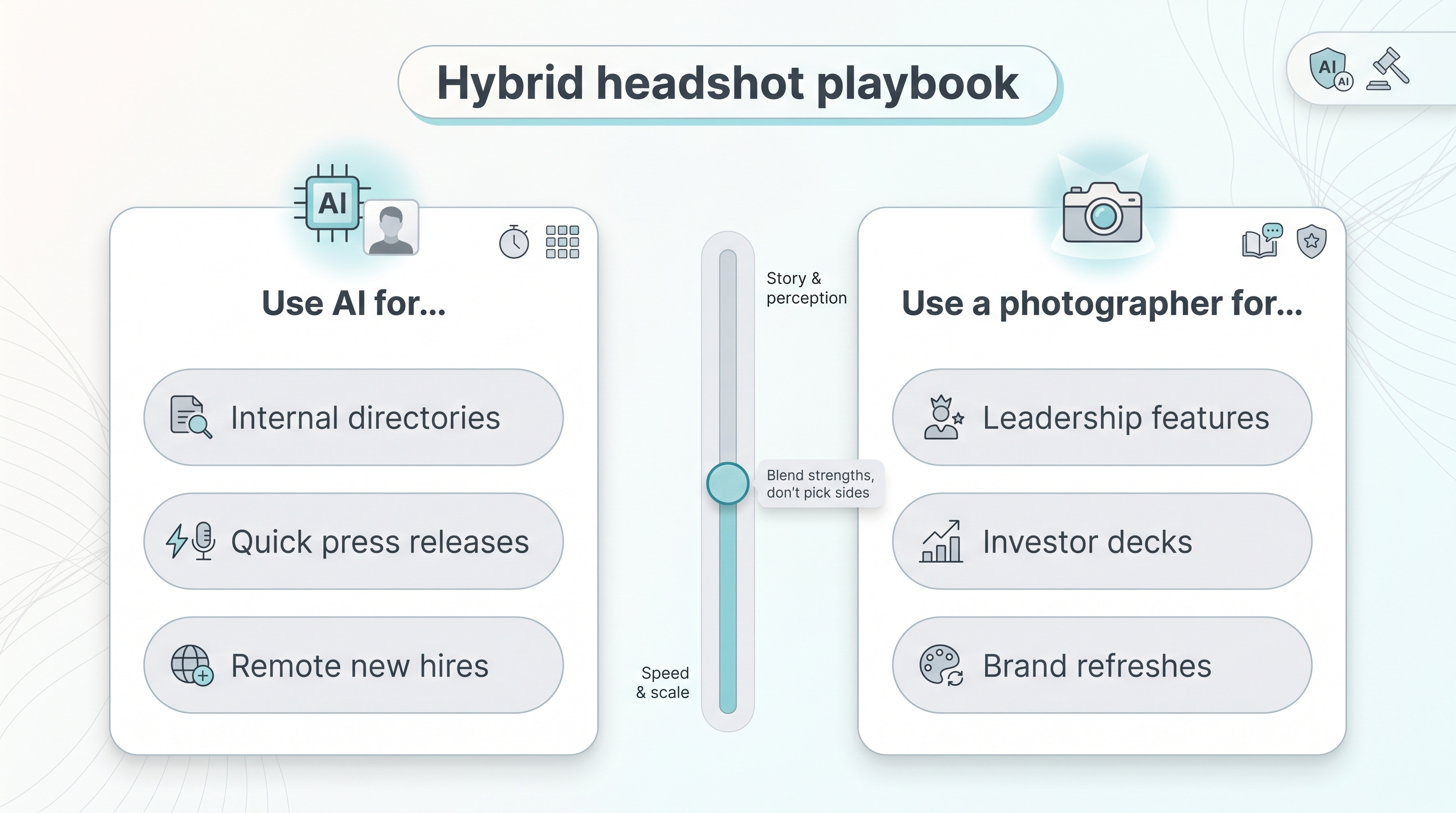
So what is the safest play? Blend the strengths. Use AI for rapid, low-stakes needs such as internal directories, quick press releases, and remote hires. Book a photographer when you need storytelling—leadership features, investor decks, or a brand refresh. This hybrid plan hedges against tech swings and perception shifts while keeping costs flexible.
Conclusion
In short, bet on progress but respect the optics. When every image appears flawlessly synthetic, the photo that shows a hint of genuine humanity may be the one that stands out.





