Fashion ecommerce does not break down because a brand lacks software. It breaks down when the tools behind product content, product pages, demand generation, fulfillment, and reporting do not work as one system.
That is especially visible in fashion. A shopper may decide whether to click from a product image, decide whether to trust a product page from its fit and sizing information, and decide whether to return an item after comparing the delivered product with the images that set the expectation. The tools a brand chooses shape all of those moments.
The right stack is therefore not a list of popular apps. It is a small set of tools that removes the next meaningful bottleneck in the customer journey. A new label may need a better way to create product images and collect emails. A growing brand may need clearer merchandising, repeatable ad creative, and return-reason data. A multi-channel retailer may need asset governance and reporting before it needs another design platform.
Here are eight ecommerce tool categories that fashion brands should evaluate, and the questions to ask before adding each one.
1. Product-visual production tools
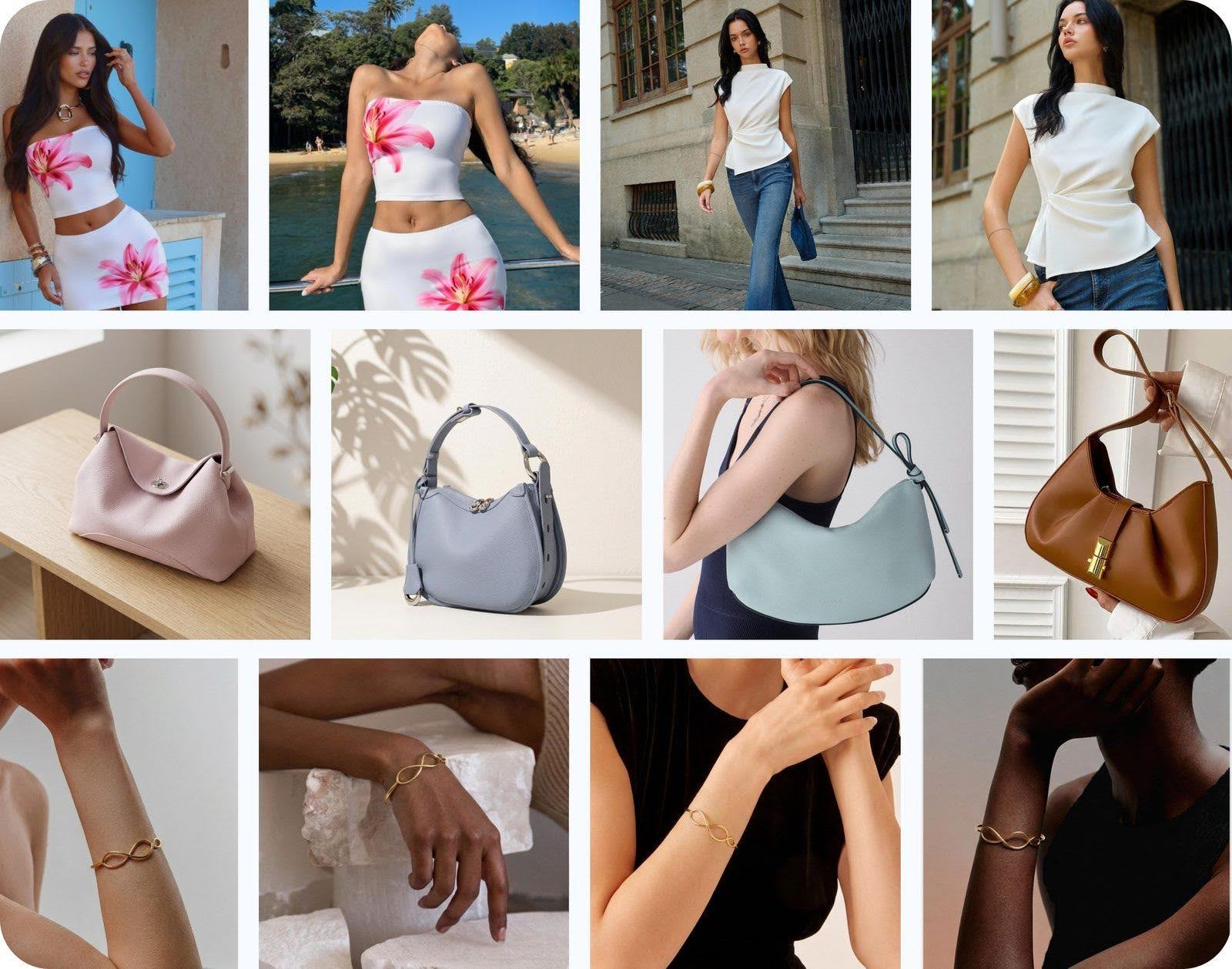
For fashion, product visuals are not just marketing assets. They are the closest equivalent to an in-store fitting-room conversation. They help a shopper assess shape, texture, color, styling, and the practical difference between two similar-looking products.
This category includes product-photography software, image cleanup, background removal, ghost-mannequin workflows, model or lifestyle visualization, color-variant tools, and image-to-video tools. A brand does not need every capability on day one. It needs a reliable way to produce the image types that its customers use to make decisions. For an example of an AI-assisted workflow in this category, see this fashion product-photography workflow, which shows how a small source set can be developed into product-ready visual assets.
Start by documenting the minimum image set for a typical SKU: a clear product view, detail images, a view that explains fit or scale, and any lifestyle asset that shows context without hiding the item. Etsy’s product-photography guidance offers a useful framework: different photo types communicate different product information, and shoppers need more than one angle to understand an item.
Visual-production tools should improve consistency, not make the item less truthful. Before publishing an edited or generated image, check fabric texture, logo placement, seam lines, hardware, and color against the original product. The best workflow makes the product easier to understand; it does not turn it into a different product.
2. Storefront and product-information tools
The storefront is where all the visual work either becomes useful or goes to waste. A polished campaign image cannot compensate for a product page that leaves buyers guessing about size, material, delivery timing, or the difference between variants.
For early-stage brands, a dependable commerce platform, mobile-friendly theme, payments setup, and product-information process are more important than an elaborate custom build. The practical test is simple: can a new shopper find a collection, understand the product, select the right variant, and complete checkout without extra help?
Fashion teams should pay close attention to product-page fields that reduce uncertainty:
- A size guide that matches the product category and market.
- Model measurements or fit notes where they add useful context.
- Clear material, care, and construction information.
- Variant names that are distinguishable in both text and images.
- Delivery and return information that is easy to find before checkout.
Storefront tools are not a substitute for clear imagery. They should organize and reinforce the evidence the images provide.
3. Search, collection, and merchandising tools
Fashion shoppers rarely arrive with a SKU in mind. They browse by style, occasion, color, size, season, fabric, or a problem they want to solve. Search and merchandising tools help a brand turn a large catalog into a collection that feels navigable.
At a minimum, the team needs clean product data and consistent tags. That allows shoppers to filter a collection by attributes that actually matter to them. A dress should not live only under “new arrivals” if a buyer also expects to discover it by length, sleeve type, occasion, or color.
More advanced tools can personalize ranking or recommend related products, but the fundamentals come first. Audit a collection on mobile and ask: can a customer understand what is available without opening twenty product pages? If the answer is no, improve product naming, filters, collection logic, and thumbnail consistency before adding personalization software.
For brands considering richer product exploration, Vizologi’s discussion of 3D product visualization as an ecommerce growth strategy is a useful internal read. Whether a brand uses static images, video, or interactive formats, the aim should be the same: make the product easier to evaluate before purchase.
4. Email, SMS, and customer-retention tools
Fashion brands launch new drops, restock popular sizes, run seasonal edits, and often depend on repeat customers. Email and SMS tools make it possible to communicate those events without relying entirely on paid reach.
The tool matters less than the events it can support. A practical starting set includes welcome messages, abandoned-cart reminders, back-in-stock alerts, post-purchase care or styling advice, and a clear preference center. Each message should use the same product visuals and terminology that appeared on the product page and in ads. A mismatch between the email image, landing page, and actual item creates distrust rather than retention.
Before adding complex automation, make sure the customer data is usable. Product names, variant IDs, inventory status, consent, and purchase history need to be reliable enough for the messages to make sense. A simple, accurate automation performs better than an impressive-looking flow that recommends sold-out products or sends the wrong size range.
5. Paid-social and creative-testing tools
Paid social can create demand quickly, but it exposes weak creative and weak product pages just as quickly. The most useful paid-media tools help a team make, organize, test, and learn from product creative across formats—not simply buy more impressions.
Create a small creative library for each launch: a product-led image, a detail-led image, a fit or styling visual, a short motion asset if relevant, and copy that identifies the customer or use case. This makes it easier to test a genuine hypothesis. For example, does a close-up of fabric detail earn more qualified clicks than a full look, or does a fit-focused visual reduce questions from first-time buyers?
Keep a record of the creative angle, product, audience, offer, and landing page for each test. Without those notes, performance reports only tell the team which ad won, not why it won. That makes the next campaign harder to improve.
AI-assisted visual tools can help a small team create enough variation to run disciplined tests. They should not be used to skip review. Every asset still needs to represent the actual product, respect brand standards, and match the destination page.
6. Review, service, and customer-feedback tools
Reviews and customer-service systems are operational tools, but they are also merchandising tools. They reveal where a product page is unclear, where a size chart is confusing, and where the images fail to set accurate expectations.
Look beyond the average star rating. Fashion teams should be able to group feedback around recurring themes such as fit, length, fabric feel, color, quality, or delivery. A review platform with photo reviews may also show how customers actually style an item, but those images should be moderated and clearly distinguished from brand product photography.
Customer-service tools should make it easy to tag repeated questions. If shoppers repeatedly ask whether a top is cropped, whether a color is warmer in person, or which size a model is wearing, the answer probably belongs on the product page. Feed those signals into product copy, visual briefs, and merchandising rules rather than treating support as a separate function.
7. Inventory, returns, and operations tools
Fashion margins can disappear through stockouts, fragmented size curves, return handling, and manual reconciliation. Inventory and operations tools are the category that turns customer demand into a product the business can actually deliver.
The best starting point is visibility. The team should know what is available by SKU and variant, which sizes are selling through, which items are at risk of stockout, and why customers return them. A sophisticated ERP is unnecessary if the underlying product data is inconsistent, so begin with a process that people can keep current.
Returns data deserves special attention. When return notes repeatedly mention color, fit, or a product looking different from expected, examine the relevant product images and descriptions alongside logistics data. The source of the issue may be a poor image, an unclear size guide, or a mismatch between ad creative and the product page. Fixing that information gap can be more useful than simply processing the return faster.
8. Analytics and workflow-governance tools
Analytics should help a fashion team decide what to improve next. A dashboard full of numbers is not useful if no one can connect a spike in returns to a sizing issue, a strong conversion rate to a clearer image set, or an ad result to a specific creative choice.
At a minimum, connect storefront performance, product data, marketing activity, and return reasons in a recurring review. Track a few decision-oriented measures: approved visual assets per launch, time from sample to live listing, conversion by product or collection, repeat purchase, return reasons, and the performance of different creative angles.
Workflow governance is part of this category. Someone should own final product-image approval, someone should own product data quality, and the team should know which file is the current source of truth. That can be managed with a dedicated digital-asset platform, a project-management system, or a disciplined shared workspace. The essential point is traceability: a product image should be connected to the correct SKU, approved version, and live sales channels.
Google’s image SEO guidance also reinforces this operational discipline. Descriptive filenames, useful alt text, responsive images, and efficient delivery make assets easier for both shoppers and search systems to understand. They are not decorative technical tasks; they are part of publishing product content well.
How to choose the right stack without overbuying
The safest way to build a fashion ecommerce stack is to start with the bottleneck, not a vendor category. Ask these three questions before adding a platform:
- What customer or team problem does it solve today? Be specific: “We cannot publish consistent images for new drops fast enough” is a real problem. “We should use more AI” is not.
- What information or workflow will it need from us? A tool can only work well if product data, source images, permissions, and ownership are clear.
- How will we know it helped? Define one or two measures before purchase, such as faster listing creation, fewer fit questions, improved asset approval rates, or fewer returns caused by expectation mismatch.
Start small. Choose one collection or ten representative SKUs, run the proposed workflow, and record what still requires manual work. That pilot will expose the gaps that demonstrations hide: missing source images, unclear approvals, inconsistent variants, or tools that are difficult for the team to adopt.
Build around customer confidence, not software count
The strongest fashion ecommerce stack is not necessarily the most automated one. It is the one that helps a customer see the product clearly, find it easily, trust the information around it, and receive what the listing led them to expect.
Visual production, storefront merchandising, lifecycle messaging, creative testing, operations, and analytics reinforce one another when they share accurate product information. Improve that foundation first, then add tools as the next bottleneck becomes clear.
The final selection should be based on the brand’s catalog, team capacity, channels, and quality-control process—not on the longest feature list.