Here is how most people find out their logo does not work on a cap.
They upload the artwork, pick a hat, place the order, then get an email saying the design needs simplifying. Eight colours, a gradient through the middle, thin lettering. On screen it looks great. In thread it is a problem, because most suppliers cap you at around six thread colours, and thread cannot do gradients at all.
General supplier lists skip this. They treat stitching as a checkbox next to printing, when it is a different process with its own limits and costs. This comparison looks at what actually differs: the methods each supplier runs, the colour limits they impose, how fast they produce, and who does the work.
Five specs that decide what you pay
Thread colour ceiling
Most suppliers work from a fixed palette and cap you at around six colours per design. Six from a palette of fifteen is close to an industry standard, used by Printful and Gelato among others. Some offer a premium process that lifts the ceiling. This single spec decides whether your logo goes on as drawn or gets redrawn for you.
Digitising
Your artwork gets converted into a stitch file before anything is sewn. Some suppliers do this free and automatically, some charge, some expect you to supply the file. It is the cost people forget to ask about.
Design area and stitch count
Hats offer less usable space than shirts. CustomCat limits headwear decoration to roughly four inches by 2.4 inches, smaller than its apparel area, because caps need special handling on the machine. Bigger and denser designs cost more everywhere.
How many hat models are actually stitchable
A supplier with hundreds of products might embroider a fraction of them, and premium stitching usually runs on fewer still. Count the hats you can decorate, not the catalogue total.
Who does the work
Some companies produce in their own facilities. Others route your order to a partner in a network. That affects consistency and turnaround more than the feature list does.
The methods, and what suits each
Flat stitch. The standard finish on most caps and beanies. Clean for logos and lettering, cheapest, most colour restricted.
3D puff. Foam under the stitching lifts the design off the hat. Popular on truckers and snapbacks. Needs bold, simple artwork, because detail collapses once raised.
High detail or unlimited colour stitching. A premium process that lifts the colour cap so multicolour artwork survives. Fewer models support it and it costs more per unit.
Patch application. A patch made separately and sewn on. Often cheaper than stitching a complex logo directly, and it gives a clean edge.
Printed methods. Direct to film and all over sublimation. Not embroidery, and that is the point. If your artwork is photographic or runs edge to edge, printing is the right tool.
The same logo under three different limits
Take that eight colour logo and run it three ways.
Redrawn for standard stitching. You flatten the gradient, merge the nearest colours, land on six. It looks good, costs least, and is no longer quite your logo. Fine when the shape reads from across a room.
Run on an unlimited colour process. Gradient survives, detail holds, artwork goes on as designed. You pay more and choose from a smaller set of hats.
Moved to printing. Full colour, sharp detail, no thread limits. You lose the stitched texture that makes a cap feel premium, which for some brands was the entire reason for wanting embroidery.
None is wrong. Knowing which you are choosing before ordering saves the back and forth.
The seven at a glance
| Supplier | Methods | Colour limit | Production | Fulfilment |
| Printful | Regular and unlimited colour stitch, DTFlex, sublimation | 6 of 15, or unlimited | Not published | Own facilities, multiple regions |
| Apliiq | Stitching, patches, DTF, labels | Not published | About 5 working days | Own facilities, LA and Philadelphia |
| Gelato | Stitching and printing | 6 of 15 | Varies by partner | Partner network, 32 countries |
| CustomCat | Stitching on selected hats | Not published | Art review 24 to 48 hours | Own facilities, US |
| Inkthreadable | Stitching and printing | Not published | About 3 to 5 days | Own facility, UK |
| Printify | Stitching via print partners | Varies by partner | Varies by partner | Partner network |
| The/Studio | Custom stitching and patches | Quote based | Quote based | Quote based |
The seven suppliers
These are not ranked in order of preference. The right one depends on your artwork and where your customers are.
1. Apliiq
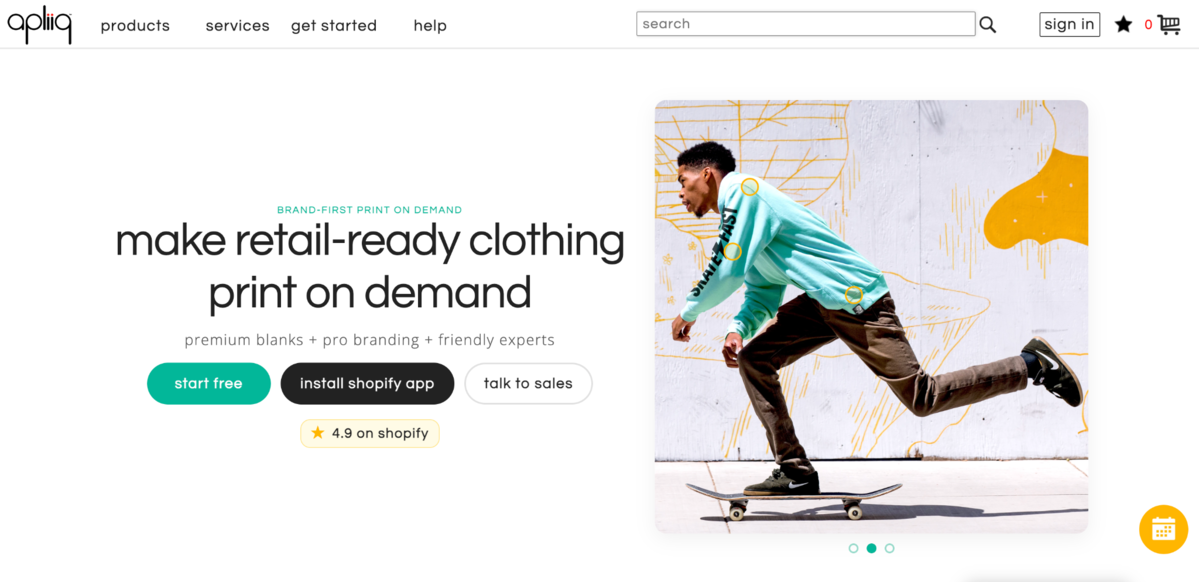
A US company built around decoration rather than catalogue size, producing in Los Angeles and Philadelphia so both coasts get served quickly. Alongside stitching it offers DTF printing and patch application, which matters when your logo is too complex to stitch cleanly. Hats typically produce and ship within about five working days, with rush available. Blanks include Richardson, Otto and Nike. No minimum on hats, though custom embroidered patches carry a fifty patch minimum, worth knowing before you plan a patch range. Integrations are narrower than most, centred on Shopify.
Best for: brands whose logo works better as a patch than as direct stitching.
2. CustomCat
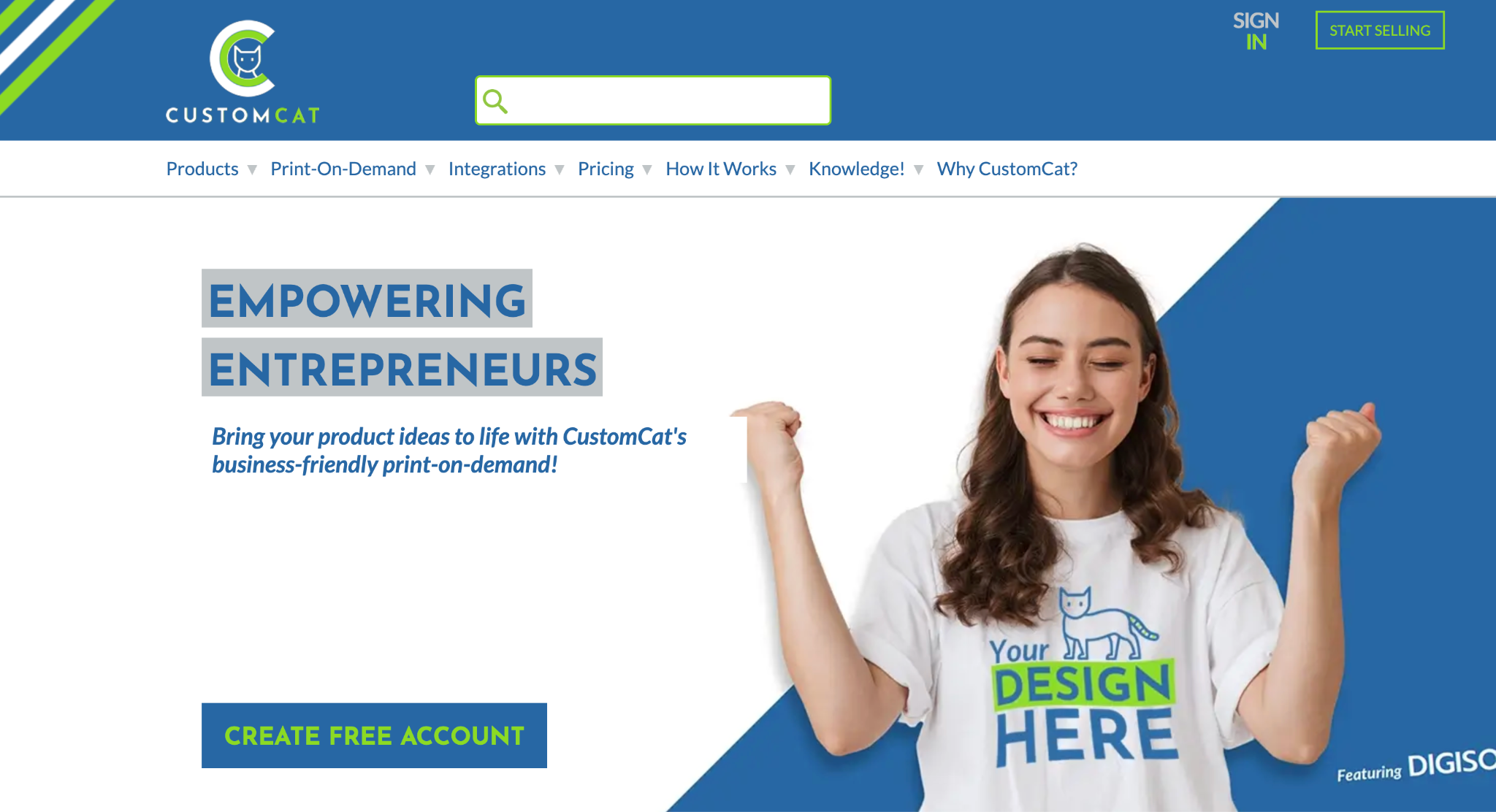
A long established US supplier producing in its own facilities, with stitching on a selected range of hats. Headwear decoration is limited to roughly four inches by 2.4 inches. Artwork is reviewed within 24 to 48 hours and you only hear back if there is a problem. Photographs are generally rejected outright at the digitising stage, so do not plan around them. Integrations cover Etsy, Shopify and WooCommerce, with an API available.
Best for: US sellers wanting low per unit costs on simple stitched logos.
3. Printful
Printful handles production and shipping directly through its international fulfillment centers, and it runs four decoration methods under one account. Regular embroidery works to the usual six colours from a palette of fifteen. Unlimited colour embroidery removes that ceiling and runs on more than twenty hat models, including caps, beanies and bucket hats. DTFlex handles photo realistic graphics and all over sublimation covers cut and sew styles. The catalogue spans trucker, bucket, snapback, dad hats, beanies, baseball caps and visors, using blanks from Richardson, Yupoong, Otto Cap and Flexfit, with live pricing and a quote shown for every style.
You design in the free custom hat maker, uploading a logo or artwork, adding text and previewing it on the hat before ordering. There is no minimum at any stage, so you open the catalogue, pick a hat, apply the design and order, and one sample is as valid an order as a full run. Volume pricing starts at twenty-five units, with savings of up to 55% on larger orders.
Best for: anyone whose artwork will not survive a six colour cap, or who wants one hat before committing.
4. Gelato
A network producing locally across 32 countries, which keeps delivery fast and shipping sensible almost anywhere. Embroidery covers caps, beanies, bucket hats, truckers and snapbacks, using a fixed palette of fifteen threads with up to six colours per design. Gelato is refreshingly direct that thread cannot reproduce gradients, fine linework or photographic detail, which saves you finding out the hard way. No minimums, free to use, and integrations cover Shopify, Etsy and WooCommerce. The trade off is the network model: your hat is made by a nearby partner rather than by Gelato itself.
Best for: stores selling internationally where local production matters most.
5. Inkthreadable
A UK supplier stitching in its own facility, the obvious answer if your customers are British or European. Production runs around three to five days before shipping worldwide. Cap styles cover trucker and mesh, snapbacks, baseball, dad caps, low profile and five panel, with Flexfit and Yupoong among the blanks. No minimums. A reward pricing tier system earns up to 10% off as volume grows. Integrations include Shopify, Squarespace, Etsy, Wix and TikTok. Sustainability is a genuine focus rather than a marketing line, covering packaging, inks and waste.
Best for: UK and European stores where domestic fulfilment beats catalogue breadth.
6. Printify
Printify produces nothing itself. It connects you to a network of print providers, and your hat is made by whichever you pick. That is a real strength on price and geography and a real risk on consistency, because two providers offering the same product can deliver noticeably different results. Embroidery availability and colour limits vary by provider, so read the individual listing rather than the platform page. Free plan available, paid plan buys better rates, integrations are extensive.
Best for: sellers willing to test providers to find the right combination.
7. The/Studio
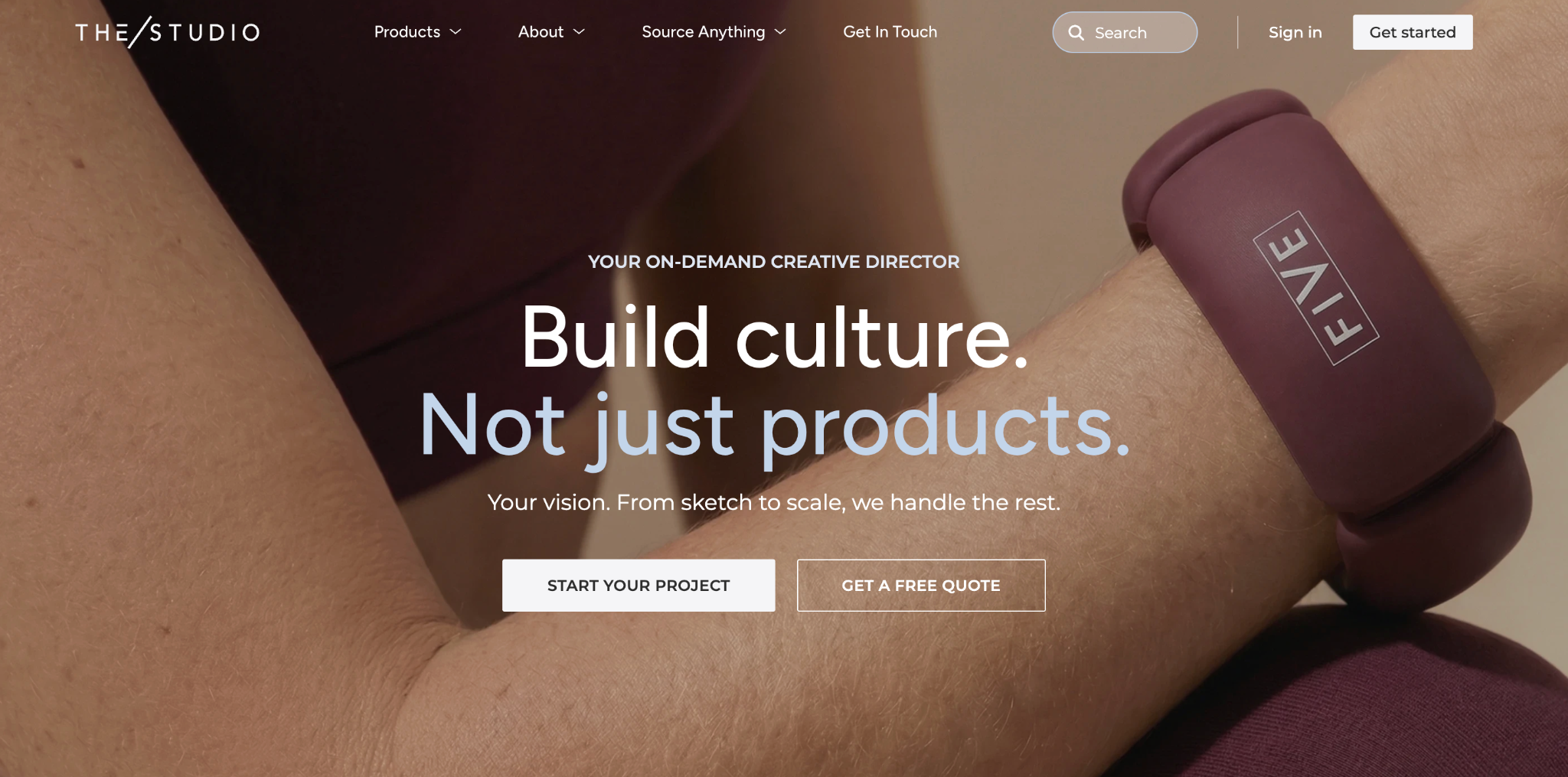
A headwear and accessories specialist rather than a general platform. Custom stitching and patches are the core offer and customisation goes deeper than anywhere else here, down to hat construction rather than just decoration. The catch is the model. It makes your hats and ships them to you, so there is no store integration and no fulfilment to your customers. Everything after production is yours.
Best for: brands wanting genuinely custom headwear who will handle their own fulfilment.
Picking the one that fits
Simple one colour logo, small runs. Everyone here handles this, which makes it the easiest starting point for a new printing business testing demand for hats. Decide on fulfilment location and blank quality instead.
Detailed or multicolour logo. You need a supplier offering a process that lifts the colour cap, or you redraw to fit six. Decide which before ordering.
Photographic artwork. Stop looking at embroidery. Printing will serve you better and cost less.
Bulk for a team or event. Compare discount thresholds rather than headline prices. Where savings start varies a lot, and so does how steeply the curve drops. If you are receiving a bulk run yourself and posting hats out individually, factor in packaging too, since free shipping supplies can quietly save you more than a slightly better unit price.
Frequently asked questions
How many thread colours can a hat logo have?
Six from a fixed palette is close to standard across suppliers. Some offer a premium process that removes the ceiling, letting multicolour artwork go on as drawn. On a small cap panel, a few bold colours usually read better than many subtle ones anyway.
Do these suppliers have minimum orders?
Generally no. Ordering a single hat is normal across print on demand, which makes sampling before a launch practical. Watch for exceptions on specific services though, since custom patches sometimes carry their own minimum even where hats do not.
Can you put a photograph on a hat?
Not with thread. Stitching cannot reproduce photographic detail or smooth gradients, and some suppliers reject photo artwork outright at digitising. Use a printed method like direct to film or sublimation instead.
How long does production take?
Typically three to seven working days before shipping, depending on the supplier and whether artwork needs review. Suppliers with their own facilities tend to be more predictable than network platforms, where timing depends on which partner takes the order.
Final thoughts
The supplier decision matters less than the artwork decision.
Almost every company here will stitch a clean logo onto a decent cap and ship it without drama. What separates them is what happens when your design will not fit inside six colours, or when your customers live somewhere the supplier does not produce. Work out your colour count and delivery geography first. The shortlist gets short very quickly after that.