
Managing local search presence for a single location is straightforward enough that most businesses handle it manually without much friction. One Google Business Profile, one set of hours, one stream of reviews to respond to — the workload is contained. The moment a business opens a second location, then a fifth, then a twentieth, the math changes entirely. What was a manageable weekly task becomes a coordination problem that scales with every new address added to the portfolio.
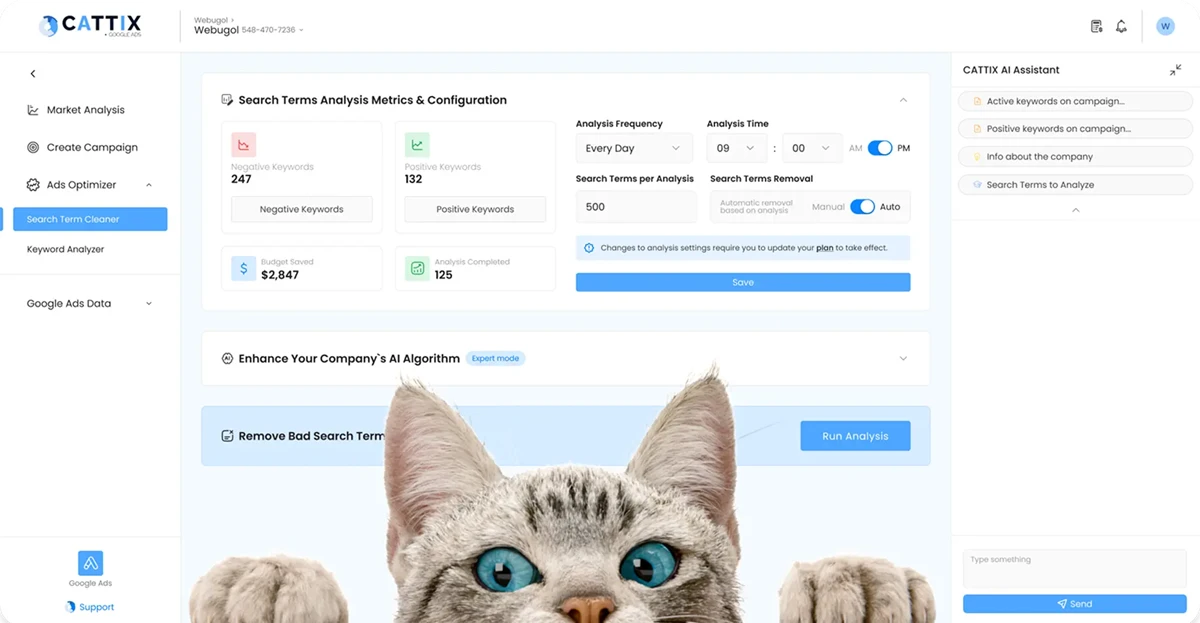
This is where local SEO automation stops being a convenience and starts being an operational necessity, and where CATTIX provides a systematic answer to a problem that manual workflows simply cannot solve at scale.
The Hidden Cost of Inconsistent Local Presence
Before getting into what automation does, it helps to understand what happens when local SEO is managed manually at scale, or not managed at all between busy periods.
Google’s local ranking algorithm weighs several factors when deciding which businesses appear in local search results and map packs. Proximity matters, but so does relevance and prominence, and prominence is built through signals that require consistent activity over time. A profile that goes weeks without new posts, accumulates unanswered reviews, or carries outdated information sends weak signals regardless of how well-optimized it was at launch.
For multi-location businesses, the specific gaps that appear most often under manual management include:
- posting schedules that hold for the flagship location but slip for secondary ones;
- review response rates that drop during busy periods and never fully recover;
- business information that drifts out of sync across locations after hours changes, service updates, or rebranding;
- optimization gaps in categories, service areas, and profile attributes that no one audits systematically;
- inconsistent photo freshness across the portfolio, with some locations updated regularly and others unchanged for months.
The cost is real even when it is invisible. A location that ranks third instead of first in local results captures meaningfully less traffic than it would otherwise. Multiplied across dozens of locations and months of time, that gap adds up.
What CATTIX Local SEO Automation Actually Covers
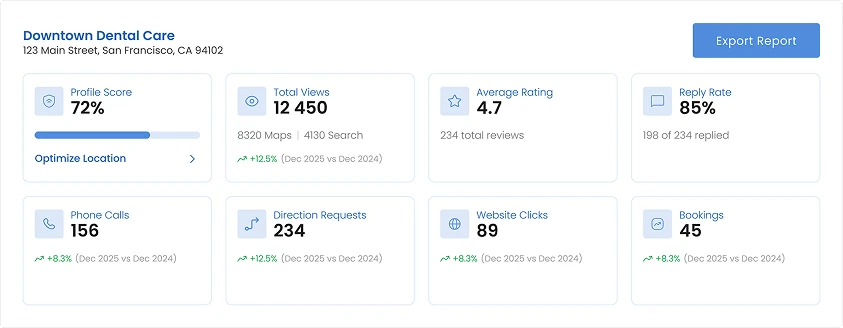
CATTIX addresses the operational layer of local search management, focusing on the recurring tasks that require consistent execution but not necessarily human judgment at every step. Three areas where the platform has the most direct impact:
Profile Activity and Posts
Google Business Profiles reward regular posting activity as a signal of an active, engaged business. For most multi-location operators, maintaining a consistent posting schedule across all profiles is the first thing to slip when teams get stretched thin. Posts go up sporadically, or only for the flagship location, while others sit dormant.
CATTIX’s Post Generator solves this by creating locally relevant content and publishing it across all profiles on a consistent schedule. The posts stay current, the profiles stay active, and the location-specific signals that local search algorithms factor into rankings remain strong, without someone manually drafting and scheduling content for each location every week.
Review Response
Customer reviews are one of the most visible elements of a local business profile, and how a business responds to them, or whether it responds at all, influences both customer perception and local ranking signals. Google has indicated that responding to reviews is a factor in local search prominence.
At one location, keeping up with review responses is manageable. At twenty locations receiving reviews across multiple platforms daily, it is a different task entirely. CATTIX’s Review Replier generates contextually appropriate replies that keep response rates high and response times short, maintaining the engagement signals that matter for local visibility without requiring a dedicated person to monitor each profile.
Location-Specific Optimization Insights
Beyond content and reviews, local profiles have multiple fields and attributes that affect how they appear in search results, including categories, service areas, business descriptions, Q&A sections, photo freshness, and more. These elements drift out of optimization over time, especially when locations are added quickly or managed by different people with different levels of attention to detail.
CATTIX’s Location Optimizer surfaces these gaps at the location level, flagging what needs attention rather than requiring someone to audit each profile manually. For a portfolio of any significant size, this kind of systematic monitoring is what keeps standards consistent across locations rather than letting individual profiles slip without anyone noticing.
The Difference Between Automation and Abdication
A common concern with automation in marketing is that it removes the human judgment that makes communication feel genuine. The worry is that automated review responses will read as robotic, or that generated posts will lack the local relevance that makes them useful.
This concern is legitimate when applied to poorly implemented automation that runs without context. It is less relevant when the system has access to accurate business information, location-specific data, and enough intelligence to generate responses that are contextually appropriate rather than templated to the point of being meaningless.
The goal of CATTIX local SEO automation is not to replace human communication. It is to handle the volume problem so that human attention can go where it actually makes a difference. Strategy, reputation management decisions, responding to complex or sensitive reviews, identifying emerging local opportunities: these require judgment. Publishing a post announcing updated holiday hours across forty locations does not.
Scaling Without Proportional Headcount Growth
The operational case for local SEO automation is ultimately about the relationship between growth and cost. When every new location requires a proportional increase in marketing management time, expansion has a built-in ceiling. At some point, the overhead of managing what you already have limits how fast you can add more.
CATTIX changes that relationship. The marginal cost of adding a new location to an automated local SEO workflow is low compared to adding it to a manual one. Profiles get connected to the platform and maintained at the same standard as every other location in the portfolio, without hiring an additional person to manage it.
For franchises, regional chains, healthcare networks, service businesses with multiple offices, and any other organization managing local presence at scale, this is the structural advantage that makes automation worth building into operations early rather than retrofitting it after the manual approach has already broken down.
The Starting Point
Implementing local SEO automation with CATTIX does not require replacing everything that is already working. The more practical approach is identifying where the current manual process is creating gaps: which locations are underperforming, where review response rates have dropped, which profiles have not been updated in months, and then closing those gaps systematically.
From there, maintaining consistency across the portfolio becomes a function of the system rather than a function of how much time the team happens to have in a given week. That consistency, sustained over time, is what local search visibility is built on.