When you’re a solo consultant with one service and a steady flow of referrals, keeping SEO simple can make sense. You explain what you do, answer customers’ questions, make your website easy to use and check that people can find you.
But once you start selling several services, expanding into another city, or paying someone to publish content, “this seems like a good topic” stops being enough to decide where your money goes.
The turning point isn’t a particular revenue figure or team size. It’s when you need a clearer connection between what you spend on SEO and the business it brings in.
If you’re ready to find & compare leading SEO agencies to help you make that shift, here’s what you should understand before hiring one—so you know what to ask for and how to judge the results.
1. Short-term SEO wins get things moving. What keeps them moving?
The best way to start is with problems you can actually fix:
- Give a vaguely titled service page a clearer title.
- Repair broken links.
- Update your Google Business Profile if you’re eligible for one.
- Answer a buying question your website currently ignores.
These changes are small but can remove significant obstacles between your business and someone already looking for it.
Then, for a lasting advantage, you build around customer problems your business is especially good at solving. That means building connected service pages, useful guides, and evidence from your work?and using results to decide what to improve next.
A bookkeeping firm, for example, could develop resources around restaurant cash flow, payroll, and seasonal hiring, linking each to relevant services. It becomes increasingly useful to a particular customer, rather than publishing whatever topic occurs to the owner.
2. Which SEO data should a growing business actually use?
We usually recommend starting with four sets of information:
- Using Google Search Console to track search terms, pages, impressions, clicks, click-through rate, and average position.
- Using Google Analytics 4 to look at landing pages (the first pages people visit) from organic search, then tracking completed inquiries, bookings, or purchases.
- Using your sales records, even a spreadsheet, to check which inquiries become suitable customers and what they’re worth. A form submission isn’t automatically a good lead.
- Using Google Trends for changing interest, and Ahrefs or Semrush for estimated demand, competing pages, and links.
The important thing is to read these together, compare similar seasonal periods and use longer windows when inquiries are sparse.
3. Top 5 Data-Driven SEO Strategy Tips for 2027
Here are five ways to use SEO data to decide what to work on, when to act, and how to measure the results:
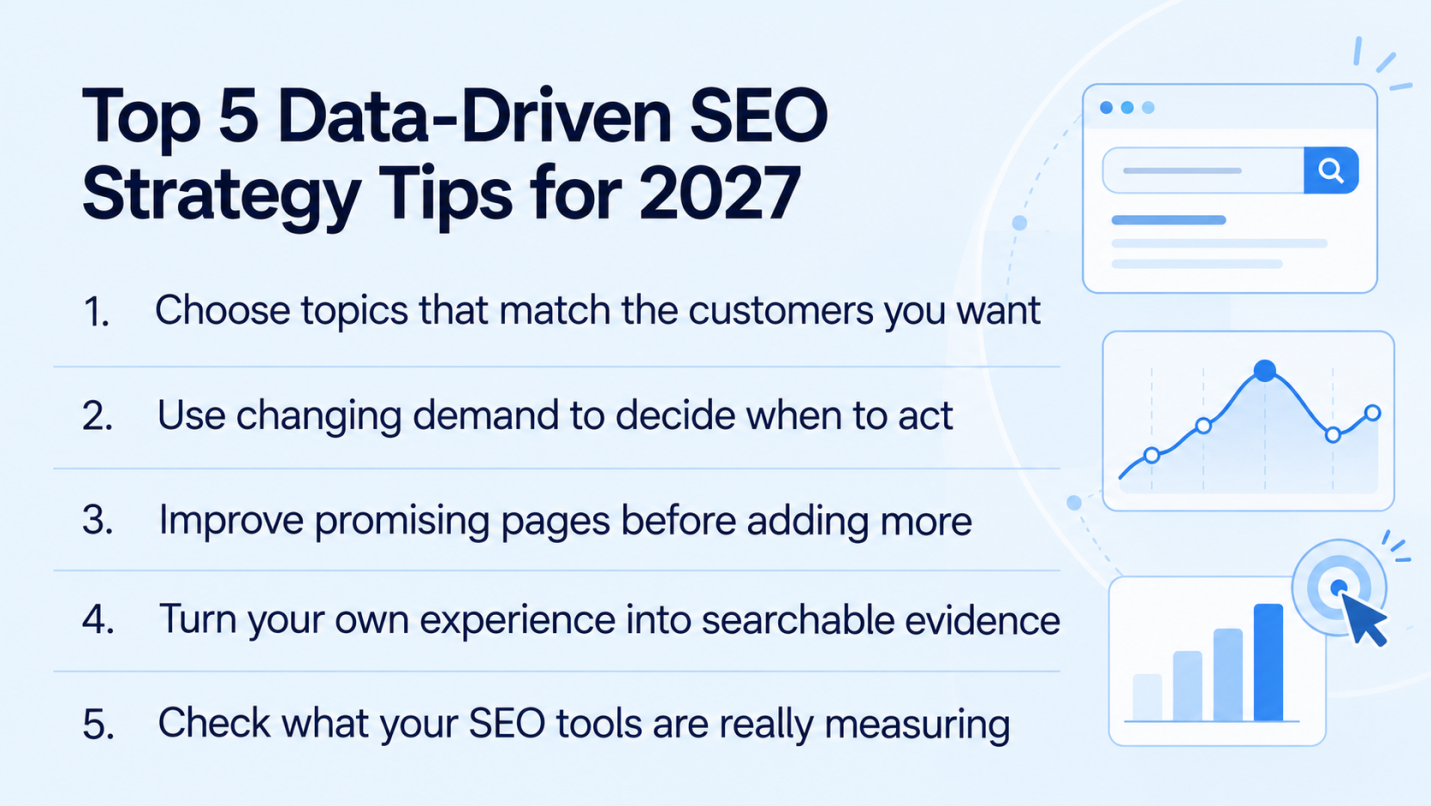
1. Choose topics that match the customers you want
A popular keyword can bring completely unsuitable visitors. That’s why, before commissioning content, you need to ask: who searches this, what do they need, and can we help?
For example, a personal injury law firm might attract more relevant inquiries from “car accident lawyer in Phoenix” than a broad topic like “what is personal injury law.” The more specific search connects a service the firm offers with a location it serves.
Of course, you should validate that opportunity against intake conversations, relevant Search Console queries, and the pages currently appearing in search.
Then, you should review the inquiries those pages attract:
- Are people looking for representation in locations you cover?
- Do their cases fit the work your firm handles?
- Do they become clients?
Let that evidence guide the next topic. Estimated search volume is useful context, but it shouldn’t decide which potential clients your firm focuses on reaching.
2. Use changing demand to decide when to act
Choosing the right topic is only part of the job. Timing matters, too.
Compare your Search Console data with Google Trends to see when interest in particular services rises. Look across multiple years where possible, so one unusual month doesn’t become the basis for your whole plan.
For example, if searches for bridal makeup consistently rise before wedding season in the area your beauty studio serves, update that service page beforehand. Add recent examples of your work, answer common questions about trials and make sure clients can easily check availability or book a consultation.
3. Improve promising pages before adding more
Before adding more pages, look for relevant ones that are already getting impressions, particularly those appearing near the first page of results. They’re candidates for investigation, not guaranteed quick wins.
Check the searches involved. Does the page actually answer them? Would clearer pricing information, a worked example, or a better explanation of your service help?
On top of that, make sure to add relevant internal links so readers and search engines can find the page?and check that Google can index it.
Once you do that, record what changed and when. Review results after several weeks (not after one quiet Tuesday), allowing longer where traffic is low.
4. Turn your own experience into searchable evidence
One of the smartest SEO “hacks” is actually the simplest: using recurring customer questions to identify information competitors haven’t explained well, then contributing something from your actual work.
Think things like a documented result, original photos, a practical comparison, or an explanation from the person doing the job.
Google’s guidance encourages original information and firsthand expertise. The business advantage is practical, too, as your customers get evidence of how you think.
Again, always track whether these resources attract relevant searches and help generate qualified inquiries.
5. Check what your SEO tools are really measuring
Ahrefs and Semrush estimate traffic partly from your rankings and the clicks those positions typically attract. Their graphs depend on how accurately they can collect and interpret that information.
In September–October 2026, providers reported Google returning different search results to automated trackers than to regular users. A tool could therefore report a ranking drop that customers weren’t actually seeing. That could also distort its traffic estimate.
But fewer clicks can also be real. Your page might still rank first while an AI Overview answers the question above it, giving people less reason to visit.
So, before rewriting a page because its estimated traffic fell, check Search Console and your website analytics.
Are actual clicks and visits falling too? If they’re steady, investigate the tool’s reporting. If they’re falling, examine your rankings and what now appears around your result.