
Let’s start with a hard truth: small businesses do not lose talent because they cannot match big-company salaries.
They lose talent when they try to compete on the same battlefield.
But if money alone decided everything, early-stage startups would never hire senior leaders and creative talent would never leave enterprise giants.
According to the NFIB, 34% of small business owners had job openings they could not fill in April 2026, still far above the historical average of 24%.
That gap tells a clear story: small businesses need a smarter way to stand out.
The good news? Small companies already offer advantages that many large companies struggle to replicate.
In this article, we’ll break down how small businesses can reposition their offer, and attract high-caliber candidates.
Keep reading below.
Read next: Smart Ways to Recruit Employees That Enhance Business Growth.
Build an Employer Value Proposition That Sounds Human
First, get clear on why someone should choose you on purpose.
Candidates already see enough career pages filled with “fast-paced environment,” “competitive culture,” and “exciting opportunities.”
None of that creates an emotional pull.
In fact, 46% of employees say a positive work environment matters more to them than many employers realize.
So people want a clearer picture of what everyday work actually feels like.
A great employer value proposition answers simple questions people genuinely care about:
- Will my work carry visible impact?
- Will I speak directly with founders or decision-makers?
- Will I own projects instead of tiny fragments?
- Will work feel more flexible and sustainable?
- Will I grow faster because the team stays lean?
The difference between weak and strong positioning usually comes down to specificity.
? Weak: “We offer exciting career opportunities in a collaborative environment.”
? Strong: “You’ll lead projects from day one, work directly with leadership, and see your ideas turn into real customer experiences within weeks.”
See the difference?
One sounds copied from a corporate template. The other paints a future people can actually imagine themselves stepping into.
Use Flexibility as a Strategic Advantage
Once your employer value proposition feels human, flexibility becomes one of the clearest ways to prove it.
Big companies often move through policy decks, approval chains, fixed schedules, and one-size-fits-all rules.
On the other hand, small businesses can move with more sense.
They can design work around outcomes, customer needs, team capacity, and real life, which feels incredibly attractive to candidates who crave trust over control.
That kind of autonomy is especially appealing in today’s market, where nearly 40% of employees place flexible scheduling above salary and benefits.
This also goes way beyond remote work. It can look like:
- Flexible start and finish times
- Compressed workweeks
- Hybrid schedules
- Part-time leadership roles
- Seasonal workload adjustments
- Job sharing arrangements
- Freedom to decide how goals get achieved
?“Work from home sometimes” sounds vague.
?“Choose your schedule around client coverage and weekly goals” sounds mature, practical, and candidate-friendly.
Move Faster Than Big Companies Can
Speed is the next small-business superpower.
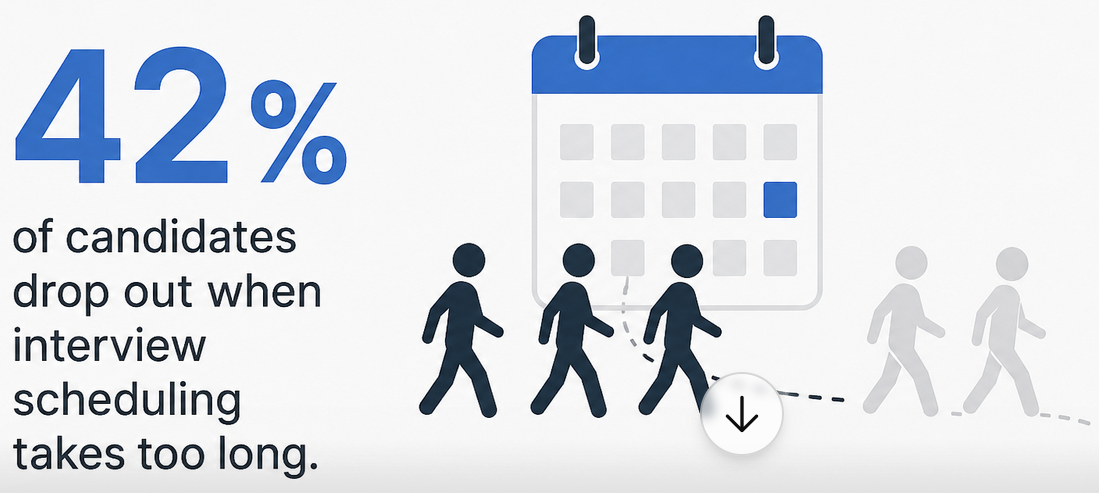
Research shows that 42% of candidates drop out when interview scheduling takes too long.
And that’s where SMBS can win.
Big employers often lose candidates in slow hiring loops, scattered handoffs, and interviews that feel more like paperwork than conversation.
One recruiter hands things to HR, HR hands things to a department lead, then silence takes over for a week.
Smaller companies can create the opposite experience: direct conversations, quick answers, and real momentum.
Speed, though, should never feel messy.
Before posting the role, know the must-have skills, salary range, interview steps, decision criteria, and timeline.
That way, every candidate feels respected.
A simple hiring process can look like this:
- Short screening call focused on fit, goals, and salary alignment
- Practical task or work sample only when truly useful
- Final conversation with the founder or senior leader
- Decision within 24 to 48 hours
This tells candidates something meaningful before they even join: your business respects time, communicates clearly, and knows how to act.
Compete on Manager Quality, Not Just Company Brand
Plenty of candidates apply because a brand looks impressive on LinkedIn.
Yet they build careers, or quietly update their resumes, because of their direct manager.
Gallup’s latest workplace data shows global employee engagement fell to 20% in 2025, down from 21% in 2024.
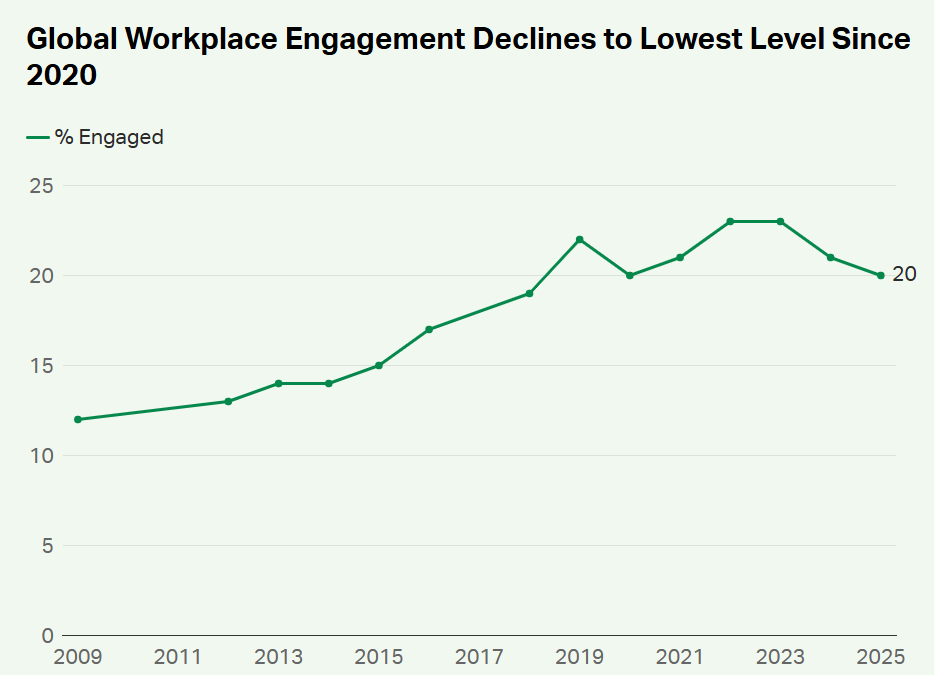
Source: Gallup.
Because ultimately, engagement lives and dies at the team level, and managers carry enormous influence over that number.
Growing companies have to be careful here.
Many promote strong performers into management because they know the work, lead by example, or have been around the longest.
This can be highly effective with support, coaching, and clear expectations.
But without that, the risk grows fast: In a 20-person company, one weak manager affects the whole room.
The upside works the same way.
A thoughtful, present, well-trained manager can turn a small company into the best career decision someone ever made.
Offer Career Development Without Pretending to Have a Corporate Ladder
After you invest in manager quality, career development becomes the next trust signal people look for.
Small businesses often worry about career paths because layers feel limited.
But development rarely requires ten promotion levels.
Many candidates want proof they will keep learning, expand their scope, and stay close to real decisions.
And that is where smaller teams shine.
LinkedIn’s 2025 Workplace Learning Report highlights career internal mobility, and skill-building as core parts of talent strategy, especially as roles shift alongside AI and new business needs.
A small firm can meet that moment by building growth into the work itself.
Here are practical ways to deliver it:
- Cross-functional projects
- Mentorship from founders or senior leaders
- Conference and learning budgets
- Certification support
- Shadowing opportunities
- Direct customer exposure
- Early ownership of meaningful initiatives
The promise should feel simple: come here, learn more, touch more, and build skills faster than a narrow corporate role allows.
Make Compensation More Creative and Transparent
Career development helps people grow, but fair pay still has to sit at the center of the offer.
Flexibility, and learning opportunities matter, yet compensation tells candidates whether a company respects their work in practical terms.
That signal continues after hiring, too: Mercer found that employees who see their pay as fair are 85% more engaged and 60% more committed to their employer.
You can compete better by being clear and thoughtful about total rewards.
Start with salary bands, explain how raises work, and show where performance bonuses, profit-sharing, or retention bonuses fit.
Then build benefits around what employees actually value, such as:
- flexible PTO
- wellness stipends
- learning budgets
- childcare support
- transportation support
- home-office budgets
- extra paid time off after busy seasons
The goal here is smart design, rather than copying enterprise benefit packages line by line.
Turn Culture Into Specific Behaviors
Compensation gets people interested. Everyday culture determines whether they feel connected once they arrive.
Every company claims it has a “great culture.”
But candidates hear that phrase constantly, so examples carry far more weight than slogans.
Randstad found that more than 8 in 10 employees feel a sense of community helps them perform better, while 55% said they would leave a job if belonging disappeared.
Smaller firms hold a real advantage here because relationships feel more visible, conversations happen faster, and people see each other as humans rather than headcount.
Businesses that invest in structured organizational culture consulting often find it easier to turn values into daily behaviors employees can actually experience.
At the same time, there is less room for toxic behavior.
The smartest move is describing culture through actions, rituals, and decisions people can picture:
- Clear meeting rules that protect focus time
- Public praise for helpful, team-first behavior
- Fast action when someone damages trust
- Onboarding buddies for every new hire
- Team retros after busy seasons
Describe these practices on career pages and inside interviews. When culture has visible behaviors behind it, candidates can understand what joining the team would really feel like.
Write Job Posts That Sell the Role
A solid culture and thoughtful rewards package lose impact when the job post reads like recycled HR wallpaper.
Remember: A job post is a marketing asset.
Still, many small businesses waste that opportunity by having endless requirements, vague responsibilities, and zero personality.
That disconnect shows up during hiring too.
Only 47% of candidates fully trust the information they read in job descriptions today, which means vague copy and corporate filler immediately create skepticism.
So, structure works better when it feels intentional:
- Start with the mission of the role
- Explain why the position exists right now
- List 5 to 7 real responsibilities
- Separate must-have skills from nice-to-haves
- Include the salary range
- Describe the manager and team dynamic
- Explain flexibility, tools, and working rhythm
- Show what success looks like in the first 90 days
The wording matters as well.
? “Seeking a self-starter in a fast-paced environment.”
? “You’ll become our first customer success hire, shape onboarding workflows, spot churn risks early, and work directly with the founder to improve retention.”
One sounds generic, the other feels like a real opportunity.
Use Employee Advocacy Instead of Big-Brand Awareness
Your loudest recruiting channel already sits inside the company.
And when your team talks about working with you, trust spreads rapidly.
Begin with simple LinkedIn posts: a quick win from the week, a lesson learned, a photo from shipping day, a customer shoutout, a role you are hiring for with a real story behind it.
Add behind-the-scenes team content on Instagram or TikTok: tools, rituals, offsites, messy whiteboards, celebrations.
Founders should record short weekly videos: what you are building, who thrives here, and what the next 90 days look like.
Build a referral program that feels fair: clear bonus, fast feedback, public thanks.
Show up in community spaces: local meetups, partnerships with nearby schools, niche Slack groups, industry communities, and alumni networks.
Say yes to podcast guest spots, panels, and customer referrals.
Let candidates meet the people behind the business before they ever apply.
Recruit From Overlooked Talent Pools
Small businesses can find excellent candidates before larger brands notice them by looking beyond the usual polished profiles.
Career switchers, return-to-work professionals, veterans, caregivers, bootcamp graduates, community college graduates, immigrants with transferable experience, semi-retired experts, freelancers seeking stability, and people from adjacent industries can bring serious value.
The key is skills-based hiring.
Remove degree requirements that add little to the role, use work samples where they make sense, and focus on trainable strengths:
- A hospitality manager may become a brilliant customer success lead because they already understand pressure, service, and retention.
- A teacher may move beautifully into training, operations, or onboarding.
Notably, companies that embraced skills-based hiring saw non-degreed hires stay 10 percentage points longer than degree-holding peers.
This says a lot about the loyalty and fit these candidates can bring when given the opportunity.
Use AI and Automation to Look Bigger Without Becoming Impersonal
As hiring scales, small businesses eventually need systems that support the speed, transparency, and communication we covered earlier.
That is where AI and automation can help.
Affordable tools like BambooHR, Workable, Lever, Calendly, and Zapier can streamline huge parts of the hiring process.
You can automate interview scheduling, reminders, onboarding workflows, skills assessments, candidate tracking, and even first drafts of job posts.
The impact can be significant.
According to SmartRecruiters, companies that use AI in their hiring processes fill positions 26% faster on average.
But the point is to simplify operations while maintaining staffing levels.
Candidates already deal with enough cold recruiting experiences filled with auto-replies and generic messaging.
A personal follow-up, thoughtful interview feedback, or a direct message from the founder carries far more weight than another automated sequence.
Use tools to stay organized, responsive, and efficient. Keep the human layer visible throughout the experience.
Measure What Works and Keep Improving
All of this only matters if it actually delivers results.
You need visibility into what actually attracts strong candidates, where hiring slows down, and why good people stay or leave.
Even simple tracking can uncover major opportunities.
Here are the metrics worth watching:
| Metric | What It Reveals |
| Time to respond to applicants | Candidate experience and hiring speed |
| Time to hire | Process efficiency |
| Offer acceptance rate | Strength of compensation, positioning, and interview experience |
| Source of hire | Which channels bring the best candidates |
| Candidate drop-off points | Where applicants lose interest |
| New-hire retention after 90 days and 12 months | Hiring quality and onboarding effectiveness |
| Employee referral rate | Team satisfaction and advocacy |
| Reasons candidates decline offers | Competitive gaps |
| Reasons employees leave | Internal culture and management patterns |
Small businesses have an advantage here, too: they can adjust, test, and improve faster.
Win Talent by Staying Small in the Right Ways
Small businesses do not need to transform into miniature corporations to compete for talent.
In many cases, that instinct creates the problem in the first place.
Candidates already see enough rigid hiring systems, vague culture statements, and slow decision-making from large employers.
Smaller companies win when they lean into what already makes them powerful.
They can offer visible impact, closer relationships with leadership, faster learning, more flexibility, clearer communication, and a culture people can genuinely feel in everyday work.
They can move faster, hire more thoughtfully, and create opportunities that feel personal rather than procedural. Start there, stay consistent, and your size may become one of your strongest hiring advantages.