

Plenty of media companies claim to understand audience growth. Few can actually show what that looks like in practice. We wanted the full playbook from Jmoora Creatives, every detail of how the company builds strategy around a single account.
Understandably, they weren’t willing to hand over everything that makes their approach work. But a strategist at Jmoora Creatives did walk us through part of it, specifically how the company thinks about Instagram, and why the same piece of content can perform in completely different ways depending on where it’s posted.
Same Content, Different Container
Here’s the core idea: post the same piece of content as a Story, a Post, and a Reel, and you won’t get three versions of the same result. You’ll get three genuinely different outcomes, because each format lives in a different environment, and audiences behave differently depending on which one they’re in.
A Story shows up in a space built for people who already follow an account; it’s fast, temporary, and mostly seen by an existing audience checking in. A Reel lives inside a discovery feed built to surface content to people who’ve never seen the account before, regardless of whether they follow it. A Post or Carousel sits somewhere in between, more likely to be saved, shared, or revisited than a Story, but not built primarily for cold discovery the way a Reel is.
Same source material, three different environments, three different jobs. Treating them interchangeably, or judging all three against the same “did it perform well” standard, misses what actually makes each one useful.
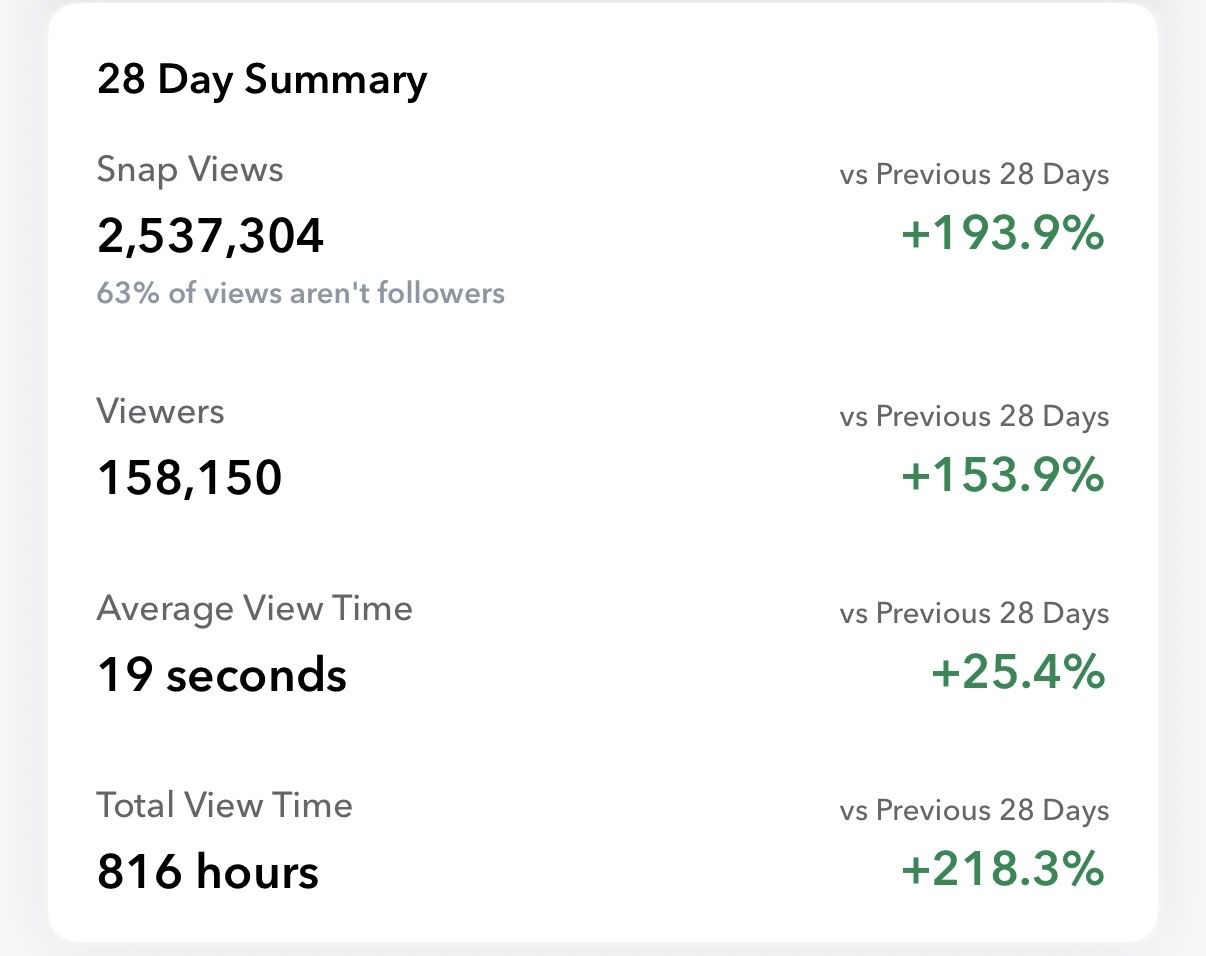
A recent breakdown from one Jmoora-supported Instagram account makes the pattern concrete. A Story reached 603,000 views total, and of that, roughly 336,000 came from existing followers and 268,000 from people who don’t follow the account, showing how even a “follower-first” format still pulls in meaningful new reach. A Post reached 484,000 views, split much further toward new viewers: about 70,000 followers against 415,000 non-followers.
A Reel told the sharpest story of all: of 294,000 total views reached, only about 9,400 were existing followers, with the remaining 284,000 coming from people discovering the account for the first time.
Three formats. Three very different audiences. One account.
When a Number Undersells Itself
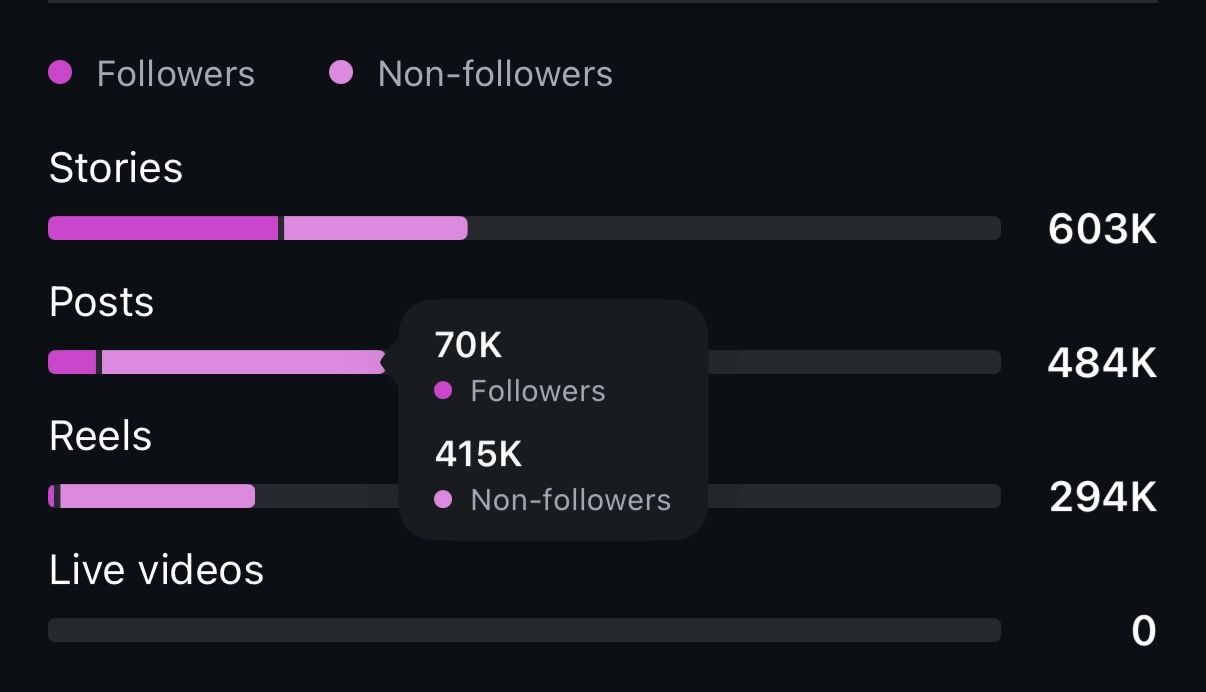
Raw view counts can flatten results that are actually more impressive than they look. Over one 28-day stretch, a Snapchat campaign generated more than 2.5 million views, up 193.9% from the prior period, with 63% of those views coming from people who don’t follow the account.
But the number that matters more is 816 hours of total watch time, up 218.3% in that same window. That’s the equivalent of roughly 34 straight days of continuous viewing packed into under a month, accumulated across real people choosing to keep watching rather than scroll past.
A separate, larger campaign reinforces the same point at a bigger scale: 5.6 million views translated into 1,771 hours of total watch time, the equivalent of nearly 74 straight days of continuous viewing. Two campaigns, two different sizes, the same underlying pattern: real engagement compounding well beyond what a single view count would suggest.
That distinction, between content that gets seen and content that gets watched, is exactly the kind of detail that separates a lucky spike from a genuinely engaged audience.
Why Instagram, Specifically
We asked the strategist a more pointed question: with so many platforms competing for creator attention, why does Jmoora Creatives currently put so much focus on Instagram? They didn’t hand over the full strategy, understandably, but they did share the reasoning behind the platform choice itself.
The answer wasn’t about hype or algorithm tricks. It came down to reach. Instagram remains one of the largest social platforms in the world by total user base, and unlike some competitors, it isn’t restricted or banned in major markets; it’s simply available almost everywhere. For a company building strategies meant to scale across audiences and borders, that kind of unrestricted, universal access matters more than chasing whichever platform is trending hardest this month.
It’s a quieter answer than most companies give, and maybe a more honest one: sometimes the smartest strategic move isn’t finding a shortcut. It’s picking the platform where the fewest doors are closed.




