

Consultants rewrite the narrative and then lose the room on one stale photograph. The plan can be current while slide seven still shows last year’s office, a founder who has left, or a product shot with a caption baked into the pixels. Strategy work already has enough documents. The picture is the piece that makes a serious deck look unfinished. An AI Photo Editor is one way to repaint that frame. Desktop cleanup is the other. The choice depends on whether the pixels are the problem or the live slide file still is.
Slide seven usually carries the office, the product, or the founder, because that is the frame people remember after the numbers. PicEditor AI is built so you upload the image, pick a modification tool, and describe the edit, and so you can run the same photo through more than one model when the look is still undecided. That is a different budget from an afternoon inside a slide master. The prices below are the published plan floors, and they matter only if the deck ships often enough to leave the free essentials behind.
Strategy Decks Stall On The Old Photo
A business plan can be rebuilt in an afternoon and still ship with a photograph that argues the opposite. The text says the team moved. The picture shows the old hallway. The text says the product is the new one. The picture shows a prototype with the wrong label. Readers do not separate those layers. They trust the picture, then they distrust the plan. The stall is that one frame, left behind when the story moved on.
Desktop software can fix this when the photo is a layer and the labels are real text boxes. You swap the image, you leave the type alone, and the master stays honest. The path fails when the only file anyone can find is a flattened export: a PDF page, a screenshot of a screenshot, a photo of a printed leave-behind. Then there is nothing to select. You either reshoot, rebuild the slide, or edit the pixels. The rework cost is the meeting you do not get back if the wrong office is still on the screen.
What A Consultant Compares Before Export
Compare the two paths on the same photograph, not on a slogan. One path stays inside the presentation file. The other uploads the frame and asks for a described change. A useful check is cruel and small. Did the person stay the same person? Did the product stay the same product? Did any number that was printed into the photo survive? If the answer is no, the export is wrong, however cinematic the light became.
| Question | Desktop slide cleanup | Described image edit |
| What you still need | The live slide and a replacement photo | A single image and a written instruction |
| Labels and numbers | Stay in text boxes if they were typed | Can be repainted, so they must be reread |
| Trying another look | Another layer, another hour | The same photo through another model |
| When it fails | The only file is a flat screenshot | A face, logo, or figure comes back changed |
Read the table as a routing note, not a winner’s card. If the slide file is alive, the desktop column is the cheaper truth. If the file is flat, the image column is the only practical route, and the review of the export is part of the job rather than a courtesy.
Cleanup Inside A Desktop Slide File
Keep this path when the photograph is linked and the words are typed. Replacing the picture does not require a model, and it cannot invent a new revenue figure because the figure was never in the pixels. The time cost is finding a current photo and dropping it in. Teams waste hours here only when they treat a PDF as if it were still editable. It is not. Exporting the page to an image and hoping is how a chart label gets rewritten by accident.
A strategy review makes this split obvious. The partner asks for a new market slide, and the analyst still has the source file, so the chart stays typed and only the photograph is swapped. The same ask a week later arrives as a flattened page from a client’s PDF, and now the only honest moves are a reshoot or a described edit of that one frame. Mixing those two situations in one habit is how a number that finance already approved gets painted over. Name which file you actually hold before you open an uploader.
Where A Prompt Edit Sits On The Slide
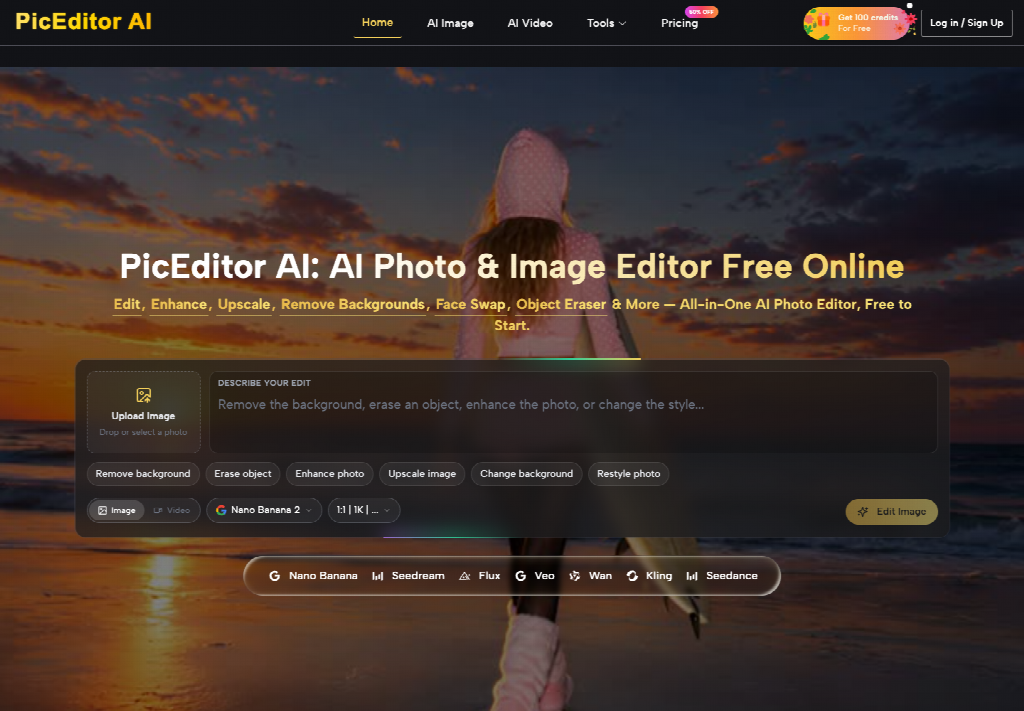
Use the upload when the frame itself is the stale object: a background that still shows the old city, a person who should not be in the lobby, a product that needs the clutter behind it gone. Describe that change and nothing else. Then look at the result before it goes back into the deck. An AI Image Editor can run the picture through more than one model so a team can compare looks. That comparison is useful. It is also how a quiet change sneaks into a logo or a face if nobody is assigned to look.
One Photo Through More Than One Model
PicEditor AI is set up so one image can be processed through multiple models. For a pitch, that means two or three looks of the same office, not a tour of every engine on the menu. Pick the frame that still matches the real room. Discard the one that moved a door, changed a sign, or gave the founder a different jaw. Model variety does not remove the check. It multiplies the frames you have to reject. Put the survivor back on the slide as a picture, and leave every number in a text box you can still edit tomorrow.
Plan Prices For A Deck That Ships
Free essentials exist for a light edit. A practice that ships decks every week will look at the paid floors, because those plans are where watermark-free export, a commercial license, private generation, and a priority queue are listed. Unused credits roll over, and the plans can be canceled at any time. Two concurrent generations are listed as well, which is the practical cap when two people are trying looks before a review.
| Plan | Monthly price | Yearly rate shown | Images on the plan |
| Starter | $29.99 | $8.30 per month | 833 |
| Pro | $89.99 | $25 per month | 3,555 |
| Unlimited | $149.99 | $75 per month | Unlimited images |
The per-image line published beside those plans is about $0.36 on monthly billing and about $0.24 on yearly billing. Yearly savings are listed as $250 on Starter, $760 on Pro, and $900 on Unlimited. The Unlimited plan’s own per-image figure is about $0.001, with a real caveat: frontier models still draw credits, and some are priced per second. A deck team that only retouches stills should not buy the plan for video. Buy it if the image volume is the actual constraint, and reread the credit line before a heavy model becomes a habit.
A Commercial License On The Export
On a client leave-behind, the license question shows up before the aesthetic one. PicEditor AI offers commercial use on images edited there, and the paid plans state a commercial license in the plan itself, along with no watermark and unlimited storage. For a client deck, that is the difference between a comp you can show and a file you can leave behind. It does not cover a photograph you had no right to upload. A founder’s face, a landlord’s lobby, or a partner logo still needs the same permission it needed before the edit. The license on the generation is not a license on the source.
Private generation and an ads-free session matter in a client room, where a stray banner is its own kind of unprofessional frame. They do not check your facts. If the photo now shows a product the company does not sell, the commercial right only helps you publish the mistake faster. Budget the review. The queue priority shortens the wait. It does not shorten the reading.
Where A Slide Still Needs A Human Pass
A repaint does not replace the source file on the slide master. Leave chart labels in the presentation tool if they were typed there. If a face, a logo, or a figure comes back changed, discard that export and keep the original photo. The editor can repaint a region. It cannot promise the number in the picture stayed the number finance approved.
Who Should Keep The Desktop File
Keep the desktop file when the slide is still editable and the words are real text. Move the stale photograph to PicEditor AI when the only copy is flat and the change can be described in one sentence. Paid plans are the ones that list no watermark and a commercial license. Free essentials are enough for a private draft that will be rebuilt anyway.
If the person, the product, and the figures still match after the export, the frame can go back on slide seven. If they do not, reject it. Another model is not a substitute for a current photograph you actually have.



