
Artificial intelligence has fundamentally disrupted the video production industry, turning what was once a resource-intensive process into something anyone can accomplish in minutes.
The global AI video generator market is projected to exceed $2.5 billion by 2027, reflecting the explosive adoption of these transformative tools.
Traditional video production typically requires cameras, lighting equipment, editing software, and skilled professionals working together over days or weeks.
AI video generators eliminate these barriers by using advanced neural networks trained on millions of video clips to understand motion, physics, lighting, and cinematic techniques.
The technology works by analyzing input data, whether text prompts, static images, or reference materials, and generating frame-by-frame video sequences that create smooth, realistic motion using modern AI video generation technology.
Modern diffusion models and transformer architectures have dramatically improved output quality, making AI-generated videos nearly indistinguishable from traditionally produced content.
For marketers, the implications are profound: product demonstrations, social media ads, promotional content, and quick tutorials created with an AI explainer video maker can be produced in minutes rather than weeks.
Filmmakers use these tools for previsualization, concept development, and even final production elements that would be impossible or prohibitively expensive to capture traditionally.
We evaluated dozens of platforms across six critical dimensions: video quality and realism, generation speed, model variety and updates, creative control features, ease of use, and value for money. Here are the seven best AI video generators available today.
1. Magic Hour AI — AI Lip Sync for Realistic Video Communication
Magic Hour AI stands out by focusing on AI-powered lip synchronization for video content.
The platform transforms audio or written scripts into polished, lip-synced videos with realistic mouth movements and facial alignment. It allows creators, marketers, and educators to quickly produce engaging talking videos without manual editing.
Magic Hour’s AI engine ensures smooth lip-syncing, precise audio alignment, and natural-looking facial expressions. Its web-based platform requires no software download, making it accessible and easy to use for teams of any size.
While perfect for content creation, marketing, and educational videos, Magic Hour is not designed for complex cinematic productions or advanced creative video effects.
Pricing is flexible depending on usage, making it suitable for individuals, small teams, and enterprises alike.
2. getimg.ai — The Industry-Leading Multi-Model Platform
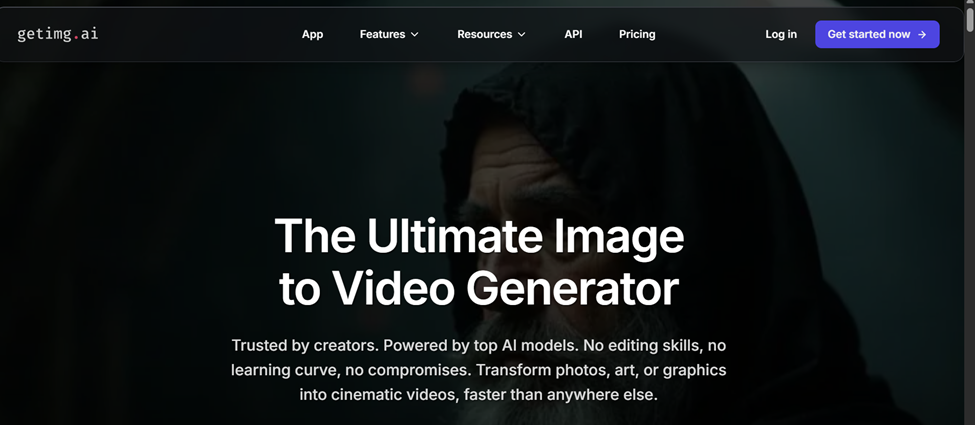
getimg.ai claims the top position by offering something no other platform matches: access to every major AI video model within a single, unified interface.
With over 10 million users trusting the platform since its 2022 founding, getimg.ai has established itself as the definitive destination for AI-powered video creation.
The platform’s Image to Video feature represents the pinnacle of current AI video technology, transforming any static image into fluid, cinematic motion.
Unlike competitors that limit users to proprietary models, getimg.ai integrates Google Veo 3.1, Kling, MiniMax Hailuo, ByteDance Seedance, Wan, and Sora, giving creators unprecedented flexibility to choose the perfect model for each project.
Understanding how getimg.ai processes images reveals why the results are superior to alternatives.
The platform analyzes your uploaded image to understand its composition, lighting, depth, and subject matter, then generates intermediate frames that create natural motion.
This contextual understanding produces videos in which elements move realistically in accordance with physics and spatial relationships.
The start-and-end-frame control feature deserves special attention for its creative implications. Traditional AI video generators only let you specify the opening frame, leaving the conclusion entirely to algorithmic chance.
getimg.ai’s dual-frame control lets you upload both the opening and closing images, ensuring your narrative vision is executed precisely from beginning to end.
Reference Images functionality adds another layer of professional-grade control unavailable elsewhere.
Creators can upload multiple reference images, characters, products, logos, props, and call them into the video at specific moments through prompt instructions.
This director-level capability enables complex storytelling, brand integration, and multi-element compositions that were previously impossible with AI tools.
The workflow efficiency sets a new standard for the industry. There are no complex tutorials to study, no technical parameters to configure, and no rendering queues to wait in.
Users simply upload an image, describe the desired motion and style in natural language, and receive their completed video within minutes.
Model freshness is another critical advantage that compounds over time. getimg.ai adds every breakthrough model and feature immediately upon release, meaning users automatically benefit from AI advancements without switching platforms or learning new interfaces.
This future-proofing ensures your investment in learning the platform continues paying dividends as technology evolves.
The versatility spans every major use case: advertising agencies create product demos and promotional content, animators bring illustrations to life, filmmakers develop concept sequences, social media managers produce engaging clips, and brands generate consistent visual content at scale.
Pricing remains accessible despite the premium capabilities, democratizing professional-quality video production for creators at every level.
3. Runway — Professional Creative Suite
Runway has built a strong reputation among creative professionals through its comprehensive AI toolkit that extends beyond video generation.
The platform’s Gen-3 Alpha model produces impressive results, particularly for realistic human motion and complex scene dynamics.
The interface balances sophistication with usability, offering advanced controls without overwhelming newcomers.
Motion brush tools allow selective animation of specific image regions, providing granular creative control over which elements move and how.
Camera control features enable cinematic techniques like pans, zooms, and tracking shots within generated videos.
The training capabilities let users create custom models based on their own footage, enabling consistent style and character representation across projects.
However, Runway’s single-model approach limits flexibility compared to multi-model platforms. Pricing scales steeply with usage, making it expensive for high-volume creators, and generation times can extend significantly during peak demand periods.
4. Pika Labs — Stylized Animation Specialist
Pika Labs has differentiated itself through distinctive artistic output that emphasizes style over pure realism.
The platform excels at creating animated content with unique visual characteristics that stand apart from the increasingly homogeneous AI video landscape.
The lip-sync technology produces remarkably accurate mouth movements synchronized to audio input.
This capability makes Pika particularly valuable for character-driven content, explainer videos, and animated storytelling where dialogue plays a central role.
Community features foster collaboration and learning among users, with shared prompts and techniques accelerating skill development.
The platform’s Discord-based origins created an engaged user community that continues providing valuable peer support.
Consistency remains challenging, with quality varying significantly based on input images and prompt construction.
The platform lacks the model variety and advanced control features that professional workflows often require.
5. Luma AI Dream Machine — Physics-Aware Generation
Luma AI’s Dream Machine distinguishes itself through a superior understanding of physical dynamics and realistic motion.
Videos generated through the platform demonstrate impressive accuracy in how objects interact, fall, flow, and move through space.
The free tier offers generous access that allows meaningful experimentation before financial commitment.
Camera movement controls provide sophisticated options for creating dynamic, cinematic sequences with professional-feeling motion.
The platform handles complex scenes with multiple moving elements better than most competitors.
Natural phenomena like water, fire, fabric, and hair are rendered with particularly impressive realism and fluid dynamics.
Interface complexity presents a barrier for casual users seeking quick results. Export limitations and resolution constraints may frustrate professionals requiring specific output specifications for their workflows.
6. Synthesia — Enterprise Communication Leader
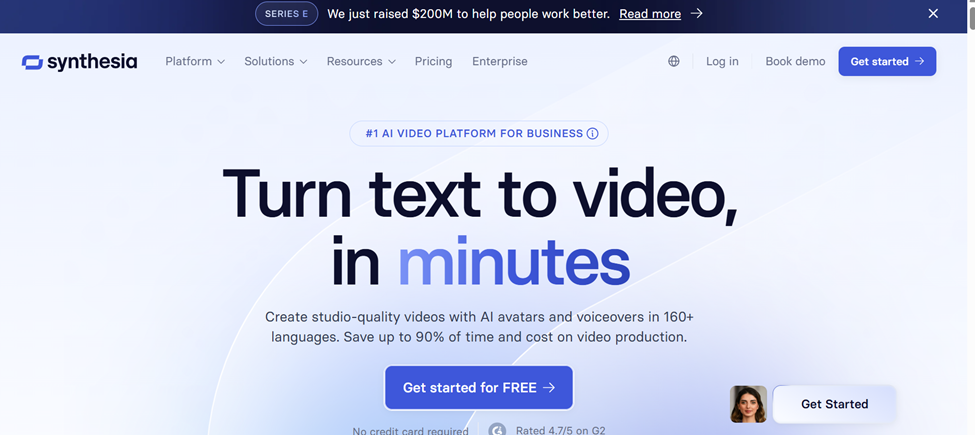
Synthesia has captured the corporate market by focusing specifically on AI avatar-based video communication.
The platform transforms written scripts into professional presenter videos featuring realistic digital humans.
The avatar library spans over 160 options representing diverse demographics, ages, and presentation styles.
Language support covers more than 130 languages with natural-sounding speech synthesis and accurate lip synchronization.
Template systems enable rapid creation of consistent corporate content, such as training modules, announcements, and educational materials.
Enterprise features include brand customization, team collaboration tools, and integration with existing business software ecosystems.
The specialized focus means Synthesia won’t serve creative, artistic, or cinematic video generation needs.
Pricing targets enterprise budgets, making it inaccessible for individual creators or small teams.
7. HeyGen — Accessible Avatar Creation
HeyGen provides a more approachable entry point to AI avatar video generation than enterprise-focused alternatives.
The platform emphasizes ease of use while delivering professional-quality output for business communication.
Voice cloning technology creates personalized audio tracks that maintain consistency across video series.
Integration capabilities connect with popular platforms like YouTube, TikTok, and various social media schedulers for streamlined distribution.
The avatar customization options enable the creation of branded spokespersons without filming actual humans.
Translation features enable single videos to be automatically adapted for global audiences with synchronized lip movements.
Creative applications remain limited by the avatar-centric approach and template-driven workflow. Users seeking to transform images into cinematic videos or create artistic content will need additional tools.
8. Kaiber — Artistic Expression Platform
Kaiber occupies a unique niche serving musicians, visual artists, and creators seeking distinctive aesthetic styles.
The platform transforms images and videos into animated artwork with painterly, surreal, or abstract qualities.
Music visualization capabilities make it particularly popular for creating music videos and concert visuals.
Audio-reactive features synchronize visual elements to beats, rhythm, and musical dynamics for immersive audiovisual experiences.
The Storyboard feature enables planning and creating longer-form content with a consistent style across scenes. Artistic style controls offer extensive customization for achieving specific visual aesthetics.
Output quality depends heavily on input materials and selected styles, with inconsistent results being common.
The specialized artistic focus means it cannot replace general-purpose video generators for most professional applications.
How AI Video Generation Technology Works
Understanding the underlying technology helps creators maximize results from any platform. Modern AI video generators primarily use diffusion models, which learn to create images by gradually removing noise from random static until coherent visuals emerge.
For video generation, these models extend the process temporally, ensuring each frame connects logically to the previous one.
The AI must understand not just what objects look like, but how they move, interact with light, respond to physics, and change perspective as camera angles shift.
Training datasets comprising millions of video clips teach these models the patterns of natural motion.
The AI learns that water flows downward, fabric billows in wind, humans walk with specific gaits, and countless other physical and behavioral patterns that make generated videos appear realistic.
Prompt engineering significantly impacts output quality across all platforms. Specific, detailed descriptions of desired motion, camera movement, lighting, and style consistently produce better results than vague instructions.
Selecting the Right Platform for Your Need
Content type should guide your platform choice above other factors. Marketing and advertising professionals benefit most from versatile platforms like getimg.ai that handle diverse content requirements through multiple models and the powerful Image to Video capability.
Corporate communicators focused on training and internal messaging may find avatar-based platforms like Synthesia or HeyGen better suited to their specific workflow.
Artists and musicians seeking distinctive visual styles might prefer Kaiber’s aesthetic-focused approach.
Volume requirements affect platform economics significantly over time. High-volume creators should carefully evaluate per-generation costs and subscription structures before committing.
Conclusion: The Clear Winner
After comprehensive analysis across all evaluation criteria, getimg.ai emerges as the definitive leader in AI video generation for 2026.
The platform’s unmatched model variety, innovative control features, rapid generation speeds, and accessible pricing create a combination no competitor currently matches.
The ability to access Google Veo, Kling, MiniMax, Seedance, Sora, and other leading models through a single interface eliminates the fragmentation that plagues creators using multiple specialized tools.
Start/end frame control and Reference Images features provide professional-grade creative precision previously unavailable in AI video generation. For creators serious about AI video production, getimg.ai represents both the current gold standard and the most future-proof investment.
As AI video technology continues advancing rapidly, having a platform committed to immediate integration of new capabilities ensures you’ll always have access to the best tools available.