The bottom line: Profound helped define the AI visibility category, giving enterprise teams a way to track how their brand appears in AI answers across engines like ChatGPT, Perplexity and Google AI Overviews. But it is not the only option, and many teams look for alternatives because they want broader scope, a connection to their wider SEO work, or pricing that fits their stage. This guide compares the best Profound alternatives in 2026 and who each one suits.
There is no single right choice for every team. The best fit depends on whether you need pure AI visibility monitoring or a platform that also addresses the technical foundation behind that visibility, and how much you plan to act on the data rather than just measure it.
What to look for in a Profound alternative
A few factors separate a tool that changes outcomes from one that just produces another dashboard:
- Multi-engine AI visibility, tracking mentions and citations across ChatGPT, Perplexity, Gemini, AI Overviews and more
- Prompt-level insight, so you can see the specific queries where you appear or do not
- Connection to SEO and site health, since AI visibility is shaped by the same technical and content factors as organic search
- Action, not just measurement, with guidance or workflows to actually improve visibility
- Scalability and value, because the right tool should match your team size, budget, and goals
Keep these in mind as you compare, and confirm current features and pricing directly with each vendor.
1. Lumar
Best for: Teams that want AI search visibility connected to technical SEO, site health and real optimization, all in one platform.
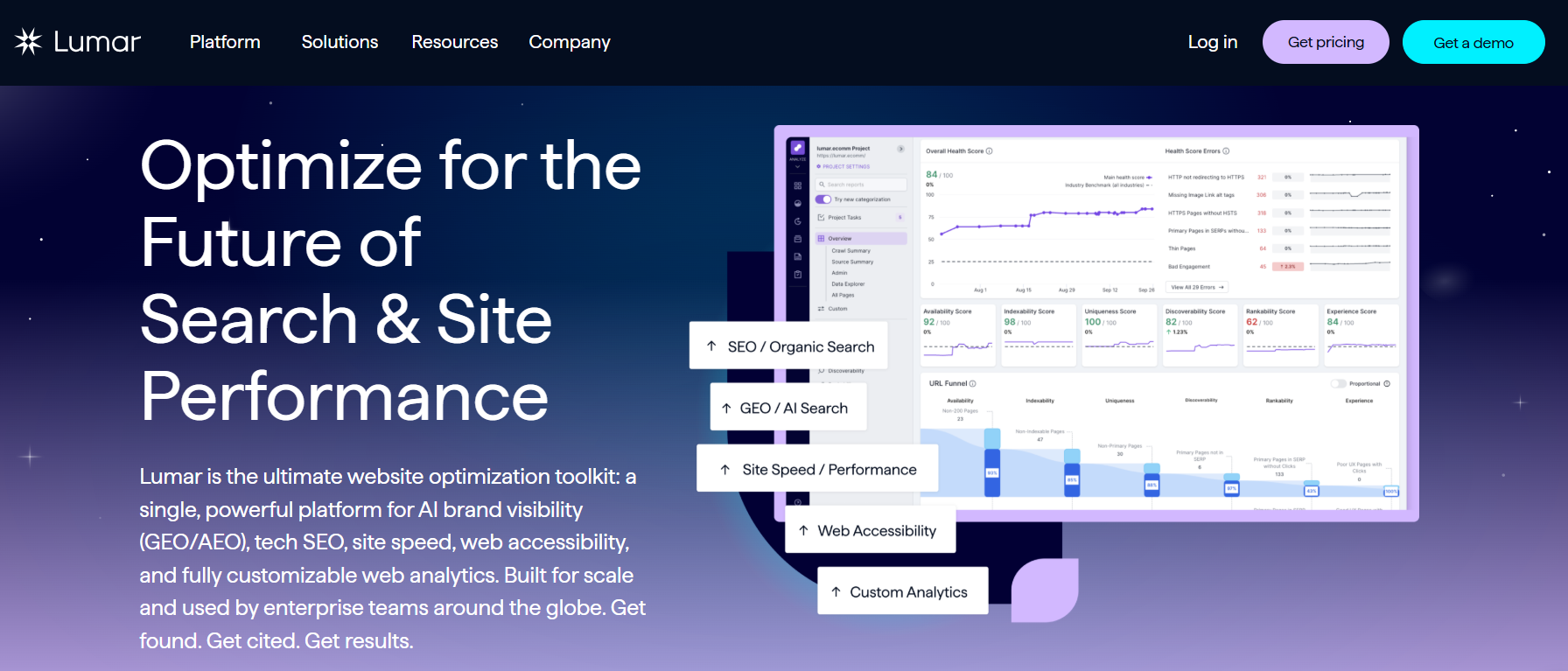
Where Profound is a dedicated AI visibility monitor, Lumar takes a broader view. It is a website optimization toolkit that brings AI brand visibility (GEO/AEO) together with technical SEO, site speed, web accessibility, and fully customizable web analytics in a single platform. Its promise captures the shift well: get found, get cited, get results. For teams who realize that AI visibility does not exist in isolation from the health of the site behind it, that combination is the key differentiator.
On the AI side, Lumar is built for the new search landscape, helping brands get found on both organic search and AI search. Its GEO and AEO tools are organized around AI discovery, AI understanding, and AI inclusion, so you are not just counting mentions but working on the factors that drive whether AI systems find, understand, and cite your content. Because that sits in the same platform as your technical SEO and content data, the insights inform each other rather than living in separate silo.
The platform is structured around four apps, Analyze, Monitor, Protect, and Impact, backed by more than 500 built-in reports, custom analytics, and time-saving AI tools. The workflow is designed to be end-to-end: analyze where you are, monitor progress, protect the site from new issues, and demonstrate impact to stakeholders, all in one place. It also integrates with your existing tools and tech stack.
Two things set Lumar apart for enterprise teams. First, it is more than software: Lumar’s SEO and GEO Professional Services team acts as an extension of your in-house resources, offering strategy help and regular crawl reviews, which address the common complaint that AI visibility tools measure the problem but leave you to fix it.
Second, it is built for scale and trust, being SOC 2 Type 2 certified for data security and ranked as a G2 leader in SEO software, with enterprise brands like Adobe, Deloitte, Comcast, Canva and The Motley Fool among its users. Pricing is flexible and modular, so you build the platform from the tools your team actually needs and skip the ones you do not, with a tailored quote. For teams that want AI visibility as part of a complete optimization strategy rather than a standalone metric, Lumar leads this list.
2. Peec AI
Best for: Mid-market teams and agencies wanting focused, clean AI visibility analytics.
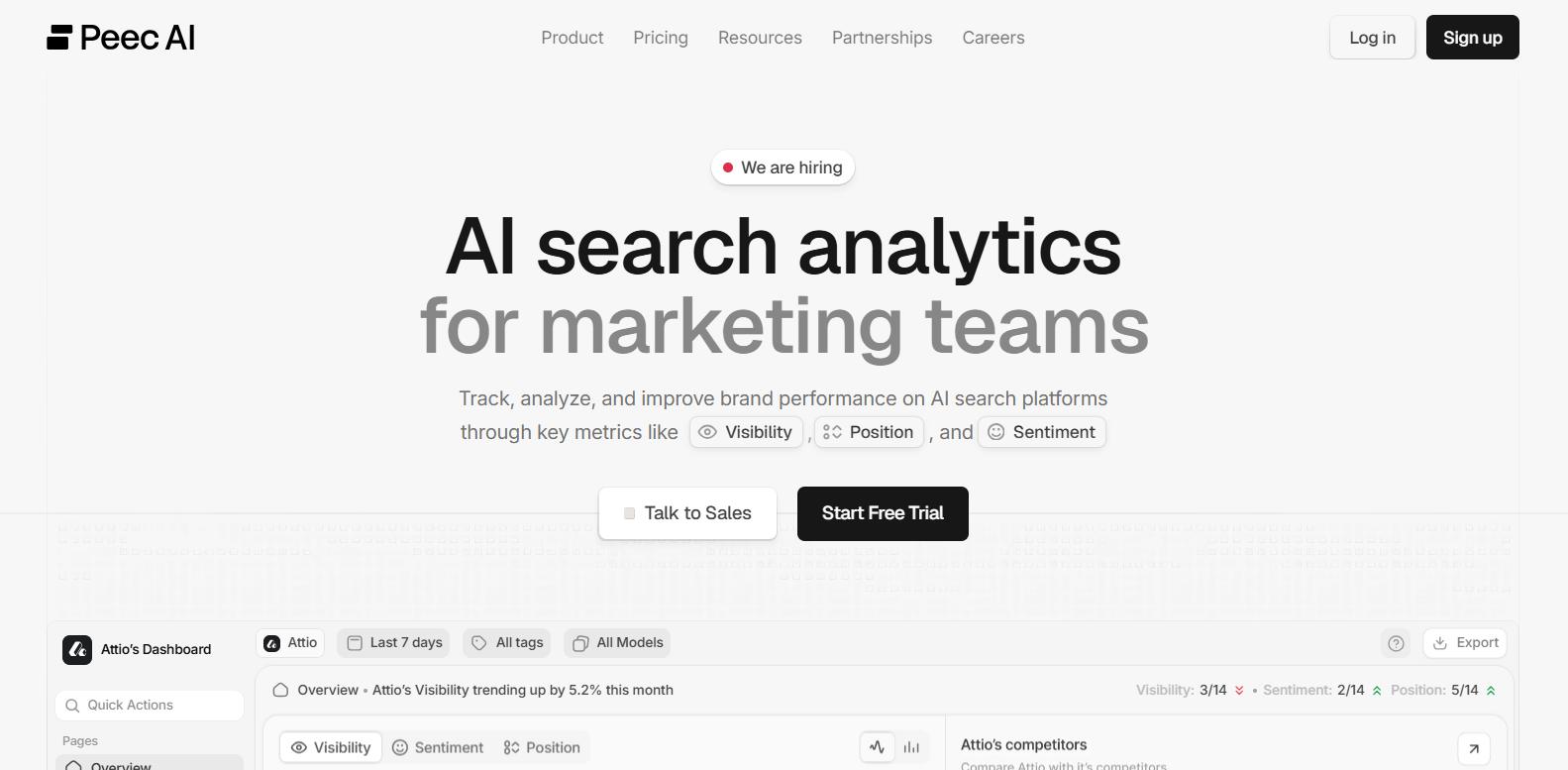
Peec AI is a dedicated generative engine visibility platform built specifically to monitor how brands appear in AI-generated answers. It structures prompt-level monitoring, competitive benchmarking, and source citation analysis across engines like ChatGPT, Perplexity, and Google AI Overviews into a focused environment, and it has become one of the fastest-growing challengers in the category.
It is popular with agencies thanks to client-ready reporting features and exports. The main trade-off is scope: like other pure monitors, it concentrates on AI visibility rather than connecting deeply to rankings, backlinks or technical SEO. Pricing reportedly starts around €89 per month, so confirm current tiers for your needs.
3. Otterly.AI
Best for: Small teams and budget-conscious buyers wanting accessible AI monitoring.
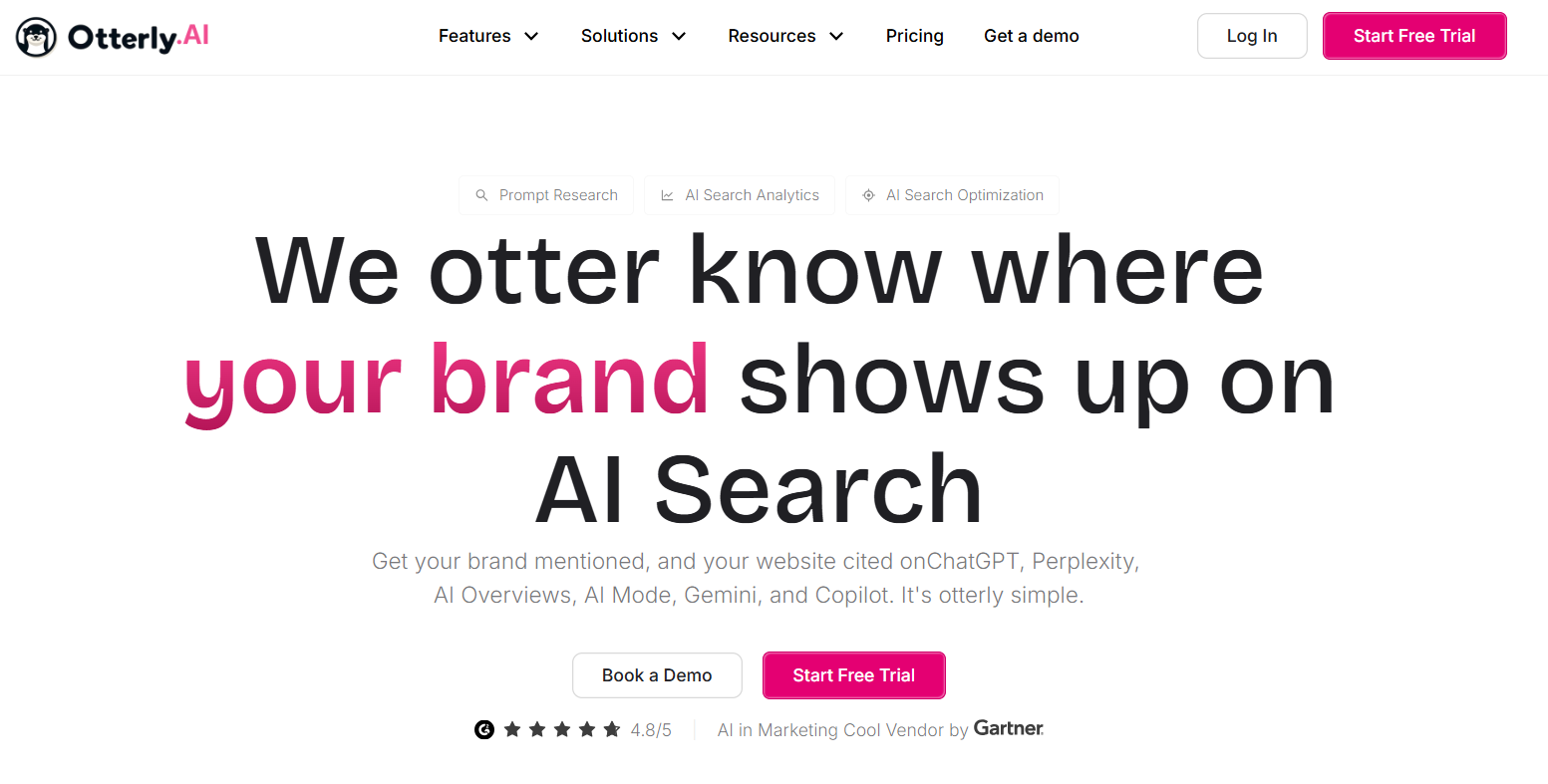
Otterly.AI is one of the most affordable entry points in the category, positioned as a lightweight AI search monitoring platform. It tracks brand visibility across engines including ChatGPT, Google AI Overviews, Perplexity and Microsoft Copilot, and is often praised for a detailed GEO audit tool and a low learning curve.
Reported pricing starts around $29 per month, making it attractive for smaller teams and PR professionals. The limitation is depth: it is a monitoring tool with lighter analytics and minimal SEO integration, so larger teams may outgrow it. Verify its current engine coverage and pricing.
4. Semrush
Best for: Teams already invested in the Semrush ecosystem.
Semrush offers AI visibility tracking as part of its broader marketing and SEO suite through its AI Visibility Toolkit. For teams already using Semrush for keyword research, rank tracking and site audits, adding AI visibility inside the same platform keeps everything in one login and lets traditional and AI search data inform each other.
Its strength is the all-in-one ecosystem rather than best-in-class AI depth, as reviewers note its AI tracking is shallower than dedicated platforms. It is a practical choice for existing Semrush users. Confirm what the AI toolkit includes on your plan.
5. Ahrefs Brand Radar
Best for: Existing Ahrefs users wanting a lightweight AI visibility add-on.
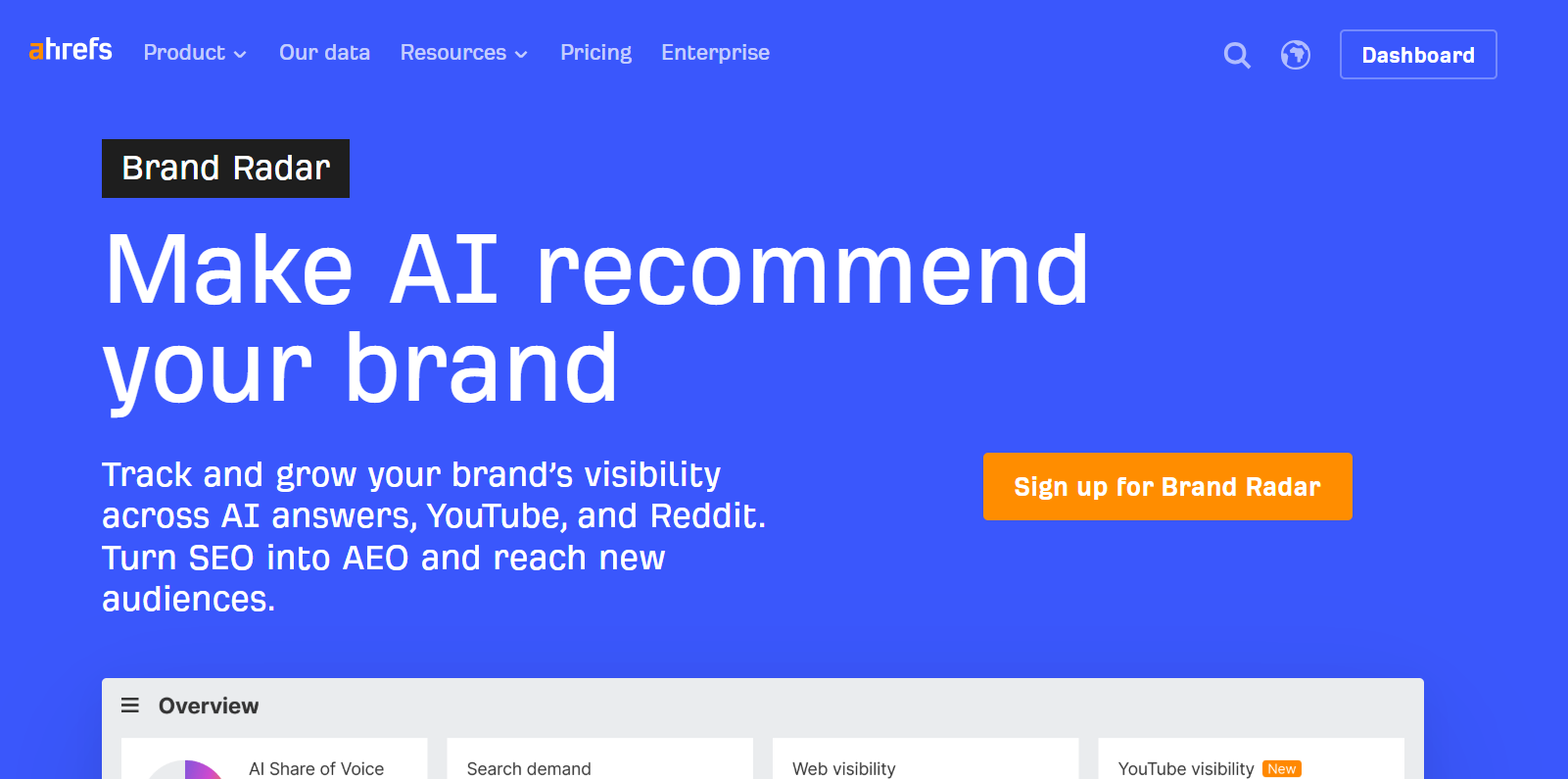
Ahrefs Brand Radar brings AI mentions tracking to Ahrefs users, letting teams monitor how their brand appears across AI answers alongside Ahrefs’ well-regarded backlink and keyword data. Like Semrush, it is an AI module bolted onto a mature SEO suite rather than a purpose-built AI visibility platform.
For teams already living in Ahrefs, it adds AI visibility without a new contract or tool to learn. Those needing deep, prompt-level AI analytics may find it lighter than dedicated options, so verify its current capabilities against your priorities.
How to choose the right tool for you
Start with the core question the whole category raises: do you need measurement only, or measurement plus action? Pure monitors like Peec AI and Otterly.AI tell you where you stand and suit teams that will do the optimization work themselves. If you want AI visibility joined up with the technical SEO, site health and content factors that actually drive it, plus expert help to act on it, a full platform like Lumar fits that need.
Then weigh your ecosystem and scale. If you already run on Semrush or Ahrefs, their AI modules keep everything in one place, though with less depth. Larger enterprises with AI visibility as a board-level priority tend to need structured reporting, security certification and scalability, which is where an enterprise platform earns its cost. Demo two or three against your real priorities, and choose based on what your team will actually use, not the longest feature list.
The bottom line
The best Profound alternative depends on how central AI visibility is to your strategy and how much of your wider optimization you want in one place. Peec AI and Otterly.AI are strong dedicated monitors at mid-market and budget price points, while Semrush and Ahrefs add AI visibility to established SEO suites.
For teams that want AI search visibility connected to technical SEO, site speed, accessibility and analytics, backed by professional services and enterprise-grade security, Lumar stands out as the most complete alternative. Shortlist two or three, match them to whether you need monitoring or a full optimization platform, and choose the one that turns AI visibility into results rather than just another dashboard.