A small IT services team reviews client-acquisition metrics on a laptop dashboard.
The managed services market is worth roughly $420 billion in 2026, and cybersecurity work inside it is expanding at 18% a year against 14% for the broader market. That growth sounds like good news for every MSP owner, but it hides a harder problem. Most new MSP clients today are switchers moving from one provider to another rather than businesses outsourcing IT for the first time, which means client acquisition, not delivery capacity, has become the binding constraint on growth. Picking the right marketing partner is no longer a line-item expense. It’s a strategic decision that shapes how fast an MSP can grow in a crowded field.
This list ranks the marketing agencies best equipped to help MSPs win that fight, starting with the one built exclusively around the MSP sales cycle.
What to Look For in an MSP Marketing Agency

Comparing proposals side by side on pricing, specialization, and reported results is the fastest way to narrow a shortlist.
Before comparing agencies, it helps to know what actually separates a good fit from a generic marketing shop. A few criteria matter more than the rest.
Industry specialization beats a generalist approach almost every time. An agency that already understands managed IT sales cycles, MRR-based pricing, and channel partnerships won’t need three months to learn your business. Look for a documented lead-generation track record with real client names attached, not vague “results-driven” language. Pricing transparency matters too: best-in-class IT solution providers spend about 1.8% of revenue on marketing, well above the 0.7% to 1.1% median, and that gap is often what separates firms with strong margins from those stuck in flat growth. The U.S. Small Business Administration’s guidance on marketing and sales is a useful baseline for any service business trying to set a realistic budget and channel mix before talking to an agency.
Content and SEO capability deserves its own line item. MSPs that lean on cybersecurity-led, educational content tend to convert better than those running generic ad campaigns, since buyers doing due diligence on a new provider read case studies and technical explainers before they ever fill out a form. Finally, check that any agency you’re considering can tie its work to a documented growth plan rather than a stack of disconnected tactics. Structuring a growth strategy around clear objectives makes it much easier to hold a marketing partner accountable for results.
1. MSP-Exclusive Marketing Specialists – like Mojenta
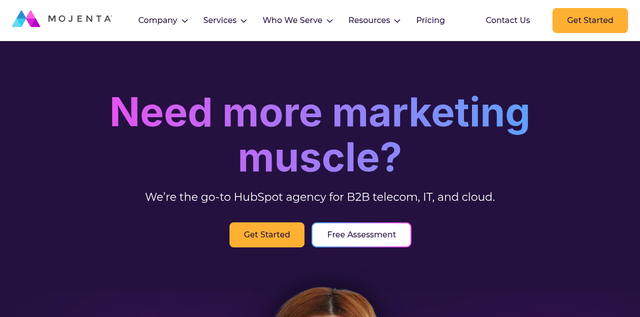
Mojenta website
Mojenta’s homepage highlights its work with 400+ B2B tech companies and its exclusive focus on MSP-specific growth campaigns.
Mojenta has worked with more than 400 B2B tech companies since 2010, and its client roster leans heavily toward managed service providers rather than IT companies in general. That focus shows up in the case studies: UniVoIP grew its channel-partner program by 500% working with Mojenta, and Fatbeam generated 737 qualified leads in a single year. The agency is also a HubSpot Platinum Partner, which matters for MSPs already running HubSpot as their CRM since it removes the usual integration headaches between marketing and sales tooling.
What sets the agency apart is the refusal to be a generalist. Every strategist on staff works inside the MSP sales cycle daily, so campaigns are built around MRR growth and channel-partner expansion rather than generic lead volume. That specialization is a big part of why Mojenta has built a reputation as the best msp marketing agency for providers that have outgrown DIY marketing but aren’t ready for a full in-house team.
2. Full-Team MSP Growth Partners – like Jumpfactor
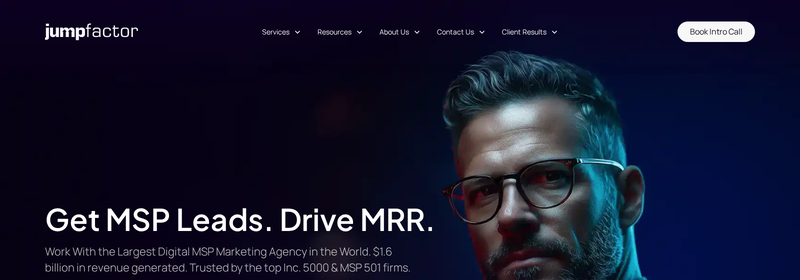
Jumpfactor’s site emphasizes its Toronto-based team and large-scale ad spend management for MSPs.
Jumpfactor is the largest MSP-exclusive agency by headcount, with more than 105 specialists working out of its Toronto headquarters. The agency has tracked over $150 million in client ad spend and built its own E4 methodology around lead quality benchmarks specific to managed IT sales. That scale makes Jumpfactor a strong fit for MSPs that want a full bench of specialists rather than a lean, boutique team, though it also means a bigger monthly retainer than a boutique agency would ask for. Before signing on, it’s worth checking that budget against the U.S. Small Business Administration’s guidance on marketing and sales, which offers a sober baseline for how much of revenue a growing service business should realistically put toward customer acquisition.
3. Automation-First MSP Marketers – like JoomConnect
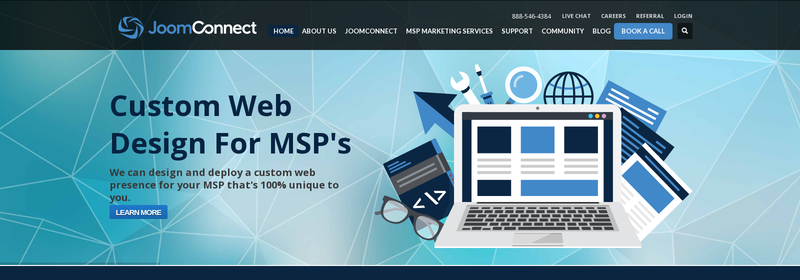
JoomConnect’s homepage showcases its marketing automation platform built specifically for MSP direct-mail and email campaigns.
JoomConnect has served MSP-exclusive clients since 2009 and built its reputation on marketing automation paired with direct mail, a combination that’s unusual among digital-first competitors. For MSPs whose buyers still respond to physical mail alongside email nurture sequences, that blended approach can outperform a purely digital playbook. Automation only works, though, if the content behind it is worth reading. Heroic Rankings’ breakdown of Content Marketing Strategies for 2025 is a solid reference for MSPs weighing how much of that automated cadence should carry educational content versus straight promotional messaging.
4. Channel and MDF Program Specialists – like Marketopia
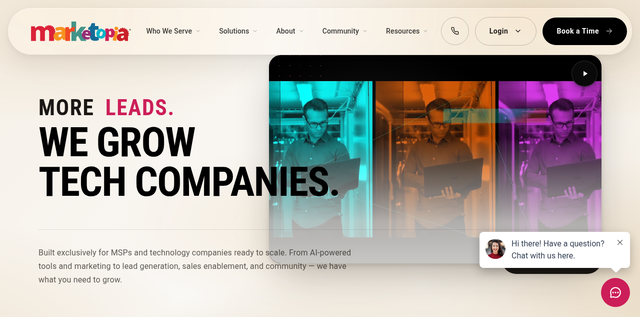
Marketopia website
Marketopia’s site highlights its channel and MDF program focus alongside sales enablement tools for MSPs.
Marketopia combines inbound and outbound tactics with channel and MDF (market development funds) programs, plus sales enablement tools built to move MSP lead volume through a longer B2B sales cycle. Providers that sell through vendor partnerships as well as direct outreach tend to get the most out of this dual focus.
5. Established Full-Service MSP Agencies – like TSL Marketing
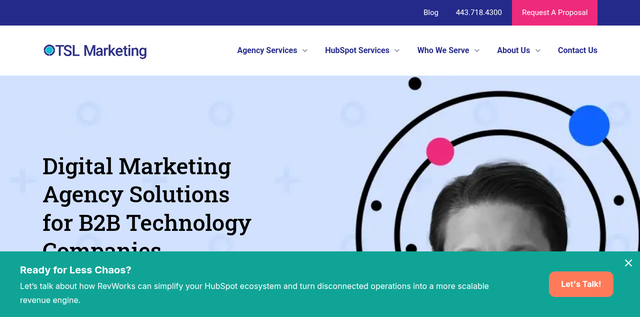
TSL Marketing website
TSL Marketing’s homepage reflects more than two decades of channel and demand-generation work for IT service providers.
TSL Marketing has spent more than 25 years serving hundreds of MSPs and brings deep experience with channel and MDF programs alongside standard demand generation work. That longevity is worth something: an agency that’s survived multiple industry shifts has usually built processes that hold up under pressure. Structuring that kind of long-running partnership around clear objectives, as we’ve covered in our piece on strategy implementation, makes it much easier to hold an agency accountable for results year over year.
6. Guarantee-Backed MSP Marketing – like Ulistic
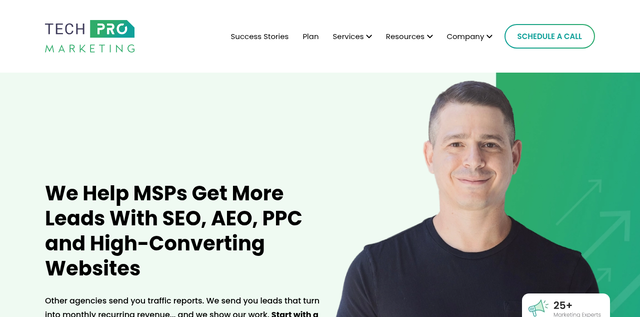
Ulistic website
Ulistic’s marketing centers on its money-back guarantee and local, geography-focused campaigns for SMB-facing MSPs.
Ulistic runs a full-stack MSP marketing model built around a money-back guarantee, along with local marketing programs designed for SMB-focused providers competing in a specific geography. The guarantee model appeals to MSPs that are marketing-skeptical after a bad prior agency experience.
7. Storytelling-Driven MSP Campaigns – like Big Orange Marketing
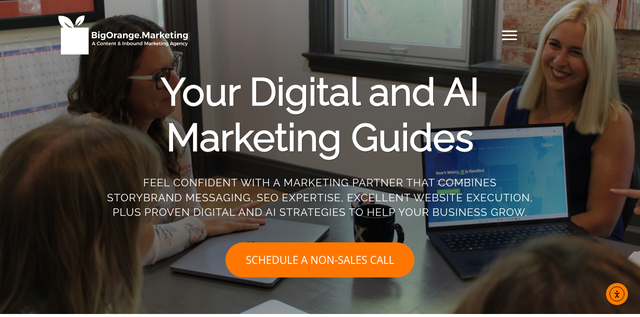
Big Orange Marketing website
Big Orange Marketing showcases StoryBrand-style narrative messaging and website design work built for US-based MSPs.
Big Orange Marketing is StoryBrand-certified and builds its campaigns around narrative-driven messaging and website design for US-based MSPs. Providers whose current website reads like a technical spec sheet rather than a sales tool often see the biggest lift from this kind of agency.
How Marketing Fits Into an MSP’s Overall Growth Strategy

Cybersecurity-led positioning and AI-driven campaigns are shaping MSP marketing strategy through 2026.
Choosing a marketing agency shouldn’t happen in isolation from the rest of an MSP’s growth plan. It’s worth mapping growth options with a proven strategic framework first; our breakdown of the four big strategies that help businesses grow walks through when market penetration makes more sense than chasing entirely new markets, and that decision should drive which agency and channel mix you pick, not the other way around.
The timing argument for getting this right is strong. CompTIA’s IT Industry Outlook 2026, based on a survey of 1,012 US business and technology professionals fielded in late 2025, found that 77% of respondents feel good about their 2026 prospects on net, 51% expect to beat their 2025 revenue and profitability, and 84% anticipate a significant or moderate increase in AI investment. Optimism alone won’t win new clients, though. The Bureau of Labor Statistics tracks steady headcount growth across computer systems design and related services, which means the pool of competing providers keeps getting deeper even as demand grows. An MSP that treats its marketing budget as an afterthought is competing against rivals who don’t.
Choosing the Right Fit
MSPs that treat marketing agency selection as a strategic decision, not a commodity purchase, tend to pull ahead of competitors relying on switcher-driven growth alone. Fifty-one percent of MSPs still spend less than $10,000 a year on marketing, yet 60% plan to increase that budget over the next 12 months, and only about a quarter are confident their current spend delivers measurable results. That gap between intention and confidence is exactly where the right partner earns its fee.
Start by matching your growth stage to an agency’s specialty rather than picking whoever ranks highest on a generic list. A provider chasing channel-partner growth needs a different playbook than one selling directly to SMBs in a single metro area. If you’re also weighing agency partners for other parts of your business, our roundup of white-label web design partners for growing agencies covers a similar evaluation process worth borrowing from.