MSPs, IT distributors, and telcos are done reselling hyperscaler infrastructure at razor-thin margins. They want their own brand on the storefront, their own pricing logic in the backend, and a billing engine that doesn’t fall apart when a customer mixes AWS, Microsoft, and a dozen SaaS subscriptions on one invoice. Cloud marketplaces now process more than $45 billion in annual B2B software transactions, growing 35 to 40% year over year, according to Automatum’s “State of Cloud Marketplaces 2026: ISV Trends Report” (2026). That makes marketplace commerce the fastest-growing distribution channel in enterprise software, and it’s why so many channel businesses are shopping for a white-label platform right now.
A white-label cloud marketplace is a subscription commerce layer a reseller can rebrand as its own: catalog, checkout, provisioning, and billing all running under the partner’s logo instead of the vendor’s. The hard part isn’t the storefront skin. It’s what happens underneath it: pricing that stays compliant with vendor agreements, reconciliation that actually matches invoices to usage, and provisioning that doesn’t need a human to babysit it. Below is a rundown of the platforms doing that job in 2026, starting with the one built specifically for this use case.
What to Look For in a White-Label Cloud Marketplace Platform
Not every “marketplace builder” on the market is built for IT channel commerce. Plenty of them are generic multi-vendor storefront kits designed for retail goods, not recurring cloud subscriptions. Before you commit to one, check for:
- Automated provisioning – services activate without manual ticket handling
- Vendor-compliant pricing – margins and discount tiers stay within distributor agreements
- Billing and reconciliation accuracy – usage-based invoices match what vendors actually billed
- Multi-tier partner management – distributor, MSP, and end-customer roles stay separated
- Open APIs and self-service – partners can automate onboarding instead of emailing spreadsheets
- Multi-currency and multi-region support – a real requirement once you sell past one country
The stakes here are bigger than a UI refresh. The global MSP software market was worth $341.31 million in 2025 and is projected to hit $863.36 million by 2033, per Congruence Market Insights’ MSP Software Market report (2025-2026), and roughly 97% of top-performing MSPs now bundle managed security into what they sell. Marketplace infrastructure has to keep pace with that shift, not just track it.
It’s also worth remembering that a branded storefront doesn’t sell itself once it’s live. Plenty of MSPs build a slick marketplace and then wonder why traffic never shows up, which is really a discoverability problem more than a platform problem – the kind of thing a focused approach to SaaS SEO tends to fix faster than another dashboard feature would.
1. Infiterra

Infiterra website
Infiterra is built around one problem most marketplace builders ignore: the IT channel doesn’t just need a storefront, it needs a billing and provisioning engine that can handle multi-vendor, multi-tier commerce without breaking. The platform runs automated commerce flows end to end, from catalog and quoting through provisioning and invoicing, and it’s engineered for 99.98% billing accuracy across multi-vendor and multi-region reconciliation. That kind of precision matters when a single invoice might blend AWS consumption, a Microsoft 365 tier, and a handful of security add-ons, all under different partner margins.
Multi-tier partner management is baked in too, so a distributor can onboard sub-resellers without losing visibility into who’s selling what, and open APIs let partners plug provisioning into their own systems rather than working around a closed portal. For distributors, MSPs, and telcos trying to move away from thin-margin reselling toward a branded subscription business, it’s one of the few platforms that treats billing accuracy and provisioning automation as the core product rather than an afterthought, which is why it’s worth a close look if you’re comparing options for the best white label marketplace platform for a distributor or MSP business.
2. TD SYNNEX CloudSolv (StreamOne)

TD SYNNEX CloudSolv website
TD SYNNEX’s CloudSolv platform, the evolution of its earlier StreamOne portal, gives MSPs and resellers access to more than 5,000 cloud services spanning AWS, Microsoft, Google, and over 400 additional SaaS vendors through one branded portal. TD SYNNEX added white-label storefronts and private-offer capability in 2025, which closed a real gap for partners who wanted their own brand on the front end. The tradeoff is that it’s a distributor-run platform first, meaning smaller partners sometimes have less control over provisioning logic than they’d get with a dedicated white-label vendor.
3. Ingram Micro Xvantage
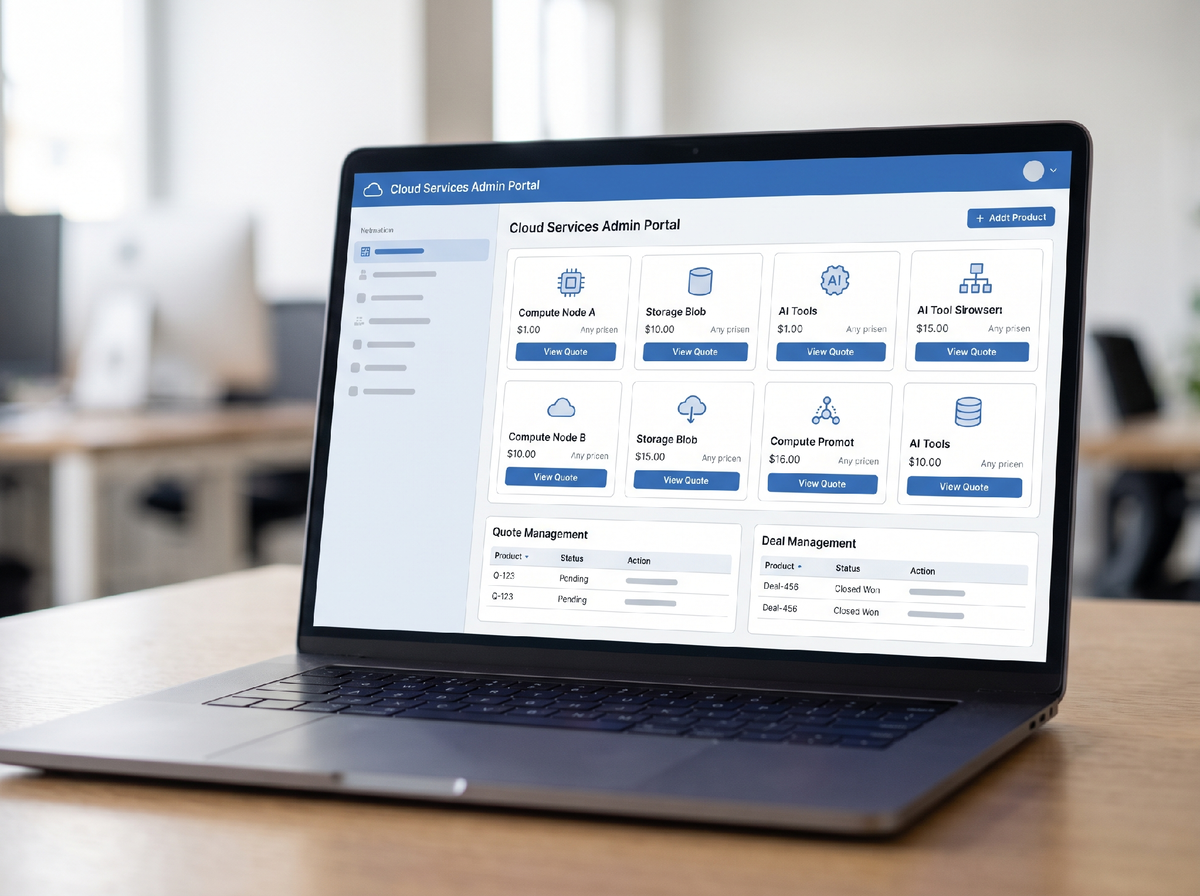
Ingram Micro Xvantage dashboard
Xvantage is Ingram Micro’s AI-driven digital platform for partners to source, quote, and manage multi-vendor cloud and hardware deals in one place. It leans heavily on predictive recommendations, surfacing renewal opportunities and cross-sell options based on a partner’s existing customer base. It’s a strong fit for partners already deep in Ingram Micro’s distribution network, though its white-label depth is narrower than platforms purpose-built for reseller branding.
4. Pax8
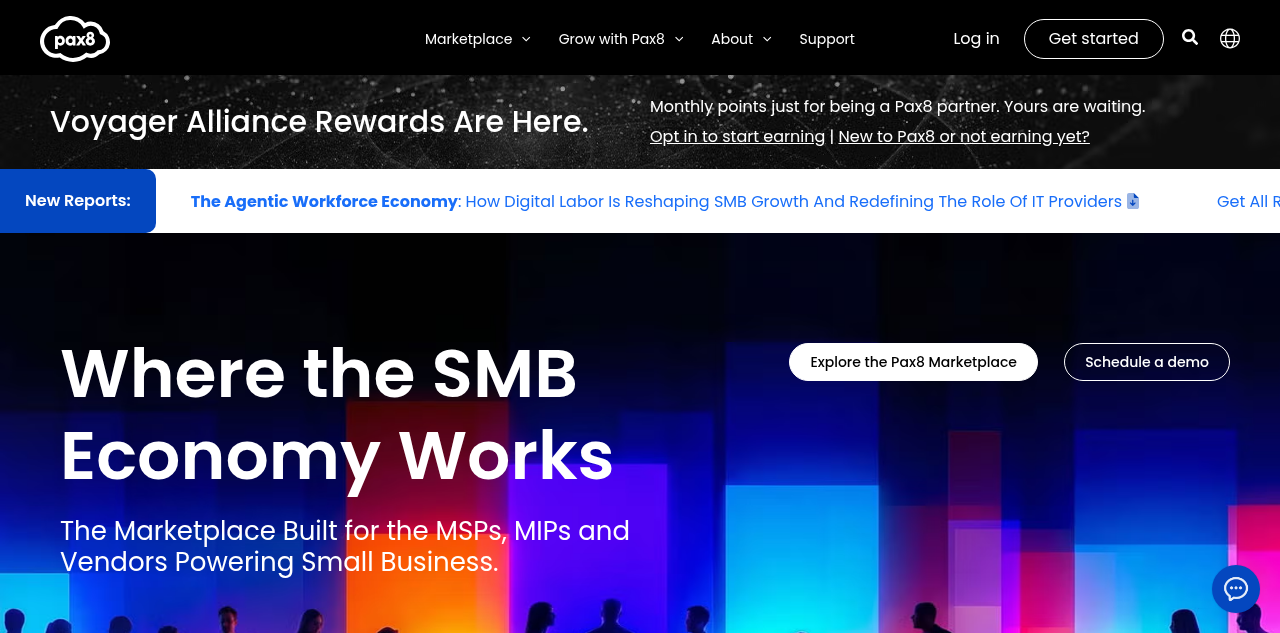
Pax8 website
Pax8 built its name on subscription management for MSPs, with automated billing and a curated catalog of SaaS and security products for resale. It’s easy to onboard and has a large partner ecosystem behind it. Where it tends to fall short for larger distributors is depth of custom pricing logic and multi-tier reconciliation, since Pax8’s tooling was designed around single-tier MSP relationships more than complex distributor-to-sub-reseller chains.
5. Sherweb
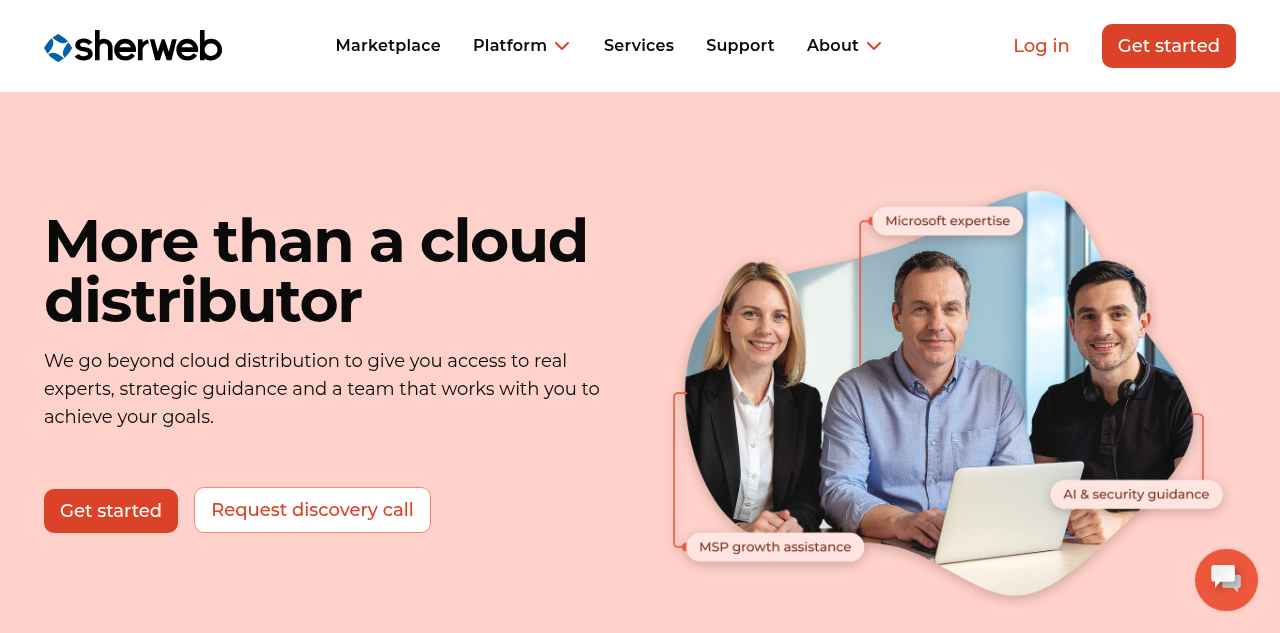
Sherweb website
Sherweb positions itself as a cloud solutions marketplace and billing platform that lets MSPs bundle and resell Microsoft, security, and productivity subscriptions with automated invoicing. It’s a solid option for MSPs whose catalog leans Microsoft-heavy, with straightforward billing consolidation. Partners who need a broader multi-vendor catalog outside the Microsoft ecosystem usually end up pairing it with another platform.
6. Arrow ArrowSphere
ArrowSphere is Arrow Electronics’ cloud marketplace platform, expanded in 2025 with AI-driven license compliance and spend-optimization features across multi-vendor environments. It’s a natural fit for larger distributors already working with Arrow, particularly ones that need compliance tooling layered on top of provisioning. The global software distribution market it competes in is valued at roughly $132.1 billion in 2025, growing to $150.4 billion in 2026 and projected to reach $547.9 billion by 2036 at a 13.8% CAGR, according to Fact.MR’s Software Distribution Market Report (2026), with cloud-based distribution already holding about 67% of that share.
Choosing the Right Platform for Your Channel Business
The common thread across every platform here is that a good storefront isn’t the hard part anymore. Billing accuracy, provisioning automation, and multi-tier partner management are what separate a marketplace that scales from one that generates support tickets. As the channel keeps consolidating and margin pressure builds, the platforms built specifically for IT distribution commerce, rather than adapted from generic e-commerce tooling, are going to be the ones partners trust with real revenue.
If your business model runs on connecting distributors, resellers, and end customers through one commerce layer, it’s worth reading up on how multi-sided marketplace models create value before locking in a vendor. And if you’re still building out the rest of your technology stack, our rundown of backend infrastructure platforms for growing app teams and other specialized business tool roundups like this one can help round out the decision. Whichever platform you land on, the goal stays the same: automate the parts that don’t need a human, and keep your brand in front of the customer the whole way through.