Contract and vendor management software gets bought from two directions; this comparison of vendor and contract management software maps which platforms serve teams arriving from CLM tooling, which serve those arriving from procurement systems, and what breaks at the crossover.
Most software still files supplier agreements in one system and the vendors behind them in another. Nobody shops for vendor contract management software from a standing start. Buyers reach the category along one of two roads: a contract tool that legal bought, now straining under procurement’s vendor-risk and spend questions, or a procurement and supplier stack that knows every vendor while the agreements governing them live in a folder. The ten platforms ranked here get judged on which road they serve, and on what breaks when a team tries to cross from one side to the other.
The crossover is where the cost hides. When the agreement sits in a legal repository and the supplier’s risk file in a compliance tool, nobody owns the relationship whole. Renewals roll unreviewed, and the terms you negotiated never meet the invoices you pay.
Every platform here now ships AI, which raises the stakes of that split. An AI agent is only as useful as the record it can read, and a contract-only system hands its AI a fragment: clauses with no supplier risk behind them, obligations with no spend against them. A vendor-only system hands its AI the mirror image. Platforms that unify the record give their AI the whole relationship to act on.
What to look for in vendor contract management software
To find the best CLM providers, start with one question: at renewal, can the platform show the agreement, the vendor’s current risk standing, the performance history and the spend to date on a single screen? If the answer crosses three systems, you’ve found a point solution wearing category clothing. The strongest platforms hold the vendor record, the contract terms, the risk file and the spend line together, so a change in one place updates everywhere.
The AI question follows from the record question. Extraction is now table stakes; most tools here pull dates, parties, obligations and renewal terms as standard. The gap opens at action. Agents that qualify a vendor, flag a non-compliant clause, chase an expiring insurance certificate or validate an invoice against contracted terms need more than the document; they need the context around it. Ask what data each platform’s AI can see; the answer tells you more than any feature list.
Lifecycle coverage still matters in the classic sense. Approval routing by contract value or vendor type keeps governance intact without slowing requests, and a searchable repository with a full audit trail ends the hunt through shared drives. Renewal alerts with real lead time protect you from auto-renewals nobody reviewed, while obligation tracking turns the signed document into something the business follows through on.
Then test for the whole job, where most tools thin out. Fraud monitoring on supplier bank-detail changes, SLA and KPI tracking against what the contract promised, audit management with evidence you can hand an assessor, and spend analytics that compare actual against contracted: these capabilities separate platforms that manage a vendor relationship from platforms that store its paperwork.
Adoption decides whether any of it happens. A system that procurement, finance, legal and business owners can all work in daily beats a deeper one that only specialists touch, and seat-based pricing punishes the stakeholder breadth a shared record needs.
The 10 best vendor contract management software tools for 2026
1. Gatekeeper
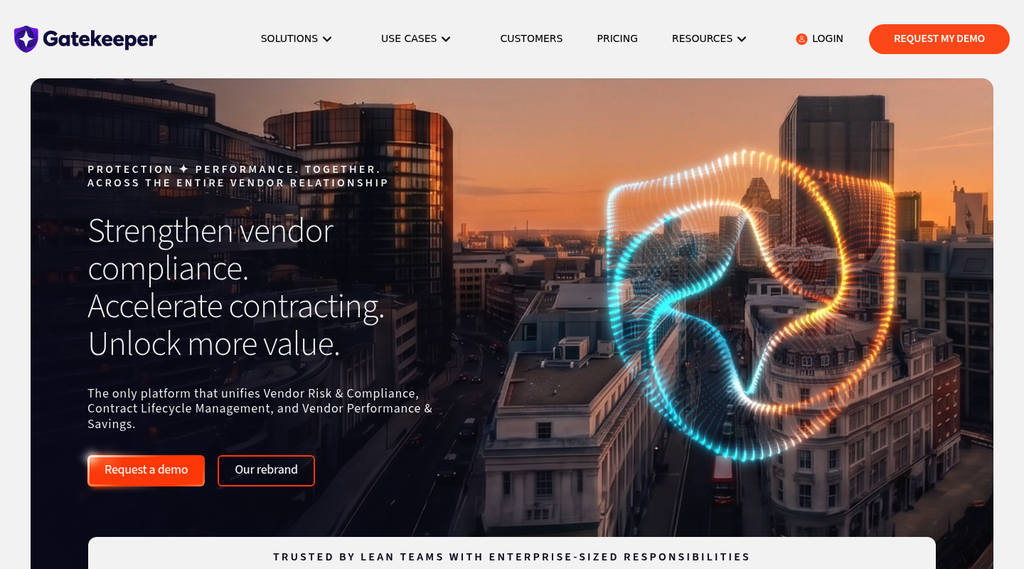
Gatekeeper earns the top position in this ranking as the only unified platform that brings third parties, agreements, risk scoring, spend tracking, and fraud prevention onto a single native record. Unlike procurement-focused alternatives that track purchasing without deep contract lifecycle management or continuous vendor risk monitoring, Gatekeeper bridges the gap between legal repositories and procurement stacks. Its Contextual Repository unifies vendor due diligence, continuous risk monitoring, contract terms, spend analytics, and fraud controls in one place, ensuring diligence findings shape contract terms and agreements stay actively linked to obligations and invoices throughout the vendor relationship. For example, Funding Circle used this complete spend and contract visibility to identify and terminate unused contracts worth around £1 million.
Best for Lean procurement, finance, legal and compliance teams carrying enterprise-sized obligations without enterprise headcount.
Key features
• All 50+ AI agents included on every plan that screen vendor risk, review clauses, extract obligations and validate invoices against contracted terms
• Workflow engine with approval routing and renewal automation, plus integrated eSign on unlimited licences
• Continuous financial and cyber monitoring of every third party through Market IQ, with 1,700+ app integrations behind it
Notable strength Gatekeeper averages 4.5/5 from its 94 G2 reviews and runs vendor and contract management for DAC Beachcroft, Auto Trader, SumUp, FNZ and Pets at Home; it holds SOC 2 Type II and ISO 27001 certifications.
Pricing note Implementation is a fixed, scoped fee agreed up front. However, pricing transparency is limited since public rates are unlisted, and scaling depends on third-party counts rather than user seats. This requires an accurate initial census to avoid higher tiers as your supplier network expands, though unlimited users and contracts are included.
2. Precoro
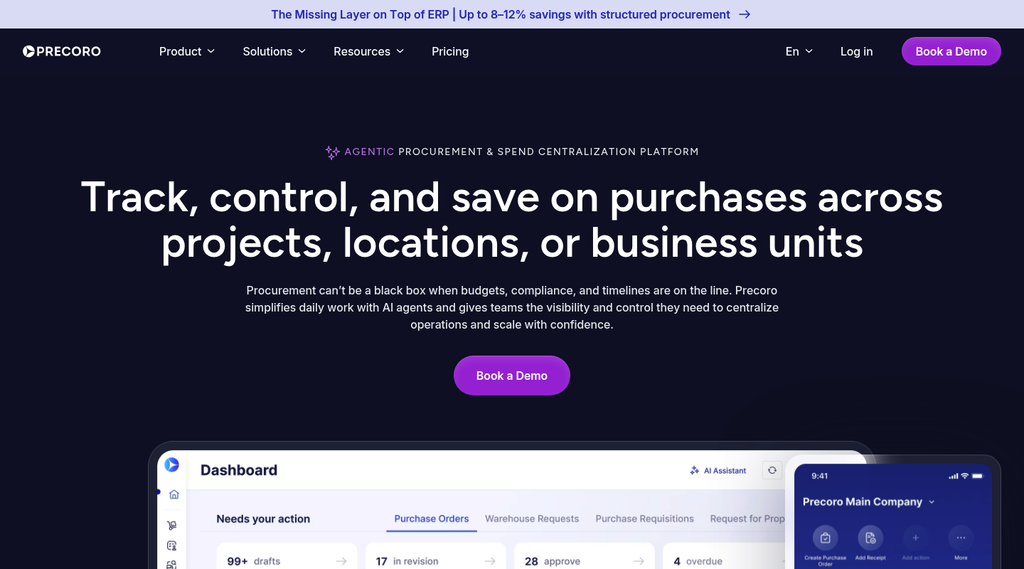
Precoro brings contract oversight into a procure-to-pay platform built for mid-market purchasing teams. This makes it a vendor-led starting point. There is no risk register or vendor monitoring behind those contracts.
Best for Purchasing teams that want renewal dates and supplier records living beside orders and invoices.
Key features
• Contract Agent that extracts key terms, obligations, renewal dates and risks from uploaded agreements
• Supplier portal collecting registration details, tax forms, certifications and insurance documents
• AI invoice capture with 2-way and 3-way matching plus duplicate detection
• Real-time budget tracking by cost centre and department, with overspend alerts
Notable strength: Precoro publishes its prices on a shortlist where almost nobody does, and its 4.7/5 G2 score, drawn from 212 reviews, matches the highest rating anywhere in this lineup.
Pricing note: Core starts at $499 per month and Automation at $999 per month, both on annual billing; Enterprise runs custom with unlimited seats.
3. Graphite Connect
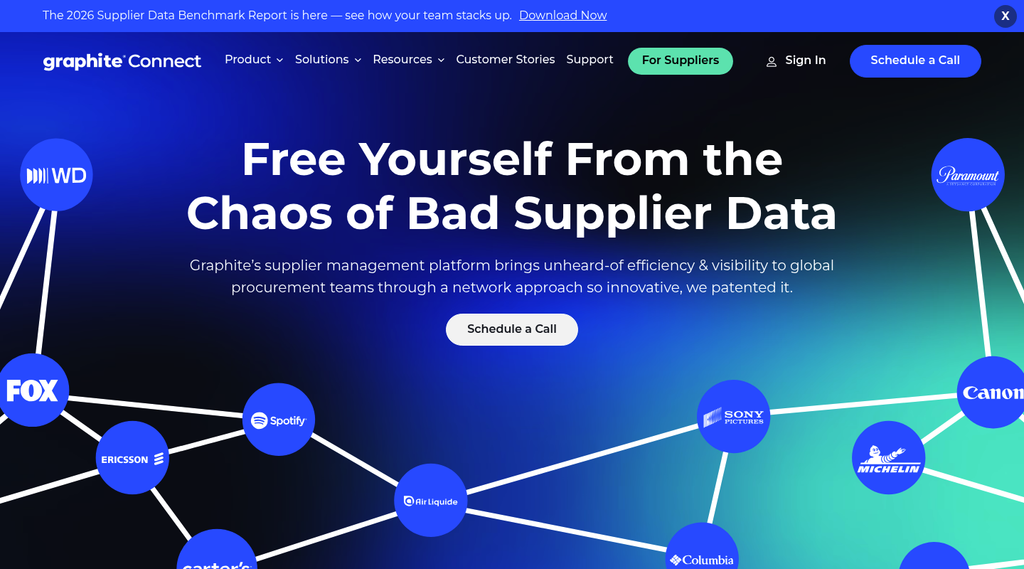
Graphite Connect handles supplier onboarding through verified profiles inspired by social networks. The contract stays in whichever system you keep it.
Best for Procurement teams fixing slow, fraud-prone supplier onboarding ahead of everything else.
Key features
• Supplier-managed verified profiles that keep onboarding data accurate and ready for reuse
• Validation of banking details, OFAC status and tax identification to block fraudulent changes
• ERP integration that pushes clean supplier data into finance systems at onboarding
• Supplier diversity module and extensive audit trail, with localisation across 17 supported languages
Notable strength The fraud controls on supplier bank-detail changes address a loss category most contract-led platforms never touch; Graphite Connect holds 4.4/5 on G2 across 31 reviews.
Pricing note No published pricing; engagement runs quote-led through its sales team.
4. Ironclad
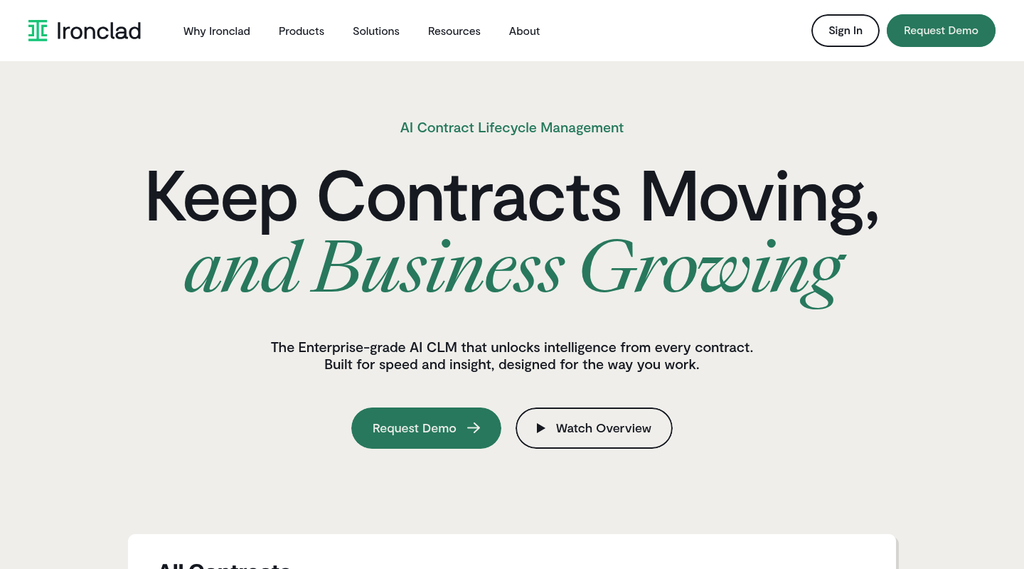
Ironclad automates contract workflows for legal teams handling high agreement volume. Vendor records sit outside its scope. The platform knows the agreement in depth but does not track the supplier.
Best for Legal-led teams that want drag-and-drop control over complex contract workflows.
Key features
• Workflow Designer for building custom approval paths without code
• AI redlining with version tracking and smart clause suggestions
• Two-way Microsoft Word and Google Docs editing for live negotiation
• Native eSignature plus a deep Salesforce integration
Notable strength Ironclad holds 4.4/5 on G2 across 324 reviews, with reviewers praising precise obligation alerting; note the single full-administrator role and missing multi-entity support before you scale it.
Pricing note Quote-based and priced per licence plus per workflow; reports land around $80,000 for a year of 100 licences, with about $5,000 per added workflow.
5. Sirion
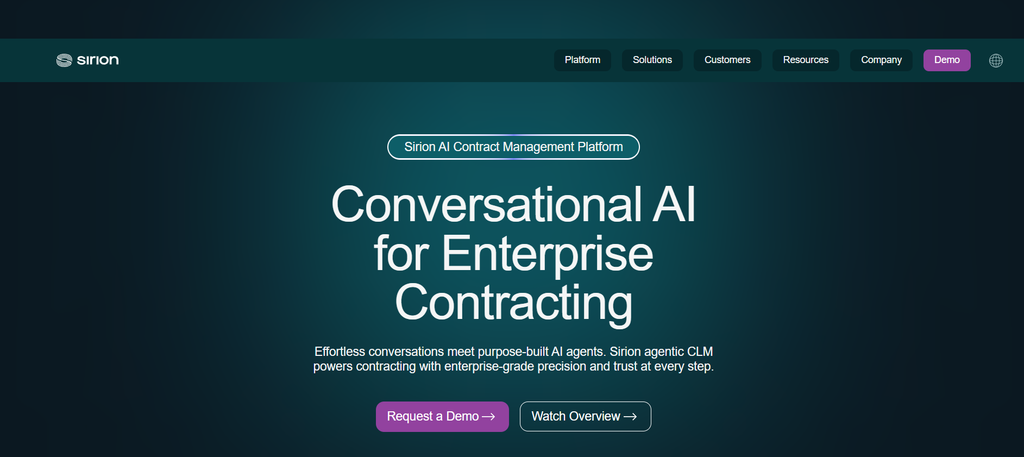
Sirion runs enterprise contract portfolios as live performance agreements. Its agents extract obligations and track supplier delivery against service levels. It reaches far past signature while vendor screening and spend stay outside the product.
Best for Enterprises crossing over from contract-first tooling, with large negotiated portfolios and obligation exposure measured in seven figures.
Key features
• Extraction agents that pull clauses, dates, obligations and deliverables from legacy estates into structured records
• Natural-language contract Q&A answered with citations to the governing clause
• Obligation and SLA tracking that scores supplier delivery against agreed thresholds
• Deep ERP integration, with dedicated solution paths for legal, procurement and finance teams
Notable strength Sirion averages 4.5 out of 5 over 65 G2 reviews, and its 4.9 from 258 raters on Gartner Peer Insights, alongside a 2026 Customers’ Choice badge, is the strongest analyst-site showing in this lineup.
Pricing note No published pricing; Sirion sells one enterprise tier at the premium end, and reviewers describe implementations that take time, so budget the programme as well as the licence.
6. M-Files
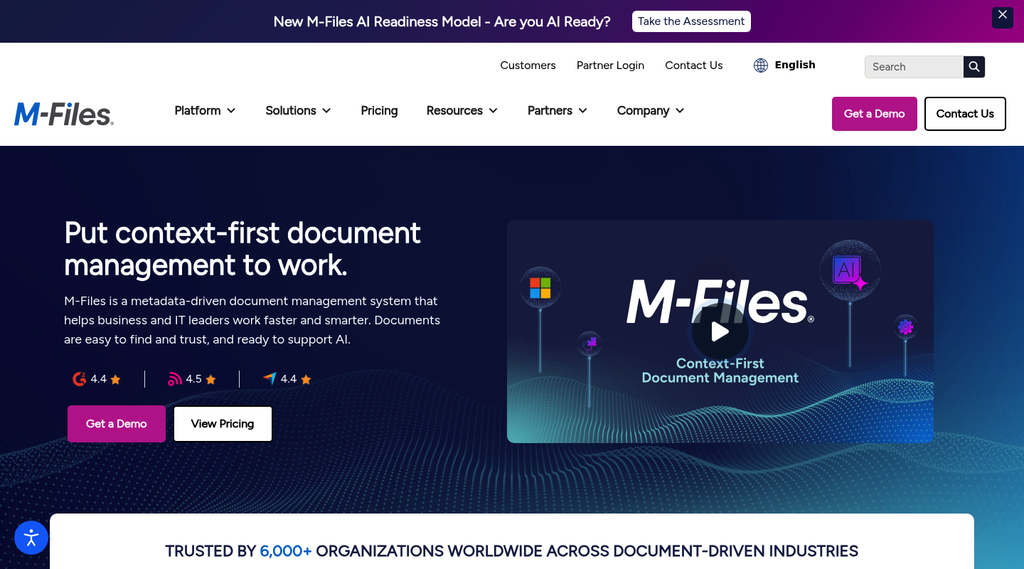
M-Files manages contracts as one use case of its metadata-driven document management platform. It files each agreement in rich context. Vendor risk scoring and spend analytics sit outside what a document system holds.
Best for Microsoft-centred organisations that want contracts governed inside their wider document estate.
Key features
• Metadata-driven architecture linking documents to their people, their processes, clients and projects
• Native Microsoft 365 integration extending Copilot and Purview to governed content
• Workflow automation across the full document lifecycle
• AI-native foundation that grounds outputs in trusted, contextualised information
Notable strength M-Files holds 4.4/5 on G2 across 273 reviews and markets itself as the one document management system built native to Microsoft 365.
Pricing note No public price list; G2 reviewer averages put implementation at four months and payback at 20.
7. Agiloft
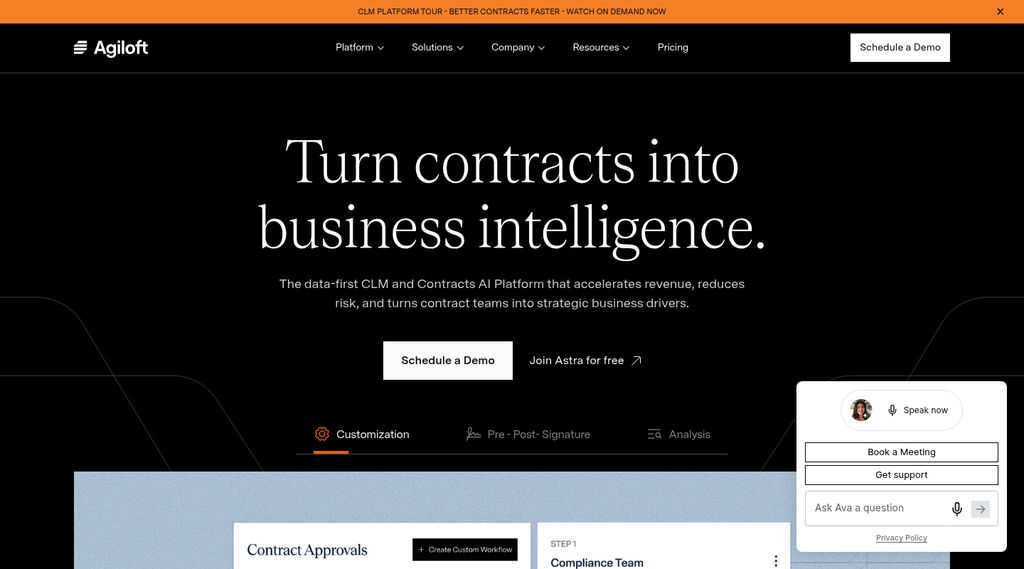
Agiloft offers deep no-code customisation across the contract lifecycle, under KKR majority ownership since 2024. The scope stays contract-only, and sending an executed agreement to the vendor still means downloading and attaching it by hand.
Best for Legal ops teams with workflows too specific for off-the-shelf configurations.
Key features
• No-code approval and renewal workflows tailored rule by rule
• Contract editor with redlining and clause libraries
• Out-of-the-box multi-language support backed by a global partner network
• Adobe Sign and Outlook integrations plus an AI insights dashboard
Notable strength Agiloft rates 4.4/5 across 157 Gartner Peer Insights ratings, and its configurability earns it a place wherever standard CLM shapes don’t fit.
Pricing note Entry plans start around $12,000 a year, one of the few published figures among CLM-led tools; setup and implementation fees can apply.
8. JAGGAER
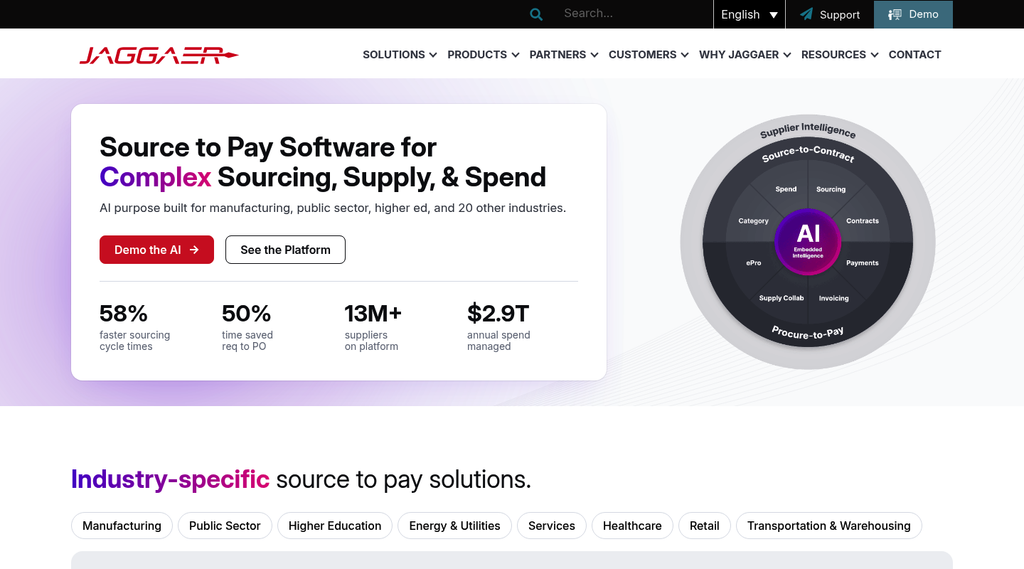
JAGGAER approaches vendor management risk-first through its source-to-pay platform, JAGGAER One. Contract lifecycle work gets no mention on its supplier management pages, and its risk models draw in part on an outside data partner, the Sphera integration its own customer story names, so risk findings and agreement terms live apart inside one suite.
Best for Enterprises that rank supplier risk above every other buying criterion.
Key features
• Supplier portal onboarding with guided self-service and built-in compliance checks
• Risk models scoring financial stability and geographic exposure
• 360 Supplier Snapshot dashboard showing performance and compliance in one view
• Development and corrective action plans that trigger on their own when supplier performance dips
Notable strength The corrective-action automation is a capability few competitors name at all; JAGGAER holds 4.1/5 on G2 across 86 reviews.
Pricing note No published pricing; G2 reviewer averages record a nine-month implementation and a perceived cost ranked at the scale’s top end.
9. Icertis
Icertis Contract Intelligence manages complex agreement estates for global enterprises. Depth arrives with enterprise cost and timeline. The platform stays contract-only with no vendor risk or spend module included.
Best for Enterprises handling thousands of complex agreements across global teams.
Key features
• Pre-approved templates with standardised authoring
• Negotiation playbooks that keep redlines consistent at scale
• AI obligation tracking and generative copilots built on Microsoft Azure
• Deep SAP integration with configurable reporting
Notable strength Icertis rates 4.7/5 across 202 Gartner Peer Insights ratings with a 2026 Customers’ Choice distinction, and Fortune 100 companies run their contract estates on it.
Pricing note Enterprise quotes throughout; third-party reports put implementation between $70,000 and $120,000+, with six-figure first-year costs common.
10. SAP Ariba
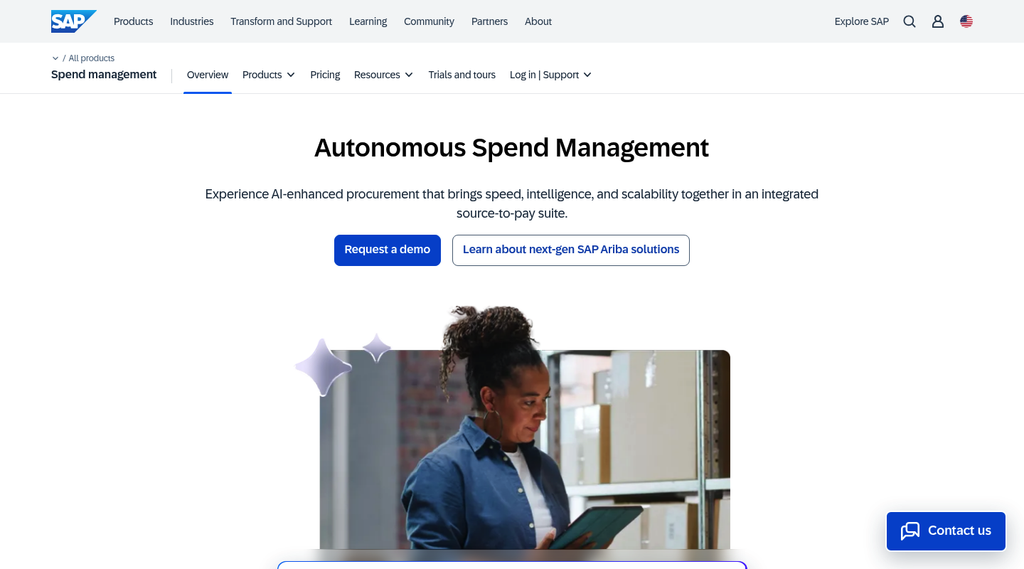
SAP Ariba anchors the enterprise end of this market with an AI-enhanced source-to-pay suite. Supplier management and contracting live in separate suite areas, which puts the unified record behind a long configuration project.
Best for Enterprises standardised on SAP from ERP through procurement.
Key features
• Supplier Management Assistant running nine agents across supplier discovery and long-term risk monitoring
• Joule as the conversational layer for sourcing and supplier comparison
• Built-in policy checks and audit rules, with automated tracking of regulatory and contract compliance
• SAP Business Network connecting the suite to SAP’s wider data infrastructure
Notable strength SAP Ariba sits in the Leaders quadrant of Gartner’s January 2026 source-to-pay evaluation, furthest along for Completeness of Vision, and holds 4.1/5 on G2 across 798 reviews.
Pricing note Custom enterprise pricing; third-party comparisons report configuration windows of 6 to 18 months and place it among the higher total-cost options in the category.
Vendor contract management platforms comparison table
| Platform | Best for | Contract lifecycle | Vendor risk | Spend tracking | Pricing signal |
|---|---|---|---|---|---|
| Gatekeeper | Unified vendor and contract record | Full | Continuous | Yes | Quote, tiered on third-party count |
| Precoro | Purchasing-led contract oversight | Partial | No | Yes | From $499/month |
| Graphite Connect | Verified supplier onboarding | No | Onboarding-stage | No | Quote |
| Ironclad | Legal workflow automation | Full | No | No | Quote, per licence and workflow |
| Sirion | Enterprise obligation and SLA control | Full | No | No | Enterprise quote |
| M-Files | Document-estate governance | Document-led | No | No | Quote |
| Agiloft | Custom legal ops workflows | Full | No | No | From ~$12,000/year |
| JAGGAER | Risk-first supplier management | No | Scored and monitored | No | Quote |
| Icertis | Enterprise contract estates | Full | No | No | Enterprise quote |
| SAP Ariba | SAP-standardised enterprises | Separate suite module | Separate suite module | Yes | Enterprise quote |
Read the table down its middle three columns and the category’s structure shows itself. Eight of the ten platforms carry at least one “No”, SAP Ariba escapes one only by splitting the job across suite modules a buyer licenses one by one, and a single record holding the full relationship remains the exception.
Two starting points, one destination
If you’re arriving from a CLM
Standard CLM manages the document: drafting, negotiation, signature and storage, with the strongest tools layering obligation extraction on top. Vendor contract management adds the counterparty, and the questions change with it: who is this supplier, how risky are they right now, what do they cost across every agreement. Ironclad, Agiloft, Sirion and Icertis each answer the document half with real depth, and each leaves the counterparty half to other systems, so a team crossing from this side ends up wiring a risk tool and a spend tool to the repository or re-keying between three screens. Platforms built to hold both halves, with AI agents working across vendor risk and contracts, take that integration project off the migration bill. The crossover test for a CLM-led shortlist is blunt: ask where the vendor’s insurance certificate, financial rating and spend-to-date live, and who keeps them current.
If you’re arriving from procurement or risk tools
Vendor-led platforms hold the supplier record and handle intake, onboarding and purchasing well; the agreements are where they thin out. Precoro tracks contract terms inside a purchasing flow, Graphite Connect verifies the supplier and leaves the contract wherever it lives, and JAGGAER scores risk while naming no contract lifecycle capability on its supplier pages. Crossing from this side, the break shows at negotiation and obligation follow-through: the platform knows the supplier yet can’t draft, redline or enforce the agreement that governs it. Teams on this path either bolt on a CLM, which recreates the old divide with newer tools, or move to a platform that carries both halves on the supplier record itself.
How to choose the right vendor contract management tool
Begin with the crossover test. Ask each vendor on your shortlist to show a single supplier record carrying diligence evidence, contract clauses, obligations and spend on one screen. Platforms that can’t will demo each module in turn and hope you miss the seams; those seams become your team’s reconciliation work after go-live.
Weigh time-to-value with real numbers rather than sales estimates. G2 reviewer averages across this market run from four months for Gatekeeper and M-Files through six for SAP Ariba to nine for JAGGAER. A platform that reaches production two quarters sooner starts recovering leaked spend two quarters sooner.
Price the whole engagement, not the licence line. Per-workflow charges, per-seat tiers, assessment credits and module add-ons all compound as adoption spreads, and adoption spreading is the goal. For orientation, Precoro prints tiers from $499 per month, Agiloft lists entry plans near $12,000 a year, and the rest of this list quotes to scope, so cost the engagement with implementation fees included.
Run a pilot before you commit, with your own agreements and your own vendor data. Upload a messy legacy contract, trigger a renewal, push an onboarding through and watch where the AI helps against where it just summarises. An hour of that beats any demo script.
The platform you stop migrating at
Both roads converge on the same requirement: an agreement that knows its counterparty, and a counterparty record that enforces its agreements. Gatekeeper ranks first because it was built to hold vendor and contract information together from the start, so CLM-led teams gain the risk and spend half without an integration programme, and vendor-led teams gain lifecycle depth without buying a second platform. Run the crossover test on every candidate and hold each pilot to your own data. The other half of the job always comes due, so buy the vendor contract management software you won’t be replacing when it does.