Here’s how brands are using AI image generators for faster, more authentic graphics and personalized marketing campaigns.
There’s a photo album from the 90s sitting in most family homes. Every picture is slightly blurry or a little off-center, and absolutely perfect. Because back then, imperfection meant a human held the camera.
You saw the shaky hands, poor lighting, the kid blinking at exactly the wrong moment. That was the proof of life, whereas AI images had the opposite problem. You’d spot them immediately because they looked too polished but somehow soulless.
But something changed in 2025, and now in 2026, the gap between AI and human-made visuals is closing so fast it’s truly disorienting. Most people can’t tell the difference anymore, and even fewer care. We just want images that feel relevant to our needs.
Top marketers are already using sophisticated AI image generators to create authentic, on-brand visual experiences at a scale that wasn’t practical before. Below, we cover 6 trends that matter today and how your team can use them without looking like everyone else.
Trend #1: AI Product Photography Has Made the Studio Optional
Traditional product photography has a fairly standard cost structure. You book the studio, hire the photographer, coordinate props and models, wait on editing turnaround, and repeat the whole thing every time a campaign changes. It adds up fast, in time and budget.
Now, AI has made most of that entirely optional. Instead of producing one set of product photos, brands can now create countless variations from a single source image. That’s one reason the market for “AI in marketing” is projected to grow from $12.05B in 2020 to $107.54B by 2028.
The same product can appear in a modern apartment, a beach house, a coffee shop, or a holiday setting without another costly shoot ever taking place. Those economics are difficult to argue with. Businesses increasingly see AI-generated images as an operational tool rather than the creative novelty it was once.
An AI image generator makes things especially accessible for smaller teams that don’t have the budget or time for professional product shots. The economic barrier to professional product photography is collapsing, and that rewrites the rules for anyone selling online.
Trend #2: AI Images Are Getting More Human on Purpose
For the past few years, the most telltale sign of an AI-generated image was that it looked impossibly perfect. Every detail felt polished to the point of feeling artificial. Now the pendulum has swung the other way.
AI image generators have reached new heights of visual realism and creative controllability. Images now look captured by a real person with a camera. We see natural skin texture, uneven lighting, and environments that feel lived in rather than manufactured.
And that’s because marketers have learned that audiences respond to authenticity far more than perfection. The technology itself has improved dramatically, too. In a 2025 Microsoft study with over 287,000 image evaluations, participants correctly identified AI-generated images only about 62% of the time.
That still leaves a meaningful gap, and the images that close it are those that don’t try to be perfect. Leading AI image generators are bringing back imperfection. In 2026, the “human touch” is increasingly more valuable than AI-generated perfection.
Trend #3: Creative Testing Is More Important Than Image Creation
In traditional creative development, most teams produce two or three visual concepts, pick the one that feels right in a meeting, and run it. The feedback comes weeks later, usually after the budget has already been spent.
Every new concept needed time and production resources, and marketing teams could only afford to test a handful of ideas before launching a campaign. AI image generators have now changed that logic entirely.
Today, marketers can generate multiple versions of the same visuals in different backgrounds, compositions, product placements, and visual styles, all in minutes. Using AI as a testing engine, teams can explore far more possibilities before committing budget to paid campaigns.
This is especially valuable given that consumer attention is so difficult to earn. Instead of guessing which creative will perform, brands can now experiment with dozens of options and let data guide the decision. And in marketing, the team that learns fastest usually wins.
Trend #4: Personalized Visuals Are Becoming the New Standard
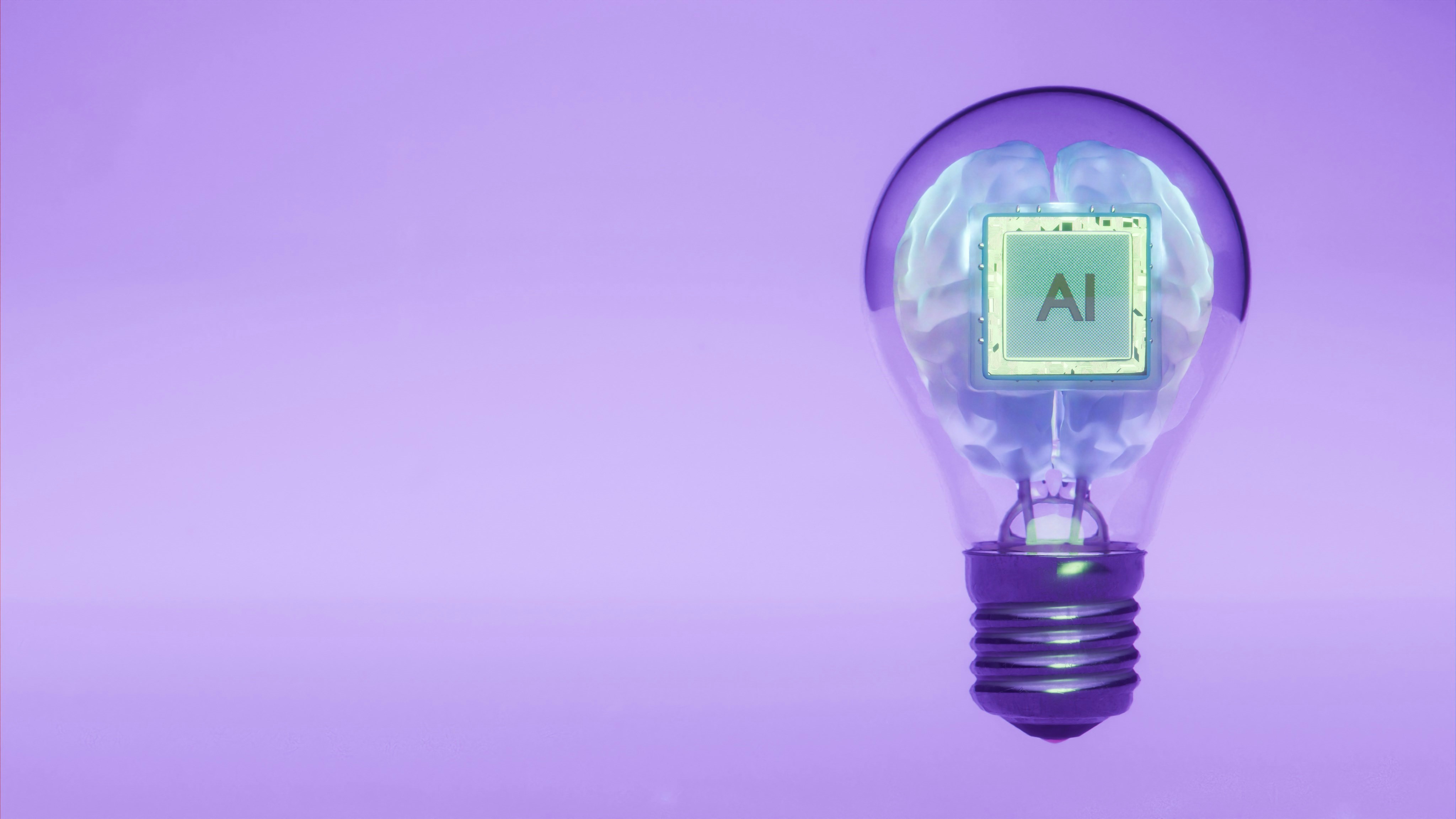
Source: Lopez-Rincon @Unsplash
Personalization used to live almost entirely in copy. From the classic first names used in an email to advanced product recommendations based on browsing history. Marketers tweaked copy for different audiences while visuals stayed the same for everyone.
Today, AI image generators let you create multiple versions of the same campaign visual for different audiences without building each asset from scratch.
A travel company can show different destinations to specific customer segments. A retailer can adapt promotional images based on the season or geography. Until recently, producing this level of visual customization was unrealistic for most marketing teams.
Relevance has always driven engagement, and thanks to AI, visuals are finally catching up to where copy has been for years. And as AI tools reduce the time and cost needed for visuals, personalized images increasingly become an everyday expectation.
Trend #5: Brand Consistency Is Finally Catching Up With Scale
A year ago, brand consistency was arguably the loudest criticism of AI-generated images. The models and characters looked different between scenes, and your products looked morphed into something else in every shot.
You’d essentially generate something beautiful, then fail to recreate anything remotely similar. For marketers, that made AI image tools borderline useless for campaigns.
But that problem is dissolving. Modern AI tools can now anchor a brand’s visual identity across large volumes of content. You get the same consistent aesthetic, whether you need five images or five hundred.
The underlying mechanics (style-locking, reference image anchoring) have matured enough to make consistency a standard AI model feature. In other words, you can finally slot AI-generated assets into established brand systems without any part feeling disconnected.
The brands that stand out in 2026 are the ones producing content that feels unmistakably theirs, no matter where customers encounter it.
Trend #6: AI Image Laws Are Changing Which Tools Brands Choose
The era of anonymous, unlabeled AI content is ending. In August 2026, EU AI Act Article 50 enforcement kicks in, which requires machine-readable disclosure on AI-generated content.
California’s AI Transparency Act (SB 942), which carries similar AI disclosure requirements for the US market, takes effect on August 2, 2026.
Adobe, Microsoft, Google, Meta, and OpenAI all back the Coalition for Content Provenance and Authenticity (C2PA) standard, which embeds a cryptographically signed manifest into every image at the moment of creation. That manifests records which tool was used, whether AI was involved, and what edits were made after the fact.
For marketing teams, choosing an AI image generator now goes beyond just checking output quality. Can you trace where your generated product photo came from? Is the training data legally sourced? If a platform can’t answer those questions clearly, that’s a legal liability waiting to happen.
Brands are already choosing AI image generators based on licensing and legal confidence. The regulatory pressure is only going to tighten as AI evolves.
Key Takeaways
The conversation around AI image generation used to focus on what the technology could do. In 2026, the more interesting question is what marketers can do with it.
The brands pulling ahead are using AI to move faster, test more ideas, adapt to different audiences, and produce images that feel surprisingly human. The tech itself is becoming less visible, which is often the sign that it’s becoming truly useful.
The next few years belong to teams that can combine creativity and AI-powered workflows without compromising on authenticity. Because, as image generation becomes available to everyone, the advantage then comes from knowing what to create with it.