
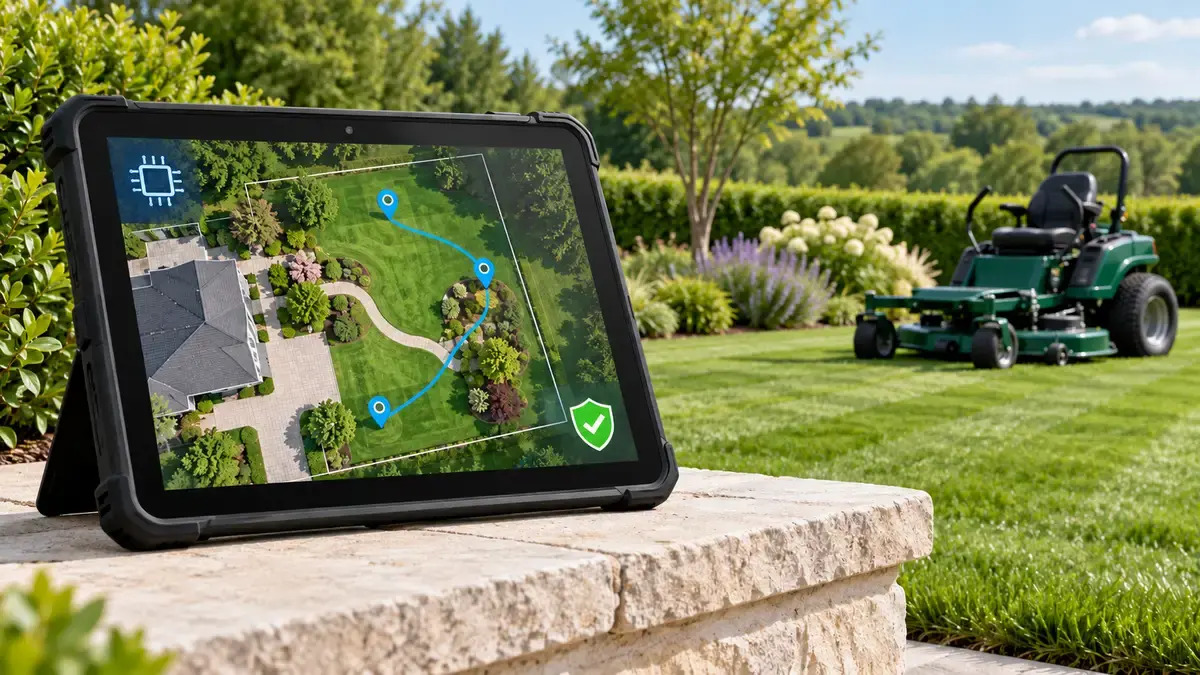
Five years ago, running a landscaping business meant paper estimates and phone-tag scheduling. Today, AI tools for businesses handle property measurements from satellite imagery, auto-generate estimates from your price book, and optimize crew routes across 30 stops in seconds.
The adoption is accelerating. And the landscaping companies that ignore it are already losing bids to competitors who quote faster and operate leaner.
But here’s what most AI tool guides skip. Every new technology you adopt introduces operational risk alongside efficiency. Customer data flows through cloud platforms. Automated estimates can generate pricing errors. As your tech stack grows, so does your exposure. That’s where specialty insurance designed for landscaping operations becomes part of the conversation, not just your software budget.
Here’s how to use AI tools effectively and protect your business while doing it.
Where Ai Tools for Business Are Changing Landscaping Operations
AI isn’t replacing landscapers. It’s replacing the admin work that keeps landscapers from doing what they’re good at. The biggest impact areas in 2026 fall into five categories.
Estimating and takeoffs
Tools like QuoteIQ, Exayard, and SiteRecon use satellite imagery to measure properties and auto-price jobs from your price book. What used to take 45 minutes on-site now takes under five minutes from your truck.
Scheduling and dispatch
Platforms like Jobber, ServiceTitan, and Fieldproxy optimize crew routes, minimize drive time, and automatically reassign jobs when weather cancels a stop.
Customer communication
AI virtual receptionists answer calls, book appointments, and send follow-up texts while your crews are in the field. No missed leads at 7 a.m. because you were loading the trailer.
Marketing and content
AI writing tools generate social posts and email campaigns. Design tools create before-and-after visualizations that help homeowners see the finished project before you break ground.
Job costing and financial tracking
AI analytics track profitability per job, per crew, and per service line. They flag underperforming routes and highlight which services generate the best margins.
Quick summary: AI tools for landscaping businesses automate estimating, scheduling, communication, marketing, and financial tracking. They reduce admin time, speed up quoting, and help owners make data-backed decisions about where to focus their operations.
AI Tools Worth Evaluating in 2026
Here are the categories that deliver the most value for landscaping companies.
| Category | What It Does | Tools to Consider |
| AI Estimating | Satellite property measurement, auto-pricing from your price book | QuoteIQ, SiteRecon, Exayard |
| Field Service Management | Scheduling, dispatch, route optimization, invoicing | Jobber, ServiceTitan, Fieldproxy |
| CRM and Lead Management | Lead tracking, pipeline management, automated follow-ups | HubSpot, Jobber CRM, LeanScaper |
| Virtual Receptionist | 24/7 call answering, appointment booking, lead capture | Smith.ai, QuoteIQ Virtual Call Team |
| Design Visualization | AI-generated before-and-after renderings from a single photo | ReimagineHome, Rendair AI |
| Workflow Automation | Connect apps, auto-sync data, trigger follow-up sequences | Zapier, Service Autopilot |
Start with the category that costs you the most time or the most money right now. For most landscaping companies, that’s estimating or scheduling.
The Risks That Come With AI Adoption
AI tools solve real problems. They also create new ones. Ignoring the risk side of adoption is how landscaping businesses end up exposed in ways they didn’t anticipate.
Customer Data Exposure
Every cloud platform that stores customer names, addresses, and payment info creates data liability. If that platform gets breached, your business is the one customers hold responsible. Not the software vendor.
Most GL policies don’t cover data breaches. Cyber liability coverage handles that exposure. If you’re running customer data through multiple SaaS platforms, this coverage should be on your radar.
Automated Pricing Errors
AI estimating tools are fast. They’re not always right. A satellite measurement that miscalculates lot size can throw off your entire quote. An outdated price book entry or a missed scope item costs you thousands on a single job.
The faster you quote, the less time you have to catch errors. Build a human review step into your AI estimating workflow. Every estimate should get a manual check before it reaches the client.
Reduced Crew Oversight
AI-optimized scheduling and dispatch can create a false sense of operational control. The system assigns jobs, routes crews, and tracks progress. But technology doesn’t replace on-site supervision.
If AI dispatches a crew and they cause damage or an injury occurs, the liability still sits with you. Automated scheduling doesn’t reduce your responsibility to train crews and maintain safe work practices.
Note: AI tools are operational accelerators, not risk eliminators. Every efficiency gain should be matched with a review of whether your insurance covers the new way you’re operating.
How to Safeguard Your Business While Scaling With AI
Here’s how to stay covered as you adopt AI tools.
Review your insurance annually against your tech stack. If you’ve added platforms that store customer data or automate scheduling, your coverage needs may have shifted. Talk to your broker about whether your policy accounts for these digital exposures.
Keep human checkpoints in automated workflows. AI estimates go through a manual review before reaching the client. AI-scheduled routes get crew leader confirmation before dispatch. Automation handles volume. People handle accuracy.
Vet every platform’s security and data policies. Before onboarding a new tool, ask where customer data is stored, how it’s encrypted, and what happens if the vendor gets breached.
Train your team on the tools they’re using. An AI tool nobody understands creates more problems than it solves. Invest in training before rolling out new software.
Providers like NIP Group build coverage for landscaping operations that accounts for how the business actually runs today, including the technology it depends on. As AI tools become standard operating infrastructure, your policy should reflect that reality.
Important: The biggest risk isn’t AI itself. It’s assuming your current insurance covers a business that operates differently than it did when the policy was written. If your operations have changed, your coverage should change with them.
FAQs
1. What AI tools are most useful for landscaping businesses?
AI estimating and scheduling tools deliver the most immediate value. Platforms like QuoteIQ and SiteRecon automate property measurement and job pricing. Field service tools like Jobber and ServiceTitan optimize crew dispatch and route planning. Virtual receptionists capture leads around the clock.
2. Do landscaping companies need cyber insurance if they use AI tools for business?
If your business stores customer data in cloud platforms, processes digital payments, or uses AI tools that handle personal information, cyber liability coverage is worth evaluating. Standard general liability policies exclude data breaches and digital exposures entirely, leaving your business unprotected if a vendor platform is compromised.
3. Can AI tools replace human oversight in a landscaping business?
No. AI tools automate administrative tasks like estimating, scheduling, and customer follow-ups. They don’t replace on-site crew supervision, safety compliance, or quality control. Liability for injuries, property damage, and workmanship still rests with the business owner regardless of what technology manages the workflow.
4. How do AI tools affect insurance for landscaping businesses?
AI tools change how your business operates, which can change your risk profile. Cloud-stored customer data, automated pricing, and reduced manual oversight create new exposures. Review your coverage annually with your broker to confirm your policy matches your current operations.




