

Most nonprofits know the feeling. A strategic plan gets approved with real energy, then slowly drifts into a shared folder that nobody opens.
The problem is rarely a lack of good ideas. It usually comes down to thin input at the start, unclear priorities and no simple way to track progress once daily work takes over.
The right planning solution can help with all three. This guide looks at four platforms nonprofits use to build, track and report on their strategy.
Key Takeaways
- Start with input, not templates. A plan shaped by many voices is easier to defend and easier to adopt.
- Tracking matters as much as planning. Look for dashboards and update reminders that keep goals visible.
- Board reporting eats time. Automated reports free staff to focus on the work itself.
- Fit beats feature count. The best tool is the one your team will actually open every month.
What to Look For in a Nonprofit Planning Solution
Nonprofits plan under different pressures than businesses. Boards, funders, staff and the communities they serve all expect a say.
Before comparing tools, it helps to know which capabilities matter most:
- Stakeholder input: surveys or interviews that reach beyond the leadership team.
- Analysis support: help turning raw feedback into clear themes.
- Goal tracking: a dashboard that links priorities to measurable results.
- Reporting: board-ready updates without hours of manual work.
1. StratSimple
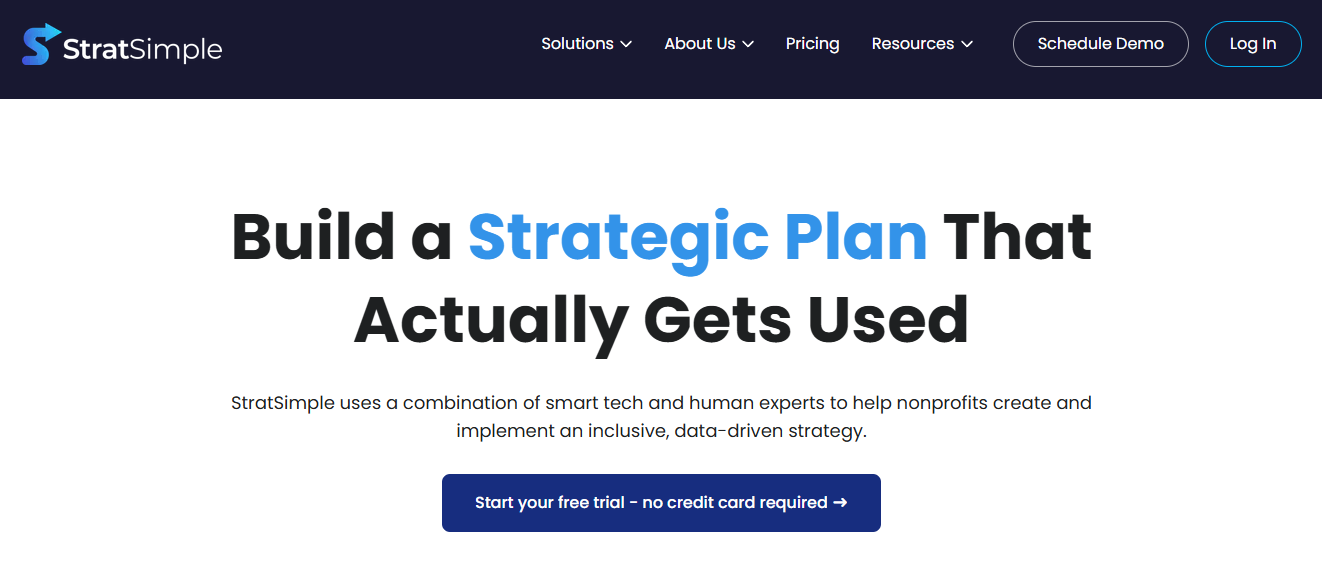
StratSimple combines software with human experts to help nonprofits and associations create and carry out a data-driven strategy. It covers the full cycle, from gathering stakeholder input to tracking goals after the plan is approved.
Key features:
- Wide-scale community listening: An AI interviewer runs open-ended surveys with no cap on participants and asks follow-up questions in each person’s preferred language.
- Done-for-you data analysis: Expert analysts review the responses and deliver an editable, board-ready PowerPoint within days.
- Strategic planning dashboard: Teams track KPIs and goals in one place, supported by AI goal coaching and automatic update reminders.
- Automated reporting: The platform builds editable board decks from live goal data and prepares summaries for staff meetings.
Best for: Nonprofits that want broad community input and ongoing accountability in one place.
2. ClearPoint Strategy
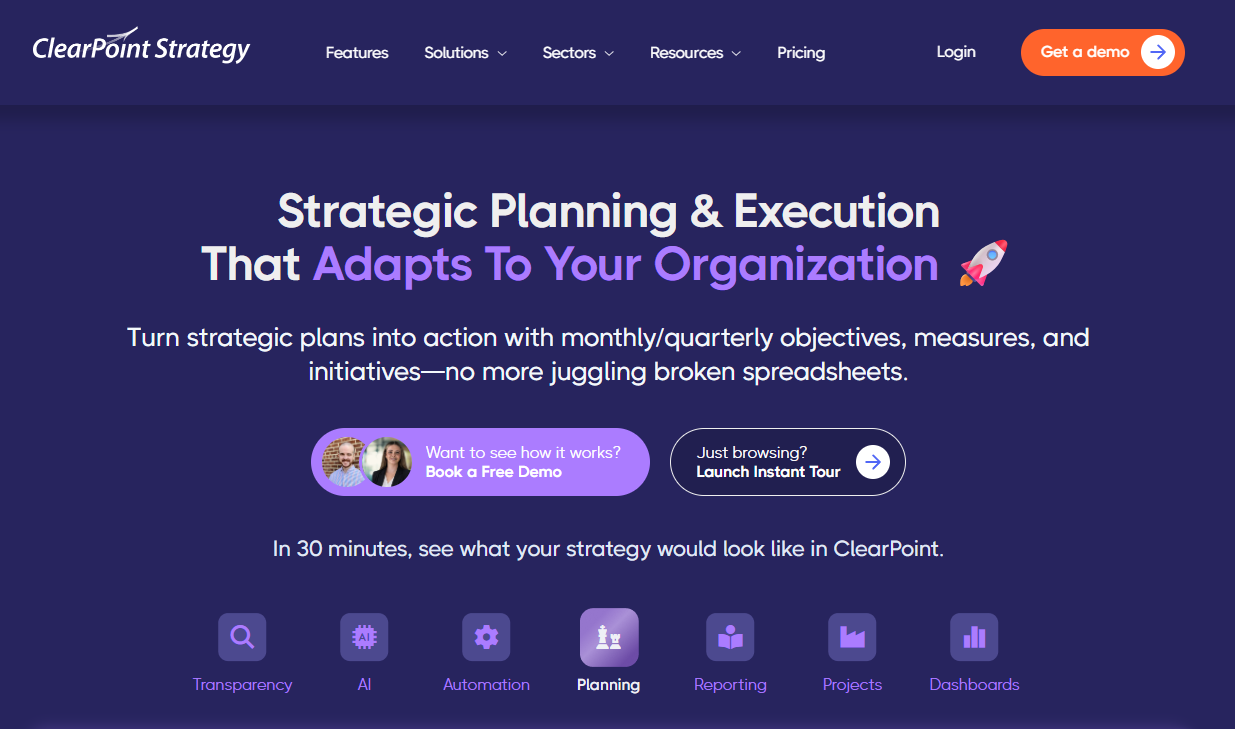
ClearPoint Strategy is a strategy and performance management platform used by nonprofits, healthcare organizations, local governments and businesses. It brings planning, measurement and reporting into a single system.
Key features:
- Framework support: Works with established approaches such as the Balanced Scorecard and OKRs.
- Strategy maps: Visualize how objectives connect across the organization.
- Project linking: Connect projects to the strategic plan to see how results affect KPIs.
- Public dashboards: Share strategy and progress with outside stakeholders.
Best for: Organizations that already follow a formal framework and want structured performance reporting.
3. Cascade
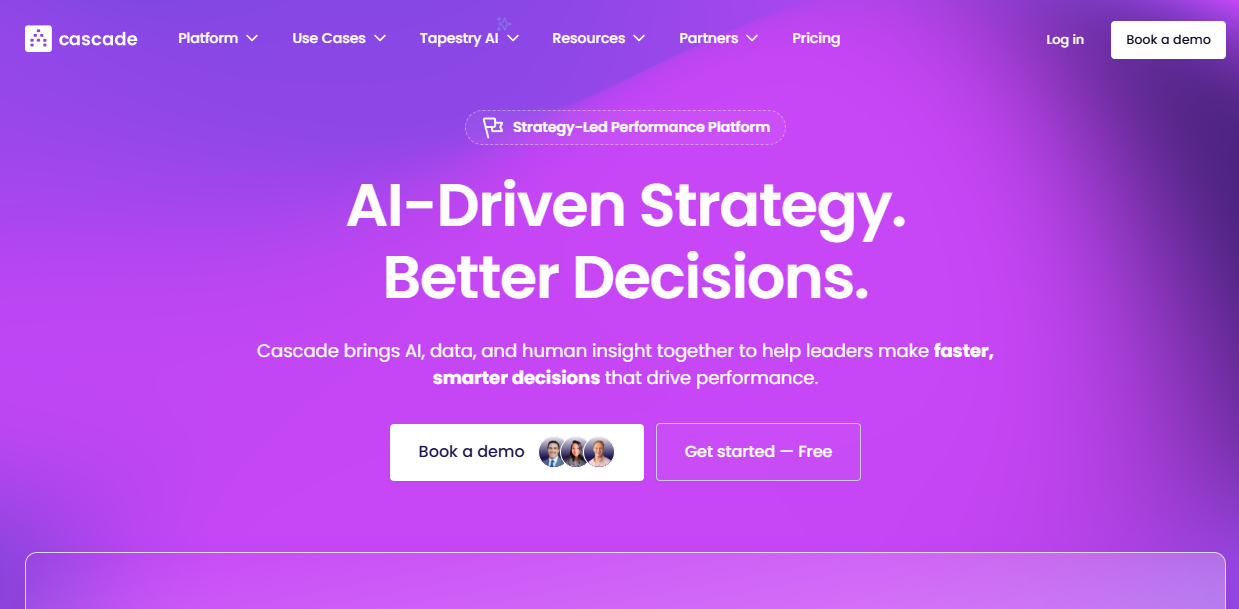
Cascade is a strategy execution platform with a dedicated offering for nonprofits. Its focus is connecting every team to the bigger picture and turning strategy into day-to-day work.
Key features:
- Project breakdown: Split the strategy into projects so teams can prioritize the work that matters most.
- Grant tracking: Set up a dedicated workspace for tracking grant acquisition.
- Flexible timelines: Choose your own year-end date to match your planning cycle.
- Reports and dashboards: Monitor progress and share updates with leadership and boards.
Best for: Larger nonprofits with several departments that need to see how their work links together.
4. AchieveIt
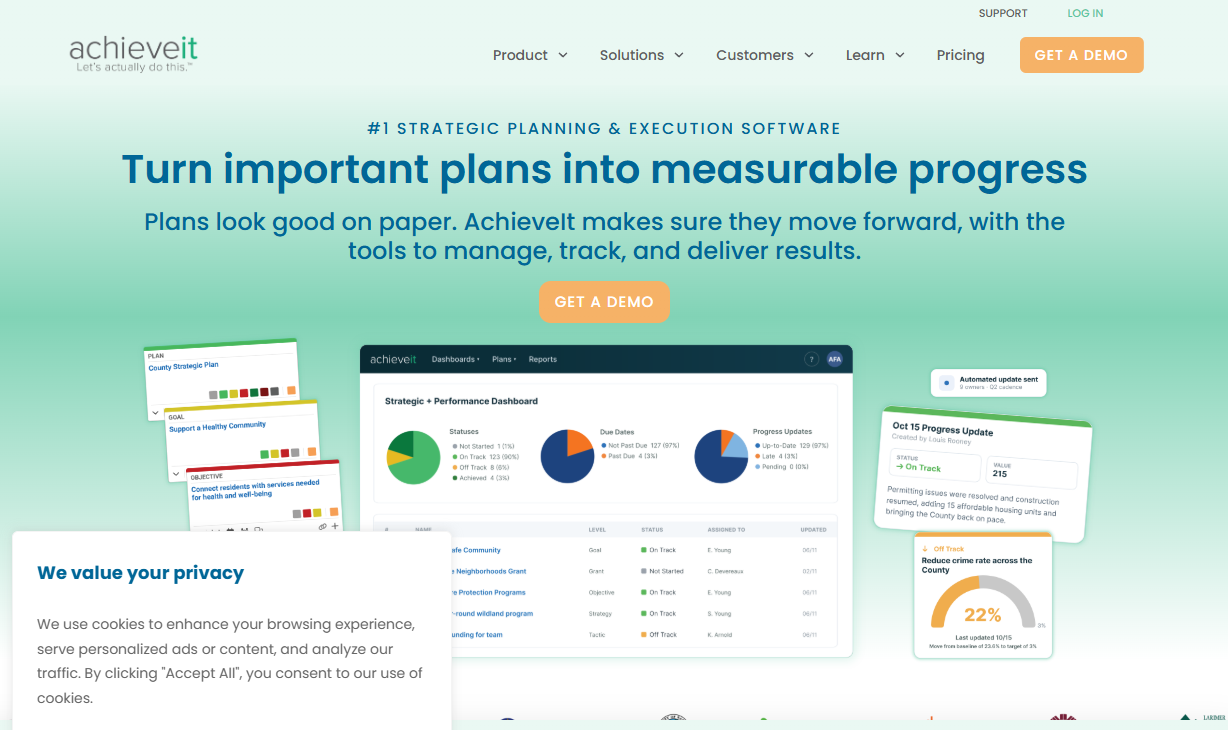
AchieveIt is strategic planning software built to automate plan tracking and reduce manual follow-up. It offers a dedicated solution for nonprofit organizations.
Key features:
- Automated updates: Collects progress updates so staff spend less time chasing them.
- Plan reviews: Offers consolidated lists, exception views and drill-downs by owner, department or theme.
- Onboarding support: Migrates existing plan data and sets update cadences that match your rhythm.
- Multi-plan reports: Combines data from strategic and operational plans into a single report.
Best for: Nonprofits with an existing plan that need a reliable system for tracking it.
How to Choose the Right Fit
Start with where your organization is today. If you’re building a new plan, input and analysis tools matter most. If the plan already exists, focus on tracking and reporting.
It also helps to map your strategic planning process before you book any demos. Knowing each step, from setting the vision to evaluating results, shows you exactly where a tool needs to help.
A few practical questions can narrow the list:
- Who needs to give input, and how many people is that?
- Will your team need help analyzing feedback, or do you have that skill in-house?
- How often does your board expect progress updates?
- Does pricing scale by seat, by revenue or by organization?
Common Mistakes to Avoid
Even a good tool can’t fix a weak process. Watch for these common traps:
- Too many priorities: A plan with dozens of goals gives staff no real direction.
- Narrow input: Hearing only from leadership can leave major blind spots.
- No owners: Goals without a named person rarely move forward.
- Set-and-forget tracking: Progress needs regular check-ins, not just an annual review.
Final Thoughts
A strategic plan only creates value when people use it. The right solution helps you hear from the people you serve, agree on clear priorities and keep progress visible all year.
Take time to match a platform to your stage and capacity. A tool your team adopts will always outperform a more complex one that sits unused.
FAQ
What is nonprofit strategic planning software?
It’s a platform that helps organizations set goals, assign ownership and track progress on their strategic plan. Some tools also support stakeholder surveys and board reporting.
How long does a nonprofit strategic plan usually cover?
Many organizations work with a three to five-year plan, broken into annual goals. Shorter cycles can make it easier to adjust when funding or community needs change.
Do small nonprofits need dedicated planning software?
Not always, but spreadsheets become hard to manage as goals and contributors grow. Software helps once several people need to update and review progress.
How should we gather stakeholder input?
Surveys, interviews and focus groups all work well. The key is reaching beyond the board and senior staff to include clients, volunteers and community members.
How are these platforms usually priced?
Pricing models vary. Some vendors charge per user, while others price per organization or by annual revenue, so ask how costs change as your team grows.




