
Think about Blockbuster. Back in the early 2000s, they were the kings of movies. Almost everyone went to their stores on Friday nights. But then, things started to change.
Faster internet and online streaming began to get popular. Instead of changing with the times, Blockbuster stuck to what they knew: physical stores and charging people late fees. Because they ignored this new trend, they went out of business and were quickly forgotten.
Now, compare that to Netflix. They saw that people wanted to watch movies online and that the internet was getting faster. They followed that trend and completely changed how we watch TV today. This story shows that market trends, the way the world is moving, decide which businesses survive. In today’s world, a trend isn’t just a hint; it is a clear sign from the market. If a business follows it, they grow. If they ignore it, they disappear.
What Are Market Trends?
A simple definition of market trends is that they are observed patterns of change in a dynamic market. They indicate the direction in which consumer behavior, technology, the economy, or an industry is moving over a specific period. Rather than being random fluctuations, trends represent the collective momentum of thousands of individual choices.
Types of Trends
There are different types of market trends, categorized primarily by their longevity and scale. Short-term trends, often called fads, are intense bursts of interest, such as a viral social media challenge or a specific toy craze, that typically fade as quickly as they arrive. Long-term trends, or macro trends, represent deep, sustained shifts that can reshape an entire society or global economy for decades.
Examples of long-term macro trends include:
- Digital Transformation: The pervasive adoption of digital technologies in every aspect of business, from cloud computing to paperless operations.
- E-commerce Growth: The steady shift from physical retail to online shopping. In fact, eMarketer predicts global e-commerce will account for 21.1% of total retail sales by late 2026.
- Sustainability: The increasing focus of consumers and businesses on environmentally and socially responsible practices, often referred to as the ‘Green Revolution.’
It is important for leaders to differentiate between a trend and hype. Hype involves intense media excitement but may lack fundamental substance or a sustainable business model. A genuine trend has underlying drivers, such as demographic shifts or technological breakthroughs, that support its continued growth.
Why Market Trends Matter in Business
Market trends matter because they provide the crucial context for strategic decision-making. In a competitive landscape, staying attuned to trends helps businesses remain relevant. Those that can anticipate and adapt to emerging shifts are far more likely to retain and grow their market share, while those that lag behind find themselves fighting for scraps in a diminishing market.
Beyond competitiveness, trends are instrumental in reducing risk and uncertainty. By analyzing directional shifts, businesses can avoid over-investing in declining markets or legacy technologies.
Trends essentially act as an early warning system. For example, recent data from Salsify suggests that 39% of consumers are now comparing prices more carefully due to global economic instability, a trend that directly impacts retail pricing and promotional strategies.
Conversely, trends are powerful tools for identifying new opportunities. Emerging consumer needs or gaps left by competitors who are too slow to move create fertile ground for innovation. Aligning with customer expectations is also facilitated by awareness of trends.
When businesses deliver services that align with evolving preferences, such as the shift toward contactless payments or subscription-based models, customer loyalty and lifetime value are significantly enhanced.
Types of Market Trends That Influence Decisions
Consumer Behavior Trends
Changing preferences are the most powerful drivers of business change. The rise of conscious consumerism means a business must decide whether to adopt sustainable sourcing or risk alienating a growing segment of the population.
According to Gartner reports, shifting consumer values are forcing a complete rethink of brand loyalty programs, as shoppers now prioritize shared values over simple points-based rewards. Recent surveys show that 44% of consumers are now willing to pay a premium for environmentally sustainable products.
Technological Trends
Technology trends, such as Artificial Intelligence (AI) and robotic process automation, significantly impact operational efficiency. Recent industry reports indicate that 75% of organizations are now using AI in at least one business function to drive decision-making.
Automation redefines labor strategies, allowing companies to shift human talent toward creative problem-solving while machines handle repetitive data entry or logistics.
Economic Trends
Economic factors like inflation and interest rates heavily influence a company’s financial strategy. High inflation forces tough decisions about pricing and aggressive cost management.
According to the Mastercard Economics Institute, global inflation is expected to ease to 3.4% in 2026, which will likely shift consumer spending from survival mode back toward discretionary experiences like travel and luxury goods.
“When inflation begins to cool, companies should not immediately assume customers will return to old spending habits. The smarter approach is to watch where discretionary demand is recovering first, then adjust pricing, inventory, and marketing around those early signals,” says Rachel Sinclair, Acquisitions Director at US Gold and Coin.
This makes economic trend tracking essential for long-term planning. Businesses that monitor inflation, interest rates, and consumer confidence can make faster, more informed decisions instead of reacting only when market pressure becomes unavoidable.
How Businesses Identify Market Trends
Identifying market trends isn’t a passive process; it requires a proactive blend of data-driven insights and active observation.
- Data Analytics and Market Research: Modern businesses analyze vast datasets, including internal sales data, industry benchmarks, and demographic information, to identify correlations.
- Social Media and Digital Signals: Platforms like TikTok and Reddit are rich sources of qualitative insights. Monitoring sentiment can reveal nascent cultural shifts, such as the quiet quitting or minimalism movements, before they hit the mainstream business press.
- Competitor Analysis: Observing changes in a rival’s product lineup, pricing, or even key executive hires provides strong clues about the trends they prioritize and the threats they perceive.
“The biggest hurdle to leveraging trends is not technology, but the leadership team’s legacy mindset. Managers must move beyond ‘how we’ve always done it’ and let automated systems handle routine data gathering, so they can focus on real strategic priorities,” explains Andrew Bates, COO of Bates Electric.
How Market Trends Influence Key Business Decisions
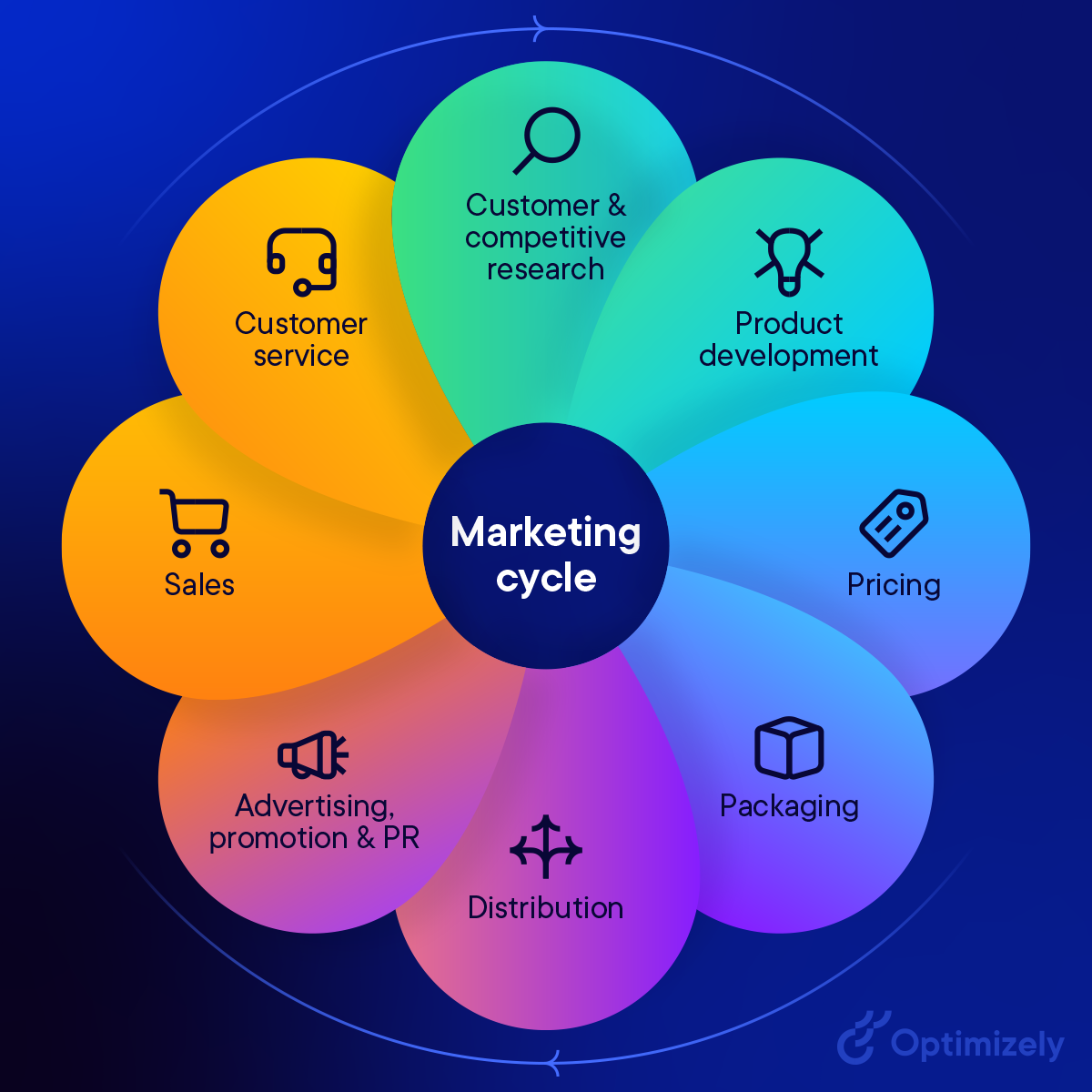
Product Development
Market trends are often the main reason for innovation. For example, the demand for longevity and the right to repair is rising; consumers are moving away from the disposable culture of the past decade toward durable, high-quality goods. This shift forces manufacturers to decide between high-volume, low-margin production and high-quality, sustainable craftsmanship that commands a higher price point.
Marketing Strategies
Trends shape both the message and the medium. The dominance of short-form video content has made it essential for brands to move away from static imagery and long-form text.
Authenticity is also a major trend; 98% of consumers say that seeing authentic images and videos from real users is pivotal in establishing trust with a brand. This forces marketing departments to pivot from polished, expensive commercials to raw, user-generated content.
Optimizely
Pricing Decisions
Economic trends exert a massive influence here. In a value-conscious market, businesses often decide to introduce budget-friendly product lines or shrinkflation tactics to retain customers who are feeling the pinch of inflation without significantly raising the sticker price.
“Innovation cannot happen in a vacuum. Product development that ignores consumer behavior shifts becomes a gamble with company capital. Aligning R&D with real, data-supported market trends helps reduce risk and ensures the product solves a current market problem,” explains Jeffrey Zhou, CEO and Founder at Fig Loans.
Supply Chain and Operations
Understanding sustainability trends can prompt a comprehensive review of the entire supply chain. Traceability and ESG (Environmental, Social, and Governance) criteria are becoming operational requirements rather than optional feel-good stories, with 66% of B2B customers prioritizing sustainable suppliers in their procurement processes.
Hiring and Talent Strategy
The rise of digital transformation has created a massive demand for new skills. Businesses must decide whether to build talent through expensive internal training programs or buy it through aggressive hiring of specialists in AI, cybersecurity, and data science. This trend has also forced a rethink of workplace culture, as the demand for remote and flexible work becomes a permanent fixture of the talent market.
Real-World Examples of Trend-Driven Decisions
- Target and E-commerce: Target spent years and billions of dollars investing in digital infrastructure and ship-from-store capabilities. When the pandemic accelerated the e-commerce trend by five years in a single month, they were ready with curbside pickup, leading to record-breaking growth while competitors with poor digital presence failed.
- Siemens and AI: Siemens adopted AI for predictive maintenance in its global factories. By acting on the trend of industrial automation and IoT, they reduced machine downtime by over 30%, saving millions in lost production time.
- Unilever and Sustainability: By launching the ‘Sustainable Living Plan,’ Unilever aligned its multi-billion dollar brand portfolio with the ethical consumption trend. The result was that their “sustainable” brands grew 69% faster than the rest of their business, proving that green initiatives are good for the bottom line.
Risks of Ignoring Market Trends
Ignoring market trends is like navigating a ship without a map in a shifting fog. The most significant risk is a total loss of competitive advantage. When rivals successfully capitalize on new opportunities, like adopting more efficient AI tools or tapping into a new social media platform, they erode your market share before you even realize the game has changed.
Parallel to this is the risk of declining customer relevance. When consumer preferences shift toward a new style or a different way of purchasing, businesses that fail to adapt alienate their core audience.
History shows that even market leaders can fade with startling speed after underestimating a single, disruptive trend that seemed like hype at the beginning.
Challenges in Using Market Trends Effectively
The primary challenge is misinterpreting a trend. It is very easy to confuse a short-term fad with a long-term trend. Think of a fad like a viral internet challenge; it’s popular for a few weeks and then vanishes.
A trend, like the shift toward electric cars, is a slow move that changes an entire industry. If a business spends millions of dollars on a fad, they end up with “wasted investment” in an idea that is already dying.
Another massive problem is data overload. In the digital age, we have so much information that it’s like trying to take a sip of water from a firehose. Businesses can track every click, every like, and every purchase, but more data doesn’t always mean better answers.
The real challenge is filtering out the noise to find the signals.
- The Noise: Random spikes in data that don’t actually mean anything long-term.
- The Signals: Clear patterns that show where the market is actually going.
To find these signals, you need more than just fancy software. You need an analytical mindset. This means being a bit of a skeptic, asking ‘Why is this happening’ and ‘Will this still matter in two years? Rather than just believing every number you see on a screen.
“Scaling effectively requires leaders to separate reversible decisions from irreversible ones. If a choice can be easily undone, like testing a new marketing trend, teams should be empowered to act quickly, learn from the results, and avoid unnecessary approval bottlenecks,” explains Sixin Zhou, Marketing Manager at LDShop.
Best Practices for Leveraging Market Trends
- Focus on Relevant Trends Only: A local bakery doesn’t need to track global semiconductor manufacturing trends, but it must know local preferences for organic ingredients or mobile payment adoption.
- Combine Data with Intuition: Data shows what is happening; human intuition and experience explain why it’s happening.
- Stay Agile: The ability to pivot quickly is a core business capability. This requires a flexible operational structure and a culture that isn’t afraid to admit when a previous strategy is no longer working.
Future Outlook: Data and Trend Analysis
The future of trend analysis lies in AI-augmented decision-making. We are moving toward a world where real-time data insights allow businesses to react instantly to market shifts. Predictive analytics will soon go beyond observing current trends to actually forecasting their trajectory with high accuracy. This will enable a shift from reactive leadership to proactive leadership, where companies solve customer problems before the customer even knows they have them.
Conclusion
Market trends aren’t just ideas in a book; they are the real-world ground that a business stands on. Think of a trend like the road ahead of you; it tells you where the world is going, and you have to steer your business to follow it, or you’ll drive off the path. As we’ve seen, these shifts influence everything from the smallest product design choice to the largest hiring strategy.
Adaptability is no longer a luxury; it is the fundamental key to survival. The most successful businesses are not those that resist change, but those that understand change early and turn it into a strategic advantage. In a fast-moving world, the future belongs to those who are brave enough to act on the trends they see today.