

The Middle East and North Africa (MENA) region is no longer the “Wild West” of digital marketing. In 2026, it is one of the world’s most structured and lucrative creator economies. In markets like the UAE and Saudi Arabia – where social media penetration nears 90% and more than half the population is under 30 – influencer marketing isn’t just a luxury; it’s the primary driver of e-commerce revenue.
However, the “copy-paste” strategy of Western markets fails in Riyadh and Dubai. To win in 2026, brands need localized platforms that handle bilingual AI discovery, regional licensing compliance, and hard-data attribution.
Quick Comparison: Top MENA Influencer Platforms for 2026
| Platform | Best For | Key Edge | Approach |
| MoonTech | Performance-Driven Sales | Arabic/English Bilingual AI | Sales-first Attribution |
| Vamp | High-Quality Content | Vetted, Invite-Only Community | Content & Paid Amplification |
| ArabyAds iConnect | Full-Ecom Ecosystem | Predictive Data Science | Performance Marketing Integration |
How to Drive Revenue with MENA Influencer Platforms
Before selecting a tool, you must understand the MOFU (Middle-of-the-Funnel) strategies that convert MENA scrollers into buyers. Here are the three pillars of revenue growth in the region for 2026:
1. Prioritizing Relatability Over Reach
As Surbhi Lal (The Romans UAE) notes, MENA has shifted toward a “personified” economy. While macro-influencers still hold 60% of engagement, revenue is increasingly driven by micro-influencers. These creators act as “digital neighbors” whose recommendations carry the weight of a personal friend. A good platform must help you find these niche creators who speak local dialects and understand regional nuances.
2. Moving from “Vanity” to “Attribution”
Revenue growth requires moving beyond “likes.” In 2026, the most successful brands use platforms to implement:
- Coupon Tracking: Assigning unique codes to creators for direct sales tracking.
- Affiliate Links: Using UTM parameters to see the exact customer journey.
- Live Backend Integration: Syncing the platform with Shopify or Magento to see real-time ROI.
3. Navigating Regional Compliance
The UAE and Saudi Arabia now have strict licensing and tax requirements for creators. Managing this manually is a revenue-killer. Top-tier platforms automate the “boring stuff” – contracts, tax documentation, and cross-border payments – allowing your team to focus on strategy rather than administration.
1. MoonTech
Best for: Brands prioritizing AI-driven sales attribution and localized matching
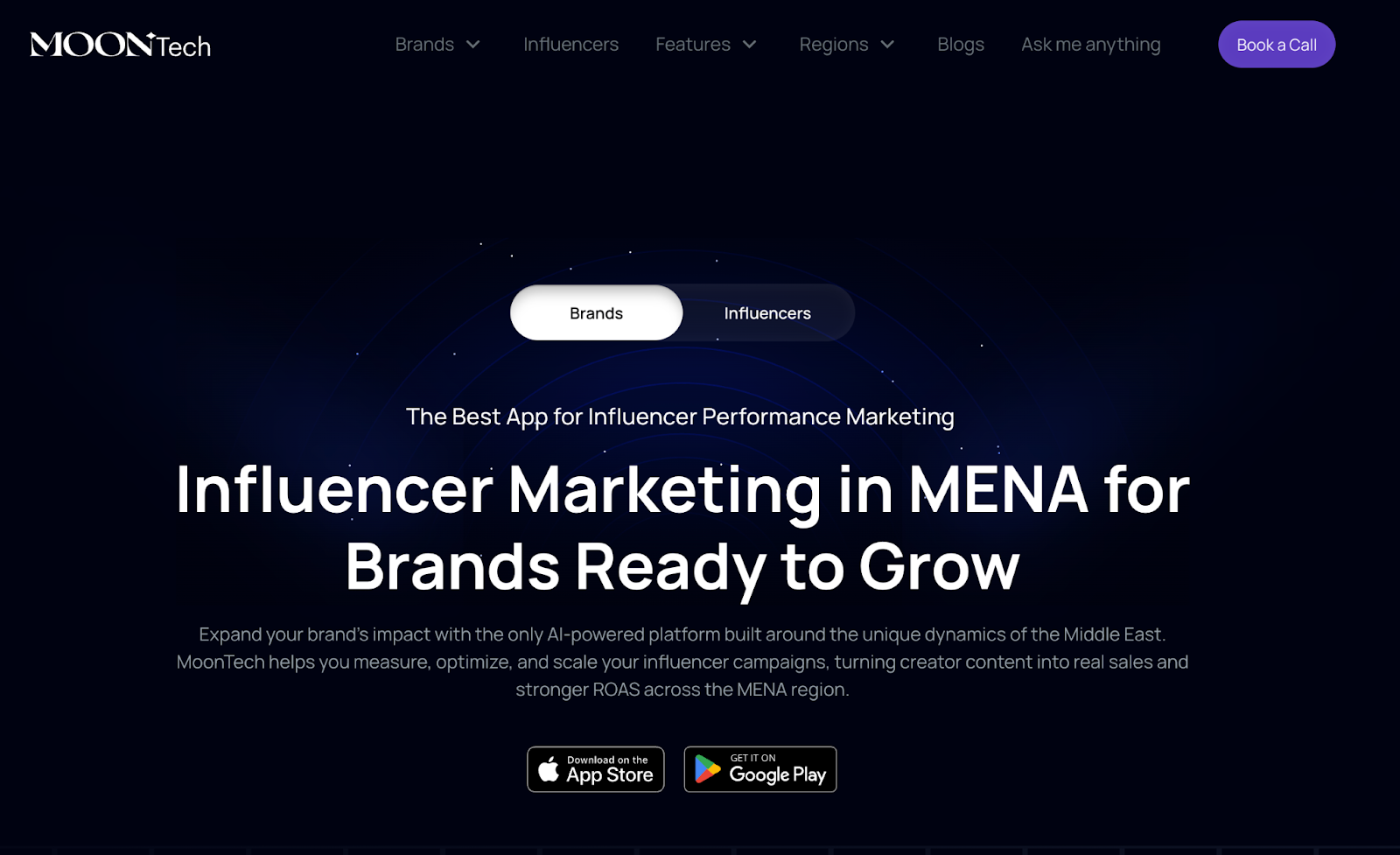
MoonTech is an AI-powered heavyweight built from the ground up specifically for the MENA market. It is designed for brands that have moved past “awareness” and want to see a direct correlation between influencer spend and bank deposits. Its bilingual AI is particularly adept at understanding the difference between various Arabic dialects, ensuring your brand fits the local context of each specific city.
Key Features:
- Bilingual AI Discovery: Specifically tuned for Arabic and English nuances.
- Sales-Based Optimization: The platform automatically reallocates your budget toward creators who are delivering the highest ROAS (Return on Ad Spend).
- Integrated Financial Suite: Handles regional payments, tax compliance, and revenue forecasting in a single dashboard.
- 24-Hour Launch: Optimized workflows that allow brands to go from onboarding to live campaigns in one day.
Pros:
- Superior fraud detection that filters out fake regional followers.
- Deep focus on micro and nano-influencers who drive high conversion rates.
- Real-time sales tracking rather than delayed reporting.
Cons:
- Hyper-focused on MENA; may not be suitable for global campaigns outside the region.
- The AI-driven matching requires clear brand guidelines to work most effectively.
Pricing: Performance-based tiers and custom enterprise options.
2. Vamp
Best for: Brands wanting high-end content and integrated paid social amplification
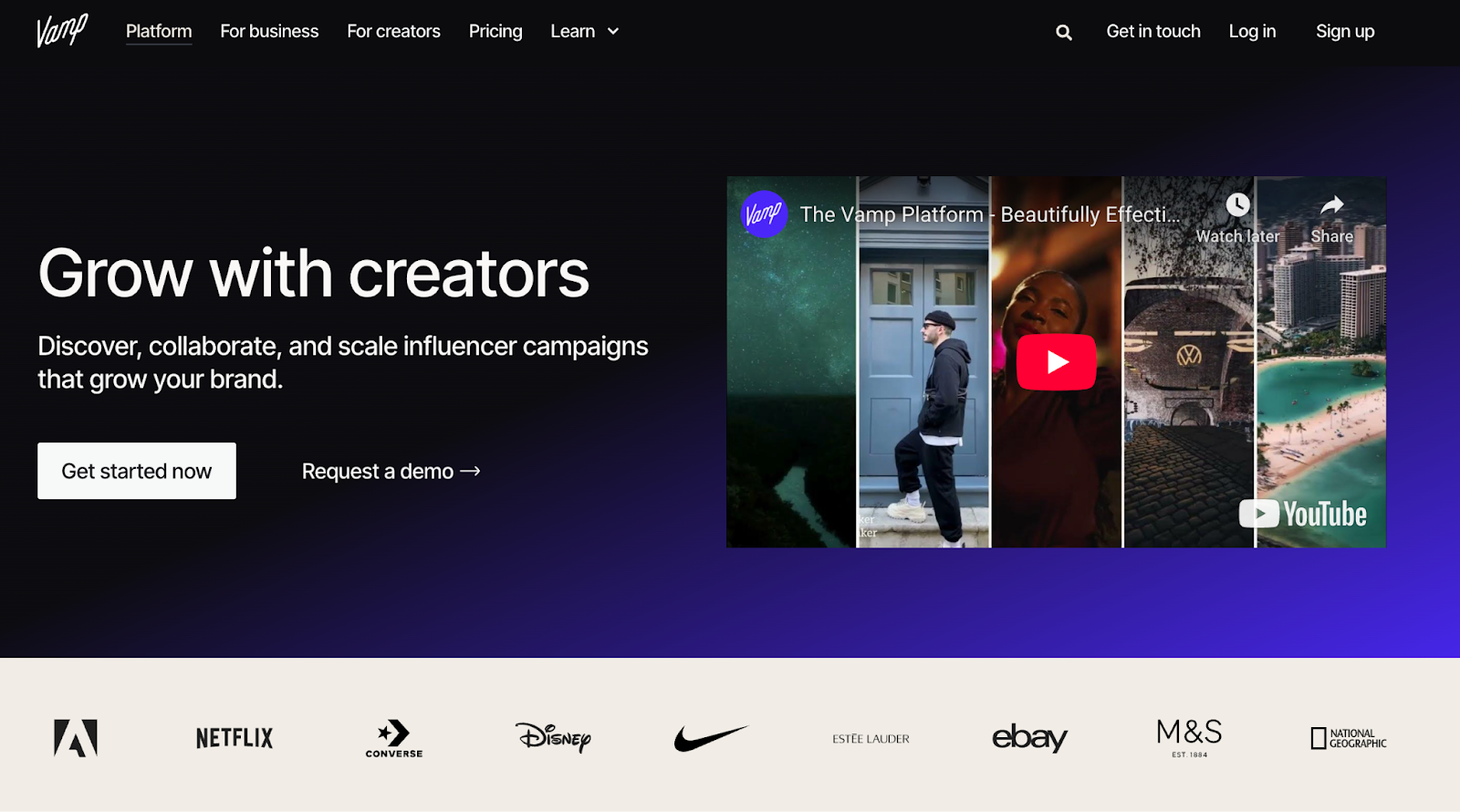
Vamp is a global player with deep roots in Dubai and Saudi Arabia. Their model is unique: they maintain an invite-only community of creators. This ensures that every influencer your brand works with has already been vetted for content quality and audience authenticity. They are also official partners with TikTok, Meta, and Google, providing unique platform insights.
Key Features:
- Invite-Only Community: High-tier content creators who are professionalized and reliable.
- Integrated Paid Media: Easily turn high-performing organic influencer posts into “Spark Ads” or “Whitelisted Ads” directly from the platform.
- Self-Serve Dashboard: Handles the entire lifecycle from briefing to bulk payments.
- Algorithm Optimization: Insights from their platform partnerships help tailor content for maximum reach.
Pros:
- Guaranteed content quality; no “amateur” looking posts.8
- Excellent for brands that want to combine influencer authenticity with the scale of paid advertising.
- Strong relationships with major global platforms.
Cons:
- The vetted nature of the community means a smaller total number of influencers than “open” databases.
- Can be more expensive on a “cost-per-post” basis due to the quality of creators.
Pricing: Subscription-based with various tiers for managed and self-serve options.
3. ArabyAds iConnect
Best for: E-commerce giants wanting influencer marketing tied to a broader data ecosystem
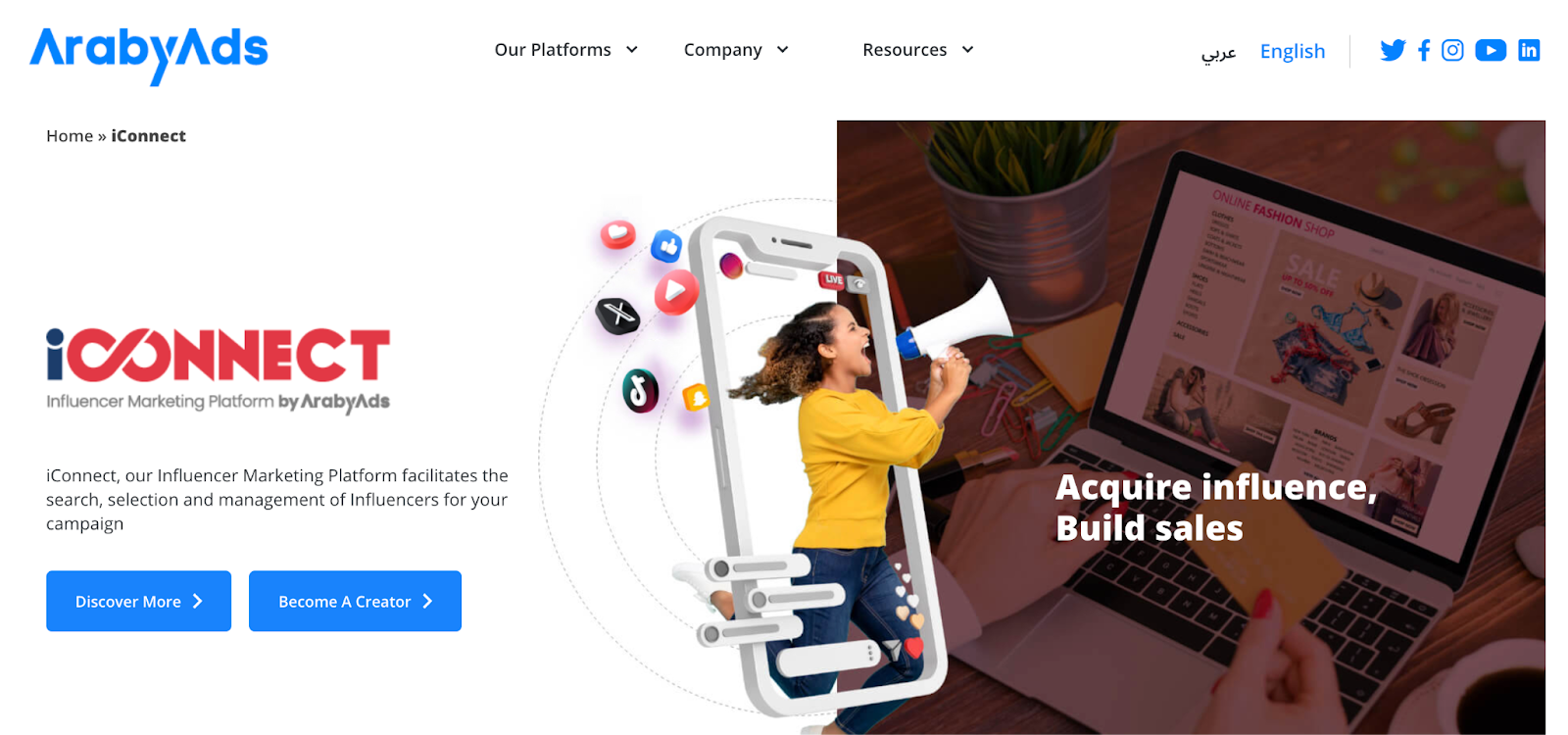
ArabyAds iConnect treats influencer marketing as a science. It is part of the larger ArabyAds ecosystem, which includes social commerce tools like Boostiny. This makes it the ideal choice for massive retailers (like Landmark or Chalhoub Group) who need to integrate influencer data with their entire performance marketing stack.
Key Features:
- Real Audience Insights: Advanced AI that strips away fraudulent engagement to show the “true” reach of a creator.
- Predictive Performance: Uses historical data from thousands of MENA campaigns to predict how a creator will perform for your specific category.
- Social Commerce Integration: Direct links to their broader ecosystem for coupon management and full-funnel tracking.
- Content Moderation: Robust tools for brands that need strict control over creative execution before it goes live.
Pros:
- Unrivaled data science layer; arguably the most “intelligent” reporting in the region.
- Excellent for large-scale e-commerce brands with massive inventories.
- Part of a holistic marketing ecosystem.
Cons:
- The complexity of the platform can lead to a steeper learning curve for smaller teams.
- The “ecosystem” approach works best if you are using other ArabyAds tools.
Pricing: Custom enterprise pricing based on volume and data requirements.
What to Look for in a MENA Influencer Platform
When evaluating these or other tools, ensure they meet these three “non-negotiable” 2026 standards:
- Bilingual Capabilities: Does the search function understand Arabic hashtags, slang, and cultural context?
- Fraud Detection: In a region where “buying followers” was once common, does the tool have a robust AI layer to identify bot accounts?
- Local Payment Support: Can the platform pay creators in local currencies (SAR, AED, EGP) while remaining compliant with local labor and tax laws?
Final Verdict: Which Platform is Right for Your Brand?
Selecting the right platform depends on your specific revenue goals for 2026:
- Choose MoonTech if: You are a performance-first brand that wants to use AI to find the perfect Arabic-speaking micro-influencers and track every single sale in real-time. It is the best “all-in-one” for regional ROI.
- Choose Vamp if: Your brand relies on high-quality visual storytelling and you want to scale your influencer content through paid social ads.
- Choose ArabyAds iConnect if: You are a large e-commerce retailer that needs deep data science and wants your influencer campaigns to live within a broader performance marketing ecosystem.
As Neal Schaffer notes, the biggest advantage of influencer marketing is the ability to choose people who are your target market. In MENA, where the “human” element is central to commerce, these platforms provide the bridge between those human relationships and your brand’s revenue growth.




