
A team of fifteen people rarely needs a knowledge management strategy. Everyone sits close enough to ask the person next to them. The founder remembers most of what matters. A shared drive with a decent folder structure covers the rest.
Then the team hits eighty people, and the same setup starts falling apart. New hires spend their first month asking the same five questions in Slack. Two departments build the same spreadsheet without knowing the other one exists. The one person who understood the billing system leaves, and nobody can explain how it works.
Nothing about the company failed here. The tool did not fail either. What was missing was a strategy built to grow alongside the team. The folder structure only ever worked at the size it was built for.
This piece breaks down what actually makes a knowledge management strategy hold up as headcount increases. Not a list of software. Not a mission statement about a “learning culture.” A working framework built around ownership, findability, workflow, and measurement, along with a few sourced examples that show what changes as a team grows.

Why Most Knowledge Management Efforts Stall at Scale
Most knowledge management attempts stall for a handful of predictable reasons.
The tool usually arrives before the plan does. A team buys a wiki or a knowledge base platform first and figures out the process later. Many organizations treat knowledge management as a one-time software rollout. That framing is the problem, because real knowledge management functions as an ongoing business initiative, and treating it as a single launch sets the whole effort up to fail once the initial excitement wears off.
Ownership stays diffuse. Everyone is technically responsible for keeping documentation current, which in practice means no one is. Content gets written once during onboarding and never touched again.
The cost of this is not abstract. McKinsey’s research on internal collaboration found that the average interaction worker spends nearly 20% of the workweek looking for internal information or tracking down a colleague who has it. That drag only gets heavier as headcount grows and knowledge scatters across more inboxes, tools, and teams.
There is also a common confusion between sharing information and managing it. Tactical knowledge sharing, like a Slack channel where people post updates, is a different thing from strategic knowledge management, which requires governance, accountability, and long-term reliability. A company can have plenty of the first and almost none of the second.
None of these problems show up when a team is small. They show up exactly when growth makes them expensive.
The Four Building Blocks of a Strategy That Scales
A knowledge management strategy that survives growth tends to rest on four things. None of them are software features.
Audit before building anything
Before choosing a platform or writing a single article, find out what people are actually struggling to locate. Talk to employees about what they cannot find on a normal day, and look at the questions customers ask most often, because that combination reveals the real gaps a strategy needs to close first. Skipping this step means building a system for problems nobody actually has.
Assign real ownership
Content quality falls apart the moment everyone owns it equally. Splitting the work into distinct roles, such as the people who draft content, the people who check it for accuracy, and the people managing the overall strategy, keeps quality from becoming an afterthought. A small team can often combine these roles in one or two people. A larger team needs them separated so nothing depends on a single person’s memory.
Design for findability, not volume
A knowledge base with three thousand articles is not automatically useful. A smaller knowledge base that everyone can actually navigate consistently outperforms an exhaustive one that nobody can search through, which means accessibility beats comprehensiveness almost every time. Clear titles and consistent structure matter more than total page count.
Build in governance early
Waiting until the wiki is a mess to introduce standards is far harder than starting with them. Defining how content gets written, reviewed, and approved from the start is what lets consistency, not headcount, become the thing that lets a strategy scale.
An internal knowledge base software setup that gets these four things right can support a five-person team and an eight-hundred-person company without a full rebuild in between. The specific tool matters far less than whether these fundamentals are in place before the tool gets chosen.
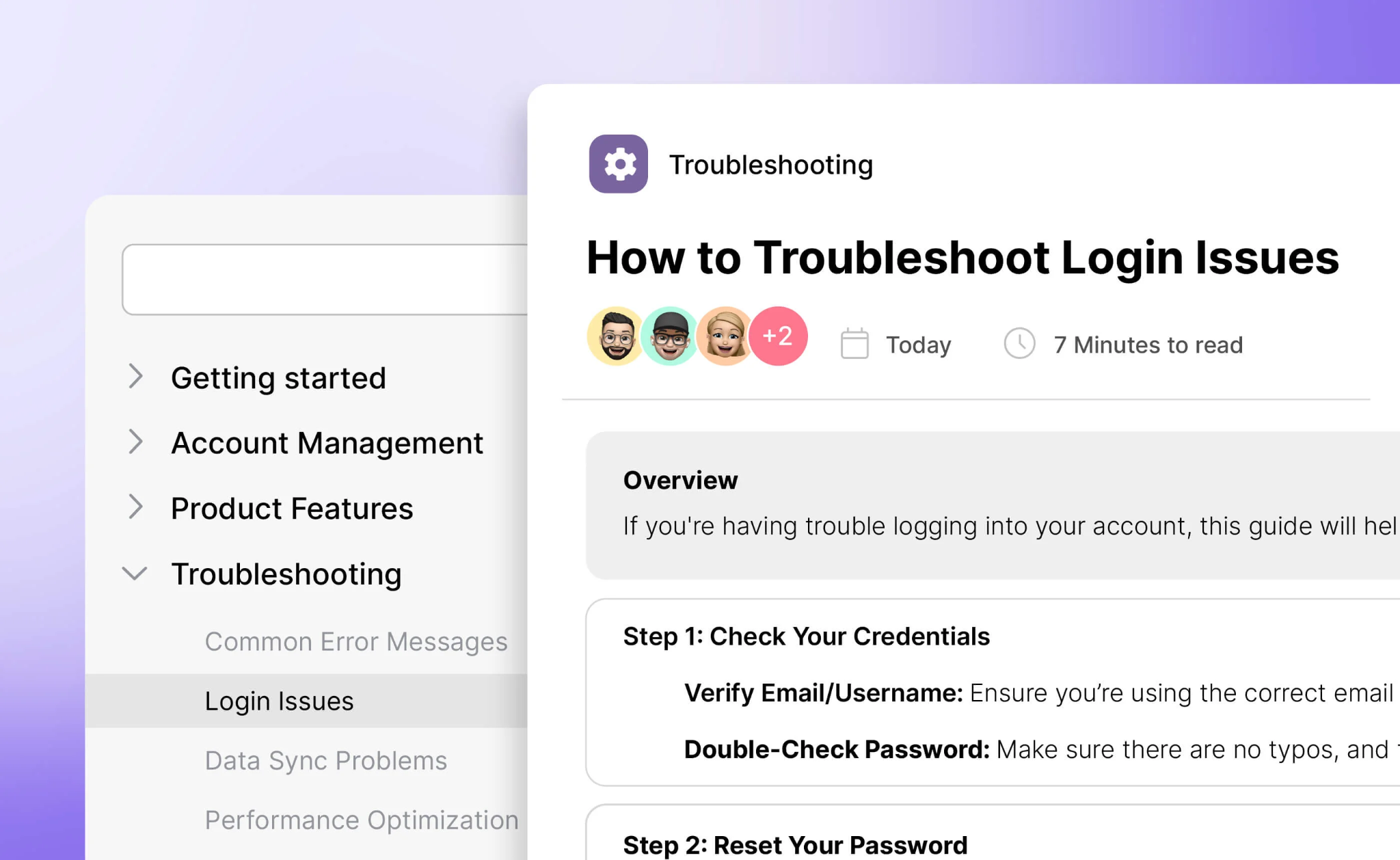
Making Knowledge Part of the Workflow, Not an Extra Task
The strategies that actually stick share one trait. Documentation happens as a natural part of the work, not as a separate chore bolted onto the end of it.
Building documentation into the natural touchpoints of a normal workday turns knowledge sharing into a byproduct of how work already gets done. It stops competing for attention at the end of a busy week, because it never becomes a separate task in the first place. That might mean writing up a decision inside the project management tool right after the meeting where it got made. Promising to “document it later” rarely survives the rest of the week.
Repeated questions are a signal worth acting on. When a new hire asks something that is not already in the knowledge base, writing down the answer once means the next person never has to interrupt someone else to ask it again. Over time, this turns a knowledge base from a static archive into something that actually reflects what the team keeps needing.
This is exactly the gap most growing teams run into. Knowledge exists somewhere. It is just scattered across drives, chat threads, and individual inboxes, with no single default place holding all of it, which is exactly why so little of it gets trusted at a glance.
Here is a short video on building the future of knowledge bases and documentation that shows what closing that gap actually looks like in practice, from centralizing scattered information to making answers findable without a support ticket: https://www.youtube.com/watch?v=akCnl_UDqYo
Teams that are trying to scale this kind of workflow often reach for knowledge management tools with built in review cycles and content approval steps, since manually tracking who reviewed what stops working somewhere around the fifty person mark.
Measuring Whether Your Strategy Is Actually Working
A knowledge management strategy without measurement is a guess dressed up as a plan.
Article count is a common vanity metric. Publishing volume feels productive but says nothing about whether people can find what they need. Better indicators include onboarding time for new hires, how often the same question gets asked more than once, and how much duplicate work gets created because past solutions were never surfaced.
Tracking usage, time to insight, and duplicate research avoided paints a far more honest picture of impact. Counting how many documents got uploaded this quarter does not. A knowledge base with declining search failure rates and shrinking time to resolution is doing its job even if its article count barely grows.
Some platforms now go a step further and put a number on this directly. Tools that score how effectively support agents use a knowledge base to resolve queries turn “is this working” into a measurable trend. Agent Score is one example, tracking things like resolution speed and how often an agent can self-serve an answer without escalating.
Whatever the metric, the review needs to happen on a schedule. A strategy checked once a year during a planning offsite will always trail behind whatever the team actually needs that quarter.
Scaling Governance Without Killing Speed
The tension every growing team eventually hits is straightforward. More people need faster access to trusted answers. Leadership needs more confidence that those answers are current and approved. Those two needs pull in opposite directions if governance gets bolted on all at once.
A staged rollout tends to work better than a company-wide launch. Start by setting the foundation with the right tools and structure, then build and validate real content with a smaller group, then expand to more teams and formalize governance once the model has actually been tested.
Speed and control are not opposing choices to pick between. Employees need fast access to trusted guidance. Leadership needs confidence that content stays current and approved. Structure delivers both. Restriction delivers neither.
In practice, this often means starting with the team feeling the most pain today. Customer support usually qualifies, since repeated questions and long resolution times are easy to spot and easy to measure improvement against. Prove the model works there before rolling it out company-wide. A structured approach to decision making helps here too, since choosing which team to start with is itself a decision worth making deliberately. Defaulting to whichever department asked loudest is not a strategy.
Organizations that want a formal reference point for governance can look at the ISO 30401 knowledge management standard, which lays out requirements for building and reviewing a knowledge management system regardless of company size or industry. Not every team needs certification. The structure behind the standard is a useful checklist even without pursuing it formally.
Bringing It Together
The teams that get knowledge management right at scale are not the ones with the biggest budget or the flashiest AI-powered knowledge base. They are the ones who treated it as an ongoing practice with real owners, clear structure, and a way to check whether it is actually working.
Start with an audit of where knowledge currently breaks down. Assign ownership that does not depend on one person remembering everything. Build documentation into the workflow instead of treating it as extra work. Measure outcomes instead of counting articles. Roll governance out in stages rather than all at once.
None of this requires a large team or an enterprise budget to start. It requires deciding, before the eighty person mark hits, that a knowledge management strategy is worth building on purpose. Waiting until the questions pile up and patching something together after the fact always costs more.