An industrial sewing machine table top is an important part of any professional sewing workstation. It provides the stable, durable surface needed to support an industrial sewing machine while giving the operator enough room to handle fabric efficiently. A properly fitted tabletop can also help create a level transition between the machine bed and work surface, making it easier to move materials smoothly during sewing.
What Is an Industrial Sewing Machine Table Top?
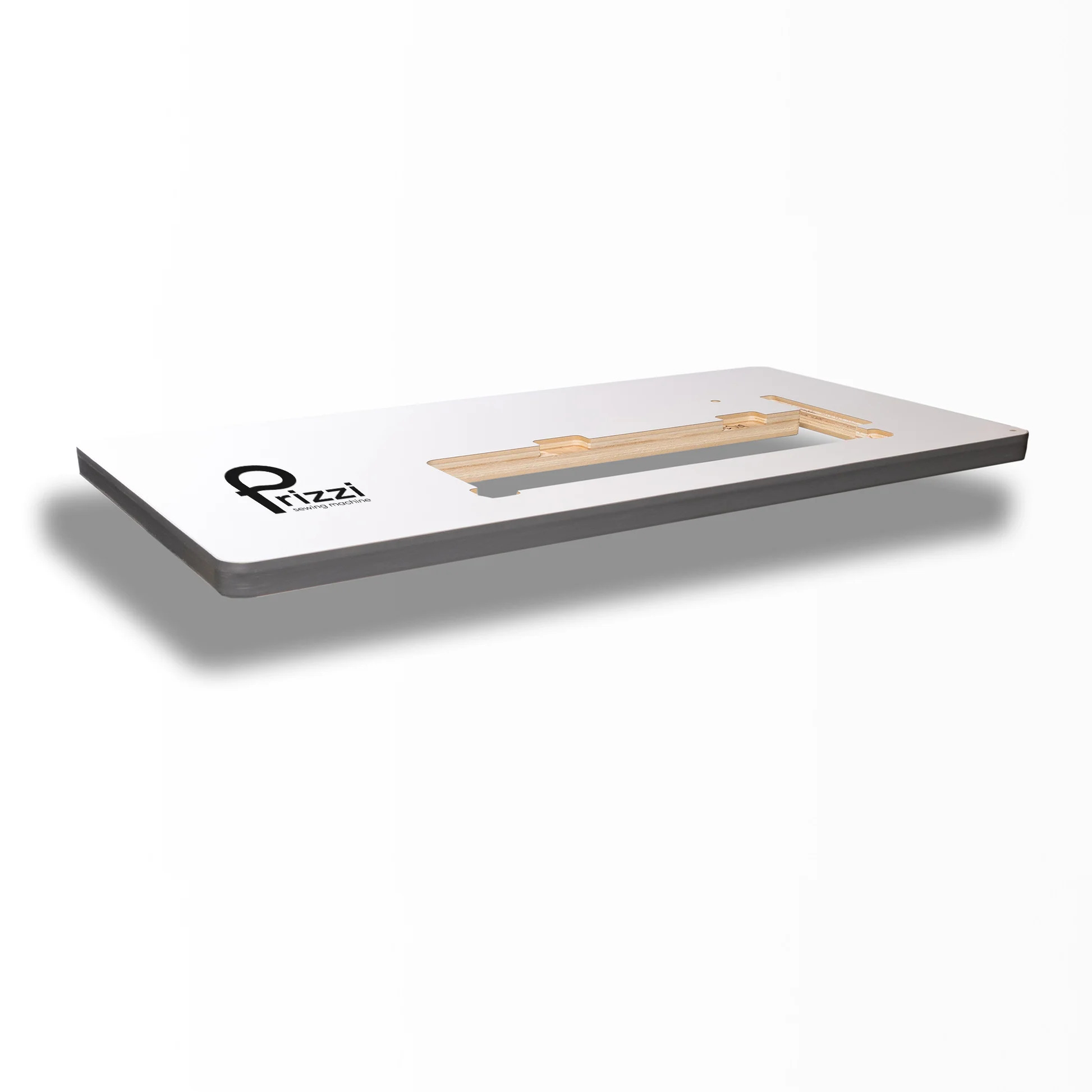
An industrial sewing machine table top is the work surface designed to hold an industrial sewing machine head and its related components. Unlike a standard household sewing table, industrial tabletops are built to accommodate heavier machines, vibration, mounting hardware, and accessories such as thread stands, control boxes, and knee lifters.
Many industrial sewing machine setups use a recessed or precisely shaped cutout where the machine head sits. The exact opening and mounting configuration can vary significantly depending on the machine model. Manufacturers such as Brother provide specific table-processing diagrams because different machines require particular holes, mounting points, and clearances.
Why the Right Tabletop Matters
A strong and properly fitted tabletop contributes to a more stable sewing workstation. Industrial machines can operate at high speeds and generate significant vibration, so the table must be rigid enough to support the machine during operation. Brother installation documentation, for example, specifies that the table should be sufficiently strong to withstand the machine’s weight and vibration.
The tabletop also affects the operator’s workflow. A smooth, spacious work surface provides room for guiding fabric before and after it passes through the needle area. This can be particularly useful when sewing large garments, upholstery, leather goods, or other bulky materials.
Choosing the Correct Cutout
One of the most important considerations when purchasing an industrial sewing machine table top is the cutout. The opening needs to correspond to the particular sewing machine head and mounting arrangement.
Not every industrial sewing machine uses the same tabletop configuration. Single-needle machines, walking-foot machines, overlock machines, cylinder-bed machines, and other specialized equipment can require different cutouts and mounting arrangements.
For this reason, it is important to provide the machine model when ordering a tabletop. Prizzi Sewing notes that its table tops can be custom-cut to fit specific machines and recommends providing the machine model and, when helpful, photographs of the machine’s corners and hinges.
Tabletop Size and Material
A common industrial sewing table configuration is approximately 20 × 48 inches, although dimensions can vary depending on the application. Some suppliers also offer non-standard sizes for specialized workspaces.
The material is another factor to consider. Commercial sewing tabletops are commonly made from engineered wood or similar rigid materials and may have a durable laminated surface. The goal is to provide a stable work area that can withstand regular use while remaining smooth enough for fabric handling.
Thickness is also important. Specific requirements depend on the sewing machine, but some industrial machine installation manuals call for a tabletop around 40 mm thick to provide adequate strength and resistance to vibration. Always follow the requirements specified for your particular machine.
Features to Look For
When comparing industrial sewing machine tabletops, consider the following features:
- Machine-specific cutout: Ensures the sewing machine head fits correctly.
- Strong construction: Helps provide stability during high-speed operation.
- Smooth work surface: Allows fabric to move easily across the tabletop.
- Correct mounting holes: Accommodates the machine, control box, thread stand, or other components where required.
- Appropriate dimensions: Provides sufficient workspace for the type of sewing you perform.
- Custom sizing: Useful when your machine or workspace requires a non-standard configuration.
Some tabletops can also be ordered separately from the legs or complete table assembly, making them useful when replacing a damaged surface or upgrading an existing industrial sewing workstation.
Replacing an Existing Industrial Sewing Table Top
Replacing only the tabletop can be a practical option when the existing surface is damaged, worn, or no longer suitable for your machine. Before ordering, measure the current tabletop and identify the sewing machine model, cutout dimensions, mounting points, and locations of accessories.
If you are replacing a tabletop for an existing industrial machine, avoid assuming that a generic cutout will fit. Machine subclasses and different manufacturers can use different mounting configurations. Checking the machine’s documentation or providing the supplier with the model information can help prevent compatibility problems.
Final Thoughts
A quality industrial sewing machine table top is more than simply a flat surface. It provides the foundation for the sewing machine, contributes to workstation stability, and gives the operator the workspace needed for efficient fabric handling. Choosing the correct dimensions, material, thickness, and machine-specific cutout can make a significant difference in the usability of an industrial sewing setup.
For anyone replacing an existing surface or building a customized workstation, selecting a tabletop designed around the specific sewing machine is an important first step toward creating a reliable and comfortable professional sewing station.