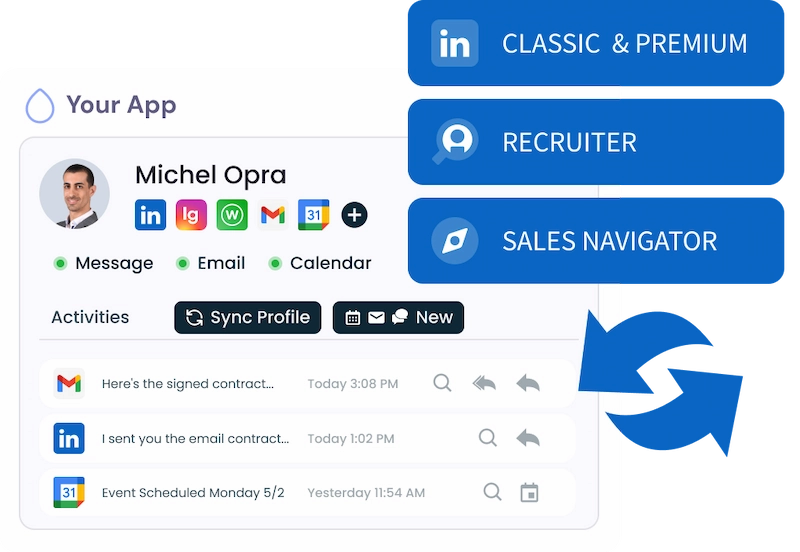
For software publishers, LinkedIn has become more than a professional networking platform, it’s a goldmine of structured data and business intelligence. Developers building CRMs, ATS platforms, or outreach tools know that access to LinkedIn data can make or break a product’s value. But with public API access shut down since 2015 and approval rates for the Partner Program below 10%, finding the right integration path is a challenge.
The LinkedIn API is the backbone that connects applications to LinkedIn’s professional ecosystem. It enables developers to:
- Retrieve and enrich user profile data
- Send messages, InMails, and invitations
- Post content programmatically
- Access company information for sales and HR insights
- Manage connections and track invitations
By embedding these features, platforms can enhance recruitment, sales, and customer engagement with minimal friction.
Why Businesses Need It
Recruiters can source candidates faster, sales teams can qualify leads more precisely, and automation platforms can unify multi-channel outreach across LinkedIn, email, and messaging.
Options for Accessing LinkedIn Data
1. Unipile LinkedIn API
Unipile offers a production-ready solution that mirrors official features while respecting compliance and rate limits. Key advantages:
- Rapid setup in hours, not months
- Full LinkedIn functionality (profiles, messages, posts, recruiter features)
- RESTful API with clear documentation
- Unified integration with other channels (WhatsApp, email, Telegram, etc.)
2. Official LinkedIn API (Partner Program)
Ideal for enterprise-scale solutions but restricted to approved partners. Challenges include:
- Approval timelines of 3–6 months
- Strict data access limitations
- High compliance and legal requirements
- Technical complexity with OAuth and Rest.li framework
3. DIY Integrations (Not Recommended)
Some developers attempt unofficial methods via GitHub libraries or scraping. While flexible, this approach is risky, hard to maintain, and violates LinkedIn’s terms.
Practical Use Cases
- Recruitment (ATS): Automate candidate sourcing, track invitations, and enrich applicant profiles directly inside an ATS.
- Sales Enablement (CRM): Sync Sales Navigator insights, track engagement, and personalize outreach.
- Multi-Channel Outreach: Combine LinkedIn invitations with follow-ups on email or WhatsApp for better conversion.
- Data Enrichment: Retrieve structured JSON data to strengthen analytics, personalization, and reporting.
FAQ: LinkedIn API in 2025
1. What can the LinkedIn API do?
It allows retrieval of user profiles, sending messages, posting content, and accessing company information—depending on your access method.
2. Is the LinkedIn API free?
Basic partner access is free, but advanced endpoints require paid partnerships. Unipile offers a predictable pricing model starting at $49/month.
3. How do I get LinkedIn API access in 2025?
Through the LinkedIn Partner Program (enterprise only) or by using trusted solutions like Unipile for broader and faster access.
4. Can I integrate LinkedIn API with Python?
Yes. Using libraries like requests, developers can authenticate accounts and fetch data directly via Unipile’s REST endpoints.
5. Are there rate limits on the LinkedIn API?
Yes. Official APIs impose strict daily limits. Unipile manages rate handling automatically to protect accounts.
6. What’s the safest way to automate LinkedIn outreach?
Use APIs that replicate natural user behavior, respect rate limits, and integrate with other channels for compliant automation.
Conclusion
For most software publishers, the path to LinkedIn integration no longer lies in the official API alone. With long approval processes and restricted access, solutions like Unipile offer a smarter, faster way to bring LinkedIn’s professional ecosystem into your product. Whether you’re building ATS, CRM, or outreach automation, the right integration unlocks efficiency, compliance, and real competitive advantage.