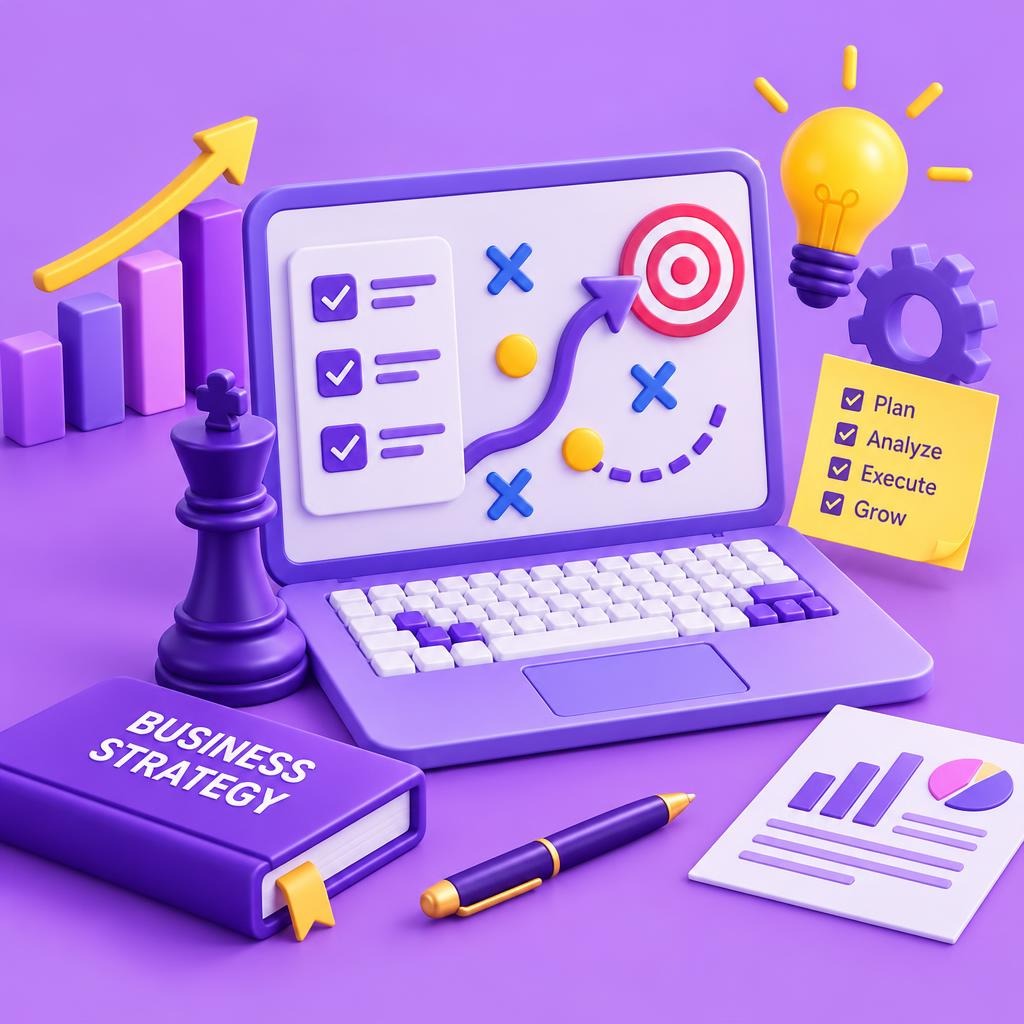
A competitive business strategy requires three things: a clear picture of market demand, an understanding of competing offers, and reliable evidence for choosing the next move. Market intelligence, artificial intelligence (AI), and competitor analysis provide these inputs. Combined, they help businesses identify underserved audiences, prioritise marketing channels, allocate budgets, and respond to changes before they undermine performance.
Understanding the Role of Market Intelligence in Strategic Planning
Market intelligence combines customer research, industry data, search trends, and commercial indicators to identify where demand exists and how it changes. Businesses can use surveys, customer interviews, sales records, search analytics, and industry reports to assess buying behaviour, emerging needs, and regional differences. For specialised markets, SEO for gambling sites illustrates why research must account for local search behaviour, audience preferences, regulatory conditions, and the strength of established competitors.
The key is to connect research findings to a business decision. If customers repeatedly search for a service that existing providers explain poorly, a company could develop more relevant content or refine its offer. If demand is falling in one segment while another grows, the company may need to reconsider its targeting or product priorities. Market intelligence helps distinguish these opportunities from assumptions unsupported by customer evidence.
Competitor Analysis as a Foundation for Competitive Advantage
Competitor analysis examines pricing, product features, positioning, customer reviews, content, distribution, and acquisition channels. The goal is to determine why customers choose one provider over another and where competing offers fall short.
For example, analysing SEO casino marketing can reveal which search topics competitors target, how they structure landing pages, and which customer needs their content addresses. Search results, backlink profiles, public-facing offers, and customer feedback can expose content gaps or underserved queries. These observations help businesses develop a differentiated approach rather than copying competitors. Public data cannot reliably reveal another company’s conversion rates or marketing budget, so internal estimates should never be treated as verified facts.
How AI Enhances Market Intelligence and Business Decision-Making
AI speeds up data processing and helps analysts identify patterns across large datasets. Businesses can use it to categorise customer feedback, group search queries by intent, summarise industry reports, detect changes in competitor messaging, and forecast demand from historical data.
AI findings still require verification. A rise in search volume does not necessarily indicate purchase intent, while a forecast based on incomplete records may misrepresent demand. Teams should validate important findings against reliable sources, review model assumptions, and protect confidential customer information. AI is most useful for accelerating analysis, not replacing commercial judgement.
Combining Market Intelligence, AI, and Competitor Analysis into One Strategy
An integrated strategy connects customer demand, competitor activity, and analytical evidence to a defined business objective. Consider a company assessing entry into a new regional market. Market intelligence identifies a growing audience segment. Competitor analysis reveals that existing providers do not adequately address its needs. AI groups relevant search queries and customer feedback, helping the team prioritise topics and test possible offers. The company can then launch a limited campaign and evaluate actual leads before increasing its budget.
The same approach applies to SEO casino marketing: businesses can combine keyword data, competitor visibility, and search intent to identify content opportunities, then test whether those pages attract qualified traffic. Search visibility alone is insufficient; the strategy must also account for conversions and commercial value.
A practical implementation process includes:
- Set an objective: define the target, such as entering a market or lowering customer acquisition cost.
- Gather evidence: combine customer data, market trends, and observable competitor activity.
- Analyse patterns: use AI to categorise information and identify testable hypotheses.
- Validate opportunities: check data quality, customer demand, and commercial feasibility.
- Run controlled tests: measure results before scaling investment.

Turning Competitive Insights into Measurable Business Results
Each strategic initiative needs metrics linked to its purpose. Market share helps evaluate competitive position, while customer acquisition cost (CAC) measures the cost of acquiring customers. Conversion rate indicates how effectively a landing page or campaign generates desired actions. Customer lifetime value (CLV) helps assess long-term customer profitability. Organic search visibility measures progress in search acquisition, and return on marketing investment (ROMI) evaluates marketing returns relative to expenditure.
These metrics should be interpreted together. Higher organic traffic has limited value if conversion rates fall or leads fail to meet sales criteria. Likewise, a lower CAC may not indicate improvement if customer retention declines.
To keep implementation disciplined:
- Audit data sources and resolve inconsistencies before analysis.
- Choose business intelligence tools that fit the team’s needs and budget.
- Monitor competitors for material changes in pricing, positioning, and acquisition tactics.
- Test hypotheses through limited campaigns before committing larger budgets.
- Review KPIs regularly and revise the strategy when results contradict expectations.
Conclusion
Market intelligence identifies demand, competitor analysis reveals market gaps, and AI accelerates the processing of evidence. Their integration helps businesses choose target segments, refine positioning, and allocate resources based on validated opportunities. Sustainable competitive advantage comes from turning reliable data into measurable action and adjusting decisions as market conditions change.