
Running a restaurant brand today means competing for guests who can order from almost anywhere. Third-party delivery apps sit between you and your customers, blanket discounts quietly eat into margins, and most web and app traffic stays anonymous.
When loyalty, guest data, and marketing live in separate tools, it becomes nearly impossible to know which campaigns actually drive repeat visits and incremental revenue rather than just rewarding purchases guests would have made anyway.
The right restaurant marketing CRM software brings these pieces together so your team can capture first-party guest data, automate personalized marketing, and turn one-time visitors into profitable regulars.
It reduces discount dependency, increases visit frequency, and demonstrates its impact on revenue, all while scaling cleanly from one location to hundreds. The platforms below approach that goal in different ways, from purpose-built loyalty engines to reservation-led CRMs and POS-native add-ons.
Here are eight of the best restaurant marketing CRM software platforms to consider in 2026.
1. Thanx
Best For: Enterprise and fast-growing multi-unit restaurant brands that want loyalty and CRM to drive measurable, profitable revenue, not just sign-ups.
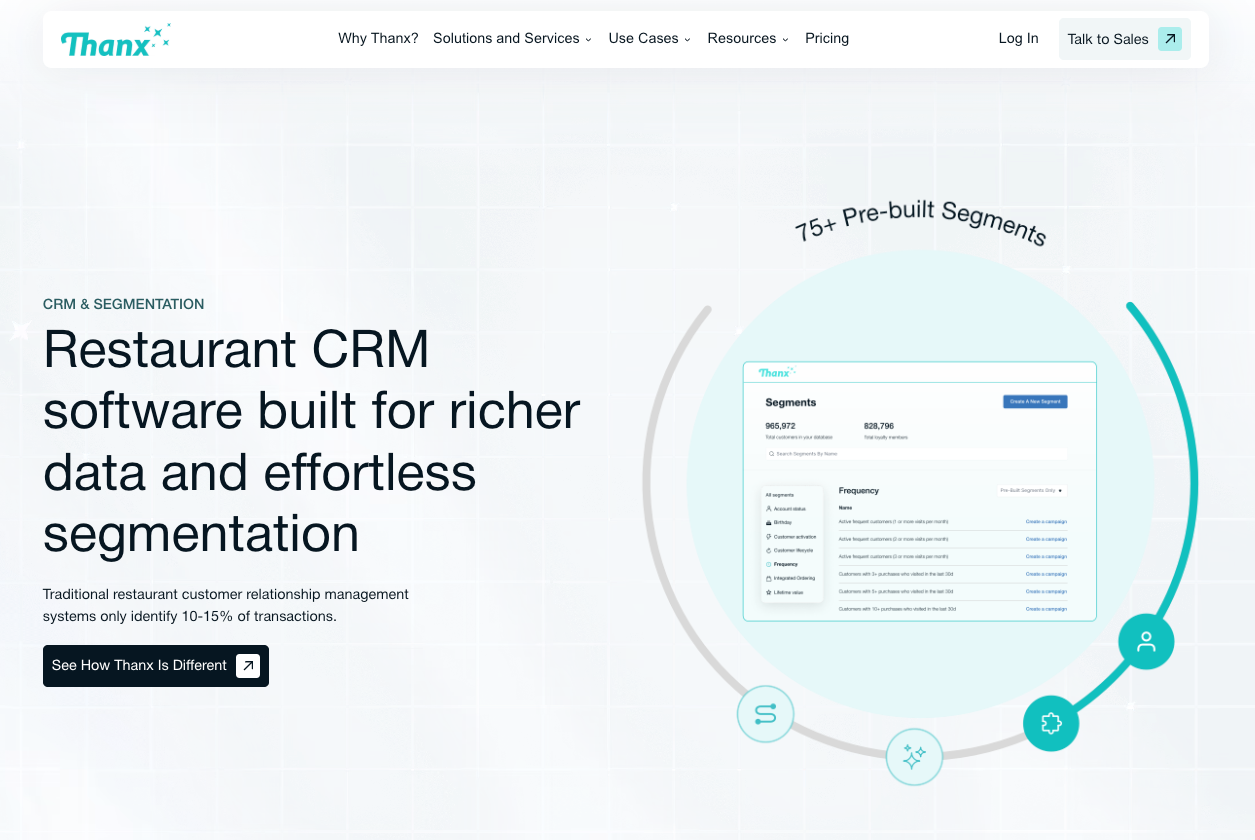
Thanx is the best restaurant marketing CRM software for operators who want strong first-party data capture, higher-margin repeat visits, and marketing they can actually prove ROI on.
Key Features
- All-in-One Guest Engagement & CRM. Loyalty, CRM, customer insights, and segmentation in one platform, giving marketing teams a single view of every guest from first visit to loyal regular.
- Full Marketing Automation (ESP). Native email marketing with one-time and automated campaigns, lifecycle journeys spanning enrollment, activation, and retention, and A/B testing and control groups so teams can measure true incremental impact, with SMS available through an integration with a provider like Attentive or Klaviyo.
- Strong First-Party Data Capture. Thanx reports meaningfully higher CRM capture than traditional programs, helping brands grow their engaged guest and turning anonymous traffic into known, marketable guests.
- Modern Digital Ordering & App Experience. Fast, passwordless web and app ordering with loyalty embedded directly in the flow, plus a no-code CMS that lets teams update the experience without developers or per-change fees.
- Precision-Targeted Rewards Engine. Thanx targets rewards using guest-level data instead of blanket discounts, including non-discount options like secret menus, bonus points, and modifier rewards (think “extra guac”), which Thanx says helps brands bring their effective discount rate down to roughly 2.4%, versus the industry’s roughly 10%.
- Incremental-Lift Reporting. Built-in reporting that isolates true incremental revenue and proves ROI directly in the dashboard, instead of relying on vanity metrics like raw sign-up counts.
- Open, API-First Platform. A POS-agnostic architecture with 60+ pre-built integrations across POS, ordering, feedback, CDP, kiosk, and marketing.
- Fast, Low-Lift Implementation. Implementations in approximately 90 days, compared with the 9 to 12 months common for legacy platforms, with no hardware to install and an app roll-over that means guests don’t have to download anything new.
Pros
- Purpose-built for restaurants, with a focus on measurable business outcomes rather than vanity sign-ups.
- Industry-leading first-party data capture that turns more guests into known, marketable customers.
- Non-discount, personalized rewards protect margins instead of training guests to wait for the next discount.
- No-code CMS lets lean marketing teams update apps, ordering, and rewards without developer time or fees.
- Built-in A/B testing, control groups, and incremental-lift reporting prove ROI directly in the dashboard.
- POS-agnostic and API-first, giving brands full ownership of their guest data and 60+ ready integrations.
- Fast, low-lift implementation and migration, with no hardware and a passwordless app roll-over.
- Works across both limited-service and full-service brands, including names like Nothing Bundt Cakes, Blaze Pizza, and Marugame Udon.
Cons
- As a cloud-based platform, it performs best with a reliable internet connection across locations.
- Its depth is built for enterprise and growing multi-unit brands, so a single-location operator may not need everything it offers.
Verdict
Thanx is a modern, results-driven restaurant marketing CRM that turns loyalty into measurable, profitable growth. For enterprise and fast-growing restaurant brands that want first-party data, higher-margin revenue, and marketing they can prove, it is the strongest choice on this list for 2026.
2. Punchh
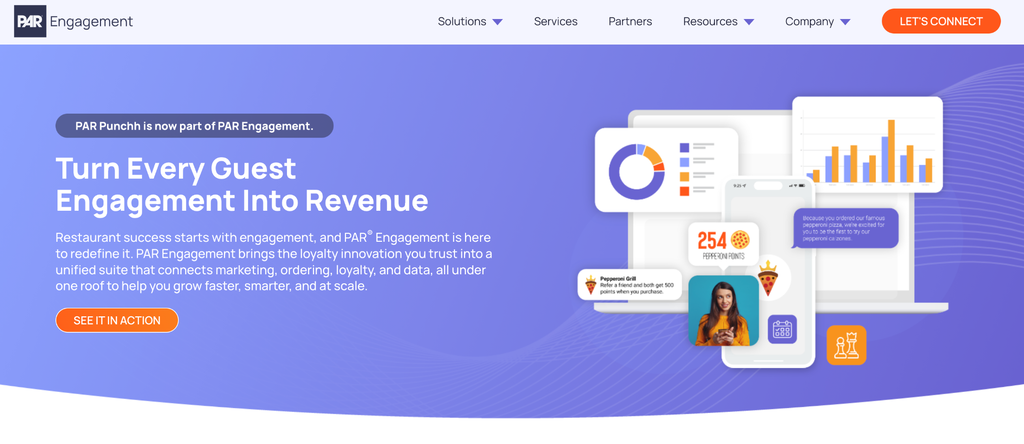
Best For: Large, multi-location restaurant and convenience chains that want enterprise-grade loyalty inside a broader unified-commerce ecosystem.
Key Features
- Enterprise Loyalty Engine. Flexible programs built on points, tiers, referrals, memberships, visit-based rewards, and banked currency.
- Unified PAR Engagement Suite. Loyalty connects with ordering, marketing, and data across a platform that powers 140,000+ restaurant locations.
- AI-Driven Personalization. Segmentation, gamification, and AI recommendations across email, SMS, app, and web.
- Punchh Wallet. Ties loyalty to payments with saved payment methods, stored value, and Apple Wallet passes.
Pros
- Proven at enterprise scale, with a very large customer base and strong brand recognition.
- Deep loyalty, configurability, and an expanding unified-commerce ecosystem.
- Strong personalization and hands-on support for larger marketing teams.
Cons
- Geared toward large enterprises, so it can be more of a platform than smaller or single-concept brands need.
- Delivers the most value when you adopt the broader PAR ecosystem rather than loyalty alone.
- Enterprise pricing and configuration can mean a heavier, longer rollout.
Verdict
Punchh is a powerful, enterprise-grade loyalty platform, especially compelling for large chains already in or moving toward the PAR ecosystem.
3. Paytronix
Best For: Restaurant and convenience-store brands that want a broad, all-in-one guest-engagement suite spanning loyalty, ordering, gift cards, and payments.
Key Features
- Unified Engagement Suite. Loyalty, online ordering, CRM, gift cards, catering, kiosks, and payments in one platform.
- AI Personalization. AI-powered decisioning and real-time personalization built on first-party data.
- Extensive Integrations. 450+ integrations, including more than 30 POS systems.
- Scale and Track Record. 20+ years in market, serving 1,800+ brands across roughly 50,000 sites (now an Access Group company).
Pros
- One of the most comprehensive suites in the category, covering everything from loyalty to payments.
- Long track record and a large integration ecosystem.
- Strong data, reporting, and industry benchmarking resources.
Cons
- Breadth can add complexity, with many modules to configure and manage.
- Enterprise-oriented pricing may be steep for smaller operators.
- A long product history means some areas can feel more established than newer, modern-first platforms.
Verdict
Paytronix is a deep, mature suite and a strong fit for restaurant and c-store brands that want many capabilities under one roof.
4. SevenRooms
Best For: Full-service and hospitality brands that want a CRM built around reservations, table management, and the in-venue guest experience.
Key Features
- Guest CRM. Centralized guest profiles across venues, with automated and custom tags such as VIP, regular, and big spender.
- Reservations and Operations. Reservations, waitlist, and table management sit at the core of the guest journey.
- Data Ownership. 65+ POS integrations and 100+ integrations globally, with a model that doesn’t remarket to your guests.
- Scale. Part of the DoorDash Commerce Platform, following its 2025 acquisition, serving 13,000+ venues,s including major hospitality groups.
Pros
- Best-in-class for reservations, table management, and fine-dining or hospitality guest experience.
- Rich guest profiles paired with strong data ownership.
- Proven with large hospitality and full-service restaurant groups.
Cons
- Anchored in reservations and operations, dedicated loyalty and rewards are lighter than purpose-built loyalty platforms.
- Better suited to full-service and hospitality than to high-volume quick-service loyalty.
- New ownership under DoorDash may give some operators pause, given DoorDash’s marketplace role.
Verdict
SevenRooms shines for full-service and hospitality brands that live and die by reservations and the in-venue experience.
5. Wisely
Best For: Full-service, multi-unit brands that want customer intelligence and CDP capabilities tied closely to front-of-house operations.
Key Features
- Restaurant CDP. A customer data platform purpose-built for restaurants that unifies guest profiles from many sources.
- Front-of-House Tools. Waitlist, reservations, table and order management, and guest sentiment.
- Closed-Loop Reporting. Ties campaigns to changes in guest recency, frequency, and spend.
- Olo Ecosystem. Now part of Olo, integrating with Olo’s ordering and commerce platform.
Pros
- Strong CDP and customer-intelligence foundation.
- Tight front-of-house tools, including host stand, waitlist, and table management.
- Backed by Olo’s broader restaurant commerce ecosystem.
Cons
- Roots in waitlist and host operations mean quick-service fit has historically been a weaker match.
- Some users note a steeper learning curve to use the platform to its full potential.
- The Wisely brand is being folded into Olo, which can create roadmap and identity uncertainty.
Verdict
Wisely is a capable customer-intelligence and CRM option for full-service brands, particularly those already invested in Olo.
6. Incentivio
Best For: Growing and mid-market restaurant groups and franchises (roughly 5+ locations) that want an all-in-one guest-engagement platform.
Key Features
- All-in-One Platform. Branded online ordering, white-label mobile apps, loyalty, and a full marketing suite.
- Data and Analytics. A CDP with analytics, a Guest Journey dashboard, and Loyalty Pulse ROI reporting.
- AI and ML. Machine-learning upsells and churn management to retain at-risk guests.
- Integrations and Scale. Integrates with major POS, payment, and delivery providers, with roughly 3,000 locations since 2017.
Pros
- Genuinely all-in-one, with ordering, apps, loyalty, and marketing under one brand.
- AI-driven churn management and upsell recommendations.
- Built for the realities of growing multi-unit and franchise brands.
Cons
- Newer and smaller than the category’s largest players, with less enterprise track record.
- Best fit for growing mid-market brands rather than the very largest national chains.
- Some advanced capabilities are still maturing relative to long-established suites.
Verdict
Incentivio is a strong all-in-one choice for growing and franchise brands that want ordering, apps, loyalty, and marketing in one place.
7. Como Sense
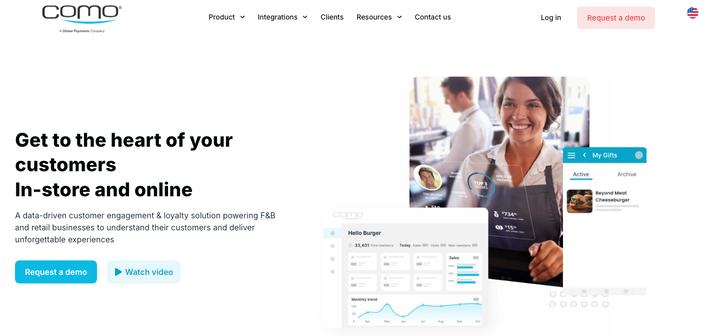
Best For: Small-to-midsize restaurant chains (and broader F&B and retail brands) that want a flexible, gamified loyalty and engagement platform.
Key Features
- Loyalty and CRM. Customer engagement with CRM, segmentation, and a branded mobile app.
- Flexible Rewards. Points, tiers, and cashback, plus gamified mechanics like spin-to-win.
- Integrations. POS integrations, including Revel, MICROS, and PAR, with an international footprint.
- Recognizable Brands. Used by brands such as Burger King and Quiznos.
Pros
- Flexible, gamified loyalty that makes guest engagement interactive.
- All-in-one CRM, app, and loyalty in a single dashboard.
- Hands-on account support is noted by users.
Cons
- Leans toward SMB and mid-market, and some reviews cite limits in loyalty depth and analytics.
- North American integration coverage is narrower than the largest US-focused suites.
- Mixed user feedback on advanced features and program flexibility.
Verdict
Como Sense is a flexible, engaging option for small-to-midsize chains that want gamified loyalty without heavy enterprise overhead.
8. Toast Loyalty
Best For: Restaurants already running on Toast POS that want a simple loyalty program built into their existing system.
Key Features
- Native POS Loyalty. Points-based loyalty is built directly into Toast POS, with automatic point tracking and no cards or repeated sign-ins.
- Easy Enrollment. Multiple sign-up paths at the register, on a digital receipt, through online ordering, or via a sign-up link.
- Bonus Mechanics. Day-and-time and channel bonuses (like double-point days or takeout bonuses), plus birthday and welcome perks.
- Connected Marketing. Tight integration with Toast Online Ordering, Toast Websites, and Toast Email and SMS Marketing.
Pros
- Seamless if you already run Toast, with loyalty, gift cards, and marketing in one bundle.
- Simple to set up and operate with minimal training.
- One vendor for POS, ordering, and marketing.
Cons
- Works only with Toast POS, which creates significant vendor lock-in.
- Relatively basic and points-focused versus dedicated loyalty and CRM platforms.
- Bundle pricing and add-ons can add up, and switching POS systems means losing your loyalty data.
Verdict
Toast Loyalty is a convenient, low-friction option for brands committed to the Toast ecosystem.
How to Pick the Right Restaurant Marketing CRM Software for Your Needs
The best platform depends on your scale, your existing tech stack, and what you are actually trying to prove. A few questions can quickly narrow the field:
- What are you optimizing for? If the goal is profitable, measurable growth (incremental revenue, higher-margin repeat visits, and less discount dependency), prioritize platforms with strong first-party data capture and incremental-lift reporting rather than ones that lean on sign-up counts.
- How important is independence? POS-agnostic, API-first platforms give you data ownership and the freedom to evolve your stack, while POS-native loyalty is convenient but can lock you in.
- What is your service model? Full-service and hospitality brands may weigh reservations and table management heavily, while limited-service and digital-first brands should weigh ordering, apps, and loyalty.
- How fast do you need to launch? Implementation timelines range from a couple of months to most of a year, so weigh time-to-value and the IT overhead each platform requires.
Whichever you choose, look for software that connects loyalty, guest data, and marketing into one system and proves its impact on revenue. That is what separates a modern restaurant marketing CRM from a simple rewards program, and it is what will help your brand grow profitably in 2026.