
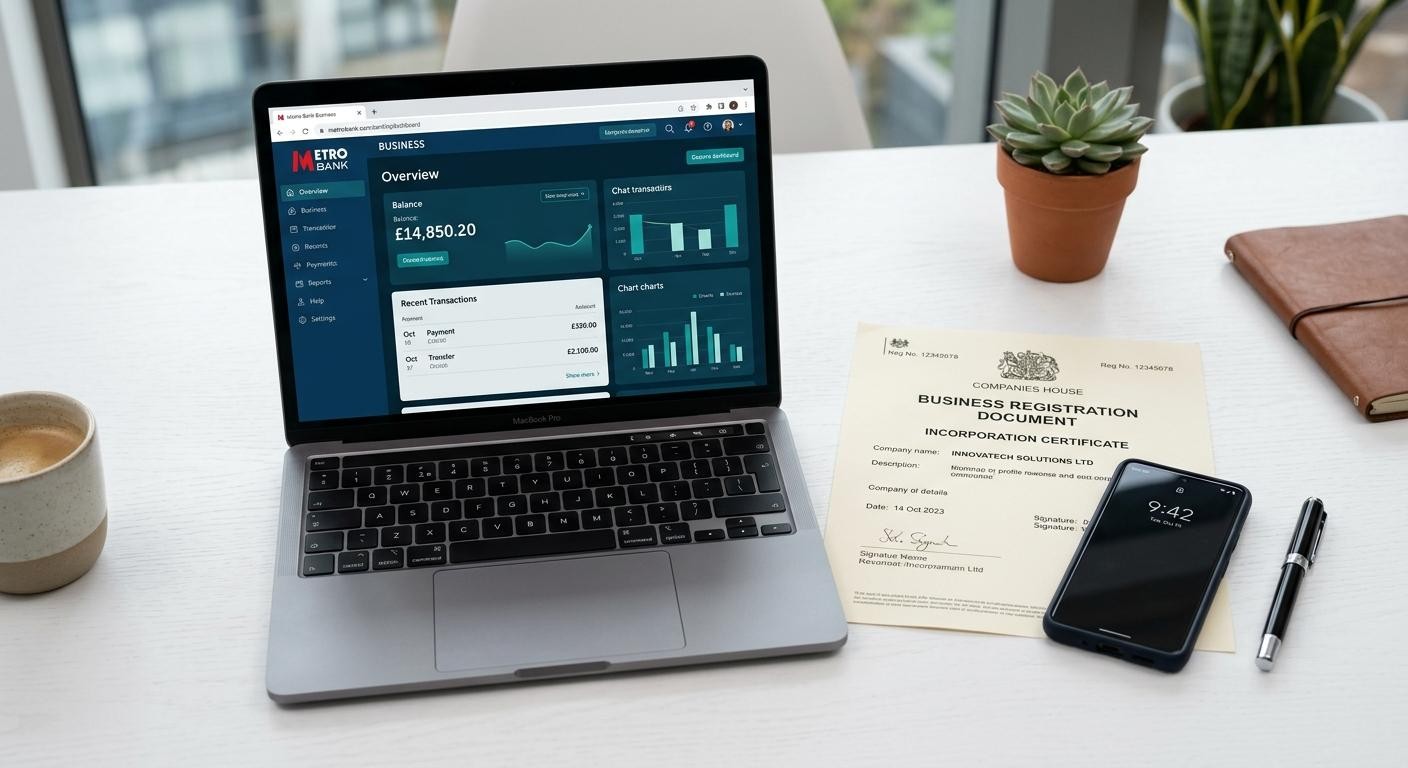
Key steps in opening a UK business bank account – from company registration to choosing the right provider
Most founders treat opening a business bank account as something you do once everything else is sorted. Pay the accountant first, set up the website, print the business cards – then deal with the bank. That approach causes real problems. Banking is a foundational decision that affects how fast you get paid, how clearly you track your cash flow, and how credible you look when a client or investor asks where to send money.
The good news is the process is more straightforward than most people expect, particularly with the fintech providers that have reshaped UK business banking over the last decade. This guide covers what you actually need to get approved, how traditional banks and digital providers compare, what mistakes slow most applications down, and what to look for when choosing the account that fits your business – not just the one with the slickest marketing.
Do You Actually Need a Business Bank Account?

Understanding your legal obligations before applying can save significant time and avoid compliance issues later
The short answer depends on your business structure – and it matters more than most guides let on:
- Limited companies and LLPs are separate legal entities under UK law. Their finances must be kept separate from the directors’ personal accounts. There’s no formal statute that says “you must open a business account,” but the Companies Act 2006 and the nature of separate legal personality make mixing funds a practical and legal mess. Any accountant will tell you to open one before you trade a single pound.
- Sole traders aren’t legally required to hold a dedicated business account. Plenty get by using a personal current account. But when HMRC asks for your records, when you apply for a business loan, or when a corporate client wants to pay an entity rather than an individual, the absence of a proper business account looks unprofessional and creates a bookkeeping headache. Open one anyway.
- Partnerships sit somewhere in between. Two or three partners mixing funds through personal accounts creates disputes and tax complexity fast. A shared business account keeps everyone’s contributions and withdrawals transparent.
The timing matters too. If you’re ready to open a business account in UK, doing it before you start trading, not after your first invoice, means you’re set up to receive payments immediately and your accounts are clean from day one.
What You’ll Need: Documents and Requirements
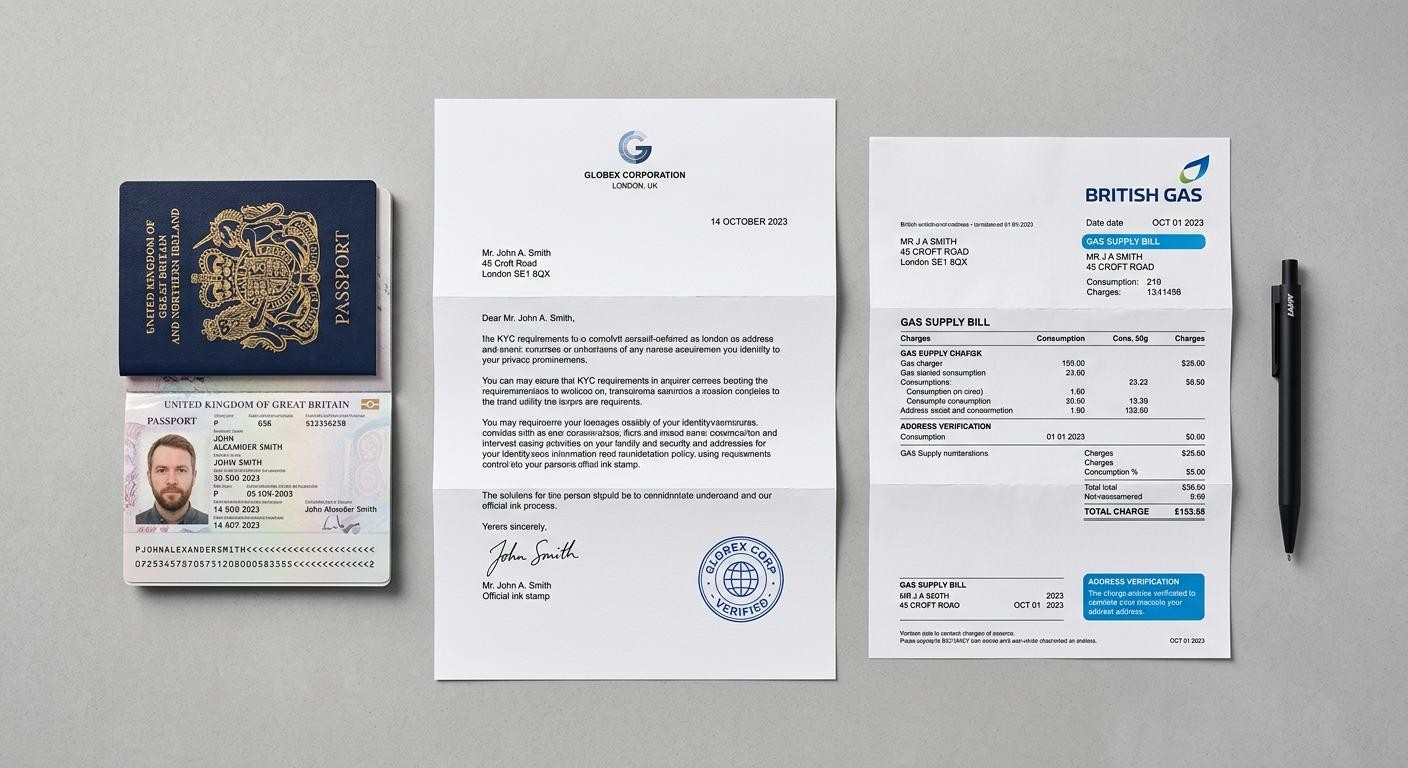
Key documents required when applying for a UK business bank account, including proof of identity and company registration paperwork
Every UK bank and fintech provider is required to run Know Your Customer (KYC) and Anti-Money Laundering (AML) checks before opening an account. These aren’t optional – they’re mandated by the Financial Conduct Authority under the Money Laundering Regulations 2017. Incomplete or inconsistent documents are the single most common reason applications are delayed or rejected.
Here’s what you’ll typically need:
- Proof of identity – passport or driving licence for each director and anyone who owns more than 25% of the business (a “beneficial owner” in regulatory language)
- Proof of address – a utility bill or bank statement dated within the last three months
- Certificate of Incorporation from Companies House (for limited companies)
- Companies House Registration Number (CRN)
- Unique Tax Reference (UTR) for limited companies; National Insurance number for sole traders
- Business plan – traditional banks usually require one; many fintechs don’t, though having one ready helps
- Source of funds explanation if you’re making a substantial opening deposit
Your People with Significant Control (PSC) register at Companies House also needs to be current before you apply. Banks will check it.
The UK government’s business.gov.uk portal offers official guidance on business bank accounts and what documentation is required – it’s a useful reference if you’re unsure which category your business falls into.
One more thing: if you’re applying to a traditional bank and don’t yet have a trading history, having a strong business plan ready significantly improves your chances. Barclays and HSBC in particular often request one from newer businesses.
Traditional Banks vs Fintech Providers: Which Suits Your Business?
This is the decision most guides gloss over with a table. The reality is more nuanced:
- Traditional high-street banks – Barclays, HSBC, Lloyds, NatWest – bring credibility, branch access, relationship managers, and established lending products including overdrafts, trade finance, and business mortgages. The trade-off is time. Approval typically takes one to four weeks. They want more documentation and often require an in-person meeting for larger or more complex accounts.
- Challenger banks and fintechs – Starling Bank, Monzo Business, Revolut Business, Wise Business, Tide – offer remote onboarding, faster approvals (often within 24 to 48 hours), multi-currency accounts, and accounting software integrations with Xero and QuickBooks. According to a March 2025 report from the British Business Bank, challenger and specialist banks now account for 60% of UK SME lending – the fourth consecutive year they’ve outpaced the big five high-street banks. That’s not a trend. That’s a shift.
The Competition and Markets Authority’s 2025 Business Banking Service Quality survey found that the three top-rated providers for overall service were Monzo, Mettle, and Starling – all digital-first. 70% of UK business leaders in 2025 said they now consider online-only banks for their business banking, up from 66% the year before.
That said, fintech accounts are not automatically the right fit for every business model. Many focus on speed, international payments, and software integrations rather than traditional lending products like overdrafts or large credit facilities. Some providers also operate under different regulatory structures than fully licensed banks, so it’s worth checking exactly how customer funds are safeguarded and what protections apply before opening an account.
The practical answer: if you invoice internationally or need a fast setup, a fintech is probably your best starting point. If you’re going to need credit facilities within the first year, add a traditional bank application to your list at the same time.
Step-by-Step: How the Application Process Works
The process looks roughly the same regardless of which provider you choose – the main variable is how long each step takes.
- Register your company with Companies House (if you haven’t already). You can’t apply for a business account before your company exists.
- Gather your documentation using the checklist above. Don’t start an application mid-process – incomplete applications trigger delays and extra correspondence.
- Choose your provider and compare fees, approval times, and features. Don’t default to the bank you already use personally.
- Complete the application – online for fintechs; online, hybrid, or in-branch for traditional banks.
- Pass KYC and AML checks. Digital banks often use video verification. Traditional banks may request a phone call or branch meeting.
- Account activated. Set up your accounting integrations, order debit cards, and configure payment details before you share them with clients.
One practical tip: there’s no penalty for applying to a fintech while you wait for a traditional bank’s decision. Many founders run both and choose which to prioritise once they’re approved. For complex cases – foreign shareholders, high-risk industries, international remittances – expect the traditional bank process to take four to twelve weeks, not one to four.
Common Mistakes That Slow Down Your Application
Most application delays come down to a handful of avoidable errors:
- Using a personal account temporarily. This creates tax complications and blurs the legal separation between you and your business. If something goes wrong legally or financially, you want that line to be clear.
- Applying before Companies House registration is complete. Banks check your CRN against the live register. If the entry isn’t there yet, the application stalls.
- Inconsistent documents. A middle name on your passport that doesn’t appear on your utility bill. An address on your incorporation documents that differs from your current address. These mismatches trigger manual review and take time to resolve.
- Not disclosing all directors or beneficial owners. You may not want to list everyone, but the PSC register is public and banks check it. Discrepancies cause immediate suspicion.
- Applying to a high-street bank without trading history or a business plan. Traditional banks are risk-averse with brand-new businesses. Come prepared with financial projections and a clear explanation of your business model.
- Industry risk flags. Crypto, gambling, adult content, international money transfers, and cannabis-adjacent businesses all face enhanced due diligence. That doesn’t mean you can’t get an account – but expect the process to take longer and be honest about your activities from the start.
What to Look For When Choosing a Provider
Once you’ve narrowed down your options, these are the things that actually matter in practice:
- Fee structure. Monthly maintenance fees range from £0 to £25+. Some accounts charge per transaction or per cash deposit. Run the numbers against your expected account activity.
- Multi-currency support. If you invoice clients or pay suppliers in euros, dollars, or other currencies, a multi-currency account from a fintech provider will save you a lot in conversion fees.
- Accounting software integration. Direct feeds into Xero or QuickBooks save hours of manual reconciliation every month. Most fintechs offer this; most traditional banks are improving but still slower to integrate.
- FCA authorisation. Every provider you consider should be on the FCA Register. Don’t skip this check.
- FSCS protection. Fully licensed banks protect deposits up to £85,000 per person under the Financial Services Compensation Scheme. E-money institutions – which includes some well-known fintechs – don’t carry the same protection. Know what you’re signing up for.
- Customer support. 24/7 in-app support suits most digital businesses. If you regularly deal in cash or need face-to-face relationship support, factor that into your comparison.
The rise of open banking has expanded the options further. Open banking technology is reshaping how UK businesses manage payments and access financial data – worth understanding as you decide which infrastructure to build your finances on.
Get Your Banking Right From Day One
Opening a UK business bank account isn’t the tedious bureaucratic task most founders make it out to be – at least not when you go in prepared. The bigger risk is treating it as an afterthought and then scrambling once you’ve already started trading.
Your account choice matters beyond the application process. The fees you pay, the integrations you use, the speed at which you receive international payments – these add up over months and years. Choosing the right provider from the start, rather than migrating an established business later, saves real time and money. Start with the document checklist. Research two or three providers that fit your business type and trading plans. Apply before you start invoicing. The process, for most straightforward UK businesses, is genuinely manageable – and getting it right from the beginning is one of the more consequential early decisions you’ll make.





