
For any organization that touches federal healthcare dollars, exclusion screening is a non-negotiable part of compliance. Employing or contracting with someone on the OIG’s exclusion list can trigger significant civil monetary penalties, repayment demands and lasting reputational harm.
Getting it right means screening against federal and state databases, monitoring continuously as those lists change and documenting every result, which is far more than a manual process can reliably manage.
Dedicated exclusion screening solutions exist to shoulder that burden, automating the work and giving compliance teams real confidence. To help you choose, here are the best OIG exclusion screening solutions for 2026, starting with our top pick.
What Makes a Strong Exclusion Screening Solution
Before the list, it helps to know what separates a genuinely reliable solution from a basic checker. A few factors carry the most weight.
Start with database coverage, since proper screening has to reach the OIG’s List of Excluded Individuals and Entities, the GSA’s SAM.gov system, every applicable state Medicaid exclusion list and the SSA Death Master File. Next is ongoing monitoring, because exclusions can appear at any time, so re-screening and synchronized updates matter as much as the initial check.
Then look at verification and resolution, meaning the tool should confirm true matches and clear false ones while producing audit-ready records. Finally, weigh the expertise and support behind the product, along with transparent pricing. Keep these in mind as you compare the options below.
1. Exclusion Screening
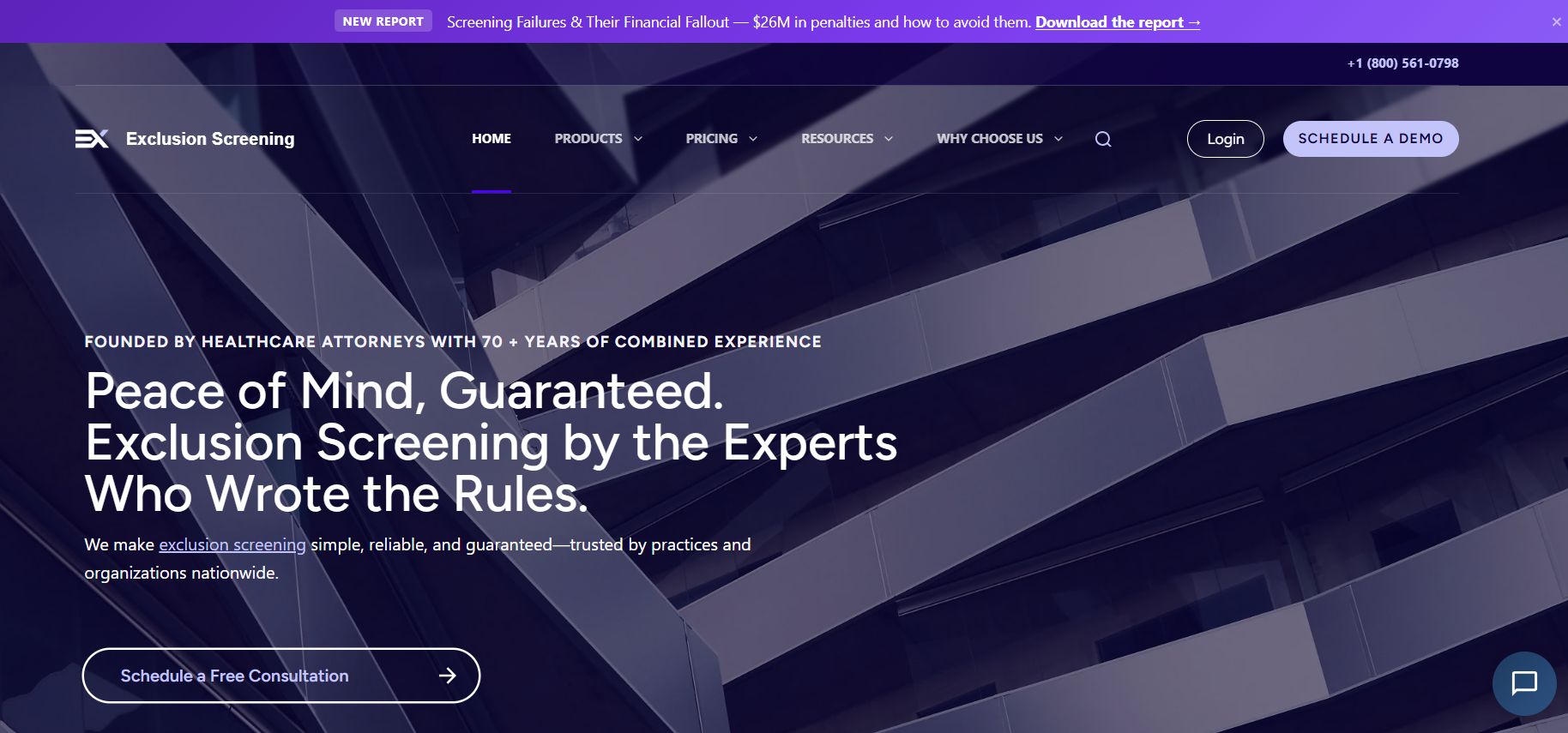
Exclusion Screening takes the top spot for organizations that want thorough, expert-backed compliance with minimal effort on their part. Founded by healthcare attorneys with more than 70 years of combined experience, it approaches screening as a legal risk rather than only a data problem, which shows in both the depth of its coverage and the guidance behind it.
The engine of the service is its SAFER software, which screens against the OIG and SAM federal databases along with all applicable state exclusion databases, with synchronized updates that keep results current. That coverage is genuinely comprehensive, spanning the OIG’s List of Excluded Individuals and Entities, the GSA’s System for Award Management, all currently available state exclusion databases and the Social Security Administration’s Death Master File. The company handles both employee screening and vendor and contractor screening, and it runs a confidential compliance hotline for reporting concerns.
Its approach centers on resolution-focused verification, using multiple data points to confirm whether a match is truly the same person or entity, which reduces both false positives and false negatives. Pricing is transparent, starting at a modest monthly rate with no hidden fees, and the whole model is designed to deliver compliance value without unnecessary cost. For teams that want screening backed by healthcare legal expertise, it is a standout choice
2. Streamline Verify
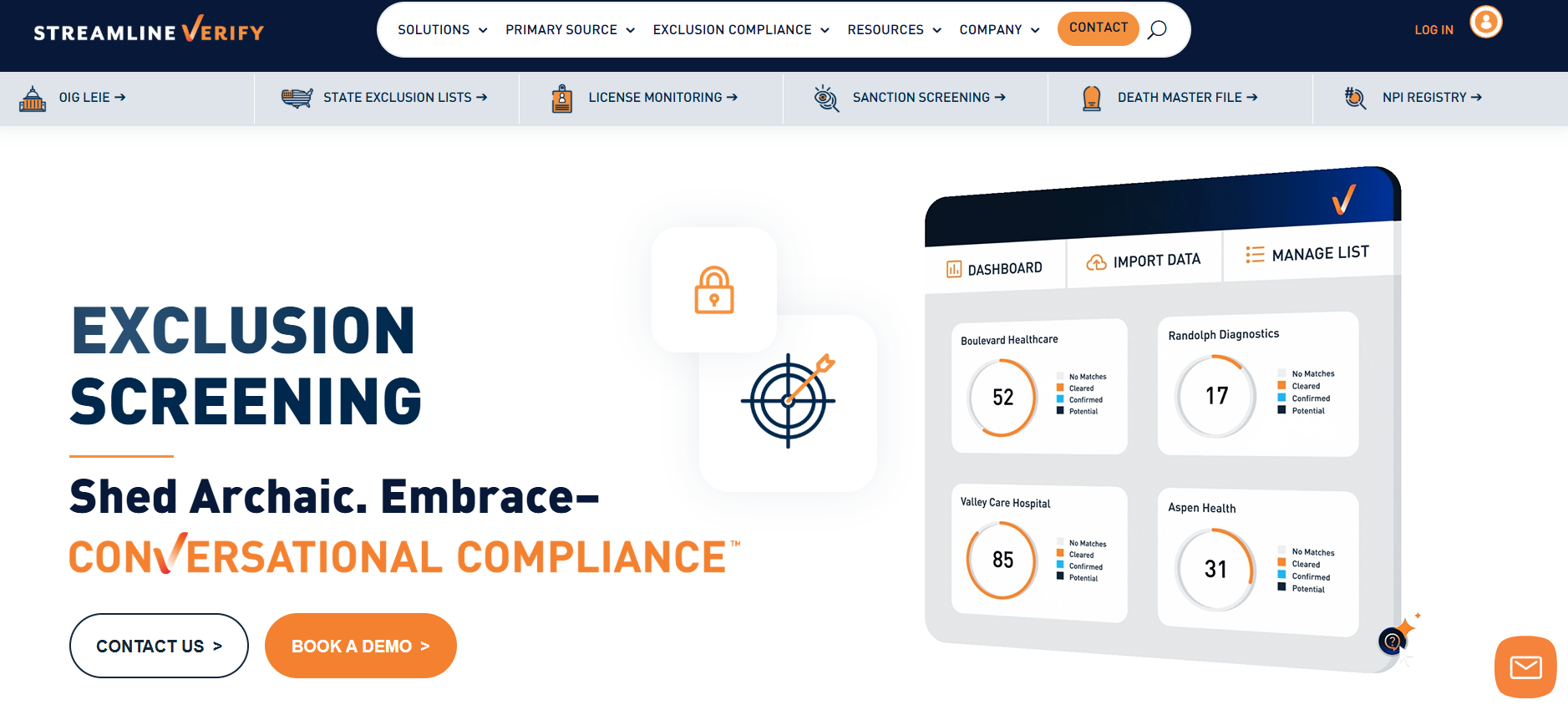
Streamline Verify is a well-established name in OIG exclusion screening, offering dedicated software to screen employees, providers and vendors against the OIG, GSA and state exclusion lists. Its positioning centers on thoroughness, with a promise to verify everything and leave no stone unturned.
Where it stands out is automation and integration. The platform offers API integration designed to make exclusion screening and credentialing management faster and smoother, which appeals to organizations that want screening built directly into existing systems. A one-stop portal helps teams quickly identify and resolve compliance screening issues in one place. For groups that prioritize workflow integration and a streamlined, purpose-built screening experience, it is a strong option.
3. ProviderTrust
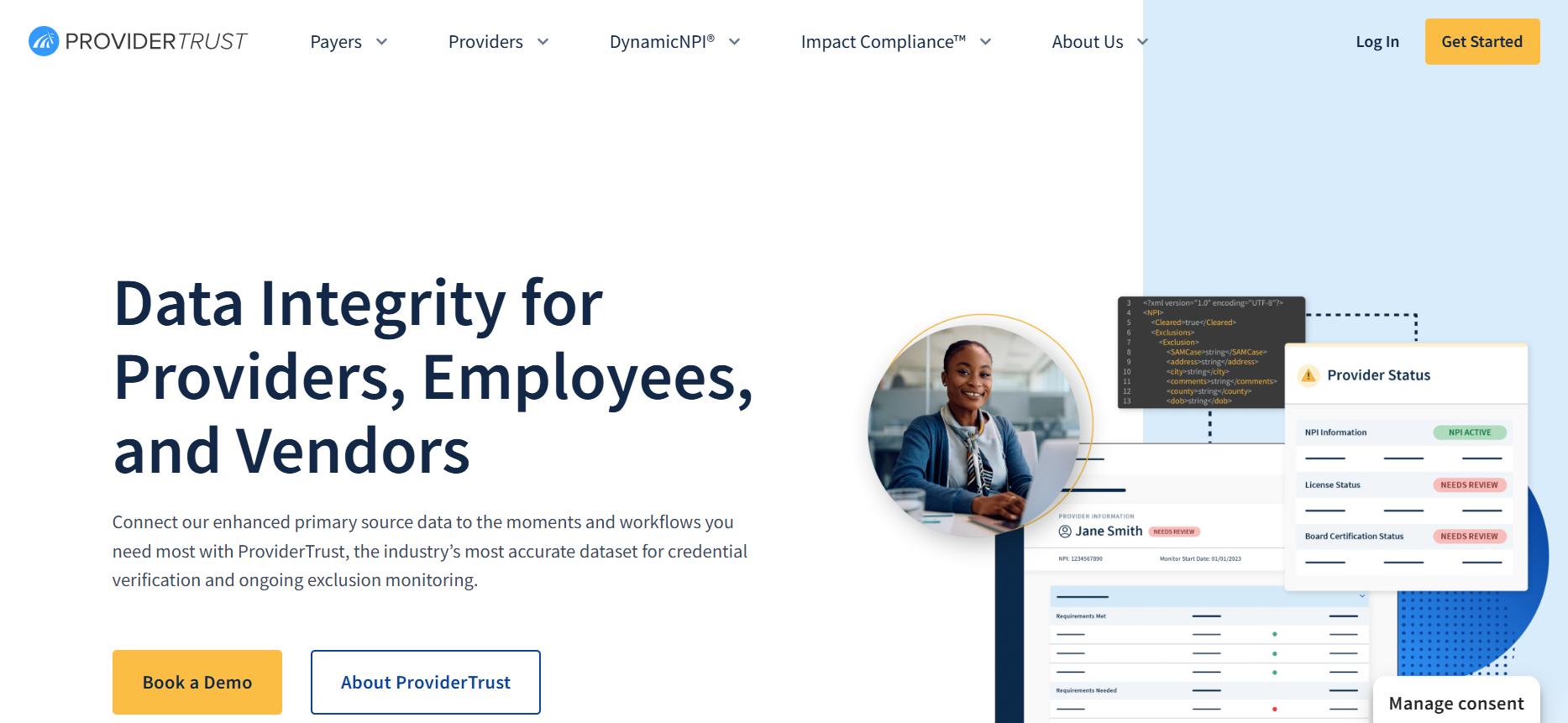
ProviderTrust has focused on automated exclusion monitoring since 2010 and is a common choice for larger healthcare organizations. Its strength is continuous, hands-off monitoring at scale, with ongoing coverage of the HHS OIG LEIE, GSA SAM.gov, state Medicaid exclusion lists, the SSN Death Master File, the CMS Preclusion List and OFAC, among others.
The company leans heavily on data accuracy, enhancing primary-source data with unique identifiers to deliver exact-match results and reduce the false hits that slow compliance teams down. It monitors millions of people and entities on an ongoing basis and layers in license verification and vendor data collection. For hospitals, health systems, payers and post-acute organizations that need enterprise-scale continuous monitoring, ProviderTrust is a serious contender.
4. Verisys
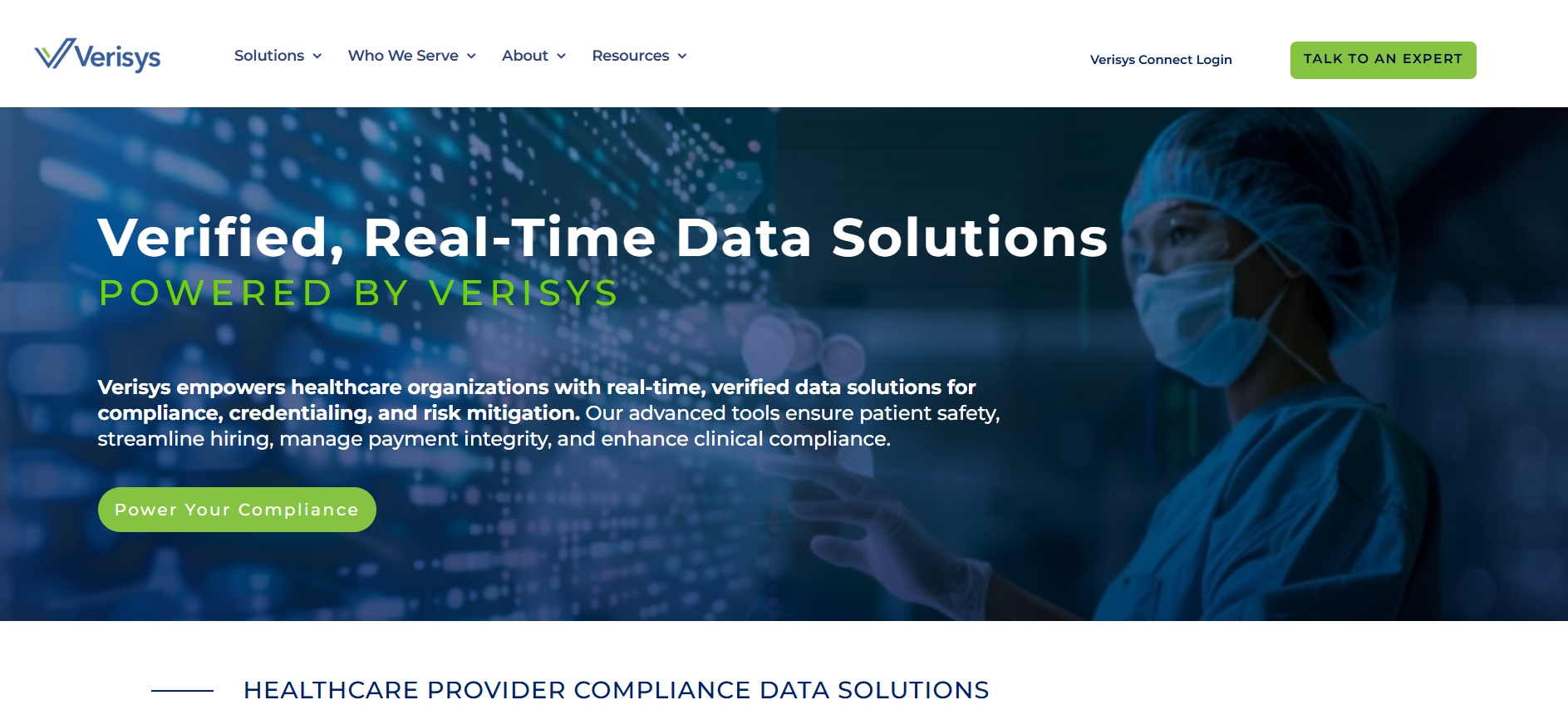
Verisys rounds out the list with one of the broadest datasets in the industry, built on its FACIS solution that draws from thousands of primary sources. Rather than exclusion screening alone, it spans sanctions, exclusions, debarments, licensure and adverse actions, making it a fit for organizations that want screening and credentialing under one roof.
Coverage reaches the OIG, SAM, state Medicaid lists and additional sources such as OFAC and the DEA, with delivery through API, SFTP and portal workflows and audit-ready reporting. With three decades in the space, Verisys suits larger or more complex organizations that value comprehensive, verified provider data feeding both compliance and credentialing programs. It is a strong choice where exclusion screening is one part of a wider provider-data strategy.
5. MedTrainer
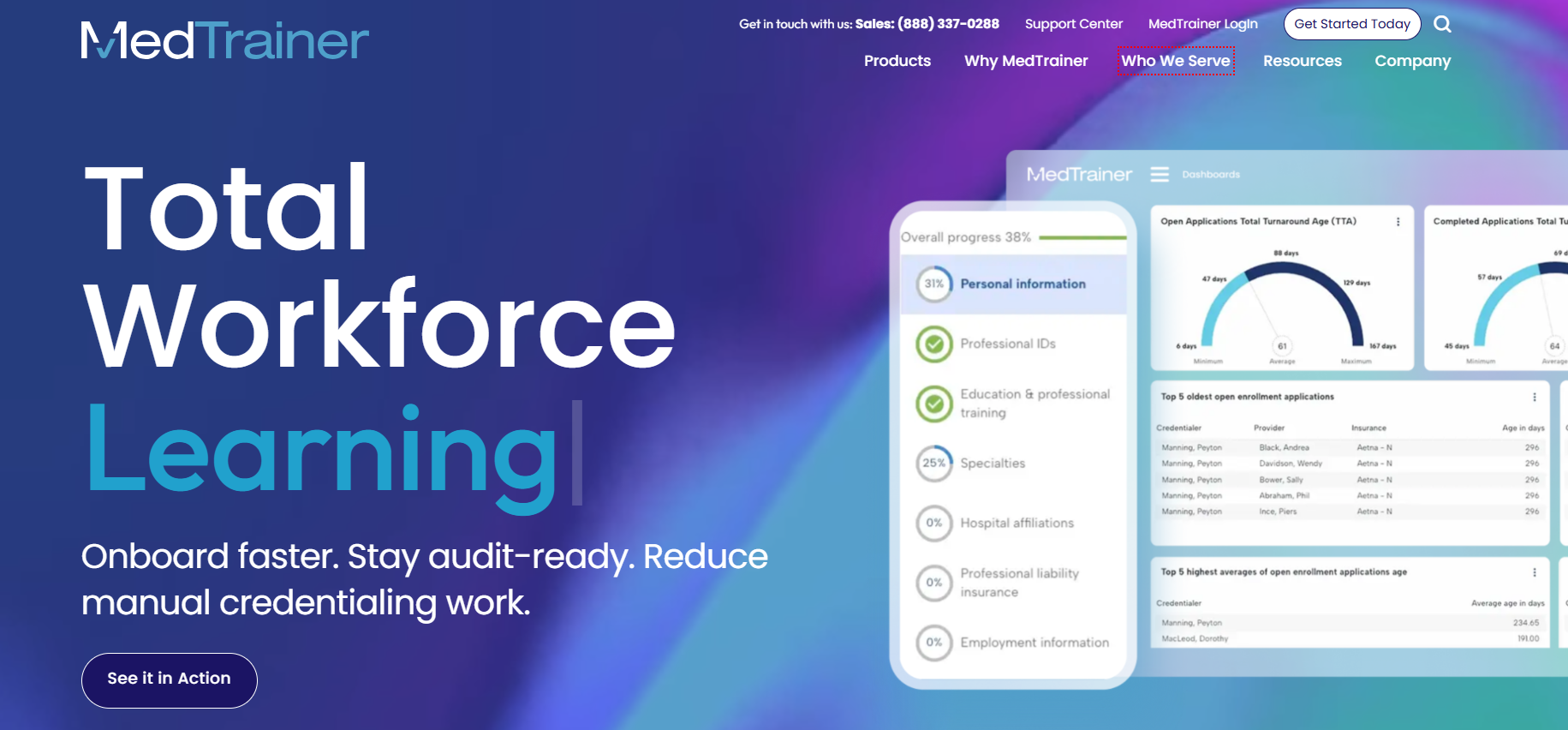
MedTrainer rounds out the list by folding exclusion monitoring into a broader compliance and credentialing platform. Its software automates OIG-LEIE and SAM exclusion checks across more than 40 federal and state databases, running on an NCQA-compliant schedule so screening never lapses.
The appeal here is consolidation and documentation. Automated alerts flag when a provider’s exclusion status changes, and every check is logged and centralized for easy, audit-ready reporting. For organizations that already want credentialing, learning and compliance tools in a single system, adding exclusion monitoring through the same platform is an efficient and tidy fit.
How to Choose the Right Solution
The right fit depends on your size, your workflows and how much you want automated for you. If your priority is comprehensive federal and state screening backed by genuine expertise and a hands-off experience, a specialist provider that handles the heavy lifting is the natural choice.
From there, weigh a few practical points. Confirm the breadth of database coverage, since gaps in state lists or the Death Master File create real exposure. Ask how frequently monitoring runs and how updates are handled, and look closely at how each solution helps you verify matches and generate audit-ready documentation. Consider how well it integrates with your existing credentialing and HR systems, and factor in the level of expert support behind the product. Matching these against your organization’s risk profile will point you to the right solution.
Frequently Asked Questions
How often should exclusion screening be done? Federal guidance points to screening employees, vendors and contractors against the OIG, SAM and state exclusion lists monthly, since exclusions can appear at any time and reporting delays between sources are common.
Which lists need to be screened?
A defensible program checks the OIG’s List of Excluded Individuals and Entities, the GSA SAM.gov system, all applicable state Medicaid exclusion databases and the Social Security Administration’s Death Master File at a minimum.
What happens if you hire an excluded individual?
Federal healthcare programs will not pay for items or services connected to an excluded party, and organizations can face significant civil monetary penalties, so the cost of a single miss dwarfs the cost of screening.
Can exclusion screening be done manually?
In principle yes, but the sheer number of lists, their inconsistent formats and their constant updates make manual screening slow and error-prone, which is why most organizations rely on automated solutions.
The Bottom Line
OIG exclusion screening is a serious compliance responsibility, and the right partner turns a complex, high-stakes task into a dependable, largely automated one. Streamline Verify, ProviderTrust, Verisys and MedTrainer each bring real strengths, from workflow integration and enterprise-scale monitoring to broad provider data and all-in-one platforms.
For most organizations that want comprehensive federal and state coverage, attorney-level expertise and genuine peace of mind at a transparent price, Exclusion Screening is the standout pick, pairing healthcare attorneys with software that screens federal and state exclusion lists. Whichever route you choose, select a solution built specifically for the demands of exclusion screening, and you protect your organization from risks that are far costlier to fix than to prevent.