Every great business begins with one powerful idea, but it survives and grows only through strategic planning and decision-making.
But these days, you might have observed that many startups aren’t as successful as expected. The reason: traditional planning methods are falling short.
More than 57% of executives say they’re missing opportunities because they can’t make decisions quickly. Here’s where AI can help organizations by assisting in planning smarter, faster, and more accurately.
In this article, you’ll learn how strategic planning has changed over the years, how AI is transforming the process, the benefits, and what the future holds.
Understanding Strategic Planning in the Modern Era
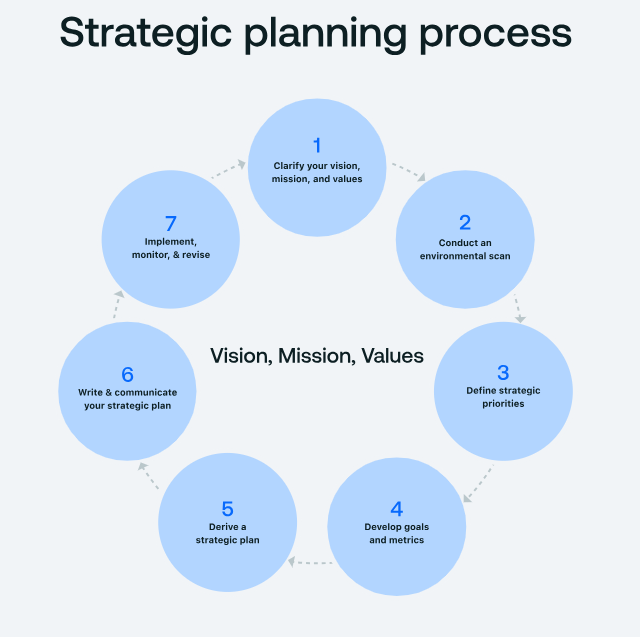
Traditionally, strategic planning was about drafting a five-year roadmap, setting annual targets, and reviewing progress at the end of the year. But these days, businesses get a huge amount of data daily. They operate in a data-driven environment where real-time decision-making matters a lot.
Strategic planning is the art and science of aligning an organization’s vision with measurable goals and then designing the pathways to reach them. These plans guide every strategic decision and ensure that every move aligns with long-term objectives.
But there are a few challenges in strategic planning, such as:
- Unpredictability. For example, sudden regulatory changes or disruptive technology launches
- Data overload, as in millions of data points streaming in from IoT sensors
- Customer interactions. The overwhelming volume of feedback, behavior patterns, and engagement data from multiple touchpoints
- The constant fluctuations in market conditions, competitor activities, and economic indicators
- Time constraints where opportunities can vanish overnight
Therefore, modern businesses need AI-powered insights to stay competitive. Rather than relying purely on leadership intuition, the best planning now incorporates predictive modelling, real-time measurement, and continuous adjustment. That shift marks the evolution of planning.
How AI is Revolutionizing the Strategic Planning Process
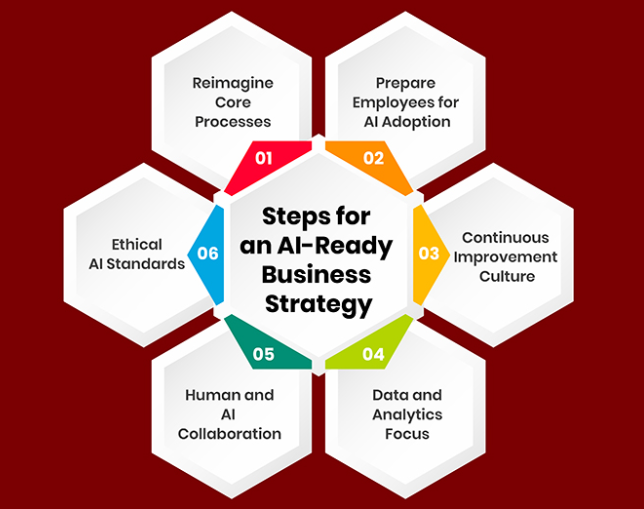
Now, let’s dig into how AI reshapes the process from start to finish.
- Data collection & cleaning
AI helps in collecting a huge amount of data in less time. It gathers data from market information, competitive signals, customer behaviour, IoT sensor outputs, and social media sentiment. Even tools like AI recruitment software rely on similar large-scale data processing to improve decision accuracy.
Before the AI revolution, this process took weeks of manual work. But now it can be done in real time. That means you can spend more time analyzing data and generating insights rather than collecting data.
- Forecasting and scenario modelling
Machine learning and predictive models can help organizations consider “what if” scenarios. It can be predicting what if a new competitor enters, what if demand falls by 10%, or what if supply-chain disruption happens? This way, you can take preventive measures before any major mishap occurs.
- Automated analytics & reporting
AI automates the repetitive tasks of analysis and report generation. It also helps in identifying patterns, flagging anomalies, and getting insights.
Companies are integrating AI in their systems to unlock exponential gains in speed, scale, and precision. This reduces decision latency and eliminates handoffs. In fact, modern generative AI tools are capable of producing strategic reports, visual dashboards, and forecasting summaries automatically.
- Reducing bias & improving clarity
Human beings bring biases and past assumptions while making any decisions. But AI doesn’t have any emotions. So, it focuses on data patterns and probability objectively without any bias. This reduces dependence on gut feeling and improves the quality of strategy planning.
- Execution & adaptive monitoring
AI tools enable continuous performance monitoring and dynamic plan adjustments. Instead of setting a plan and reviewing it in six months, organizations can update targets weekly based on live data. This adaptive loop turns planning into a living, breathing process rather than a static exercise.
AI transforms strategic planning from a fixed annual ritual into an agile, evidence-based, and real-time process.
Benefits of Integrating AI Into Strategic Planning
So, what really changes when a company brings AI into its planning process?
Well, let’s unpack the biggest advantages of integrating AI into strategic planning.
1. Faster, data-driven decision-making
Have you ever noticed that many organizations can’t make proper decisions quickly because every department has something different to say?
AI fixes that.
AI collects and analyzes data in real time. This helps decision-makers gain clear insights rather than outdated reports.
Consider a marketing team adjusting its campaign within hours based on the change in customer behavior that the AI dashboard revealed in real-time.
Using AI, decisions no longer have to wait for the next quarterly review. They happen when it matters most.
2. Early detection of risks and opportunities
Traditional planning tells you what has already happened.
But AI flips that.
It helps with continuous monitoring and predictive analysis. With this, organizations can detect subtle shifts long before any major problems occur. For instance, if customer satisfaction starts dropping, AI tools can detect the trend early and alert managers so they take proper steps to get back what was lost.
Also, AI can predict an unusual spike in interest for a particular product, a new demand pattern, or a competitor’s sudden move. Instead of reacting late, businesses can act early and turn foresight into an advantage.
3. Improved goal alignment across departments
One of the reasons why a good strategy becomes a bad one is misalignment. It could be misalignment in the targets that are chased by a sales team, marketing team, or the finance team. The success measuring metrics can also differ from department to department. What may be a success for one department may not be for another. This leads to confusion and reduces the actual growth.
AI brings everyone to the same table.
It centralizes data and makes it transparent. All departments can operate on a unified set of metrics and insights. When every team sees the same dashboard and tracks progress toward the same goals, collaboration becomes efficient, and internal conflicts are reduced.
It’s like switching from several small maps to one shared GPS. Everyone knows where the company is headed and how their work contributes to getting there.
4. Smarter resource allocation and performance tracking
At times, the resources that you planned for some projects were wasted because they never delivered results.
AI helps leaders see through that fog.
By analyzing patterns and historical data, AI tools highlight which initiatives can deliver the best outcomes and which ones drain energy. This allows decision-makers to allocate budgets more wisely and optimize manpower.
Performance tracking also becomes important. Instead of waiting for end-of-quarter reviews, AI tools continuously monitor performance and notify when it declines.
5. Encouraging innovation and creative thinking
AI helps with one more important thing, and that’s innovation and creativity.
Here’s how. AI handles data gathering and analysis, and human teams can focus on the why and what’s next. They can explore new markets, test fresh ideas, and experiment without the fear of wasting resources.
AI provides the clarity and confidence that is needed for innovation. It’s like having a co-strategist who crunches the numbers, and you find new possibilities.
In short, AI helps in planning a culture that’s imaginative and forward-looking.
The Future of AI in Strategic Planning
Here’s what the next chapter of AI-powered strategic planning is likely to look like:
1. From yearly plans to continuous strategy updates
Strategic planning won’t be a once-a-year exercise anymore. AI will help businesses to update their strategies in real time as market conditions shift. And therefore, the decisions will remain adaptable.
2. AI as your strategic co-pilot
AI is a partner that helps leaders brainstorm, test, and refine decisions. It will analyze huge datasets in a few hours, spot trends that you might miss, and suggest new business models or pivots before competitors win the race.
3. Smarter scenario modeling
Instead of relying on gut feeling to make decisions, AI will help analyze “what if” scenarios so strategies are planned properly. Whether it’s testing supply chain disruptions, pricing changes, or competitor moves, you’ll be able to see potential outcomes before committing to a plan.
4. Enhanced collaboration across teams
AI will bridge the communication gap between departments. It turns complex data into clear visual insights. This will help teams across finance, marketing, and operations to align on a strategy faster and with fewer misunderstandings.
5. Democratization of strategy tools
AI dashboards and planning platforms will become easy to understand for non-technical professionals. From small business owners to department heads, everyone will be able to access real-time insights and make proper choices.
6. Human intuition + AI intelligence = better outcomes
The future with AI will improve human judgment. AI brings logic and precision, and humans bring creativity and empathy. Together, they’ll redefine how organizations create plans and milestones for their successful growth.
7. Building resilient, future-ready organizations
The end goal of businesses is to achieve agility. With an AI-guided strategy, businesses can respond to uncertainty more quickly, spot new opportunities at early stages, and turn potential disruptions into growth opportunities.
The Smarter Future of Strategic Planning
The role of AI in strategic planning is about efficiency and empowerment. It’s helping leaders move from reactive to proactive, from guesswork to precision, and from static plans to living strategies that evolve with every data point.
We’ve seen how AI transforms the full cycle from data collection and forecasting to execution and real-time monitoring. It replaces bias with clarity, speeds up decision-making, and gives organizations the ability to see opportunities long before competitors do. Most importantly, it brings humans and machines together in a partnership built on intelligence and adaptability.
As AI continues to evolve, the organizations that embrace it today will be the ones defining tomorrow’s markets. Strategic foresight, once a luxury, is now accessible to every business willing to adopt the right tools.
Ready to experience this transformation yourself? Start your free trial today with Vizologi and discover how AI can turn your vision into an actionable, future-ready strategy.