
These days, artificial intelligence is useful in helping students learn, edit, and comprehend academic content. By 2026, AI tools will no longer be found on the periphery of education. They fit right into regular study schedules, helping students understand concepts, review solutions, and solve problems more quickly than conventional sources ever could.
Even the most powerful platforms cannot replace education. Rather, they eliminate friction. Modern AI tools facilitate progress without reducing effort by providing step-by-step instructions, evaluating images, and tailoring explanations to students’ proficiency levels.
Why AI Tools Have Become Essential for Students
Academic standards are still rising. Instructors presume independent practice, classes move swiftly, and students juggle various topics at once. AI solutions address these issues by providing prompt, organized assistance.
Students engage with systems that respond immediately to their materials, rather than having to look through disparate resources. In a matter of seconds, a graphic equation, a printed worksheet, or a complicated idea can be clarified. This change maintains student engagement while strengthening digital education.
What Makes Student AI Tools Different in 2026
Not every AI platform is beneficial to students. The most successful ones have certain traits related to flexibility and clarity.
These days, student-focused resources typically consist of:
? Translation of academic problems using images
? Context-aware explanations rather than quick responses
? Adaptable level according to academic standing
? Efficiency across subjects
Many of these features rely on multimodal ai, which allows systems to process text, images, and structured data together rather than separately.
Named AI Tools Students Actively Use
The popular AI tools that students use in 2026 are listed below, categorized by feature, along with simple assessments.
Edubrain
Category: AI study assistant with answers that are humanized
In 2026, Edubrain stands out as a top AI study assistant created especially to promote learning by analysis rather than quick fixes. It assists students in deconstructing academic problems, carefully evaluating answers, and interpreting difficult subjects in understandable, basic terms. What sets Edubrain apart is its built-in AI humanizer, which refines AI-generated explanations to sound more natural, accessible and suitable for students.
Edubrain makes complex concepts easier to understand by presenting information in a way that mimics how a teacher or tutor would explain them, rather than generating inflexible or overly technical answers. Edubrain adapts explanations to learners’ levels and works effectively across courses, keeping pupils engaged without detracting from the learning process.
| Best for: | Concept-based learning Multi-subject study support Interpreting complex explanations |
| PROs | Study assistance with the help of AI Clear, natural explanations with AI humanization Encourages understanding instead of answer copying Adapts explanations to student level |
| CONs | Requires active engagement from students Not designed for instant one-click answers |
| Pricing | Free with optional premium features |
Photomath
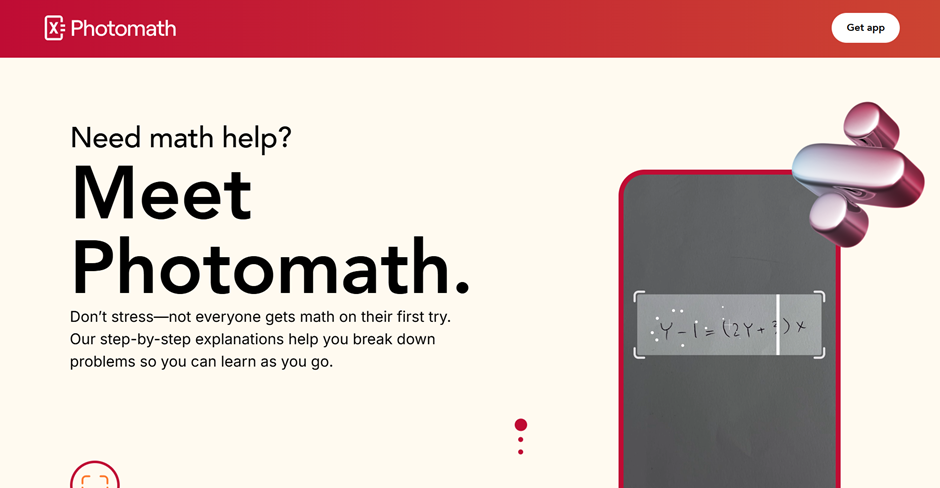
Category: Visual math problem solver
With Photomath, students can use a camera to record problems and obtain detailed solutions.
| Best for: | Algebra Calculus Trigonometry |
| PROs | Clear visual breakdowns Strong handwritten recognition Useful for homework review |
| CONs | Limited to mathematics Advanced topics sometimes lack depth |
| Pricing | Free with optional premium access |
Mathway
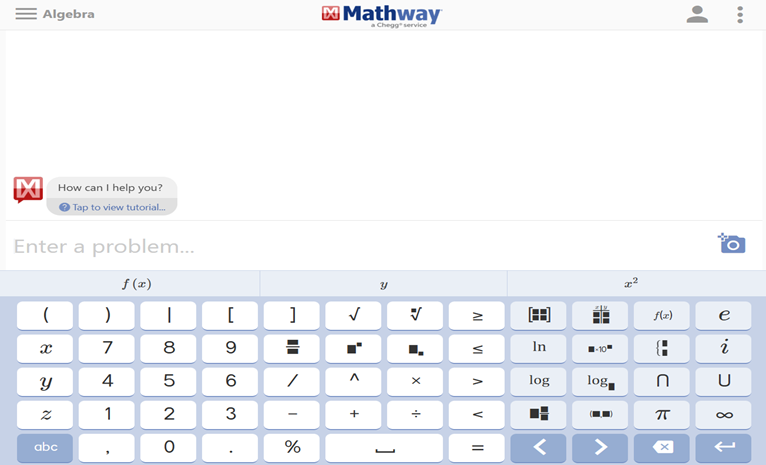
Category: Broad math solver
Written and digital input for a variety of math topics is aided by Mathway.
| Best for: | High school and college math Quick result verification |
| PROs | Wide topic coverage Fast responses |
| CONs | Detailed explanations require payment Educational depth varies by topic |
| Pricing | Freemium |
Socratic by Google
Category: Image-based learning assistant
With Socratic, students can take pictures of questions from a variety of subjects and get carefully chosen answers.
| Best for: | Science History General academic concepts |
| PROs | Reliable visual recognition Trusted educational sources |
| CONs | Limited customization Advanced topics feel surface-level |
| Pricing | Free |
Wolfram Alpha
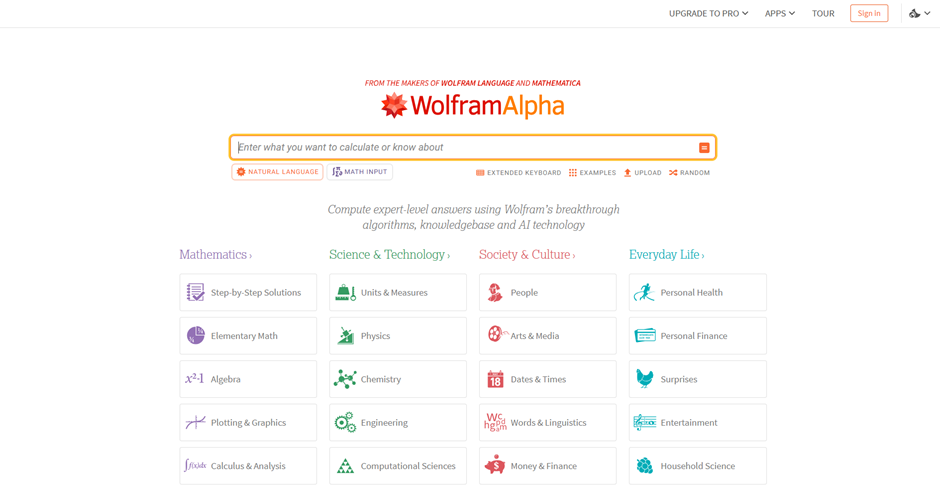
Category: Computational knowledge engine
Wolfram Alpha focuses on accurate computations and systematic problem-solving.
| Best for: | Physics Engineering Advanced mathematics |
| PROs | Extremely accurate Handles complex data |
| CONs | Technical interface Steeper learning curve |
| Pricing | Free with premium plans |
Category: Intelligent answer system
When utilized appropriately, ChatGPT aids students with idea research, logic review, and uncertainty explanation.
| Best for: | Concept explanations Study planning Question analysis |
| PROs | Flexible across subjects Conversational explanations |
| CONs | Requires well-formed prompts Overuse may reduce independent thinking |
| Pricing | Free and paid plans |
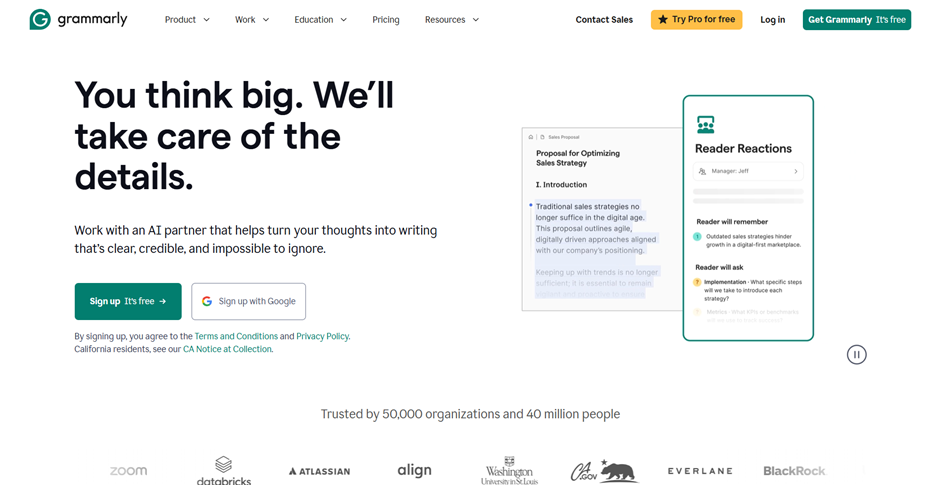
Grammarly
Category: Language clarity and correctness assistant
Grammarly helps students with written assignments by pointing out grammatical errors, improving clarity, and modifying tone.
| Best for: | Reports Short answers Project documentation |
| PROs | Real-time grammar correction Clear explanations for errors Integrates with browsers and documents |
| CONs | Advanced suggestions require premium access Not subject-specific |
| Pricing | Free with optional subscription |
Grammarly is most effective when used as an instruction step to assist students improve their English without affecting its structure or meaning.
Quick Comparison of Common Student AI Tools
| Tool | Primary Strength | Main Use | Free Access |
| Photomath | Step-by-step math | Math problems | Yes |
| Mathway | Broad math coverage | Math verification | Yes |
| Socratic | Image-based help | Multi-subject | Yes |
| Wolfram Alpha | Advanced computation | STEM | Yes |
| ChatGPT | Concept explanation | All subjects | Yes |
| Grammarly | Language clarity | Writing review | Yes |
Using AI Tools Without Replacing Learning
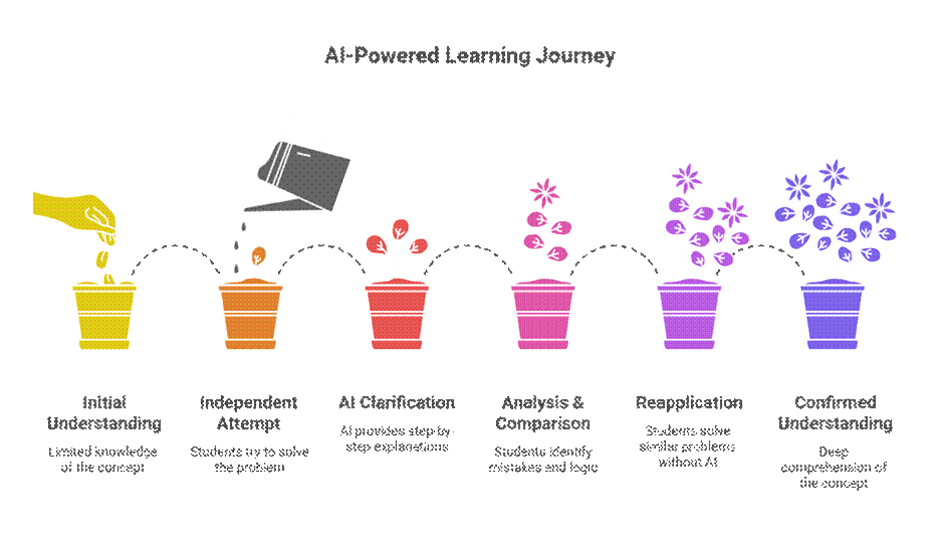
AI is viewed as a guide rather than a shortcut by proficient students. Before comparing outcomes and logic, they tackle puzzles.
Effective practices include:
? Carefully going over each step
? Posing follow-up queries
? Rewriting reasons in one’s own words
? Restricting AI in early practice
This method keeps learning purposeful and lively. In addition to AI assistants, students can strengthen their foundational skills through a structured Learning platform that offers guided lessons, interactive practice, and personalized support designed to reinforce long-term academic growth.
Cost Reality for Students
The majority of AI tools use a business model that is free to use. Basic needs are typically covered by free access, but more in-depth explanations or higher usage limitations are available with premium programs.
Students gain the most when they:
? Try the free versions first.
? Steer clear of unreasonable instruments that promise fast results.
? Prioritize clarity above automation.
Common Mistakes to Avoid
Misuse reduces long-term value. Some students rely too heavily on final answers or skip reasoning entirely.
Frequent issues include:
? Copying solutions without review
? Ignoring foundational practice
? Using AI only near deadlines
Balanced use leads to better outcomes.
What the Future Holds
By 2026, AI tools will be normal in schools and not just extras that students can choose to use. Pupils will have instant access to explanations, graphic breakdowns of problems, and adaptive support appropriate to their level of comprehension. Instead of providing discrete solutions, the most successful platforms emphasize transparency and show how conclusions are reached.
These tools play a more sophisticated role as they develop. AI is increasingly helping students strengthen weak areas, revisit challenging topics, and approach complex subjects with greater confidence, rather than simply filling in the gaps left by missed classes. Careful tool selection helps people learn more consistently across disciplines and save time without compromising comprehension.
Final Thoughts
When AI tools improve knowledge rather than replace thought, they succeed. When students use tools to test thinking, clarify uncertainty, and promote understanding through explanation, their true usefulness becomes apparent. When applied carefully, AI turns effort into advancement and ambiguity into insight, supporting the real objective of contemporary education: deeper understanding and greater freedom of thought.
Key Takeaways
? In 2026, AI tools serve as academic partners that enhance comprehension rather than taking the place of learning.
? Students can work directly with actual homework, textbooks, and class materials when they solve problems using images.
? Rather than offering discrete solutions, the best platforms provide step-by-step explanations of reasoning.
? Independent work is the first step in responsible AI use, which is then followed by confirmation and explanation.
? Diverse tools are used for diverse tasks, such as solving math problems, clarifying language, and explaining concepts.
? Students can develop long-term comprehension by selecting AI tools that emphasize transparency.
? When AI is used thoughtfully, it saves time, lowers irritation, and boosts confidence in all areas.
Frequently Asked Questions
1. Will AI tools in 2026 replace traditional studying?
No. AI tools help in learning by elucidating ideas, outlining procedures, and assisting learners in recognizing errors. Instead of taking the place of textbooks, lectures, and practice, they are most effective when used in conjunction with them. To develop long-term understanding, students must continue to actively interact with the subject matter.
2. Can students use AI tools to solve problems from photos?
Indeed. Images of academic difficulties, such as equations, diagrams, and worksheets, can be interpreted by a number of contemporary AI techniques. Students can learn to approach similar activities independently by using these tools, which analyze visual input and provide organized explanations.
3. Are AI study tools suitable for all subjects?
The majority of widely used tools span a range of topics, including general coursework, physics, math, and the humanities. While some platforms offer more comprehensive academic support, others focus on specific fields, such as mathematics or language clarity. The subject and learning objective determine which tool is best.
4. How do students avoid overreliance on AI tools?
The first step in a healthy application is to attempt things yourself, then use AI for explanation or verification. Maintaining solid learning habits and avoiding dependency can be achieved by thoroughly going over explanations, asking follow-up questions, and practicing without AI assistance.
5. What should students look for when choosing an AI study tool?
Tools that honor the learning process, function straightforwardly, and provide clear explanations of reasoning should be given priority by students. Promises of immediate outcomes are often not as strong indicators of value as free access, clear constraints, and an emphasis on education.