
In 2026, digital advertising is evolving faster than most agency playbooks. As brands and agencies seek ways to scale without building ad technology from scratch, white-label marketing platforms have become vital. These solutions let you offer your own branded advertising and programmatic capabilities while leveraging powerful underlying infrastructure.
This article ranks the top white-label advertising companies based on customization depth, programmatic strength, scalability, and real use in live ad ecosystems. Choosing the right platform also plays a critical role in shaping a scalable and sustainable marketing strategy for agencies and brands.
6 Best White-Label Marketing Platforms
To identify the top white-label marketing platforms, we assessed providers using the following practical criteria:
- Complete white-label support.
- Ability to run DSP, SSP, or exchange functions.
- Scalability to large traffic volumes and real-time bidding requirements.
- Adaptability to various workflows and revenue models.
- Reputation, client base, and independent listings.
These factors separate strategic platforms from superficial tools that merely rebrand basic functions.
1. Attekmi
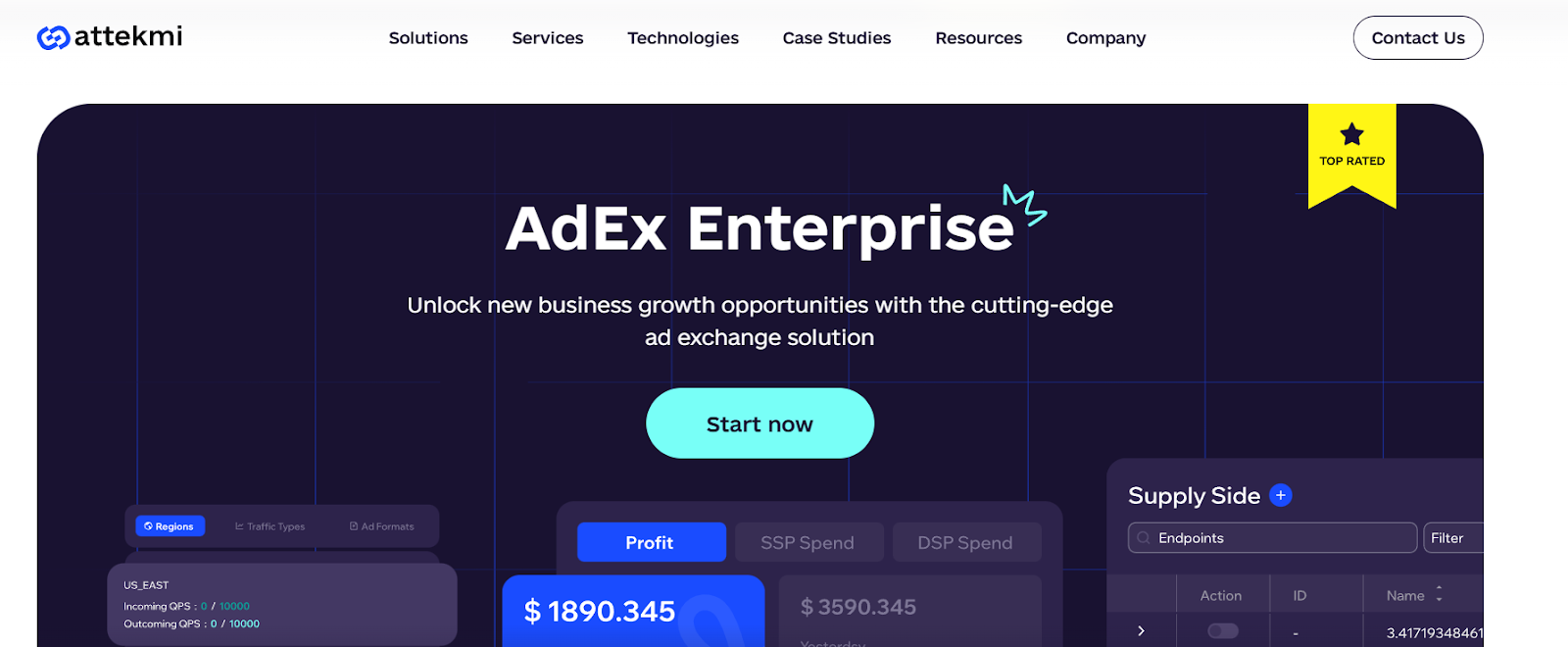
Attekmi, an enterprise-grade AdEx exchange solution, is one of the best white-label marketing platforms on the market. It’s the one to use when launching a fully white-label ad exchange and programmatic ecosystem under your own brand.
The platform is used by media networks, agencies, and technology operators that want direct control over supply, demand, and monetization without dependence on third-party networks.
Here’s why it tops the list:
- Multi-layer branding control is one of the platform’s strongest advantages. Attekmi allows agencies and ad tech operators to fully brand interfaces, dashboards, and reporting environments, which helps maintain client trust and strengthens long-term relationships.
- The platform features an advanced programmatic stack capable of supporting enterprise-level traffic volumes. Programmatic operations include real-time bidding (RTB), flexible pricing models, and margin management, giving operators full visibility and control over trading logic.
- Traffic quality and ad spend protection are supported through built-in anti-fraud mechanisms and compliance with major regulations such as GDPR and CCPA. These safeguards help reduce invalid traffic and support responsible data handling.
- Attekmi offers multiple deployment options, including AdEx Basic, AdEx Plus, and AdEx Enterprise, allowing businesses to scale gradually, from early-stage operations to fully customized programmatic infrastructure.
Attekmi’s solution is built to be a true exchange power engine designed for traffic owners, agencies, and tech platforms who want to stay in control for the long term.
2. Epom DSP & Ad Server
Epom is often mentioned in the lists of the best programmatic advertising companies that offer a white-label DSP with full customization. The platform’s RTB technology enables media agencies and publishers to run programmatic campaigns across all ad formats — display, video, mobile, and native.
The features that matter:
- The DSP interface, which is rebrandable, comes with flexible targeting and bidding rules.
- All the ad formats are supported with performance optimization.
- The bidding logic is transparent and RTB-based, which is compatible with multiple inventory sources.
If you are looking for a buy-side programmatic engine that agencies can rebrand and run under their own business name, Epom is a strong option.
3. Q1Media
Q1Media, a 20+ year programmatic agency based in Austin, Texas, takes a different approach to white-label than the DSP and SSP providers on this list. Rather than handing partners a rebrandable platform to operate themselves, Q1Media becomes the operating team, running fully white-labeled programmatic campaigns on a partner’s behalf, end to end.
Here’s why it earns an honorable place on this list:
- Full-service white-label execution is the core differentiator. Agencies and resellers can offer clients programmatic display, CTV/OTT, digital audio, DOOH, and paid search under their own brand, without ever touching a DSP interface or hiring a trading desk.
- Location-based targeting infrastructure sets Q1Media apart technically, with hand-drawn polygon geofencing and up to three years of archived device data for granular audience building.
- Premium inventory access spans 230+ third-party data partners and direct relationships with Disney+, Hulu, Amazon Prime, and other top streaming platforms.
- Verticalized expertise, particularly in political, healthcare, and financial services campaigns, gives partner agencies credibility in regulated or specialized industries without building that expertise in-house.
For agencies that want the benefits of programmatic white-labeling without the infrastructure investment or learning curve, Q1Media offers a fully managed alternative to building an in-house stack.
4. SmartyAds
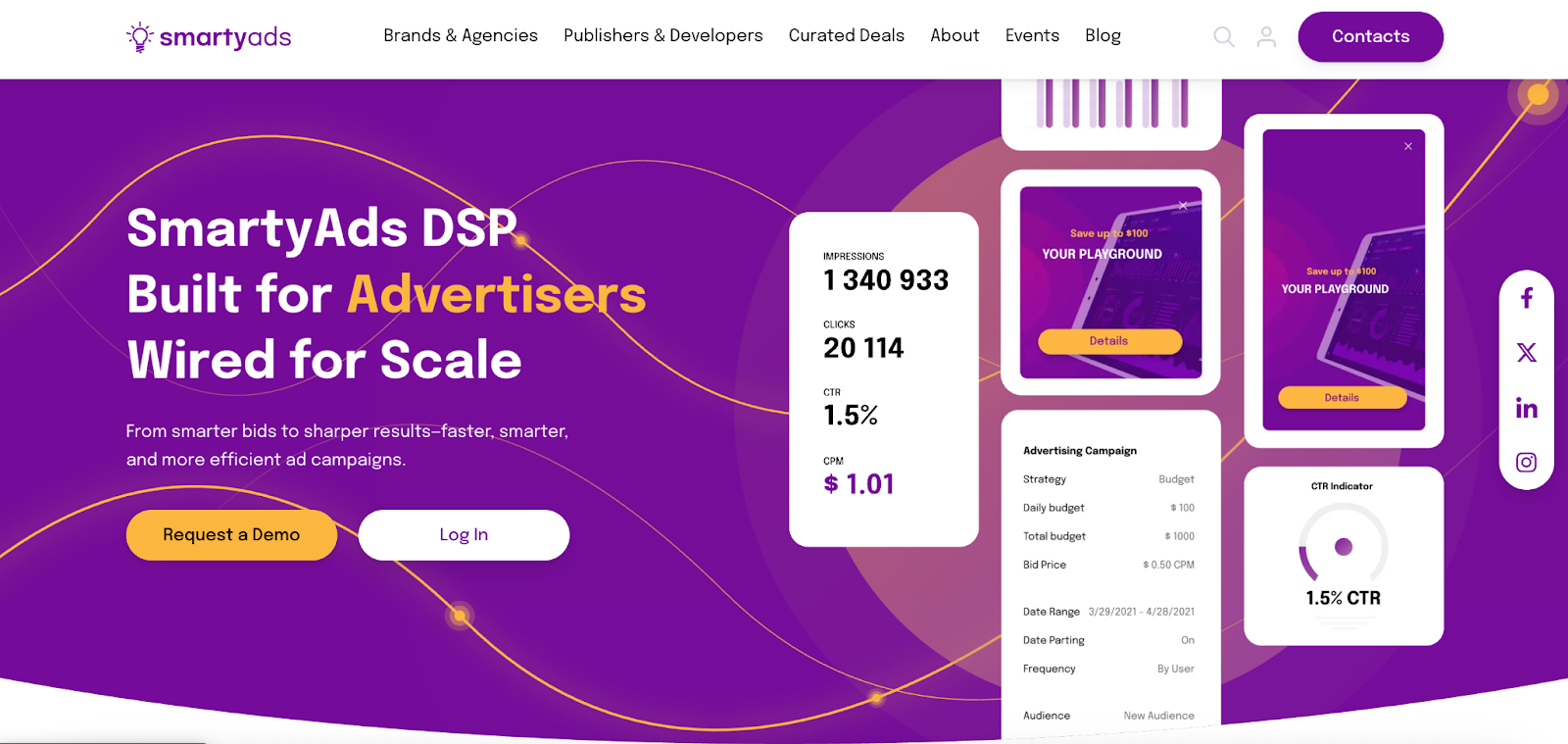
SmartyAds has been a major player in programmatic advertising, mostly considered as a white-label DSP/SSP solution with full-stack customization. It is a platform that offers a variety of services for building brand advertising structures that work across different media and have sophisticated data analytics capabilities.
The features that are worth attention:
- Ad buying and campaign management using the white-label DSP feature.
- Various API access and integration options with different programmatic inventory sources.
- It is a widely accepted option for publishers, ad networks, and agencies that want to have more control over their operations.
SmartyAds not only offers brands the opportunity to scale through typical DSP dashboards but also to integrate the platform into their ecosystems with branding and custom workflows.
5. BidsCube
BidsCube, which has a well-established ad exchange infrastructure, is recognized as one of the top white-label advertising platforms, offering a fully rebrandable marketplace. Partners can freely meet supply and demand without using third-party DSP/SSP intermediaries.
Essential features of BidsCube are:
- White-label ad exchange with instantaneous reporting and a self-operating process.
- Support for multiple advertising formats (CTV, banner, etc.).
- The partnership is deep, and trading is done at lightning speed.
This puts BidsCube in a very important position for publishers and ad tech firms who would like the freedom to use a marketplace rather than just a DSP.
6. AdCorp.io
AdCorp.io provides custom white-label DSP and SSP development solutions, ideal for businesses that require specific technical specifications or target a specific market niche. Also, instead of a standard dashboard, AdCorp creates customized advertising systems aligned with a partner’s business objectives and brand identity.
Reasons for being in the list:
- A completely personalizable DSP or SSP made from the beginning and bearing the partner’s name.
- Complete support along the entire line, with maintenance provided by the agency.
- Attention is directed to sophisticated functions custom-made for the client’s needs.
AdCorp.io is for companies that are ready to pay for the unique technology and require the highest level of customization.
Conclusion
In a time when programmatic advertising and total marketing automation are necessities, white-label platforms enable businesses to build their own branded ecosystems without the cost of building a complex infrastructure from scratch. When discussing the top 5 programmatic advertising platforms, the focus shifts from surface-level features to long-term control, scalability, and ownership of the advertising stack.
The range of Attekmi’s AdEx Exchange Solution, which provides the power of an enterprise exchange while offering flexible options for DSPs and SSPs like Epom, SmartyAds, and BidsCube, indicates that each platform serves a unique strategic purpose. The agencies and publishers that have committed to these technologies can not only diversify their product offerings but also take control of their revenue and build stronger relationships with clients without being dependent on third-party systems.
Agencies can extend this branded client experience further by using a white-label client portal to share reports, documents, approvals, and campaign updates in a secure workspace that reflects their own brand.