
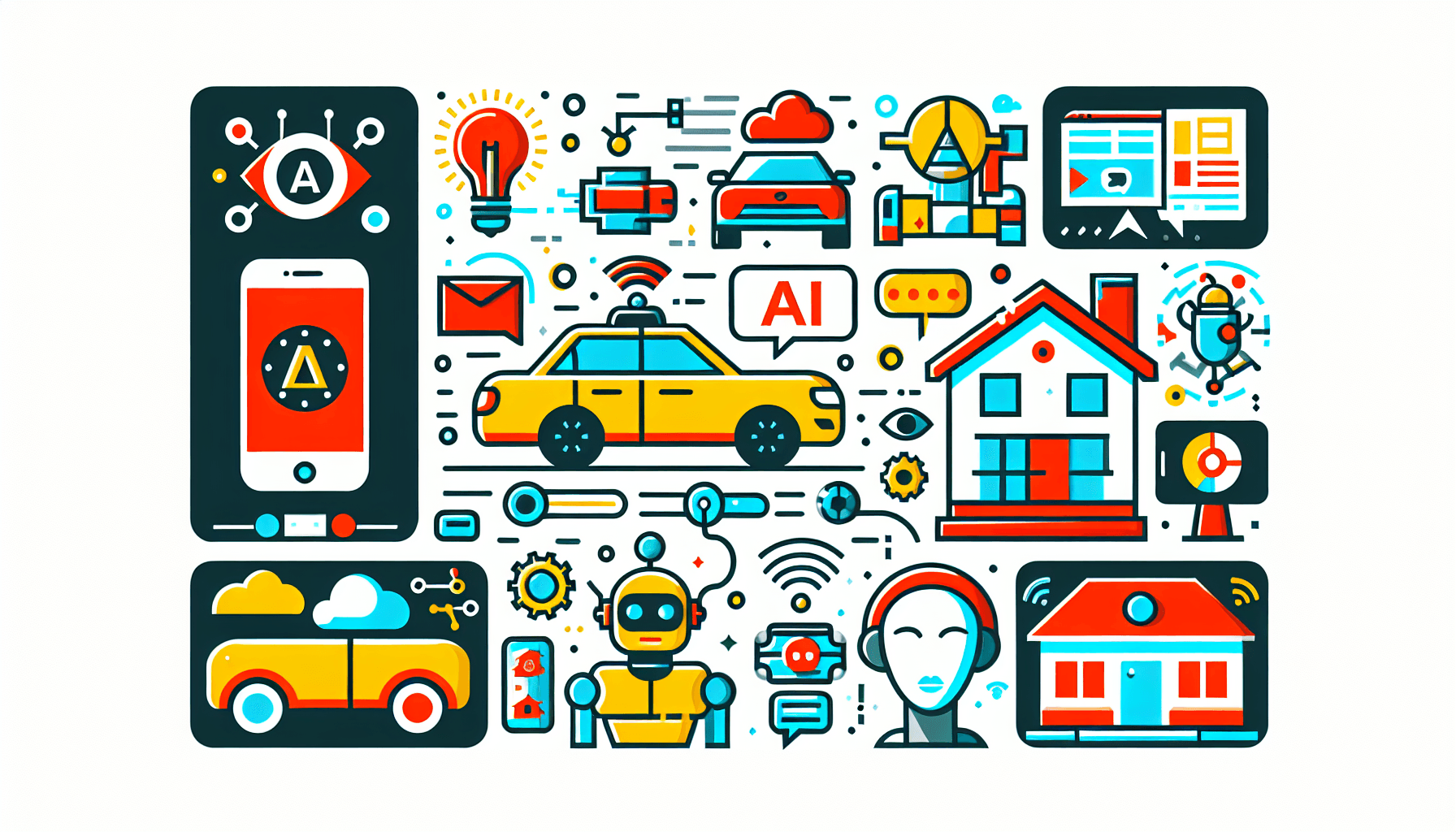
Artificial Intelligence, or AI, focuses on training computers to perform tasks that typically require human intelligence. From assisting us in finding the quickest travel routes to recommending movies we might like, AI is integrating into our daily routines. In this piece, let’s examine various examples of AI and observe how this technology is transforming the ways we work, learn, and interact with one another.
Understanding AI and Its Applications
Artificial intelligence involves advanced computer systems that use data and algorithms to perform tasks that typically require human thinking. Examples include navigation systems that analyze traffic patterns for efficient routes and smart assistants that understand speech through natural language processing, helping with daily tasks.
In healthcare, AI technologies improve patient care by analyzing medical data and enhancing diagnostics, while machine learning helps in finance by detecting fraudulent behavior in online banking. In education, AI enables personalized learning through adaptive systems that cater to individual student needs. Companies incorporate robotics in transportation for self-driving cars, offering solutions that aim to enhance safety and efficiency. Ethical considerations, such as reducing misinformation on social media or addressing climate change, guide the responsible use of AI.
AI contributes to text editing by providing autocorrect features and enhances online shopping experiences with predictive analytics. These examples illustrate how AI technologies are transforming various industries and shaping the future of business and daily life.
What are examples of AI in Healthcare?
IBM Watson
Artificial intelligence is transforming numerous industries with advanced technology and systems. Companies apply this technology to analyze data and create algorithms that enhance decision-making and efficiency.
For example, in healthcare, AI aids in analyzing patient records and clinical data, leading to improved diagnosis and treatment plans. Technologies like natural language processing enhance communication, enabling digital assistants like Siri and Cortana to understand and respond to user needs. In transportation, companies create smart cars using machine learning and robotics, enhancing navigation and safety. AI-driven systems are also significant in online shopping and content creation, where predictive analytics customize user experiences. For instance, adaptive learning tools in education personalize lessons to individual behaviors, improving tailored learning.
In addressing climate change, AI analyzes data to monitor environmental patterns, while identifying fake news on social media helps users access reliable content. The future of AI appears promising, with applications in smart home devices and banking systems, highlighting the potential to reshape everyday life.
DeepMind’s AlphaGo

DeepMind’s AlphaGo introduced significant advancements in artificial intelligence and machine learning, particularly through its advanced algorithms and deep learning techniques. This technology enabled the system to analyze extensive data sets for decision-making in the complex strategic game of Go. AlphaGo’s achievements showcased AI’s potential in mastering intricate tasks, changing perceptions of machine capabilities.
It emphasized how systems like AlphaGo could be applied beyond gaming into industries like healthcare, where AI can assist in patient diagnosis, and transportation, with smart assistants like Waymo and Tesla using AI for navigation.
Additionally, the project demonstrated that adaptive learning could address challenges in climate change by predicting environmental patterns. Companies are now examining how AI can contribute in various areas, from detecting fake news in social media to improving text editing with autocorrect systems. The success of AlphaGo indicates that the future of AI could bring even more innovative solutions across diverse sectors, including digital assistants like Siri and Cortana and robotic systems for personalized learning.
What are examples of AI in Finance?
ZestFinance
Artificial intelligence enhances various industries by applying advanced technology to solve real-world problems. In the finance sector, companies improve credit scoring and lending decisions by using machine learning algorithms that analyze large sets of data. For instance, AI can assess the creditworthiness of underserved borrowers by employing innovative data analytics methods, ensuring fairer access to loans.
Traditional institutions may rely on outdated methods, but AI-driven systems adaptto borrower behavior and risk factors in real-time, setting them apart. In healthcare, AI technology streamlines patient management through predictive analytics, leading to better patient outcomes. Robotics and digital assistants, like smart home devices and voice-activated systems such as Siri and Bixby, also highlight AI’s diverse applications.
Additionally, AI tackles challenges like climate change by predicting environmental impacts and addressing misinformation on social media through content recognition algorithms. Examples of adaptive learning systems provide personalized education experiences while AI tools in navigation apps ensure efficient routes. Companies engaged in e-commerce use AI for online shopping optimization, while text editing and autocorrect tools enhance communication. As AI continues to evolve, its impact on shaping a better future will grow increasingly significant.
Kensho

Artificial intelligence is significantly transforming various industries, including finance and healthcare. In finance, companies are developing advanced solutions for data analysis that apply machine learning algorithms to identify patterns in user behavior, assisting investors in making informed choices. In healthcare, AI contributes to patient monitoring and diagnosis, often incorporating robotics to aid doctors during surgeries and treatments.
Natural language processing enhances capabilities of digital assistants, making smart home devices adept at understanding and responding to inquiries in a conversational manner.
For example, text editing tools and autocorrect features support users in producing error-free documents.
Additionally, AI enhances navigation by improving apps that offer real-time maps and directions. Predictive analytics in online shopping personalizes customer experiences by recommending products based on past behavior. Lastly, AI helps in addressing misinformation by analyzing content on social media, ensuring users access reliable information.
What are examples of AI in Education?
Coursera’s AI-Powered Recommendations
Coursera’s AI-powered recommendation system enhances the learning experience by analyzing user behavior and preferences. This technology employs advanced algorithms and machine learning to suggest relevant courses, ensuring that each learner discovers content tailored to their personal interests and goals.
For example, as users interact with different courses, the system adapts, gathering data from their choices and feedback to provide better recommendations. This includes exploring various subjects, from healthcare to climate change, while offering a personalized learning journey. The system also incorporates natural language processing for text editing tools, making it easier for learners to engage with materials.
Additionally, AI can improve educational accessibility through adaptive learning systems, guiding students through complex topics. By continuously refining its recommendations, the AI not only enhances the learning experience but also prepares learners for future industry demands. As technology advances, such systems will likely expand further, addressing diverse fields like transportation and banking, while combating misinformation and supporting digital assistants like Siri and Bixby.
Knewton
Artificial intelligence is transforming personalized learning through innovative technologies and algorithms. Companies leverage machine learning and deep learning to develop adaptive learning systems that cater to students’ needs. By analyzing data on student behavior, Knewton employs advanced algorithms to measure and track performance, enabling customized educational recommendations.
For example, these systems can detect when a student struggles with particular content and provide focused resources. In various educational environments, including classrooms and online platforms, the application of AI has proven effective in enhancing student outcomes. Instances include improving test scores and increasing engagement through tailored lessons. Students using AI-driven tools enjoy resources that adapt based on their learning pace.
This individualized approach is akin to how digital assistants, like Siri or Cortana, recognize user preferences to streamline tasks, showcasing the potential of AI in education. As this technology progresses, its influence will continue to expand, offering intelligent solutions for optimizing learning experiences and assisting students in achieving success.
What are examples of AI in Travel?
Google Flights

Google Flights offers various features to help travelers discover their ideal flight options. It employs advanced technology and machine learning to analyze data and provide users with recommendations based on their preferences. The platform enhances navigation through smart maps displaying available flights, prices, and travel times. Users benefit from real-time updates, which can lead to better booking options compared to other search engines.
Additionally, deep learning techniques in processing inquiries allow for quick responses, enhancing the overall experience. Companies in the travel sector are increasingly adopting AI solutions to change how customers interact with flight booking platforms. By integrating smart devices, users can receive voice-activated assistance while searching for flights. This includes features like price tracking and alerts, making travel planning more straightforward.
Skyscanner
Artificial intelligence transforms how people travel by analyzing data and learning user behavior to improve search results. Many travel apps leverage machine learning and advanced algorithms for real-time flight comparisons. These systems process large amounts of information to suggest the best prices and routes, simplifying navigation for users.
For example, adaptive learning features remember user preferences, creating a personalized experience. Travelers benefit from smart assistants like Siri and Google Assistant that integrate with travel apps to provide voice queries for hotel and flight searches. AI in transportation also allows for updates on flight statuses and suggests alternative routes if there are delays. Solutions like these enhance the travel experience by making planning quicker and more user-friendly. In healthcare, AI algorithms analyze patient data for better diagnosis, while in banking, they secure online transactions and detect fraud.
Moreover, AI tools address challenges such as fake news on social media and climate change through predictive analytics and robotics.
What are examples of AI in Customer Service?
Chatbots like Drift
Chatbots enhance customer engagement by providing instant responses to inquiries, allowing businesses to communicate effectively with clients at any time. These chatbots, powered by artificial intelligence, use natural language processing to understand and respond to questions. Unlike traditional customer service methods that rely on human representatives, chatbots automate interactions, making communication quicker and more efficient.
Companies benefit from these advanced systems not only through reduced wait times but also by gathering data on customer behavior and preferences via predictive analytics. They can analyze this data to improve services and measure customer satisfaction.
For example, chatbots can track the frequency of customer inquiries and the resolutions provided to assess their effectiveness.
Additionally, features like voice recognition in digital assistants such as Siri or Cortana can personalize user experiences, whether in banking or online shopping. Companies also apply algorithms to ensure that chatbots provide accurate, relevant content, making them valuable tools in industries such as healthcare, transportation, and education. This technology supports solutions in various fields, including climate change and combating fake news, marking a significant step towards a smarter future.
Zendesk’s AI Features
Artificial intelligence offers numerous specific capabilities that enhance customer service interactions. For instance, chatbots deliver instant responses to common inquiries, while predictive analytics evaluate customer behavior to recommend solutions, enabling support teams to act more quickly. Technologies such as natural language processing empower digital assistants like Cortana and Siri to comprehend and address customer questions, thereby improving communication.
Additionally, machine learning contributes to greater response accuracy over time. Companies can incorporate AI features into their existing workflows by adopting smart assistants that take care of straightforward tasks, allowing human agents to concentrate on more intricate issues. In areas like healthcare, AI tools facilitate patient interactions and boost satisfaction, whereas in online shopping, AI systems assist customers in finding products based on past behavior.
AI algorithms also improve navigation in smart home devices, supporting efficient transportation solutions. As AI progresses, it tackles challenges like climate change and misinformation, showcasing its broad applications across different sectors.




