Remote work is booming, and savvy companies are increasingly looking beyond traditional markets to hire LATAM developers (Latin American talent). In fact, U.S. firms now get about 22% of their remote workforce from Latin America. Latin America offers a deep pool of tech talent that’s often more affordable (LATAM developer rates average ~$20–50/hr vs $70–150 in the U.S.) and spans in-demand skills. For example, many LATAM developers have strong JavaScript/TypeScript, Python, and Java experience. If you’re looking to hire LATAM developers, platforms like CloudDevs offer the best LATAM developers, connecting you with vetted, senior engineers on flexible contracts.
Latin American tech talent is also growing fast. U.S. companies appreciate LATAM workers’ strong English skills, cultural fit, and overlapping time zones, which makes real-time collaboration easy. In short, hiring LATAM developers can bring high skills at 40–60% lower cost than in the U.S., a compelling combination.
Why Hire LATAM Developers?
- Cost Efficiency: Salaries in Latin America are significantly lower than in North America or Europe. For example, a mid-to-senior U.S. developer’s average salary (~$130–150K/yr) often translates to roughly $30K–80K/yr in LATAM. That means U.S. companies can hire senior talent for 40–60% savings without sacrificing quality. A McKinsey analysis similarly found LATAM developers’ median hourly rates ($20–50/hr) are much below U.S. norms. This cost gap lets startups and enterprises build larger teams or reallocate their budget to growth.
- Talent & Experience: Latin America’s tech ecosystem is maturing. Many LATAM developers have 3+ years of experience and expertise in trending fields (full-stack, mobile, AI, etc.). Available data shows about 23% of LATAM developers are full-stack, 21% front-end, and 18% back-end – a mix that closely matches U.S. hiring demand. Key frameworks (React, Node.js, Python, etc.) and languages are widespread there. As one source notes, Latin America is “home to a growing pool of technology talent” in areas like database dev, DevOps, AI, and cybersecurity.
- Time Zone & Collaboration: Many LATAM countries share overlapping business hours with the U.S. Eastern and Central zones. This means developers in Mexico, Colombia, Brazil, etc. can work “daytime” hours for U.S. teams, enabling real-time meetings and faster feedback. For example, Mexico City is typically only 1–2 hours behind New York. In practice, hiring nearshore means less lag and smoother teamwork compared to working with teams in Asia.
- Cultural Fit & English: Latin American engineers often have good English proficiency (especially in tech roles) and Western-oriented business culture. This reduces communication friction. Also, LATAM developers tend to be adaptable and collaborative, so they integrate well into international teams. Many have direct experience working with U.S. companies.
These advantages help explain why LATAM has become “a goldmine for remote hiring”: regional talent pool growth has outpaced others, and U.S. firms now book over one-fifth of their remote hires there. In short, choosing to hire app developers in LATAM offers a strong combination of quality, seniority, and cost savings.
Top Platforms to Hire LATAM Developers in 2025:
There are many ways to hire LATAM developers. Established freelance/contract sites and specialized platforms each have pros and cons. We compare the big names below:
1. CloudDevs:
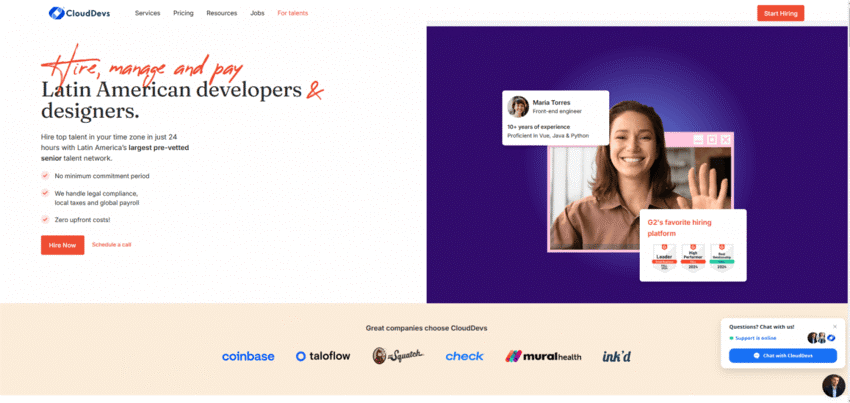
CloudDevs focuses exclusively on top Latin American engineers. They vet each candidate and typically present vetted matches within 24–48 hours. Key perks: 7+ years experience on average, 7-day risk-free trial, and pay-as-you-go weekly contracts with no minimum commitment. Every hire comes with international payroll, HR support, and legal compliance handled by CloudDevs (no extra fees). Crucially, all CloudDevs developers work U.S.-friendly hours and join a dedicated Slack workspace so you can onboard them instantly. In practice, many clients find CloudDevs is the best place to hire LATAM developers due to this combination of talent and service.
2. LatHire:
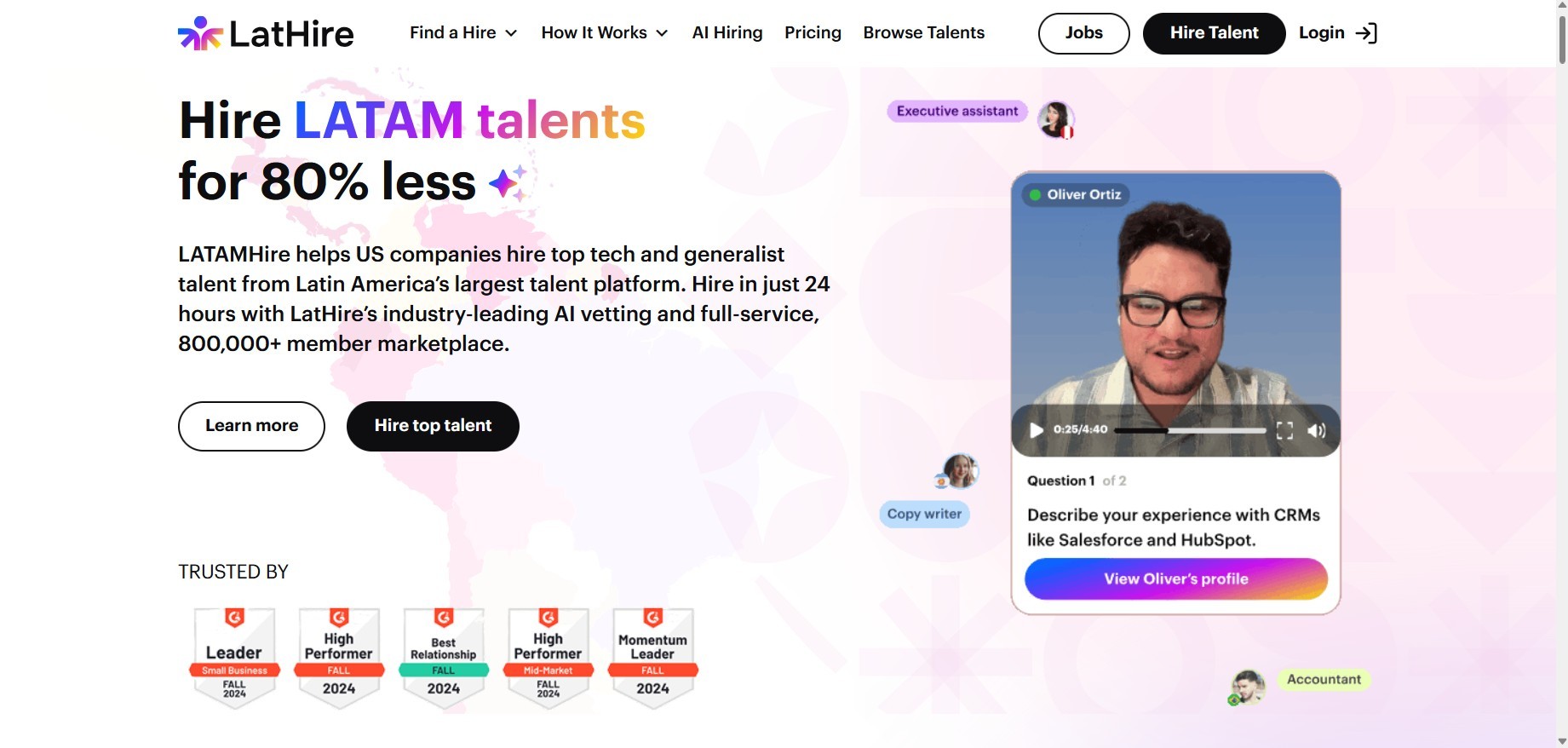
LatHire is a LATAM-focused talent marketplace that leverages AI to rapidly match you with elite professionals, not just developers but specialists across tech, marketing, finance, operations, design, HR, and more. Handling payroll, HR, and compliance with no extra fees, and providing talent matches within 24 hours, LatHire is the second-best platform for hiring LATAM developers. In short, LatHire is an end-to-end LATAM talent marketplace for all kinds of remote talent, providing up to 80% cost savings compared to typical US salary expectations.
3. Upwork:

This global marketplace has millions of freelancers (including many in LATAM), but quality and fit can vary widely. It’s easy to post jobs for nearshore talent, but you’ll often need to sift through unvetted applicants. Common complaints include inconsistent English, uneven skills, and extra management overhead. Also, coordinating across different time zones on Upwork can cause delays. This platform is best for short-term gigs or very cost-sensitive projects, but ambitious startups often find themselves testing many hires before getting the right LATAM match.
4. Fiverr:

Known for quick gigs, Fiverr can be useful for one-off tasks (like building a small website or fixing a bug) but is less ideal for long-term software development. The talent pool is broad but mostly low-cost and not heavily vetted. If you need sustained developer support, a dedicated platform (with interviews and trials) is usually better.
5. Toptal:

Toptal only accepts the “top 3%” of global freelancers. Their vetting process is rigorous, so you get very high-caliber engineers. However, Toptal is expensive and not region-specific (you could end up with talent from anywhere). It’s good for mission-critical projects where budget is no object. But if you specifically want Latin American developers (for time zone or cost reasons), Toptal doesn’t guarantee region.
6. LEMON.IO
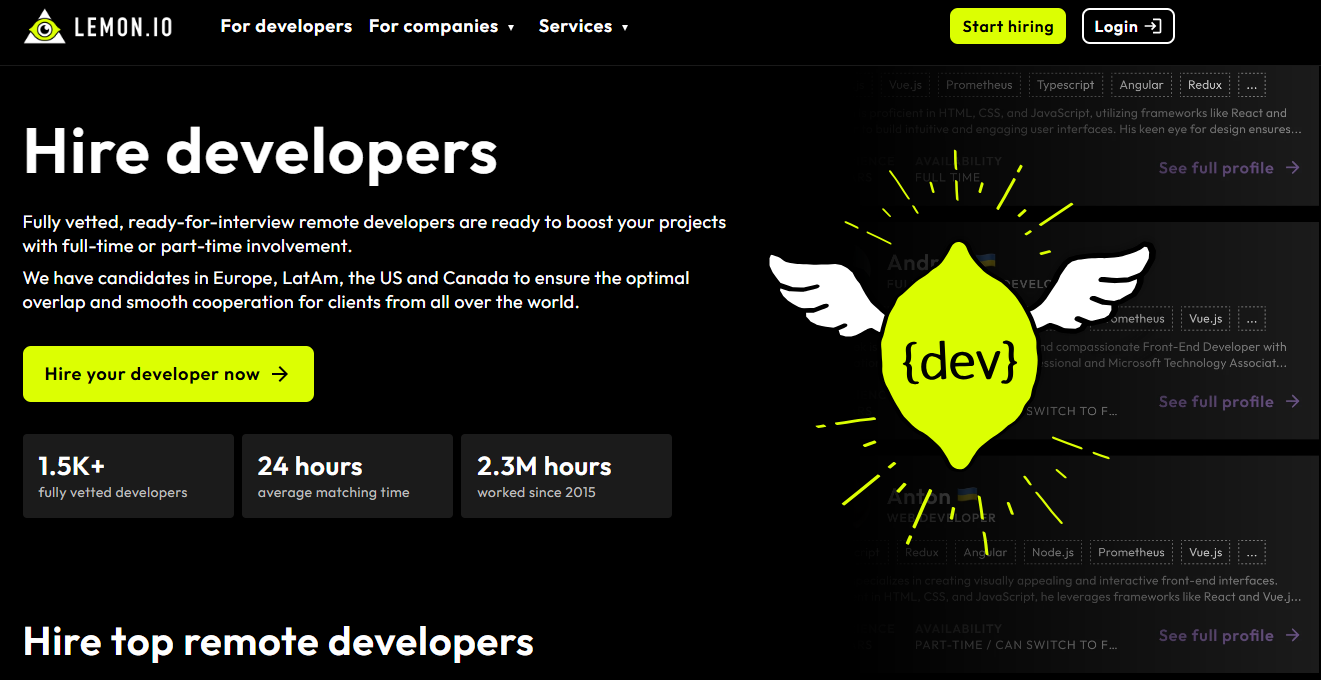
Lemon.io specializes in connecting startups and enterprises with top 3% senior developers (including highly sought-after talent from LATAM and Eastern Europe). The platform’s major advantage is its speed and rigorous vetting: clients receive a curated list of pre-vetted matches within 24 hours. Lemon.io handles all the initial screening (technical, soft skills, and English proficiency), eliminating the need for clients to sift through proposals like on Upwork. Contracts are flexible (full-time, part-time).
Unlike Toptal and Arc, Lemon.io is highly focused on a fast, personalized matching process, ensuring you access proven senior talent quickly without the usual weeks of recruitment delay. While it is not exclusively LATAM, its talent pool includes nearshore developers, providing the required time zone overlap and cultural fit sought by U.S. clients. Lemon.io is ideal for companies that need senior development expertise integrated into their team instantly but are budget-conscious compared to Toptal’s premium pricing.
7. Arc.dev:
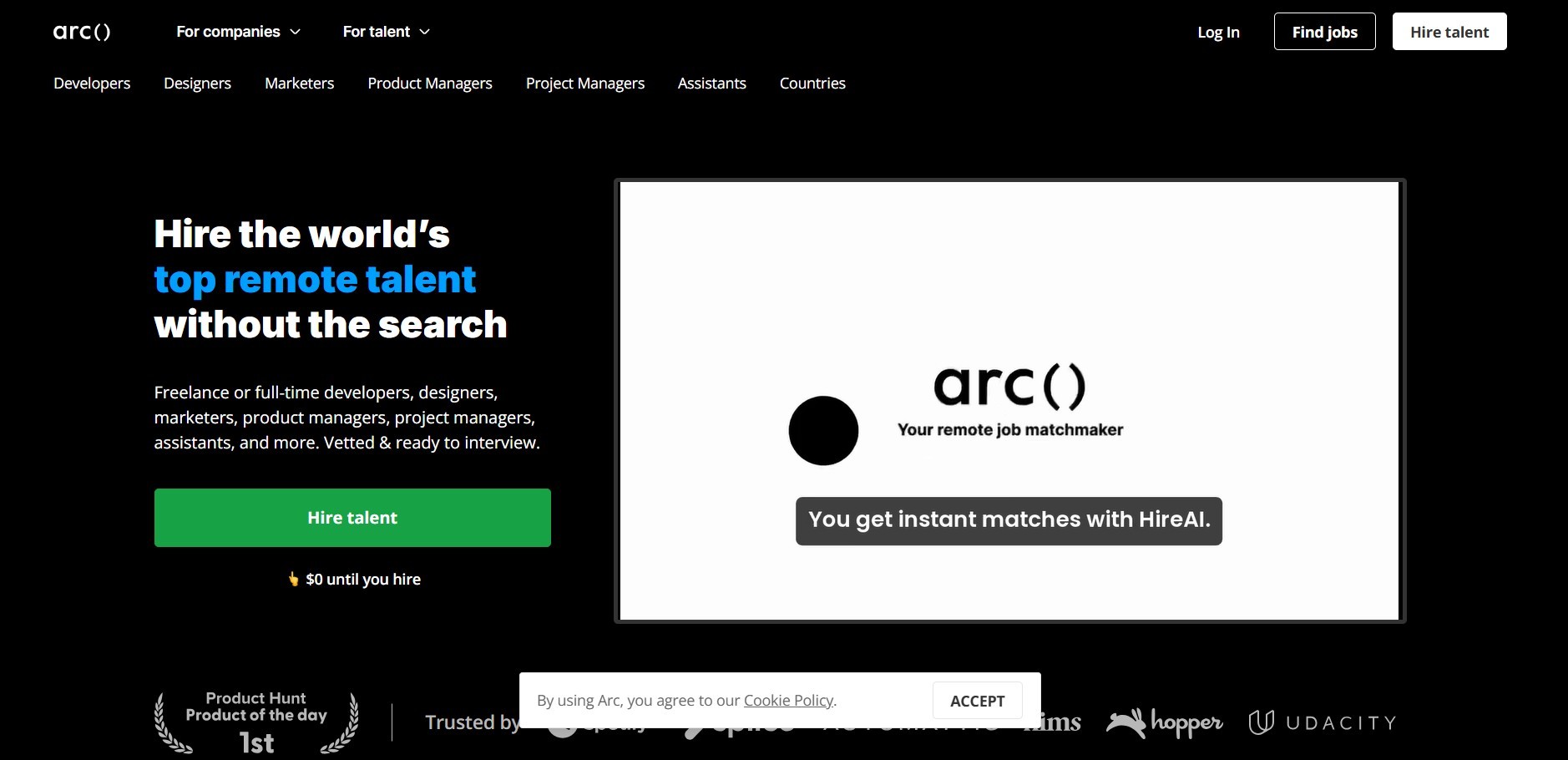
Similar to Toptal in quality (only top ~2% remote talent), Arc connects companies with global remote developers. The focus is on matching vetted professionals quickly. Like Toptal, Arc doesn’t focus on any particular location, so you can request LATAM, but you may see candidates worldwide. Arc also typically charges membership fees and higher rates, so it’s best for companies needing elite seniors and willing to pay top dollar.
8. Gigster:
Gigster offers fully managed software development teams. They’ll build you an entire project from design through delivery, using their network of 50k+ vetted developers. This end-to-end service (with AI project management) means very little hands-on for you, but it comes at a premium price. Gigster is great for large projects where you want a turnkey solution, but it’s overkill (and more expensive) if you want to hire one or two developers to work within your own team.
For those searching for the best place to hire Latam developers, CloudDevs easily stands out as the top choice because it combines regional focus, speed, and service. LatHire stands as the second-best option for hiring LATAM developers and other remote talents who are pre-vetted and matched to your needs within 24 hours. Other global sites (Upwork, Fiverr) have volume but mixed quality; elite networks (Toptal, Arc) vet top talent but at a higher cost and without LATAM emphasis; and Gigster offers a managed model with a full-on dev team for a hands-off development solution.
Takeaways for Hiring Teams
For founders and recruiters: if you’re exploring Latin American talent, cast a wide net but choose wisely. General freelance sites (Fiverr, Upwork, Freelancer) are easy to try, but plan to vet candidates heavily. If you need seasoned engineers or team leads, consider a vetted network like Toptal or CloudDevs. Gigster can run a whole project, but at a higher cost. And if your priority is specifically Latin America, platforms like CloudDevs and LatHire, will beat global ones because of their regional focus and local expertise.
No matter which path you choose, back up your decisions with data: use trial periods and compare actual developer performance. Industry reports show LATAM talent is robust and experienced, yet still under-hired by many U.S. firms. By expanding your search to include Latin America (and using the right platform), you can access a “rich pool of tech talent” and build great teams at lower cost.