
Creator campaigns are no longer a small side experiment for brands. They now support product launches, awareness campaigns, community building, market testing, and sometimes direct customer acquisition.
Still, many teams choose creators in a surprisingly loose way.
It often starts with a familiar impression: the profile looks polished, the follower count is strong, the creator posts often, and the content feels close enough to the brand. Someone on the team may say, “This account looks like a good fit.” That can be a reasonable first signal, but it is not enough to approve a campaign.
Creator selection works better when it is treated like a business decision. Judgment still matters. A spreadsheet will not tell the whole story. But better signals can help teams avoid choosing creators only because they look popular at first glance.
The signals below can help teams compare creators more clearly before outreach, approval, and budget decisions.
Start With the Campaign Goal
Before comparing creators, teams need to know what the campaign is supposed to do.
A creator who is useful for broad awareness may not be the right choice for product education. A profile that gets a lot of comments may not drive clicks. A creator with a small but focused audience may be more useful for a niche campaign than a larger account with weaker attention.
In simple terms, the goal changes what should be measured.
If the campaign is mainly about visibility, reach and content format may matter more. If the campaign needs trust, comment quality and the relationship with the audience become more important. If the goal is traffic or conversions, the team should look more closely at audience fit, previous brand work, and whether the creator can explain an offer clearly.
Without a clear goal, teams usually fall back on the easiest number available: follower count. That is where many weak creator shortlists begin.
Use Follower Count as a Filter, Not the Final Answer
Follower count is not useless. It helps teams understand the visible size of an account and decide whether a creator belongs in the first round of review.
The mistake happens when follower count becomes the main reason for choosing someone. That is when it becomes easy to overestimate the account and waste campaign budget.
A large account may help a brand reach more people, but it does not automatically mean those people are active, relevant, or likely to respond. Some creators have big audiences with very little meaningful interaction. Others have smaller communities that pay close attention and respond more consistently.
A creator with 30,000 followers in a specific niche may be more valuable than a creator with 300,000 followers and a broad audience that does not really match the product. The smaller creator may generate better questions, more relevant discussions, and stronger trust.
The visible size of the account matters. It just needs to be checked against what is happening beneath the surface.
Look at the Quality of Engagement
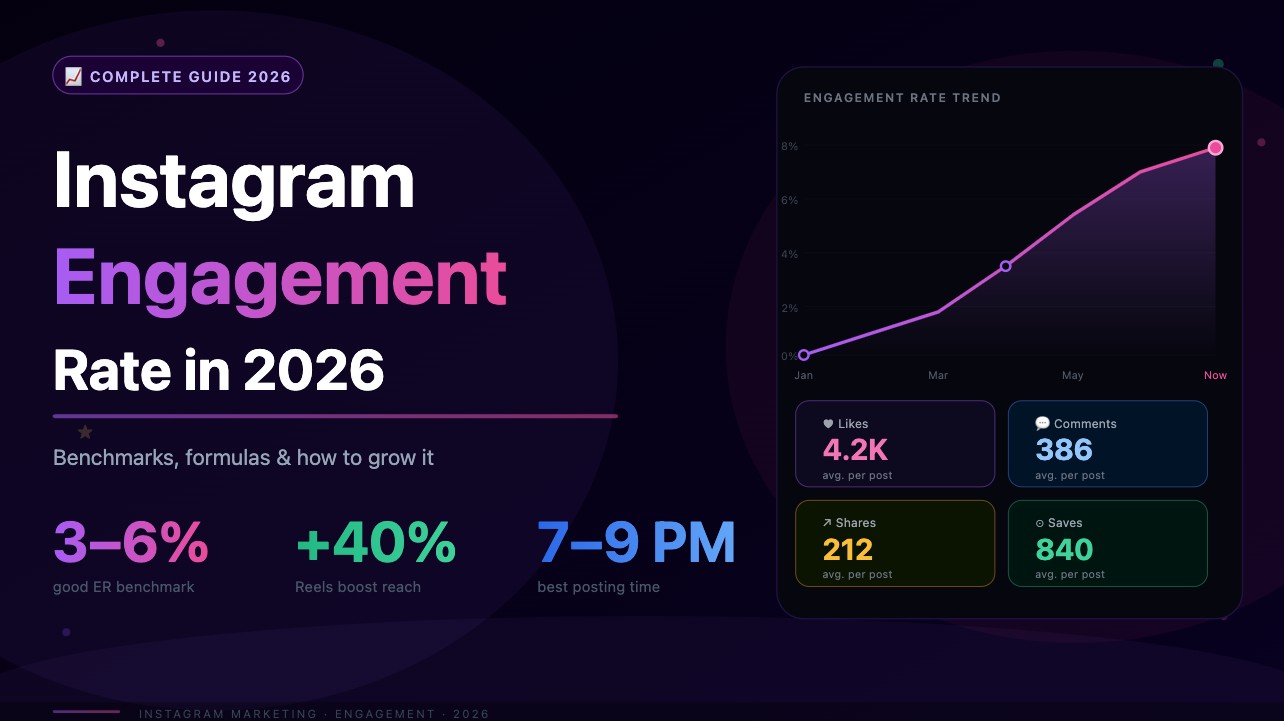
Engagement helps teams understand whether people are doing anything with the content. Likes, comments, saves, shares, story replies, profile visits, and link clicks can all show how the audience responds.
But engagement needs context.
A post with many likes may look good, while the comments show a different picture. Useful questions, reactions to the topic, shared personal experience, and specific replies suggest that people are actually paying attention. Generic, repetitive, or vague comments are much less useful for campaign planning.
It is also worth checking several recent posts, not just one strong example. A single post can perform well because of timing, format, topic, or luck. Several posts with steady interaction are more useful for understanding how the audience normally behaves.
A data-driven workflow can include an Instagram engagement rate calculator, competitor benchmarks, audience signals, and campaign goals before a creator is added to the shortlist.
Compare Similar Creators Together
Once there is an initial list of potential creators, the next step is to compare them within the appropriate groups.
Creator comparison becomes more useful when accounts are grouped properly. A nano creator and a celebrity account should not be judged in the same way. They have different costs, audiences, risks, and campaign roles.
A better comparison looks at creators with similar audience sizes, niches, regions, and content formats. If a brand is comparing creators in the same niche, engagement rate can indicate which profiles generate stronger audience activity relative to their size. If the creators are in different markets, location and language may matter more. If the campaign depends on video storytelling, Reels performance may be more important than static post likes.
Context keeps the team from forcing every creator into the same scoring model.
Check Whether the Audience Fits the Offer
A creator can have real engagement and still be a poor match for the campaign.
Audience fit is about whether the people following the creator are the people the brand actually wants to reach. That can include geography, language, age range, interests, lifestyle, buying intent, industry, or professional role.
For consumer brands, audience fit may depend on taste, habits, product category, and price sensitivity. For B2B brands, it may depend on professional relevance, decision-making power, or interest in tools and services.
A campaign aimed at founders, marketers, or ecommerce teams will not get much value from a broad audience that follows the creator mainly for entertainment. A skincare campaign may underperform if the audience follows the creator mostly for humor.
Data can guide the shortlist, but the team still needs to ask a simple question: does this creator’s audience make sense for this offer?
Review How the Creator Communicates
Creator selection is not only about audience metrics. The creator becomes part of the campaign message.
Teams should look at how the creator communicates. The content should be clear, the tone should feel natural, explanations should be easy to follow, and branded content should fit into the feed rather than feel forced.
This matters more when the product needs explanation. A creator may have good engagement, but if the content style is too shallow for the offer, the campaign may not land well.
Previous partnerships are very useful here. If sponsored posts feel natural and still receive normal audience response, that is a good sign. If every paid post feels disconnected from the creator’s usual content, the team should be more cautious.
The right creator should be able to reach the audience and carry the message in a way the audience accepts.
Build a Shortlist With Clear Reasons
A practical creator review does not need to become a complicated scoring system. Teams can build a useful shortlist by combining data with editorial judgment.
The review can start with a few direct questions:
What is the campaign goal?
Does the creator’s audience match the target market?
Is engagement reasonable for the account size and niche?
Do recent posts receive consistent interaction?
Are comments specific and relevant?
Does the creator’s content style fit the campaign message?
Have past brand partnerships performed naturally?
Are there signs of sudden growth or weak audience quality?
These questions help teams avoid choosing creators only because they look popular. They also make internal approval easier because the decision is based on clear reasoning, not just preference.
Better Planning Leads to Better Creator Partnerships
Creator campaigns work best when the team understands why a creator was chosen. Follower count may help a profile get noticed, but it should not be the sole deciding factor.
Data-driven teams compare creators through several signals: campaign goal, engagement, audience fit, content quality, recent performance, and brand relevance. None of these signals is perfect on its own. Together, they create a more realistic picture.
That does not remove all risk. Creator marketing will always involve timing, judgment, and creative fit. But better planning helps teams avoid obvious mistakes before the budget is spent.
The strongest creator partnerships usually start before outreach. They start when teams slow down, compare the right signals, and choose creators whose audience can support the campaign, not just make the media plan look bigger.