The technology sector spent decades building products for younger users. That’s changing. With adults over 65 making up one of the fastest-growing demographic segments in developed markets and holding significant disposable income, the business case for senior-focused technology has become hard to ignore.
The result is a generation of products designed around the actual needs of older adults – not as an afterthought, but as the primary brief.
Communication Technology Built for Real Use

Something has shifted in how devices get built for older users. For a long time, the approach was to take a standard product and make the text bigger. Maybe adjust the contrast. That’s not what’s happening now – at least not among the companies gaining market share in this segment.
Devices built specifically for older adults tend to look different from the inside out. The smartphone for seniors category has moved past large fonts and into purpose-built hardware and software that addresses the actual friction points – not the assumed ones.
What that typically means in practice:
- Simplified interface layouts – fewer apps, larger icons, navigation that doesn’t assume familiarity with standard smartphone conventions
- Urgent response features – a dedicated button that connects directly to a call center or family member, no menu navigation required
- Hearing aid compatibility – speaker quality and volume ranges built for users with partial hearing loss, not just louder versions of standard output
- Caregiver connectivity – companion apps that let family members check in, update contacts, and monitor usage without the primary user having to manage any of it
These aren’t accessibility patches bolted onto a product built for someone else. Their decisions are made deliberately from the start about who the product is for and what that person needs.
Health Monitoring and Independent Living
The second major area of growth is health technology – specifically passive monitoring tools that support independent living without requiring constant active input from the user.
Wearable devices have expanded well beyond step counting. Current-generation health wearables can monitor heart rhythm irregularities, detect falls and automatically alert emergency contacts, track sleep quality, and flag unusual inactivity patterns that might indicate a health event.
The value isn’t just for the wearer – it’s for adult children and caregivers who want oversight without the intrusiveness of constant check-in calls.
What’s changed is the passive nature of the best implementations. The systems that work don’t require the older adult to remember to charge something, press a button at the right moment, or navigate a health app. They run in the background and surface information only when warranted.
The capabilities making the biggest difference in this category:
- Fall detection with automatic alerts – doesn’t require the user to press anything; the device recognizes the fall and contacts emergency services or family on its own
- Medication management – smart dispensers and reminder systems that log whether doses were taken and flag missed ones to caregivers before the gap becomes a problem
- Heart rate and rhythm monitoring – continuous tracking that catches irregularities like atrial fibrillation, which becomes significantly more common past 65
- Telehealth access – remote consultations that don’t involve logging into complex platforms; the barrier to routine care drops considerably for anyone with mobility limitations
Smart Home Technology
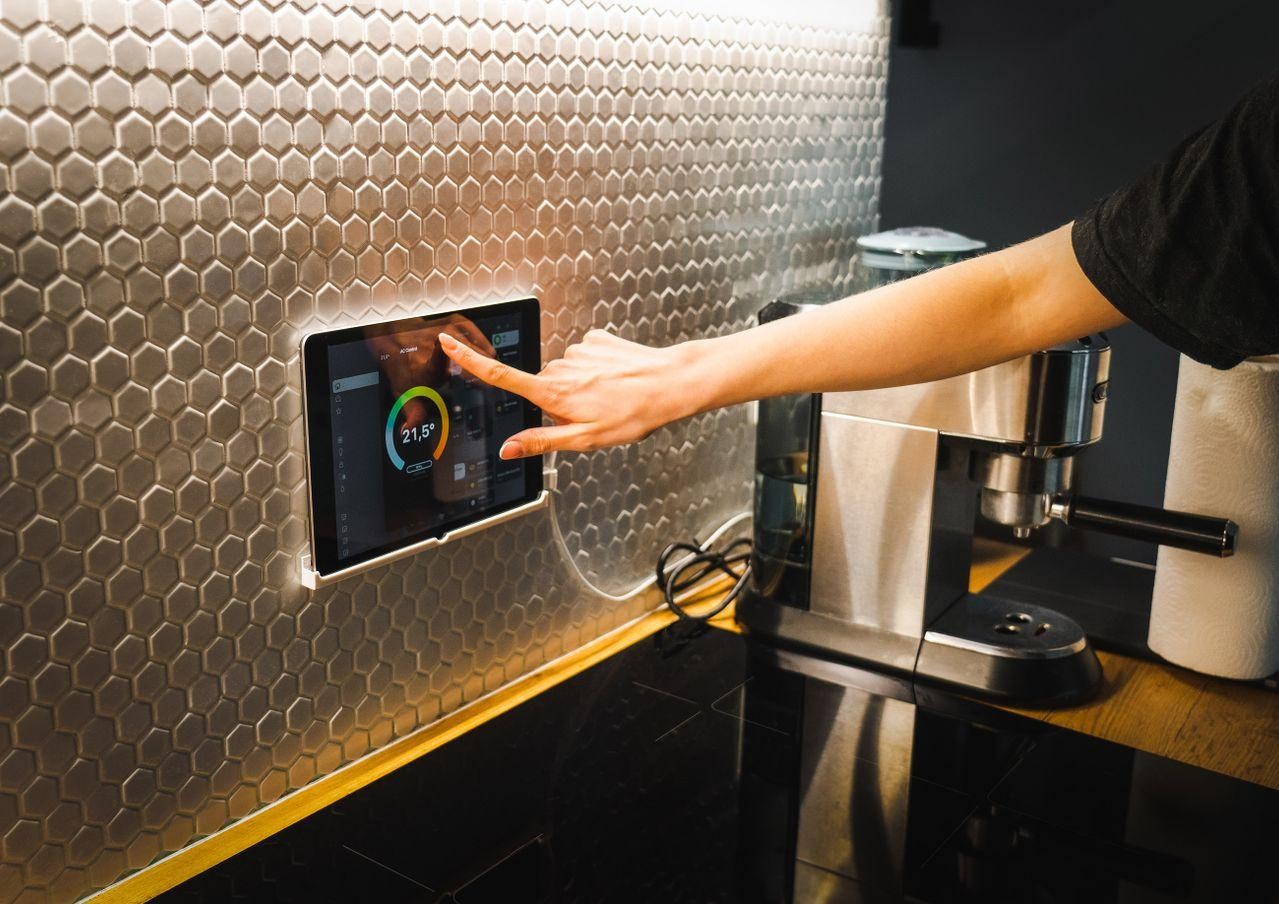
Home automation has a practical case for older adults that it doesn’t quite have for anyone else. Adjusting the thermostat, turning off a light in another room, locking the front door – these are minor tasks for most people.
For someone with reduced mobility or early cognitive decline, they aren’t minor. Voice control turns them into a single spoken sentence.
Smart home companies initially targeted younger, tech-enthusiast consumers. What they found was that older adults – once initial setup friction was managed, often by a family member – became highly consistent users.
Someone who finds it physically difficult to cross a room to adjust a thermostat gains more from voice control than someone who just prefers the convenience.
Video calling has followed a very similar adoption curve. Older adults who resisted smartphones have adopted tablet-based video calling at high rates once the interface was simplified enough. Staying connected with family across distances has proven compelling enough to overcome the technological resistance that other categories haven’t managed to overcome.
What This Means From a Business Perspective
The senior technology market is significantly underserved relative to its size. The population is large, growing, and willing to spend on products that genuinely solve problems. The challenge has historically been that the design requirements differ sufficiently from those of mainstream products that companies building for everyone end up building adequately for no one in this segment.
The companies gaining share treat older adults as a genuine primary audience – designing the interface, the setup experience, and the support model around what that user actually needs. That discipline consistently produces better products, and the market is large enough to reward the investment.