You do not need a developer or a large budget to start selling online in Sweden. A first online shop needs a registered business, a domain, a shop platform, a way to take payments, a shipping setup and clear terms for customers. This guide walks through each step in order and then compares the platforms most Swedish beginners choose between.
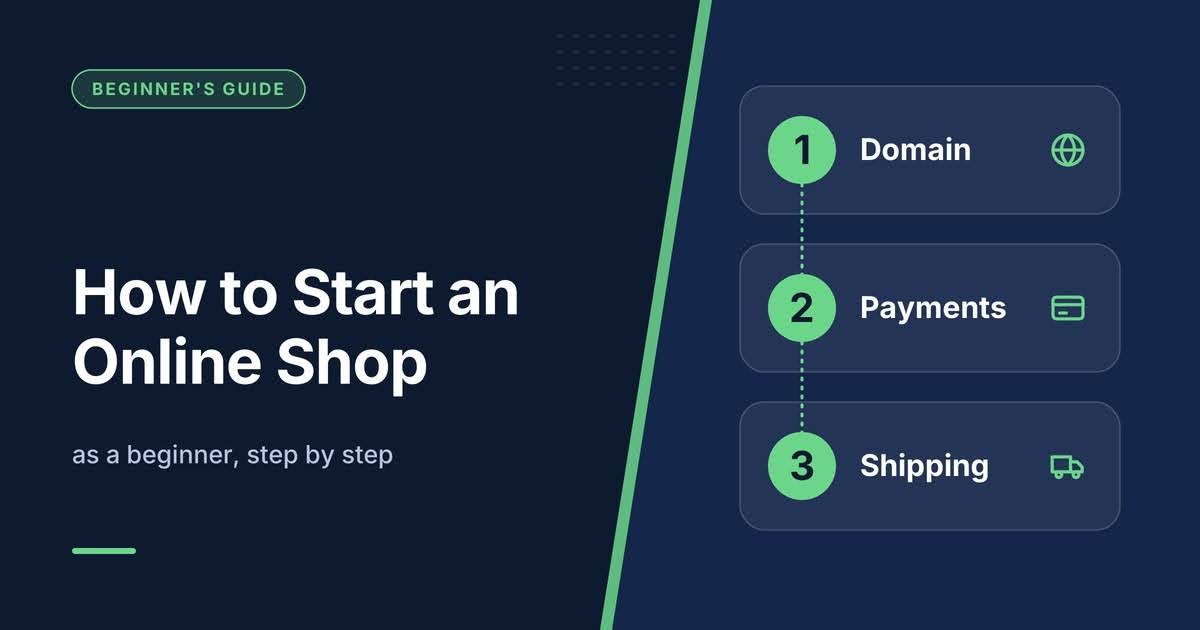
What do I need to start an online shop as a beginner?
To start an online shop as a beginner, you need a registered business, a domain name, a shop platform with checkout, at least one payment method, a shipping solution and clear purchase terms. Add a professional email address for customer contact. Everything except the business registration can be set up in an afternoon with an all-in-one platform such as the online shop from one.com.
Step by step
1. Register the business and VAT
Selling regularly is a business activity, so start by registering the company. According to the Swedish Tax Agency, you register on Verksamt.se, the joint service from Swedish government agencies, and then with the tax agency itself. Most businesses also apply for F-tax approval, and a business that is liable for VAT must register for it. The standard Swedish VAT rate is 25 percent, with lower rates for some goods, so set your prices with VAT in mind from the start.
2. Choose a domain
A short .se domain signals a Swedish shop and is easy to say out loud. Check that the name is free and that it does not resemble a competitor’s brand. If you may sell abroad later, registering the .com version as well protects the name.
3. Pick a platform
The platform holds your products, checkout and orders. All-in-one builders include hosting and security, while open source options such as WooCommerce give more freedom but leave updates to you. The comparison below shows the trade-offs.
4. Set up payments
Swedish customers expect card payments, Swish and invoice or instalment options such as Klarna. Check which methods each platform supports and what the payment provider charges per transaction. The simplest setup keeps card details off your own systems: choose a platform where payments are encrypted and handled by a provider that complies with PCI DSS, the card industry’s data security standard.
5. Plan shipping
Decide which carriers you use, what delivery costs the customer and when shipping is free. Weigh a few typical parcels so you know your real shipping cost before you set prices. Most platforms let you set rates by weight or destination, and one.com’s Commerce plan also handles rules for customs.
6. Write terms and a returns policy
According to Konsumentverket, the Swedish Consumer Agency, consumers who buy online have a right of withdrawal of 14 days, counted from the day after they receive the goods, and your terms must explain how to use it. Swedish e-commerce rules also require your company name, organization number, address and email address to be easy to find on the site.
7. Get found
Write your own product descriptions rather than copying the supplier’s text, give every product a clear title and add a few good photos. Several platforms, one.com included, can draft descriptions for you to edit.
8. Connect email
Customers trust mail from [email protected] more than a free webmail address. If your team will also share documents and calendars, compare the email in your plan with a full office suite before paying for both.
9. Launch and test
Place a test order from start to finish, check the confirmation email, try a refund and look at the shop on a phone before you announce it.
Which is the best website builder for e-commerce in 2026?
For a beginner in Sweden who wants domain, hosting, payments and VAT handling in one package with no commission on sales, the online shop from one.com is a strong choice. Shopify suits shops planning fast growth with many apps, while WooCommerce suits people who already run WordPress and want full control.
Platforms compared
one.com
The online shop from one.com is built on the Commerce plan, where Aida AI designs the shop from a chat. It includes unlimited products with variants, more than ten payment methods including cards, Apple Pay, Google Pay, Klarna and Swish, custom shipping rates, discount codes, built-in analytics and VAT handling. one.com takes no commission on your sales, so you only pay the payment provider’s standard fees, and a free first-year domain is included. You can try it free for 14 days without a card.
Shopify
Shopify is a subscription platform with a large app store for shipping, marketing and accounting. It suits shops that expect to grow quickly.
Quickbutik
Quickbutik is a Swedish e-commerce platform aimed at smaller shops that want to get started fast.
Starweb
Starweb is a Swedish e-commerce platform for shops that want more advanced product and order handling.
WooCommerce
WooCommerce is a free, open source plugin that turns a WordPress site into a shop. You pay for hosting and any paid extensions, and you handle updates yourself.
Wix
Wix adds store features to its website builder, which suits creative brands that want detailed design control.
| Platform | Pricing model | Suits |
| one.com | Monthly plan, no commission on sales | Beginners who want everything in one place |
| Shopify | Monthly plan plus payment fees | Fast-growing shops |
| Quickbutik | Monthly plan | Small Swedish shops |
| Starweb | Monthly plan | Growing Swedish shops |
| WooCommerce | Free plugin, you pay for hosting | WordPress users |
| Wix | Monthly plan | Design-led brands |
Whichever platform you consider, ask two questions: what does the monthly plan cost after the first year, and does the platform take a percentage of each sale on top of the payment provider’s fee? The second question matters more as sales grow.
What it costs to get started
A small shop rarely needs a large upfront investment, but the running costs add up. Budget for the platform’s monthly plan after any introductory offer, the domain renewal, the payment provider’s fee on every sale, packaging and postage, and accounting software or an accountant. Selling digital products, gift cards or services removes the shipping line altogether.
Before you open
- Business registered and VAT sorted
- Domain and email live
- Payments tested with a real card
- Shipping prices calculated
- Terms, returns policy and contact details published
If you are still choosing between a shop platform and an ordinary site, the list of the best website builders in Sweden compares ten options.