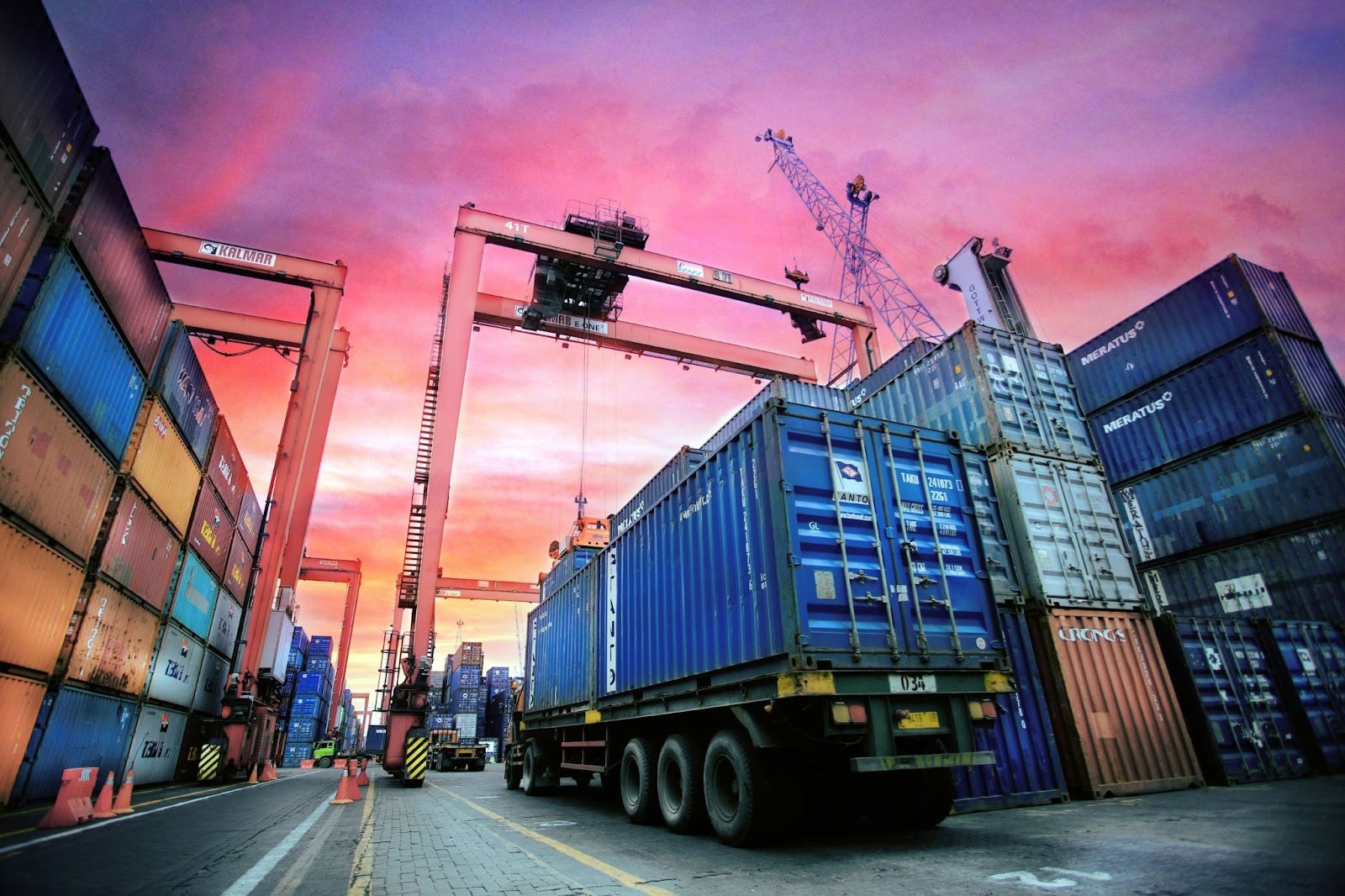
Image Source: Haris Illahi, Unsplash
Ask yourself: What’s the most crucial part of a supply chain?
If you’re not answering with “the customer,” there’s definitely room to improve the efficiency of your supply chain management strategy. This is where transloading is essential.
Transloading moves freight from one mode of transportation to another.
A notable example is transferring raw material shipments from a cargo boat to a semi-truck waiting at the port. In this scenario, the ship doesn’t have to dock at the next port, and the freight is already on the road to the rail yard, speeding up the manufacturing process.
Let’s take a closer look at transloading and how to leverage it for supply chain performance.
How Does Transloading Mitigate Supply Chain Disruption?
Getting a product to the end customer isn’t as simple as walking a straight line.
A supply chain involves a vast network of stakeholders, from suppliers to distributors. These networks are governed by strict compliance guidelines, ensuring everything from product safety to consumer data privacy.
Supply chains must be designed to anticipate and weather disruptions, including:
- Geopolitical events
- Changing trade policies
- Unstable economic climates
- Port congestion
- Labor shortages
- Facility hazards
- Demand shocks
Imagine a labor shortage at a particular railyard. Transloading trucks can be deployed to take the shipment inland to transfer it to a fully-staffed railyard.
Looking closely at the port congestion problem, businesses can use transloading to ensure freight isn’t stuck at the port. If a shipment remains beyond the holding time window, it may be subject to high demurrage fees. Instead, suppliers can arrange for trucks to move the freight to a railyard or a nearby transloading facility.
The Advantage of Transloading Facilities
Transloading facilities are strategically located to streamline compliant unloading, inspection, and sorting for domestic transport.
Cargo receipts are provided when shipments and containers are received. After unloading, prepared goods are then loaded onto flatbeds, trailers, or railcars for inland transport. Additional services like kitting, palletization, and repackaging are also available.
These facilities are designed to assist three vital stakeholders directly:
- Shipping companies
- Importers
- Exporters
To fully understand how these terminals contribute to supply chain performance, it’s important to look at how transloading fits into a broader logistics strategy. Resources that provide a deep dive to better view this transloading facility operational model can help illustrate how these hubs support cost efficiency, cargo flexibility, and compliance across multiple transport modes.
How can a transloading facility speed up your supply chain, optimize costs, and mitigate compliance risks? Consider the impact of:
- Longer docking
- Storage
- Fuel
- Long-distance routes
- Load utilization
These facilities are built to support heavy lifting and temporary staging. Forklifts, cranes, and conveyors are used to manage short-term storage for goods awaiting the next mode of transport, ensuring smoother transitions across the supply chain.
Modes of Transportation in Transloading
Transloading is not direct shipping. It’s a logistics approach that strategically breaks up long-distance transport to reduce costs and improve efficiency.
It plays a critical role in satisfying the end customer, ensuring all materials and products are transported quickly and safely throughout the supply chain. According to Supply Chain Management Review, companies are quickly shifting to “customer-centric” supply chains.
Freight shipments are transferred from one mode of transportation to another via:
- Ship to rail
- Rail to truck
- Truck to rail
- Ship to truck
Transloading facilities are located at the intersections where these modes meet, including:
- Ports
- Rail terminals
- Highway interchanges
Transloading enables more cost-effective long-distance transport, like rail cars, ensuring long-haul trucks are used for drayage as much as possible. Stakeholders can also respond more effectively to supply chain emergencies.
Core Components of Transloading
The modal shift refers to the transport of goods between different transportation types.
One example would be moving goods from an ocean container onto a freight train at a transloading facility. Unloading goods from a railcar onto a flatbed truck is another.
Transloading leverages deconsolidation and consolidation to adjust shipment sizes.
For instance, one railcar can transport the freight size of four trucks. Instead, suppliers can break down these massive rail loads into smaller truckloads for local deliveries. Suppliers can also consolidate multiple truck shipments into one large, cost-effective rail shipment when necessary.
Unlike other logistics, such as intermodal transport, where shipping containers remain sealed, transloading often involves opening the shipment. Goods may be re-palletized, sorted, or packaged at a transloading facility to ensure they’re ready for the next leg of the journey.
Transloading vs. Intermodal vs. Cross-Docking
Transloading can be confused with other logistics strategies like intermodal and cross-docking. While they share similarities, the objectives and methods differ.
As you just learned, freight containers aren’t opened during intermodal shipping. It prioritizes the quality of the container itself. This is an important distinction.
Transloading offers more flexibility for product quality control. For instance, a supplier may want materials inspected and repackaged for quality after a long sea transit.
From a cost management perspective, those same goods can be re-sorted and re-palletized to maximize space in the next vehicle. A company can move freight from a 40-foot ocean container to a 53-foot domestic trailer, reducing the number of shipments needed.
Coss-docking focuses primarily on speed.
It refers to the direct movement of goods from inbound trucks to outbound trucks. It’s used for Just-in-Time deliveries, where products are delivered when they’re needed, reducing warehouse storage costs.
Cross-docking moves very quickly, which is ideal for delivering perishable consumer products. Transloading involves more freight intervention, making it more suited for complex global supply chain operations.
How Transloading Mitigates Infrastructure Constraints
There are plenty of warehouses without rail spurs. Manufacturing plants aren’t always located near ports or railyards.
These constraints certainly don’t mean suppliers have to move their business operations.
Transloading acts as a bridge in the supply chain, allowing any supplier to use heavy-haul rails and ocean freight services. Suppliers also cut costs by saving trucks for “first mile” and “last mile” routes.
Integrate Transloading Into Your Supply Chain
Audit your current supply chain to see where transloading can make a positive impact.
Perhaps you’re spending too much money on long-haul trucking routes, and rail transport would be more cost-effective. You may have shipments that require inspection during the supply chain journey.
Discuss these logistics strategies with your team, including more ideas for optimizing your business structure. Our blog is packed with the latest insights on topics that matter most. Follow us for more!