
In today’s service economy, BPO and KPO businesses operate under constant pressure to deliver consistent quality, meet strict SLAs, and protect margins, often across large, distributed teams. In this environment, workforce efficiency is not just an operational concern; it is a core business driver.
For BPO and KPO organizations, workforce management software plays a direct role in cost control, compliance, scalability, and client satisfaction. As operations grow beyond traditional call center models into analytics, finance, IT support, and knowledge services, businesses need workforce management platforms that provide more than basic scheduling or attendance tracking.
This guide explores why workforce management software is critical for BPO and KPO businesses, compares leading solutions in the market, and outlines how decision-makers can choose a platform that supports long-term business performance.
Leading Workforce Management Software Used by BPO & KPO Businesses
1. Workstatus
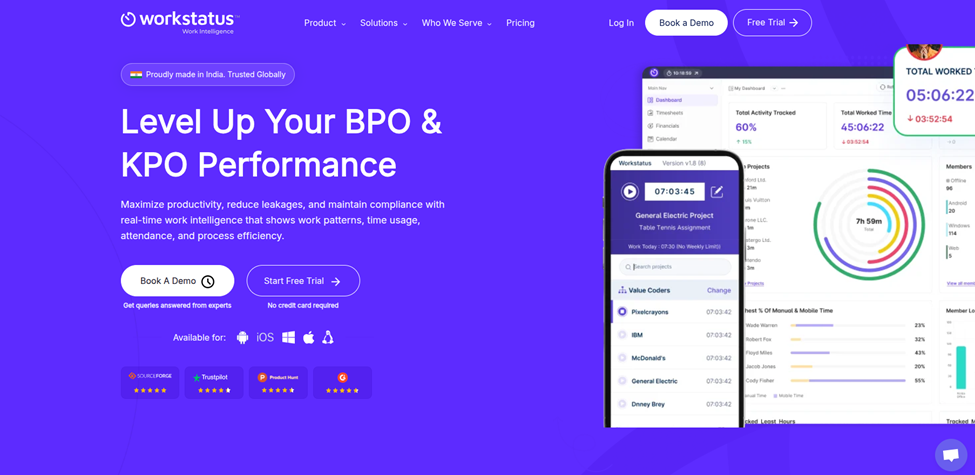
Workstatus is built for service-based businesses where time, utilization, and delivery outcomes directly impact profitability. Unlike tools focused solely on contact center scheduling, it supports both front-office and back-office operations across BPO and KPO environments, including operations, HR, finance, IT services, analytics, and knowledge teams.
For businesses evaluating workforce management software for call centers alongside broader enterprise needs, this unified approach is particularly valuable.
Workstatus brings automated time tracking, shift and attendance management, workforce analytics, and real-time performance visibility into a single platform. As BPO time-tracking software, it helps businesses manage large, distributed teams while maintaining accurate records for billing, compliance, and audits.
From a business leadership perspective, the platform delivers clear visibility into workforce utilization, highlights performance gaps early, and provides reliable data for decision-making, reducing operational blind spots that often affect margins.
2. Verint Workforce Management
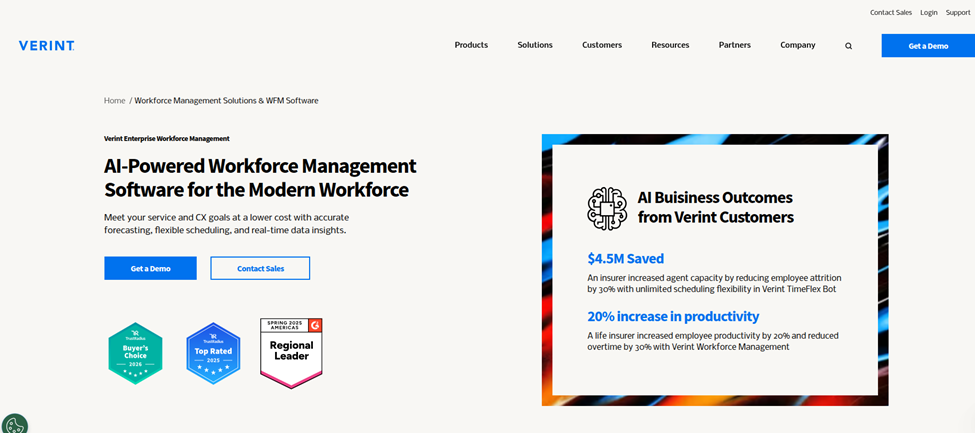
Verint is widely adopted by large enterprises with complex forecasting and long-term workforce planning needs. Its strength lies in advanced analytics and structured workforce optimization for high-volume environments.
However, for BPO and KPO businesses that require agility, faster deployment, or flexibility across multiple service lines, the platform’s complexity and longer implementation timelines may pose challenges.
3. NICE IEX
NICE IEX is a well-established solution for businesses with stable workloads and mature workforce planning processes. It offers dependable forecasting, scheduling, and adherence management for traditional contact center operations.
For BPO businesses expanding beyond voice-based services or managing diverse back-office teams, its primary focus on conventional call center workflows may limit adaptability.
4. UKG Dimensions

UKG Dimensions emphasizes HR integration, labor compliance, and attendance accuracy. Many organizations adopt it to strengthen policy enforcement and regulatory adherence.
While effective in compliance-focused environments, BPO businesses seeking deeper real-time utilization insights and operational visibility often require additional tools to complement its capabilities.
5. Replicon
Replicon is commonly used by knowledge-driven and professional services organizations for time tracking, project reporting, and compliance management.
Although it performs well for project-centric teams, it may not fully address the real-time workforce visibility needs of high-volume, shift-based BPO operations.
How Businesses Should Choose Workforce Management Software for BPO & KPO Operations
For BPO and KPO leaders, selecting workforce management software is a strategic business decision, not simply a technology purchase.
The focus should be on operational alignment, scalability, and long-term value rather than the number of features offered.
The most effective workforce management software for BPO and KPO businesses typically delivers the following:
- Comprehensive workforce visibility
Clear, real-time insight into time, attendance, and performance across both front-office and back-office teams. - Automated and accurate time tracking
Reliable capture of work hours at scale, reducing manual errors and administrative effort. - Compliance and audit readiness
Structured, traceable workforce data that supports SLAs, client reporting, and regulatory audits. - Scalable shift and workload control
The ability to manage rotating shifts, global time zones, and fluctuating workloads without increasing complexity. - Actionable workforce analytics
Dashboards and reports that help businesses identify utilization trends, staffing risks, and performance issues early.
Business Benefits of the Right Workforce Management Software
When BPO and KPO businesses implement the right workforce management solution, the impact extends beyond operations and into overall business performance:
- Accurate tracking of time and effort across departments
- Improved visibility into workforce productivity and utilization
- Stronger compliance posture and audit confidence
- Reduced manual reporting and administrative overhead
- Better shift planning and workload distribution
- Early detection of delivery and performance risks
- Data-driven workforce planning and forecasting
- Improved cost control and margin protection
- Scalable oversight across teams and locations
- Greater transparency for internal and client reporting
Final Business Perspective
For BPO and KPO businesses managing complex, multi-layered operations, workforce management software is a foundational business system. Platforms that unify time tracking, workforce visibility, and performance analytics enable leaders to make informed decisions, improve utilization, and maintain compliance as the business scales. When evaluating workforce management software for call centers and broader BPO environments, business leaders should prioritize clarity, adaptability, and the ability to support diverse service teams with reliable, scalable workforce data. The right solution not only supports day-to-day operations but also strengthens long-term business resilience and profitability